Portable power station for CPAP machine backup: nights per charge, switchover and each maker's medical stance
As an Amazon Associate I earn from qualifying purchases.
The BLUETTI Elite 300: about seven nights of CPAP per charge by our arithmetic, a switchover timed at
Most CPAP owners shop by battery size. That turns out to be the easy part, because a CPAP sips power. What goes wrong at 3 a.m. is a station that decides nothing is plugged in and switches its outlets off. Or one that spends a big share of every night keeping itself awake. Porchlight's pick for a CPAP through an outage is the BLUETTI Elite 300. By our arithmetic it gives about seven nights per charge. StorageReview timed its switchover at
What changes the answer for a CPAP or oxygen user
Every figure here assumes the heated humidifier is off. CPAP retailers say heat raises the draw a lot, so with it on, expect fewer nights. An oxygen concentrator is a different job, and we answer it below. The Elite 300 has energy to spare for a fridge as well as the CPAP. But if the fridge is your first worry and the CPAP rides along, buy for the fridge: that's the Jackery further down. If your outages run past a week, refilling matters more than battery size, and the Anker F3000 with a generator is the answer. If you rent an apartment and the station must cover the fridge and
Best for most CPAP users: BLUETTI Elite 300
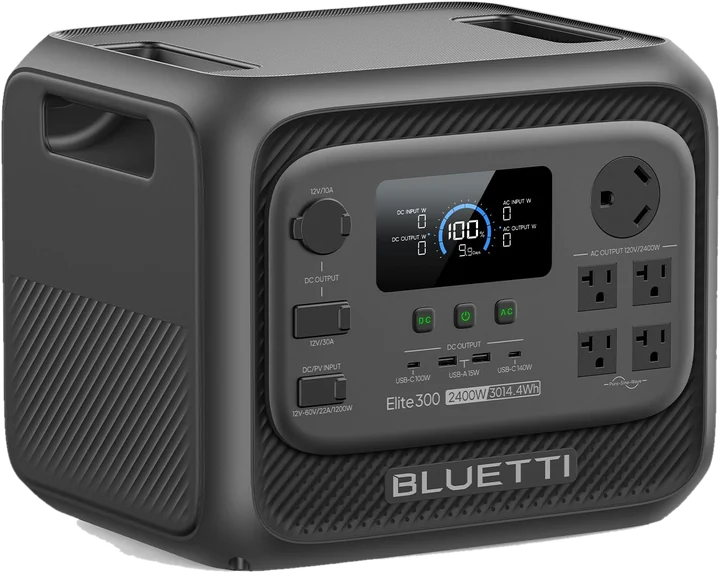
BLUETTI promises a
Two US units delivered 2,670 to
BLUETTI's manual settles two night-time worries. ECO, its power-saving cut-off, is disabled from the factory, so the outlet won't decide your CPAP isn't there. And if the battery runs flat, the outlets come back on their own once the grid returns and the battery recovers a little.
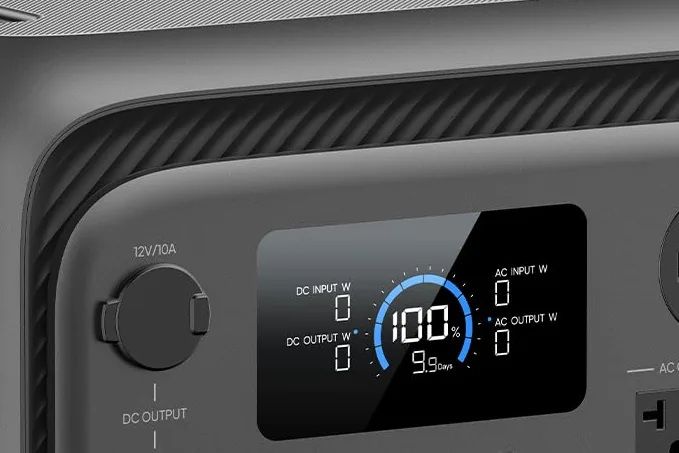
The one real catch is the fans. One tester measured
Buy it for a week of nights on a switchover a lab actually timed.
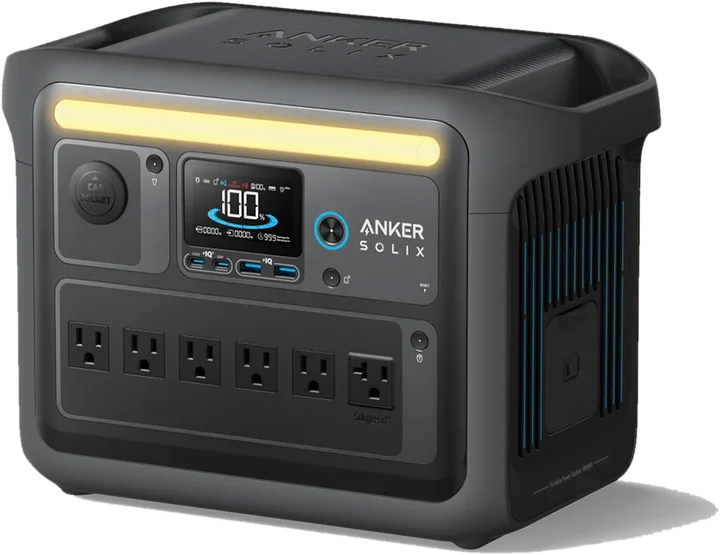
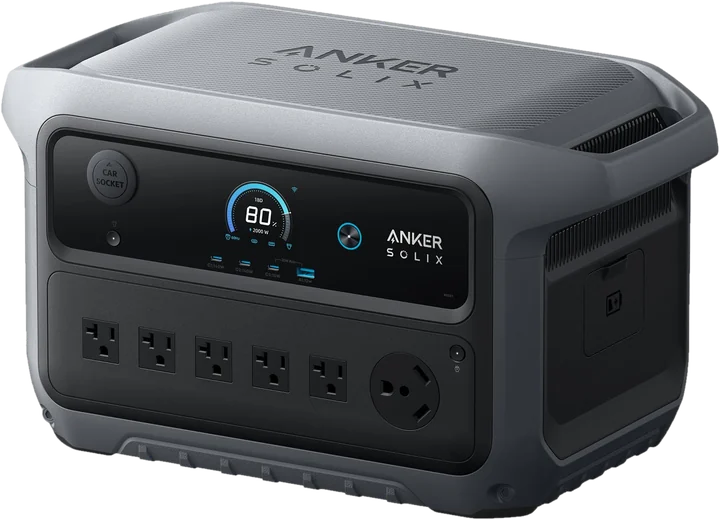
Lightest CPAP backup for a night or two: Anker SOLIX C1000 Gen 2
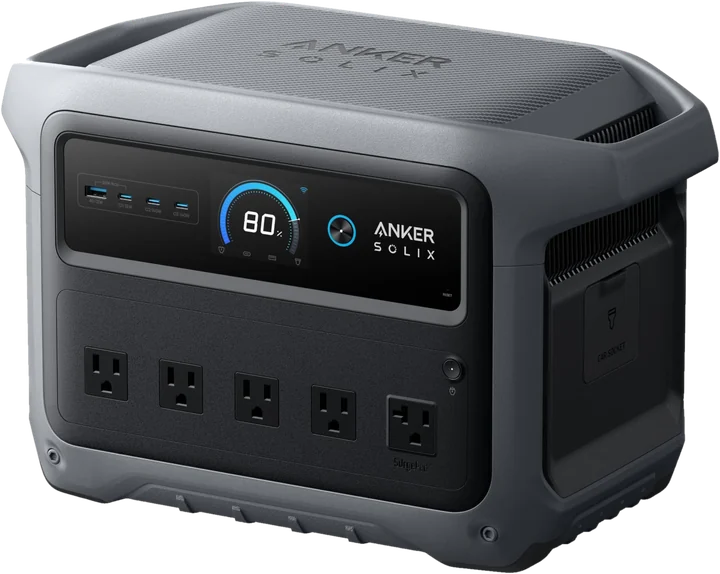
Anker advertises "20dB Operation" without saying at what load. That's like selling a quiet car by measuring it with the engine off. The numbers that matter hold up better. Two labs got
Anker's switchover claim of under
The catch is that two and a half nights is the ceiling. There's no expansion port, so a three-day ice storm means refilling it from somewhere. We had only Anker's troubleshooting guide for this model, not its full manual, so we can't tell you its power-saving settings.
Buy it for a night or two, carried by one person.
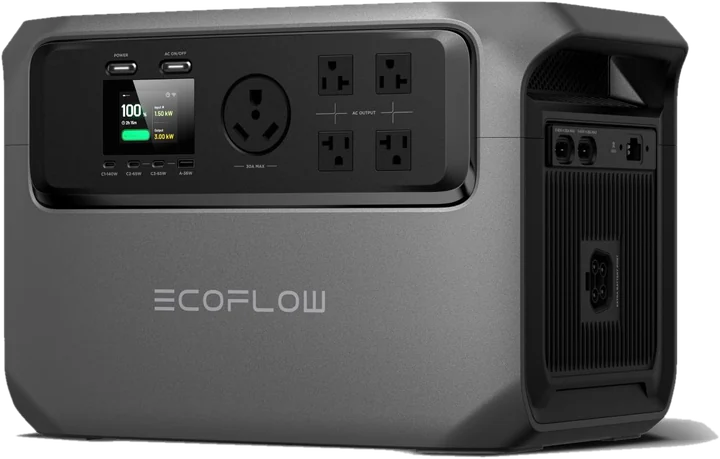
Best for a CPAP on the tightest budget: EcoFlow DELTA 3 Classic
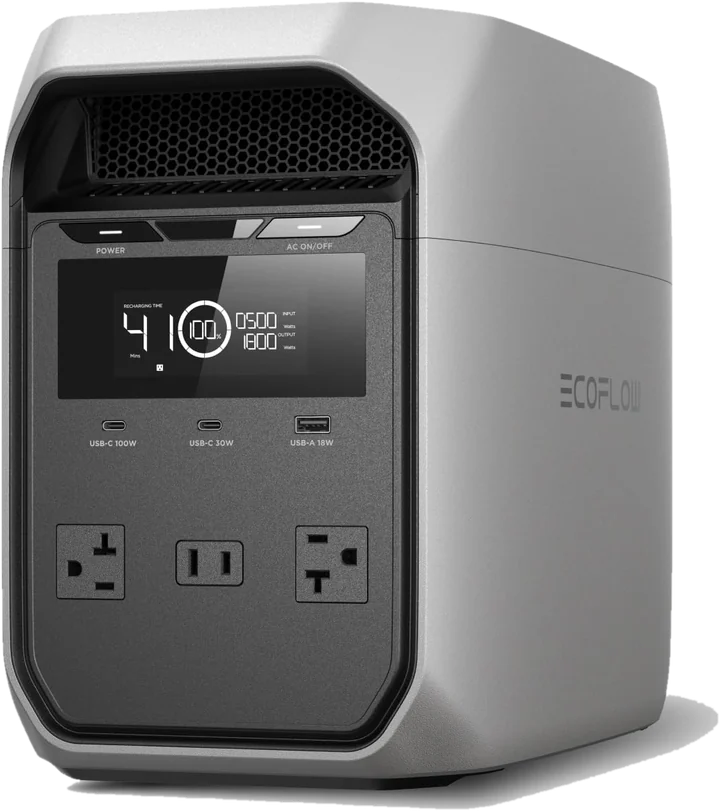
This is the least you can spend to keep a CPAP running for a night or two. It is also the box we pick for homes whose power blinks off often and briefly, wanting the router and desk to ride through and the battery to refill fast; our DELTA 3 Classic review covers that buyer. EcoFlow's switchover claim is under
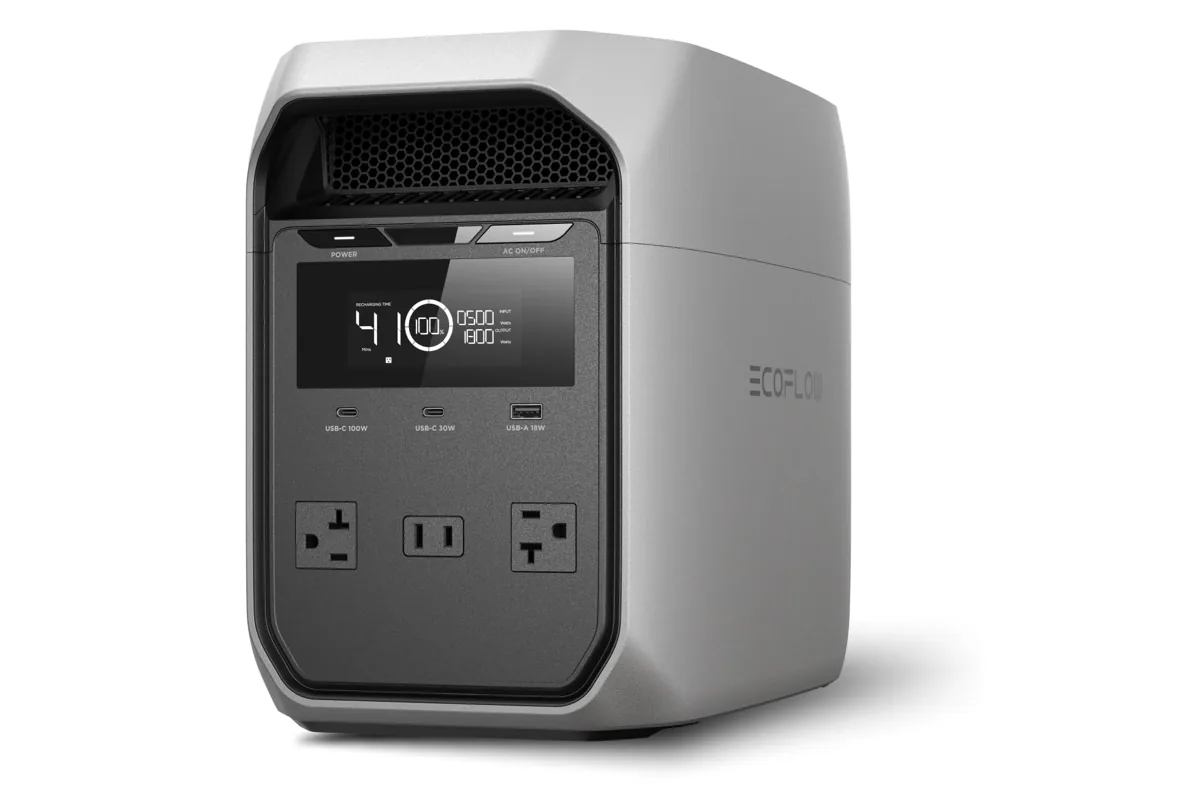
The catch is a timer. EcoFlow's US manual says the AC outlets switch off when idle, warns a fridge can trigger it, and gives no default length. Follow the manual and set the AC timeout to "never" in the app before your first outage. With no car socket, the CPAP runs through the AC outlets.
Buy it for a night or two of CPAP on the tightest budget, with the timer off.
Most of a week for less: BLUETTI Elite 200 V2
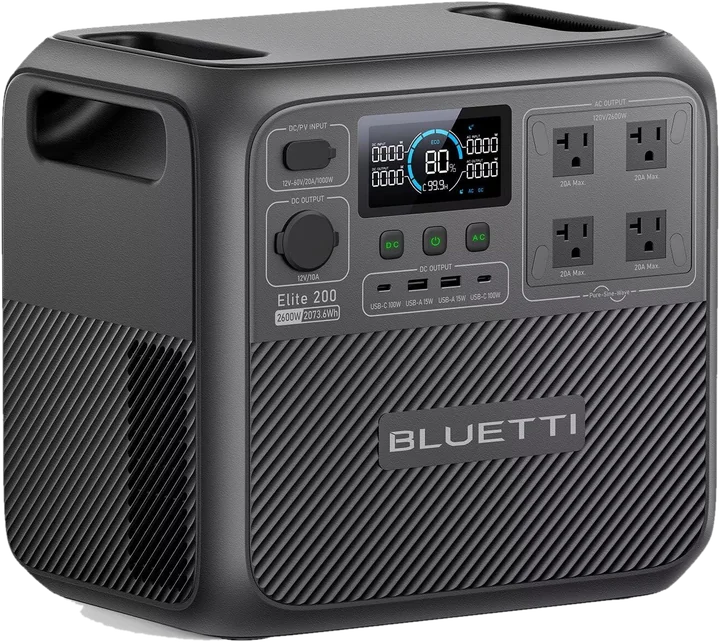
Four testers measured the Elite
Its
The catch is one default. BLUETTI's manual ships ECO mode on, cutting output after a stretch of low load. The same manual wants ECO disabled wherever the load is a small device. A CPAP is a small device, so switch ECO off the day it arrives. At
Buy it if your budget stops short of the Elite 300 and five nights will do.
Best for week-long outages with a generator: Anker SOLIX F3000
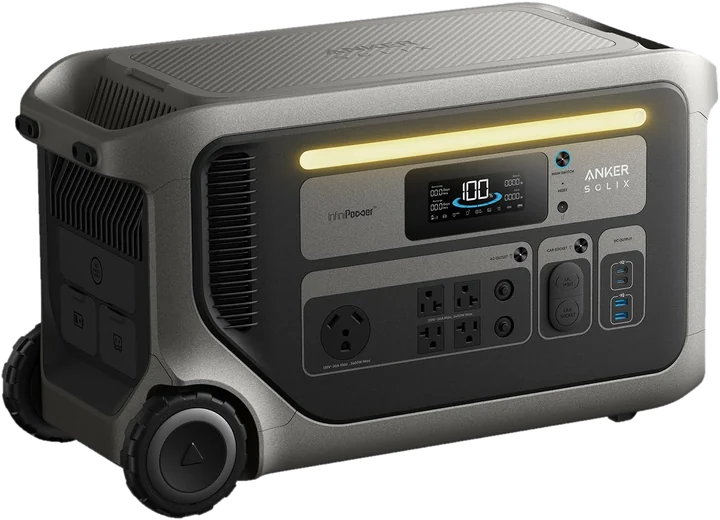
Anker claims a
Refilling is what earns the F3000 its place. Plug a
The catch is idle draw nobody can pin down:
Buy it for outages measured in weeks, paired with a generator.
Best if the fridge comes first: Jackery HomePower 3600 Plus
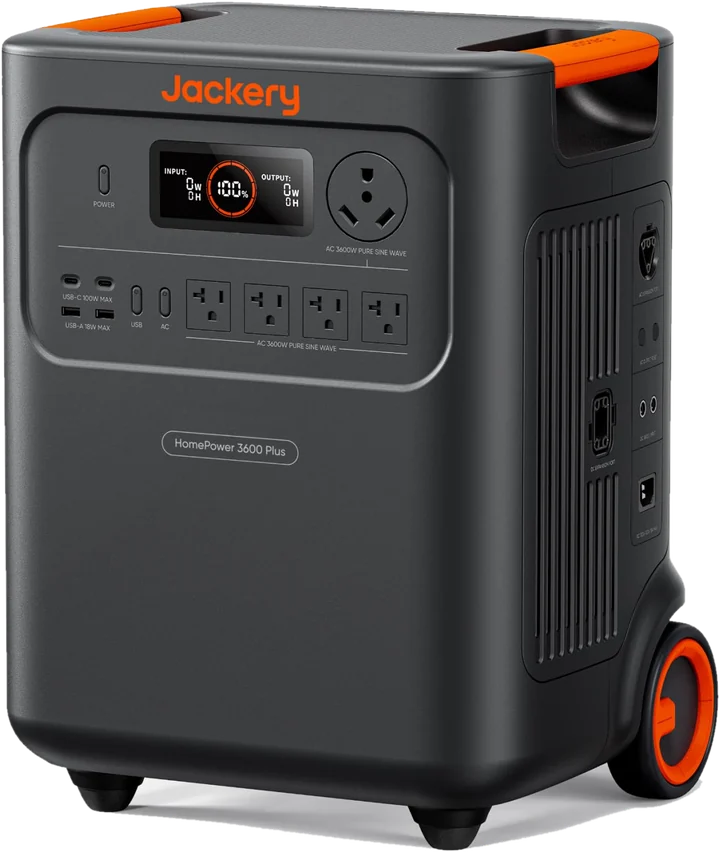
This is our pick for keeping a home's essentials running, and it is the station for a home whose first worry is food, lights and
The catch is a default that seems made to catch CPAP owners. Jackery's manual turns the outputs off after
Buy it if the fridge matters more than the CPAP. More in our HomePower
New this year, and what we're watching
The Elite 300 went on sale in March 2026, making our pick the newest station here. A box that new usually means waiting, but not this time. In eight months it has gathered more of what a CPAP user needs than models years older. It has a timed switchover, three matching idle tests, two capacity tests on US units and a six-month owner. That owner reports the app often loses the unit in standby. It also didn't wake for solar after powering down overnight. That's one person's report, not a pattern, and we're watching for more.
BLUETTI has also just put an Apex 200 on its US store. Nobody in our evidence has measured the Apex 200 itself, so there's nothing to weigh and no reason to hold off for it.
How the picks were decided
Ten models went into this page, nine of them read against the maker's own manual, drawn from 589 sources this site has kept in full. A station made the list only with measured usable energy and idle draw on the exact US model. At least one of those measurements had to come from a tester who isn't the maker.
How many nights of CPAP will a power station give me?
Divide the energy labs measured out of the battery by one night's cost. That cost is the CPAP plus the station's own idle draw, over eight hours. One tester metered a ResMed AirSense 10 with the humidifier off at around two dozen watts on average. He suggested planning on thirty, and our arithmetic uses that.
We add idle draw because at a load this small, the inverter's appetite is most of the loss. Anker itself says efficiency falls at light loads. Labs measured usable energy at much heavier loads, so treat our nights as a best case and round down. Each pick's nights are in the table below.
Does switchover time matter for a CPAP?
Only if the CPAP lives on the station nightly, with the station plugged into the wall. We found no source on how a ResMed reacts when power blinks. So we can't name a figure your machine is sure to tolerate. We can say which figures are real. Only four stations in this field have a measured switchover, and two are here: the Elite 300 at
Will the station switch itself off under a CPAP?
Ask before the outage, not during it. Power-saving modes cut outlets that see little load, and a CPAP idle all day looks like nothing at all. The Elite 300's ECO mode ships off. The Elite
What do the makers say about medical use?
Nobody promises anything, so read the wording exactly. EcoFlow's DELTA 3 Classic FAQ says it is "not recommended for critical medical devices such as ventilators." Jackery says, brand-wide, that it doesn't recommend its stations for medical or life-support equipment. Its
Can a power station run an oxygen concentrator overnight?
Perhaps for a single night on the largest box here, and we can't promise even that. The research behind this page assumes a stationary concentrator draws a few hundred watts, many times a CPAP. Nobody in our evidence measured one, so read the label on yours. The Jackery holds the most measured energy here, which makes it the only station we'd even try. Jackery is also the maker most firmly against medical use. If a lapse in oxygen would put you in danger, no station here is a plan on its own. Ask whoever supplies your equipment what they provide for outages.
The picks side by side
| Station | Best for | Nights of CPAP per charge | Switchover | Weight | Buy |
|---|---|---|---|---|---|
| BLUETTI Elite 300 | Most CPAP users | About 7 | View on Amazon | ||
| Anker SOLIX C1000 | A night or two, carried by one person | About 2½ | Under | View on Amazon | |
| EcoFlow DELTA 3 Classic | A CPAP on the tightest budget | About 2½ | Under | View on Amazon | |
| BLUETTI Elite | Most of a week for less | 5 to 6 | View on Amazon | ||
| Anker SOLIX F3000 | Week-long outages with a generator | 5 to 6½ | View on Amazon | ||
| Jackery HomePower | The fridge first, CPAP along | 6 to 8, CPAP alone | View on Amazon |
Our pick for CPAP backup: BLUETTI Elite 300
For a CPAP through an outage, we'd buy the BLUETTI Elite 300. It holds about a week of nights. Its switchover is measured rather than promised. And nothing in its defaults switches your CPAP off while you sleep. If the fridge worries you more than the CPAP, our home backup guide picks the Jackery HomePower
A CPAP asks for very little, and the Elite 300 keeps giving it that, night after night. Buy it, set it up once, and let it get on with the night.
The evidence in full
Research count: 10 models weighed; 9 maker manuals among them; across this site's research, 589 sources kept in full.
Every station considered, with the nights working
Each night is an eight-hour night at thirty watts for the CPAP (a metered ResMed AirSense 10 averaged around two dozen with the humidifier off; thirty was the tester's own planning figure), plus the station's measured idle draw with the AC on. Nights are measured usable energy divided by that, and they are our arithmetic, not anyone's test. Every usable-energy figure came from a load far heavier than a CPAP, where inverters are more efficient, so these are upper estimates.
| Station | Usable energy, measured | Idle draw with AC on, measured | Nights per charge | Switchover | Call here |
|---|---|---|---|---|---|
| BLUETTI Elite 300 | 7.4 to 7.8 | Buy, overall pick | |||
| Jackery HomePower | 6.3 to 7.8 | Buy | |||
| BLUETTI Elite | 5.6 to 6.3 | Buy | |||
| Anker SOLIX F3000 | 5.1 to 6.5 | Buy | |||
| Anker SOLIX C1000 | About 2.5 | Under | Buy | ||
| EcoFlow DELTA 3 Classic | 2.5 to 2.8 | Under | Buy | ||
| Anker SOLIX C2000 | 4.7 to 5.8 | Considered | |||
| BLUETTI Apex 300 | 6.0 to 6.7 | Considered | |||
| EcoFlow DELTA 3 Max | Not measured | Not worked out | Under | Skip | |
| Jackery Explorer 1000 v2 | Not measured | Not measured; | Not worked out | Skip |
The Solar Lab measured
A route nobody has tested: running a CPAP from a car socket through the CPAP maker's own DC converter skips the inverter. HOBOTECH measured the Elite 300 at
No fridge run exists for the Elite 300. Its room for a fridge alongside the CPAP is our reading of its measured usable energy, not a test; the Jackery's fridge run is CNET's lab result.
The DELTA 3 Classic earns its place here for two buyers our other pages also serve. For a CPAP, it is the cheapest way through a night or two. For homes with short, frequent outages that want the router and desk to ride through and the battery to refill fast, it is our pick too, as its review explains.
The four measured switchovers in the field
- BLUETTI Elite 300:
8 ms to battery, and about the same on the way back to the grid, on a Quarch analyzer with a workstation load (StorageReview, US unit, Aug 2026). - Anker SOLIX F3000:
9.8 ms on an oscilloscope; a PC under stress survived three cuts (Jasonoid, US unit, Jul 2025). - BLUETTI Apex 300:
16 ms in its standard mode, captured at two loads. Its0 ms mode was not captured (StorageReview,2026-11-10 ). - Jackery Explorer
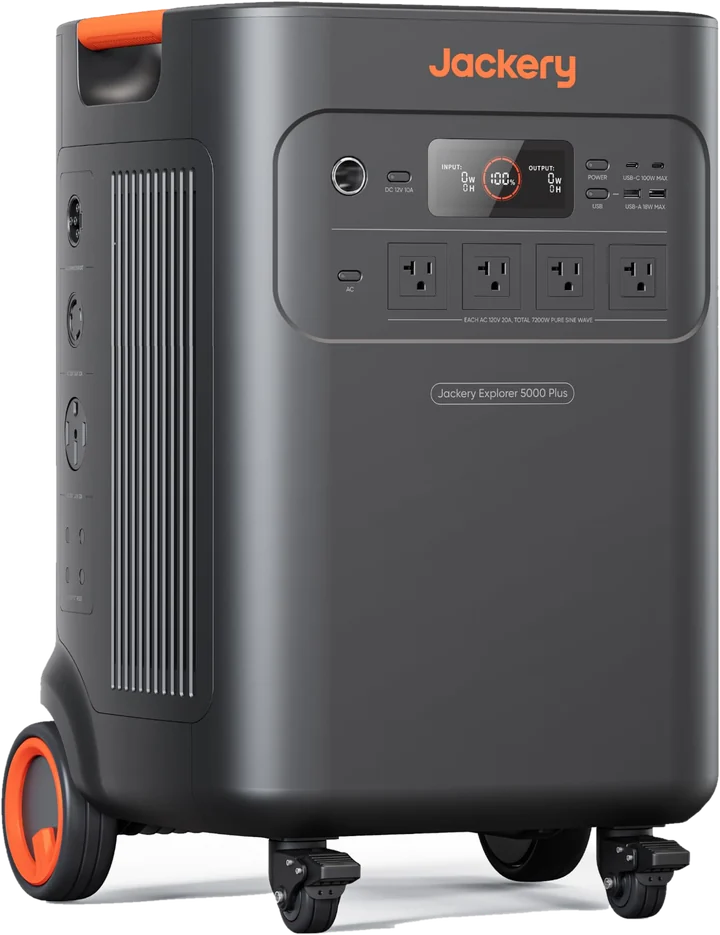
5000 Plus , through Jackery's Smart Transfer Switch: a whole-circuit switchover, not an outlet test (The Solar Lab and others). That station is not among the models this page weighed.
No tester timed any station in a
Each maker's stance, in its own words
| Maker | Where it says it | What it says |
|---|---|---|
| EcoFlow | DELTA 3 Classic US FAQ and manual | "Not recommended for critical medical devices such as ventilators." The manual adds that the grid must supply more than the loads draw, or the station cannot act as a UPS. |
| Jackery | FAQ on the Explorer | Does not recommend its power stations for medical or life-support equipment. The |
| BLUETTI | Elite | Not for servers or workstations that need a high-performance UPS. No medical statement found. |
| Anker | C1000 | No medical or life-support statement found. The C1000 |
Settings that can cut a small load, by manual
- BLUETTI Elite 300: ECO off by default. If the battery runs flat, AC output returns once the grid is back and the battery recovers.
- BLUETTI Elite
200 V2 : ECO on by default, and the manual wants it disabled for small devices. System Switch Recovery restores output after a flat battery. - BLUETTI Apex 300: ECO on by default; the manual advises disabling it for small loads.
- EcoFlow DELTA 3 Classic: AC timeout on, no default length given; the manual says set it to "never" in the app. Powers on again when charging resumes, and Port Memory restores the outputs.
- EcoFlow DELTA 3 Max: AC idle timeout; the manual says set it to "never" for fridges and medicines.
- Jackery HomePower
3600 Plus : outputs off after12 hours below25 W , on by default; disable it with the AC and main power buttons. - Anker SOLIX C2000
Gen 2 : AC turns off after15 min with no plug detected; on by default, and the manual says it can be disabled. - Anker SOLIX C1000
Gen 2 and F3000: their full US manuals were not available to us. One owner watched the C1000Gen 2 's outlets come alive again without help as its drained battery recharged, and MacRumors notes its AC has to be switched on by hand.
Testers and their methods
| Tester | How it measures | Who supplied the unit |
|---|---|---|
| StorageReview | Kill-A-Watt for energy in and out; Quarch analyzer for switchover | Not stated |
| Jasonoid | Oscilloscope on the outlet during a grid cut; idle read from the screen | Not stated |
| CNET Labs | Usable energy from a fixed resistive load logged to empty; round-trip efficiency, which includes charging losses, published separately; unit market not always stated | Not stated |
| HOBOTECH | Idle read either from the screen percentage over hours or from the energy needed to recharge, which adds charging losses | Maker discount or affiliate codes on several videos |
| The Solar Lab | Says it tests idle draw in every review; method not always stated | Bought its Elite |
| ReeWray Outdoors, Ruby's Adventures Unplugged | Full discharges through the inverter; generator runs | Maker discount or affiliate codes |
| Adventure Gear TV | Heat-gun discharge; metered idle over a long run | Jackery sponsored its |
Every result on this page comes from a US unit. Measurements made on UK, European and Australian versions were left out of every figure here.
Disagreements that don't change the call
Idle draw shows a spread on every station, and most of it comes from method: screen percentages are coarse, and recharge-energy readings include charging losses. The F3000 is the exception worth noting, because The Solar Lab's own two runs a year after its first test disagreed by more than double, which points to firmware or the unit itself as well as method.
BLUETTI claims the Elite 300 lasts 6,000+ cycles, while HOBOTECH quotes at least 4,000. Neither figure changes nights per charge.
Jackery's manual says the
CNET's spec box for the DELTA 3 Classic lists ports that don't match the Classic, but its product image and charge time do, and two other Classic tests agree, so we treat CNET's figure as the Classic's.
Skip these, and also considered
The Anker SOLIX C2000
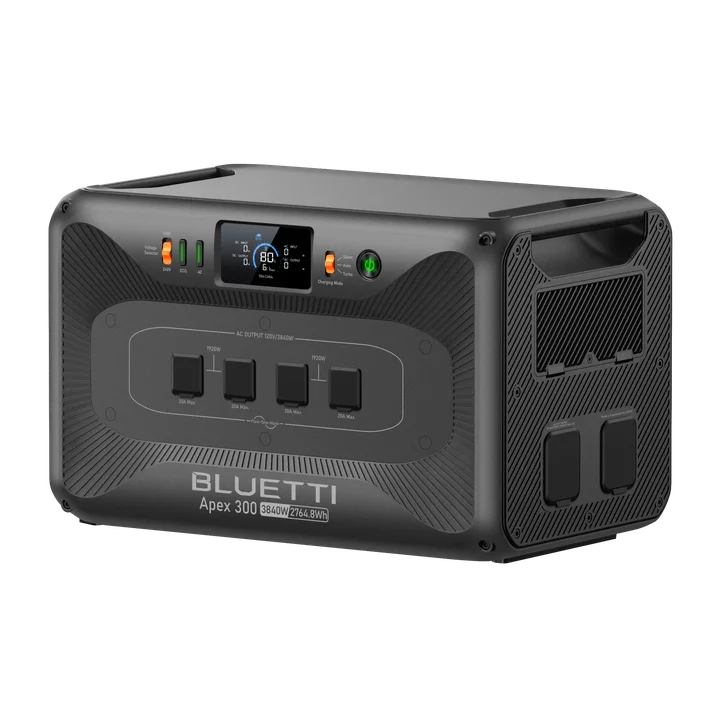
The BLUETTI Apex 300 gives about six nights and has a measured
Skip the EcoFlow DELTA 3 Max. It has one tester and no lab usable-energy figure, so we couldn't work out its nights honestly. Its
Skip the Jackery Explorer 1000 v2 too. It is light at
Sources
- BLUETTI Elite 300 user manual
(US) (opens in a new tab) - BLUETTI Elite
200 V2 user manual(US) (opens in a new tab) - BLUETTI Apex 300 user manual
(US) (opens in a new tab) - Anker SOLIX C1000
Gen 2 productpage (opens in a new tab) - Anker SOLIX C1000
Gen 2 troubleshooting and userguide (opens in a new tab) Anker SOLIX C2000 Gen 2 manual (opens in a new tab)Anker SOLIX F3000 product page (opens in a new tab) - EcoFlow DELTA 3 Classic US support
FAQ (opens in a new tab) - EcoFlow DELTA 3 Classic user manual
(US) (opens in a new tab) EcoFlow DELTA 3 Max product page (opens in a new tab) - Jackery HomePower
3600 Plus usermanual (opens in a new tab) - Jackery Explorer
5000 Plus page (brand-wide medical-useFAQ) (opens in a new tab) - Jackery Explorer 1000 v2 basic information
FAQ (opens in a new tab) - StorageReview: BLUETTI Elite 300
review (opens in a new tab) - StorageReview: BLUETTI Apex 300
review (opens in a new tab) - StorageReview: BLUETTI Elite
200 V2 review (opens in a new tab) - Jasonoid: Anker SOLIX F3000
(YouTube) (opens in a new tab) - CNET Labs: best portable power
stations (opens in a new tab) - HOBOTECH: BLUETTI Elite 300
(YouTube) (opens in a new tab) - The Solar Lab: BLUETTI Elite 300
(YouTube) (opens in a new tab) - Bren Unplugged: BLUETTI Elite 300 after six months
(YouTube) (opens in a new tab) - Minute Man Solar: Anker SOLIX C1000
Gen 2 launch review(YouTube) (opens in a new tab) - Minute Man Solar: Anker SOLIX C1000
Gen 2 in regular use(YouTube) (opens in a new tab) - Jungle River: Anker SOLIX C1000
Gen 2 (YouTube) (opens in a new tab) - 2TWENTY2 tech reviews: Anker SOLIX C1000
Gen 2 as a UPS(YouTube) (opens in a new tab) - The Anker SOLIX C1000
Gen 2 review, with Anker's feature list (TheGadgeteer) (opens in a new tab) - The Solar Pit: EcoFlow DELTA 3 Classic
(YouTube) (opens in a new tab) - The Solar Lab: EcoFlow DELTA 3 Classic
(YouTube) (opens in a new tab) - John's Off-Road: EcoFlow DELTA 3 Classic
(YouTube) (opens in a new tab) - ReefDudes: EcoFlow DELTA 3 Classic on a reef tank
(YouTube) (opens in a new tab) - HOBOTECH: BLUETTI Elite
200 V2 (YouTube) (opens in a new tab) - ReeWray Outdoors: BLUETTI Elite
200 V2 (YouTube) (opens in a new tab) - The Solar Lab: BLUETTI Elite
200 V2 (YouTube) (opens in a new tab) - The Solar Lab: Anker F3000
review (opens in a new tab) - The Solar Lab: Anker F3000 after one year
(YouTube) (opens in a new tab) - HOBOTECH: Anker SOLIX F3000
(YouTube) (opens in a new tab) - The Solar Lab: Jackery HomePower
3600 Plus review (opens in a new tab) - HOBOTECH: Jackery HomePower
3600 Plus (YouTube) (opens in a new tab) - Adventure Gear TV: Jackery HomePower
3600 Plus , sponsored(YouTube) (opens in a new tab) - There's A Trick For That: BLUETTI Apex 300
(YouTube) (opens in a new tab) - The Solar Lab: BLUETTI Apex 300
(YouTube) (opens in a new tab) - The Solar Lab: Anker SOLIX C2000
Gen 2 (YouTube) (opens in a new tab) - Adventure Gear TV: Anker SOLIX C2000
Gen 2 (YouTube) (opens in a new tab) - The Solar Lab: EcoFlow DELTA 3 Max
review (opens in a new tab) - The Solar Lab: what is a smart transfer
switch (opens in a new tab) - ResMed AirSense 10 power draw on a power station
(YouTube) (opens in a new tab) - The CPAP Shop: the AirSense 11 power
guide (opens in a new tab) - Digital Trends: Anker on light-load
efficiency (opens in a new tab)