EcoFlow DELTA 3 Classic review for home backup: measured against the maker's claims
As an Amazon Associate I earn from qualifying purchases.
Porchlight's call: buy the EcoFlow DELTA 3 Classic if your power drops out often and briefly, and the router and desk must ride through and the battery refill fast. It isn't built for multi-day storms.
- Who it’s forHomes whose power blinks off often and briefly, wanting the router and desk to ride through and the battery to refill fast
- The catchBurns close to a third of its own battery a day just being switched on, and you can't add batteries later
In the evidence table
Open the full row- Idle draw with the AC on
17 W measured- Usable energy, measured
947.47 Wh measured- Rated capacity
1,024 Wh claimed- Continuous output (gas: running watts)
1,800 W claimed- Surge (gas: starting watts)
3,600 W claimed240 V output- 120V onlyclaimed
- Neutral-ground bond
- floatingclaimed
- UPS switchover
- <
10 ms claimed
Most power station boxes are written by the marketing department. The DELTA 3 Classic's reads as if someone expected to be checked. Two independent tests got about nine tenths of the rated battery out of it, a better share than most stations we've seen CNET test. Two labs recharged it from the wall in
What you actually get with the EcoFlow DELTA 3 Classic
A
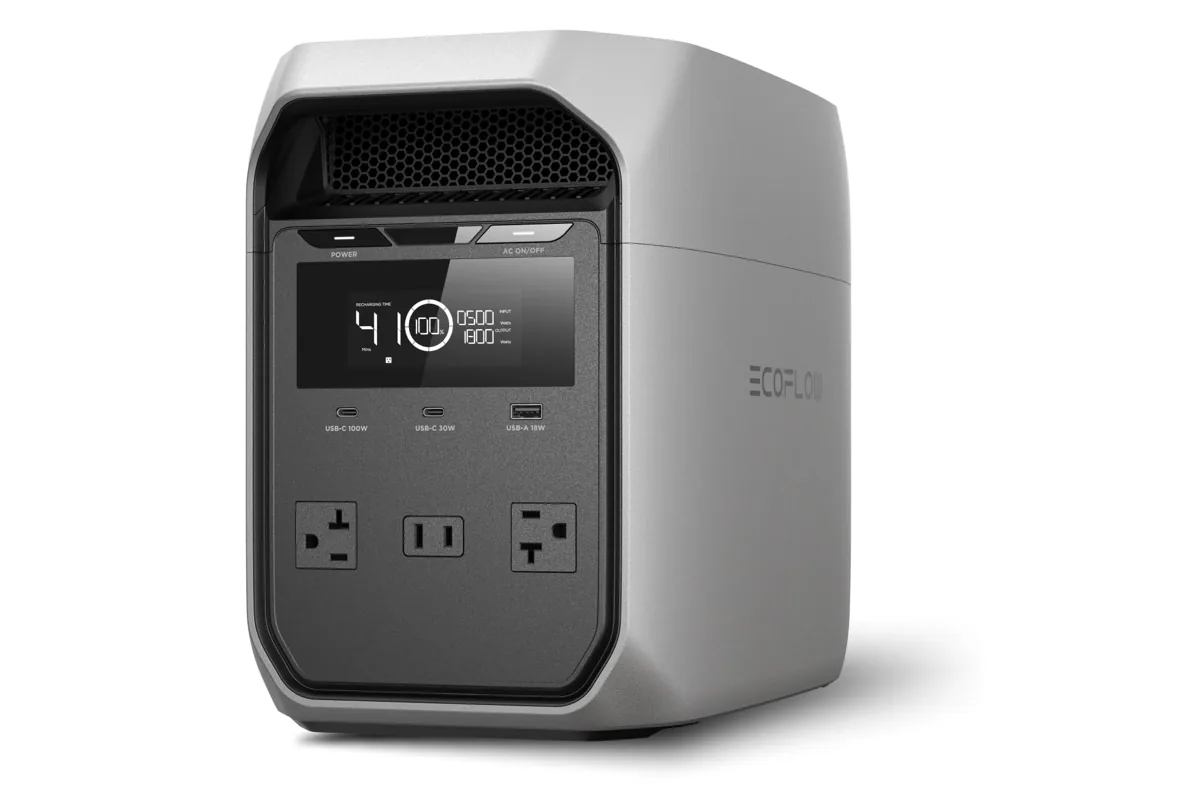
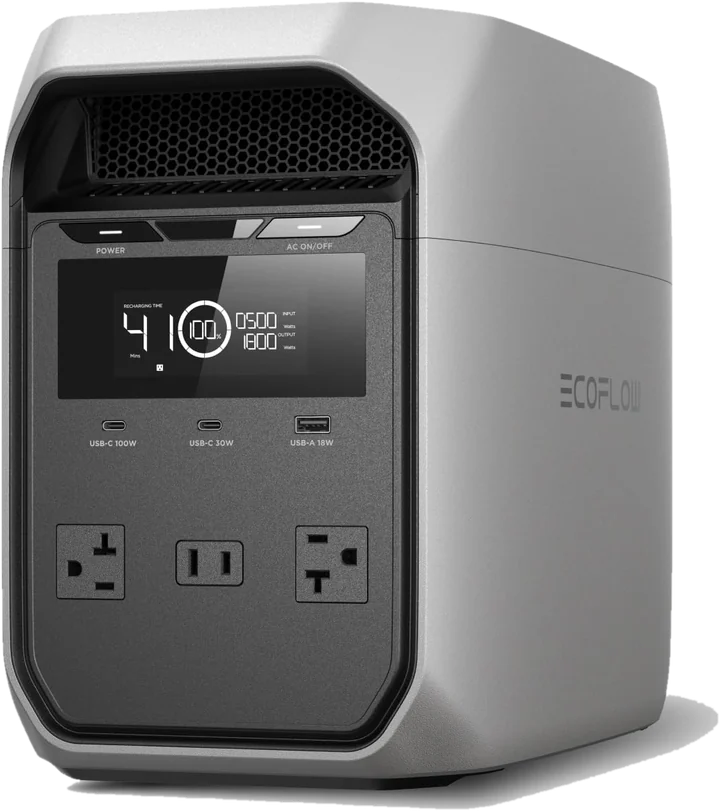
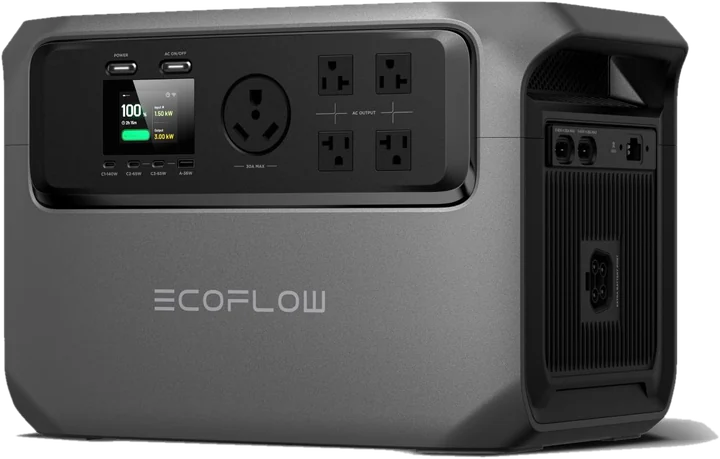
EcoFlow's spec sheet lists "Outlets 6", a tally that folds in the USB-A and USB-C sockets. Only three take a household plug, and The Solar Lab, John's Off-Road and UG Tech all found the middle one is two-prong. So your fridge, or anything else with a ground pin, has two places to go. Your refrigerator does not have a USB-C plug. There's no car-style DC socket either, which you'd only miss with a camping cooler.
Some trade coverage calls the Classic a renamed DELTA 3. EcoFlow's spec sheet says otherwise: a different charging input, fewer outlets, no expansion battery. So results for the DELTA 3, 3 Plus and 3 Max belong to those machines. One lower capacity figure pinned on the Classic online traces back to OutdoorGearLab, whose unit was the earlier, expandable DELTA 3. Every measurement here comes from the Classic itself.
For a home whose power drops out often and briefly, it's a box we'd buy.
Does the DELTA 3 Classic live up to EcoFlow's claims?
Mostly, yes. Here is every promise we could check, beside what testers of the US model got.
| What you care about | What EcoFlow claims | What testers measured | Who measured it, when, and the money behind it |
|---|---|---|---|
| Battery you can actually use | CNET Labs, Aug to Sep 2026, unit source not stated; The Solar Pit, Mar 2026, affiliate links and a discount code, unit source not stated | ||
| Recharge from the wall | Empty to full in | The Solar Lab, Oct 2025, discount-code links; CNET Labs, Aug to Sep 2026 | |
| Efficiency | No figure | 83% battery to outlet (The Solar Lab, method not stated); 81.34% wall to battery to outlet (CNET) | Same two labs as above |
| Idle draw with the AC on | No figure | The Solar Lab, Oct 2025; The Solar Pit, Mar 2026 | |
| Power-cut switchover | Under | No flicker on a light that shows gaps of | The Solar Pit, Mar 2026; John's Off-Road, Jun 2026, links and discount codes; ReefDudes, Jan 2026, purchase link |
| Noise | Under | The Solar Pit, Mar 2026 | |
| Surge for starting motors | Not measured. An air fryer plus a microwave pushed past the X-Boost rating, and it shut itself off safely | UG Tech, Jun 2026; EcoFlow sent the solar panel used in that video | |
| Outlets | "Outlets 6" | Three AC outlets, the middle one two-prong; the rest are USB | The Solar Lab, Oct 2025; John's Off-Road and UG Tech, Jun 2026 |
| Fridge runtime | No figure | Not measured on this model | Searched through Nov 2026 |
None of these testers says EcoFlow paid for the test. Most carry affiliate or discount links, which pay them when you buy.
Where a promise was tested, it held. Two testers who never compared notes landed close together on capacity. The number I'd hold back on is the surge. It sits on EcoFlow's store page, not its spec sheet, and nobody has put a motor on it. I spent a working life refusing to sign off a part whose key figure lived in the brochure but not on the drawing. This one gets the same treatment.
Don't ask it to start a motor until someone shows it can. For everything that has been tested, we'd buy it.
Living with it when the power goes out
How long will it keep my fridge cold?
About a day, by our arithmetic, once you allow for the station's own appetite. Nobody has run a household fridge on this model until it quit, so that's a sum, not a result. Try your own fridge in the home backup power calculator.
Two details in EcoFlow's documents decide whether you get that day. The US manual warns that idle AC outlets switch themselves off, and a fridge resting between cycles can trip that. The cure, in the same manual, is to change the AC timeout to "never" in the EcoFlow app. Do it the day the box arrives. Otherwise you may come downstairs at dawn to a warm fridge and a half-full station. And EcoFlow's support page says that after running flat, it switches back on when the power returns and restores the outputs that were on.
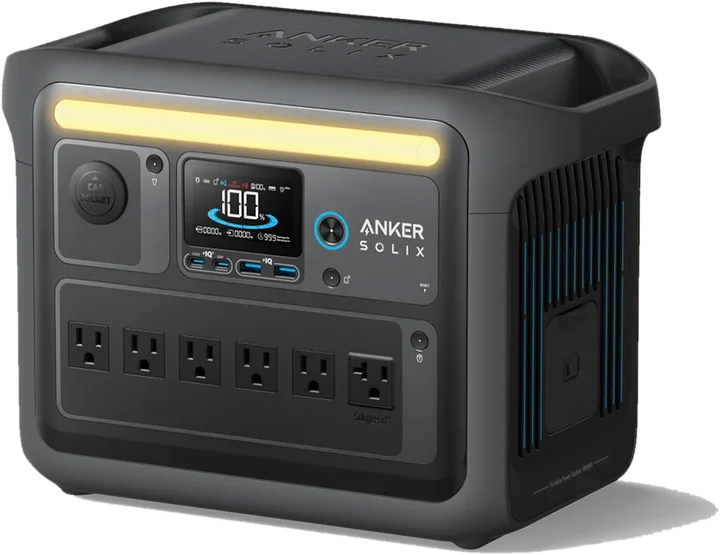
If keeping food cold overnight is the whole reason you're shopping, though, the Classic isn't our answer on a small budget. That job goes to the Anker SOLIX C1000, the main pick in our roundup of budget power stations for home backup.
Will my Wi-Fi stay up when the power cuts out?
This is what it does best. Leave it on the wall with the router, modem and desk plugged in, and an outage becomes something you hear about from the neighbors. EcoFlow puts the handover at under
Can it run my furnace, sump pump or CPAP?
For a gas furnace, it's a bridge of a few hours at best. On battery, EcoFlow's FAQ says, neutral and ground float free of each other. A furnace board that looks for them to be tied together may refuse to light, and nobody has tried one on this model. Running the furnace circuit from a battery wired in at the breaker panel is a much bigger job. For that, we'd put our money on Jackery's Explorer
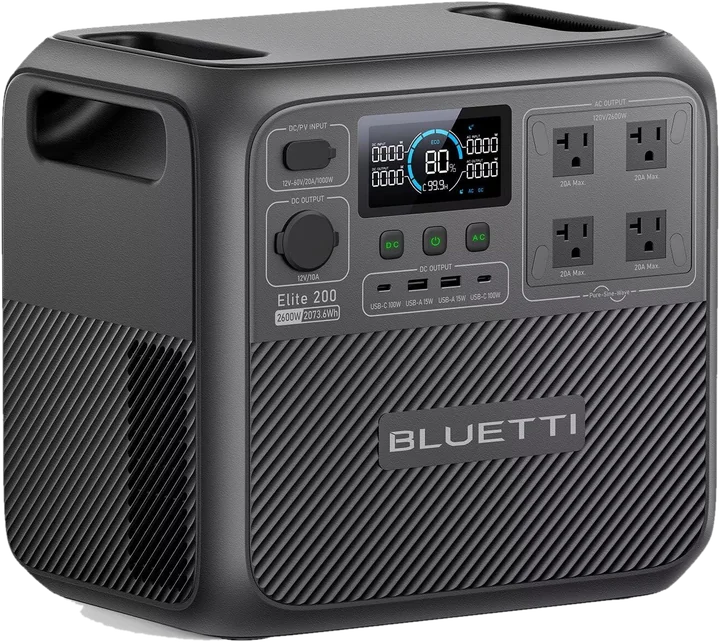
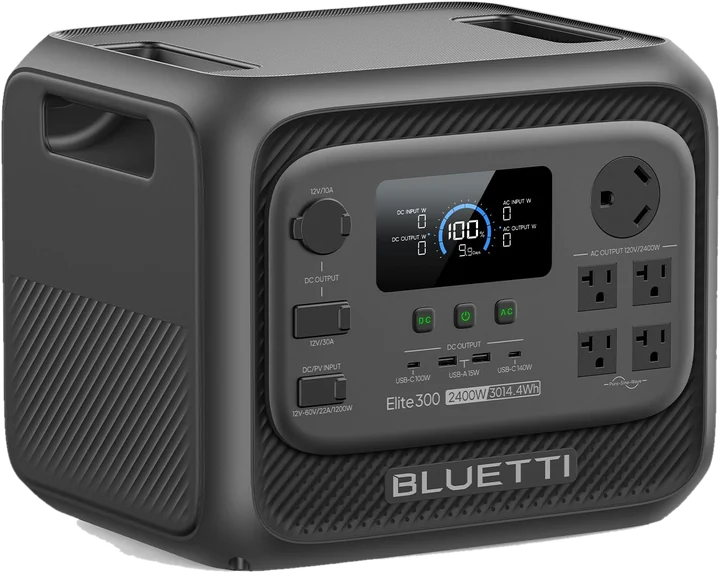
For a sump pump, it covers storms that end overnight, on a tight budget, and no more. The motor-starting surge is untested, and there's no alarm to wake you if the pump stops. When the basement is at stake, that matters more than any spec. If nobody will be home to keep an eye on the pump, we'd buy the BLUETTI Elite 300, as our sump pump backup guide explains.
The station is quiet enough for a bedroom: even its one noise test, at about three quarters of its rated output, sat near EcoFlow's own figure. EcoFlow's FAQ advises against critical medical devices such as ventilators, and nobody has measured how many nights of CPAP it gives. So if the CPAP is the reason you're shopping, look past the Classic. For a breathing machine and a router through a night or two, we'd put the Anker SOLIX C1000
Is it safe to keep in the house?
No recall names this model. EcoFlow's only CPSC recall covers the older DELTA Max 2000, fixed by firmware after six fires. Less reassuring: we found no safety listing for its model code in the Intertek, CSA or TÜV directories, and the manual shows no UL or ETL mark. UL's own database needs a login, so a listing is unconfirmed rather than ruled out.
Keep it indoors in winter. EcoFlow says it runs down to
The catch: it charges a toll just for being on
With the AC on and nothing plugged in, the DELTA 3 Classic still burns
Should you buy the EcoFlow DELTA 3 Classic?
Porchlight's verdict on the DELTA 3 Classic: buy it where the power drops out often and briefly. It keeps the router and the desk running through the cut. It lives up to its main claims better than most boxes, and it refills in under an hour for the next outage. The budget roundup linked above gives it the same job: outages that last hours, with the router and desk riding through and a fast recharge after.
Other worries have other answers. If you want the fridge covered through a full day on a smaller budget, a bigger BLUETTI station gets that job, and the home backup guide above names the one we'd buy. Skip the Classic if the load that matters most is a well pump. For a battery on that job, our well pump backup guide puts the Jackery Explorer
The bottom line
A small battery that delivers what its label says is rarer than it should be. For a home where the power blinks off often and briefly, the DELTA 3 Classic is the one we'd buy.
The evidence in full
Source by source, US units of the Classic
- CNET Labs (testing Aug to Sep 2026; list page updated
2026-09-08 ):947.47 Wh delivered into a steady resistive load logged with a HOBOware logger until empty; 81.34% round-trip efficiency (energy out divided by energy drawn from the wall to recharge); 55-minute charge. CNET's spec box lists a port count that fits the DELTA 3 or 3 Plus, not the Classic. Its product image shows the Classic (three AC outlets with a two-prong one in the middle, round display), and its charge time matches The Solar Lab's Classic. CNET's port lines are garbled elsewhere on the same page, so the port line is treated as a spec-box error and the measurements as the Classic's. Where CNET's unit came from is not stated. - The Solar Lab (US unit; video
2025-10-11 , written review2026-07-22 ): empty to full in55 min ; 83% efficiency, method not stated; idle17 W with the inverter on and no load, method not stated; three AC outlets, one not grounded; no car socket, no light; "very quiet", with no noise figure. No fridge or switchover test. Discount-code links. - The Solar Pit (US unit; video
2026-03-01 ; transcript read):940 Wh usable AC energy, load not stated (a separate run went from full to empty at close to1,800 W without shutting down, but the video doesn't tie the940 Wh to it). Idle13 W , worked out from the screen's percentage over a full day with the AC on and the screen always on (30% used). Noise39–40 dB at about three quarters of rated output, distance not stated. Switchover: no flicker on a light that shows gaps of15 ms or more; load during the test not stated. Thermal stress test stayed at safe temperatures; clean sine wave; EcoFlow support solved a mock issue quickly. Affiliate links and a discount code; unit source not stated. - John's Off-Road (
2026-06-10 ): a TV stayed on when the wall plug was pulled while the station was charging. One pull, not timed. Links and discount codes. - ReefDudes (
2026-01-05 ): aquarium lights, return pump and wave-makers did not flicker or restart over several cuts, first with the whole tank on, then pumps only. Not timed. Purchase link. - UG Tech (
2026-06-08 ): confirms two grounded outlets and a two-prong one in the middle. An air fryer plus microwave spiked past the X-Boost rating and the unit shut down safely. A fast charge on a dedicated circuit. EcoFlow supplied the solar panel. - Ready Current (one US owner, six months; video
2026-08-25 ): no failures; the app sets charge speed and charge limits; solar pass-through ran Starlink; an electric chainsaw's peaks were handled; his biggest complaint is the missing DC socket; the rear plastic port flap broke on one of his units. One person's report, not a pattern. - Our Black Cat Cottage (
2026-10-01 ): a bulb didn't flicker in a switchover test. The unit was sent by AliExpress and the video sells its link; its efficiency and noise figures came without a method, so they are not used.
From EcoFlow's own documents
- The Classic's spec sheet differs from the DELTA 3's: three AC outlets, no car socket, a different charging input, no expansion battery.
- The US manual says idle AC outlets switch off automatically and that a fridge can trigger it, with the fix being an AC timeout of "never" in the app. It gives no default length for the timeout.
- The support page says the station powers on automatically when charging resumes after an outage, and its Port Memory feature restores the outputs that were on.
Where sources disagree, and why it doesn't change the call
- Idle draw,
13 W against17 W : The Solar Pit read the screen's percentage; The Solar Lab doesn't say how it measured. If The Solar Lab metered the recharge, charger losses would push its figure up. Firmware may differ between tests five months apart. Either way, the station loses roughly a third of its battery a day to itself. - Efficiency, 83% against 81.34%: different measures, discharge efficiency against wall-to-outlet round trip.
- AC outlet count: The Solar Lab, The Solar Pit, John's Off-Road and UG Tech each report three on their units, against six in CNET's spec box (see above). EcoFlow's "Outlets 6" counts all outputs.
- Car socket: HOBOTECH's DELTA 3 series preview said the whole lineup has a regulated DC car socket, but the only model HOBOTECH put through its tests in that video was the Ultra Plus. EcoFlow's spec page lists none, and The Solar Lab, The Solar Pit and Ready Current each report none on their Classics.
- Grounding: EcoFlow's FAQ says the device is grounded and also calls it a floating-ground system. The first describes the ground pin's continuity to the chassis and to grid ground when plugged in; the second describes the neutral on battery, which isn't bonded. Both can be true. Neutral-ground in bypass (plugged-in) mode isn't stated by EcoFlow and hasn't been measured on this model.
- Rename: trade press called the Classic a renamed DELTA 3; EcoFlow's specs differ, and The Solar Lab describes an older-style screen on a newer body. Treated as its own model.
Kept out because it isn't this model
- OutdoorGearLab's "EcoFlow Delta 3" review is the expandable original DELTA 3 with six AC outlets. Its capacity figure belongs to that model.
- A furnace that failed on battery and lit on pass-through, reported by The Cool Down, came from a DELTA 3 Plus owner. Not used.
- A Japanese-market unit's capacity test agrees with the US results, but another market's unit isn't evidence here.
- WIRED's fan-noise measurement was of the DELTA 3 Plus.
What isn't known
- A household fridge run to empty with the AC timeout set to "never".
- An instrument-timed switchover, and any desktop PC ride-through.
- Surge on a motor load: no sump, well or furnace test.
- Noise at idle or while fast-charging.
- Neutral-ground status in bypass mode.
- Consumer Reports has tested the Classic with a solar panel, but its results are paywalled.
- Reddit could not be read, so there are no counted owner patterns.
- Safety listing: Intertek (brand, maker and model-code searches), CSA and TÜV Rheinland Certipedia show nothing for EF-DL3-C. EcoFlow's only Intertek
UL 2743 record names other models. UL Solutions' database needs a sign-in and wasn't read. The manual shows FCC Part 15 Class A andICES-003 Class A statements, the limits for commercial settings, and itself notes residential use may cause interference. - FCC ID: none of EcoFlow's grants names the Classic. An unnamed portable power station granted in August 2025, 2A2P9-PD324, is a candidate only; its exhibits couldn't be opened.
Research count
Research count for this page: 1 models weighed; 1 maker manuals among them; across this site's research, 589 sources kept in full.
Sources
- EcoFlow DELTA 3 Classic specs
(US) (opens in a new tab) - EcoFlow DELTA 3 Classic user manual
(US) (opens in a new tab) - EcoFlow DELTA 3 Classic support FAQ
(US) (opens in a new tab) - EcoFlow US store: DELTA 3
Classic (opens in a new tab) - EcoFlow online manual, regulatory compliance
section (opens in a new tab) CPSC recall database: EcoFlow (opens in a new tab) - Intertek ETL Listed Mark
Directory (opens in a new tab) - FCC records for EcoFlow grantee
2A2P9 (opens in a new tab) - CNET: Best portable power stations (lab
results) (opens in a new tab) - The Solar Lab: EcoFlow DELTA 3 Classic
(video) (opens in a new tab) - The Solar Lab: EcoFlow DELTA 3 Classic
review (opens in a new tab) - The Solar Pit: DELTA 3 Classic tests
(video) (opens in a new tab) - John's Off-Road: DELTA 3 Classic
(video) (opens in a new tab) - ReefDudes: DELTA 3 Classic as an aquarium backup
(video) (opens in a new tab) UG Tech: DELTA 3 Classic (video) (opens in a new tab) - Ready Current: DELTA 3 Classic after six months
(video) (opens in a new tab)