Jackery Explorer 5000 Plus vs Anker SOLIX F3800 Plus : which 240 V unit runs a whole home
As an Amazon Associate I earn from qualifying purchases.
Porchlight's pick is the Jackery Explorer
Buy the Jackery Explorer
The Anker wins on one count: refilling from a generator. It has a
Jackery Explorer 5000 Plus : it has already started the well pump
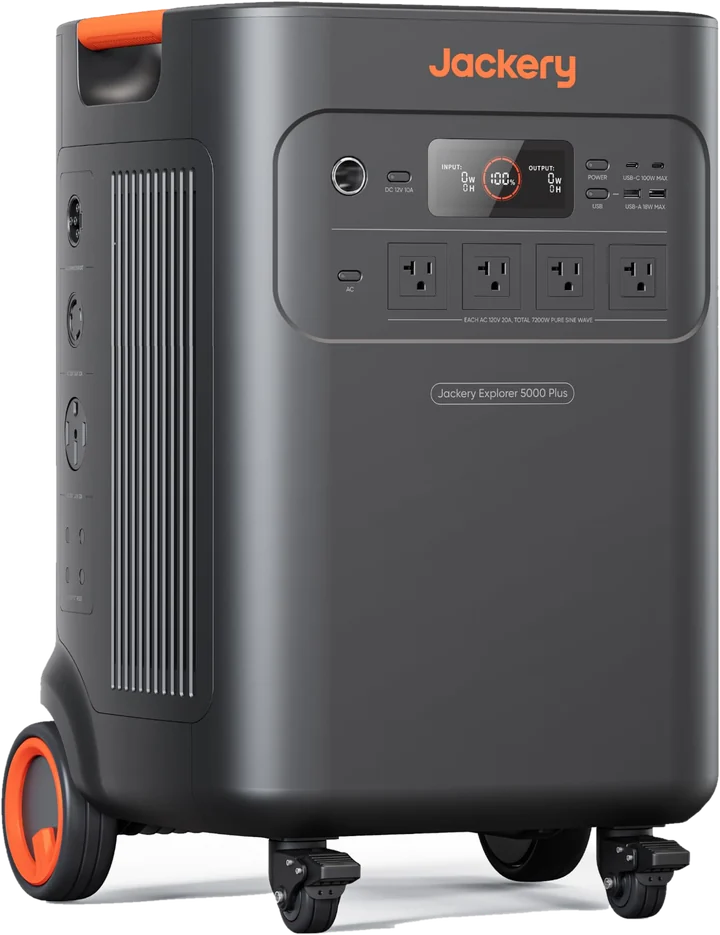
Jackery's box promises
Read the surge figure slowly. The
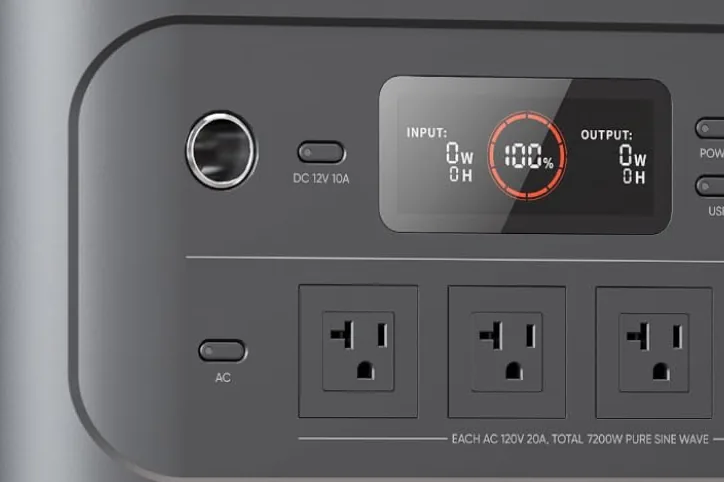
The "0ms" banner is true for the four
Switched on with nothing running, it uses
Two things for your electrician to know. Two testers found its
The one real catch is the generator. Jackery allows
We'd buy it. It runs a whole home's
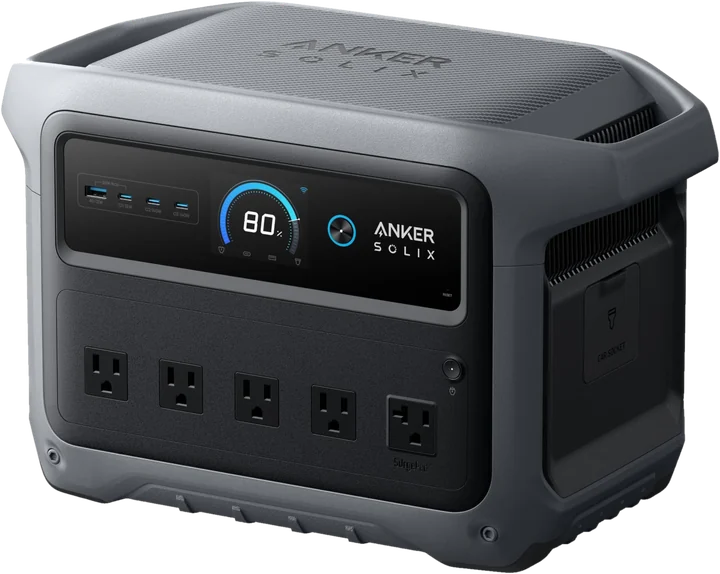
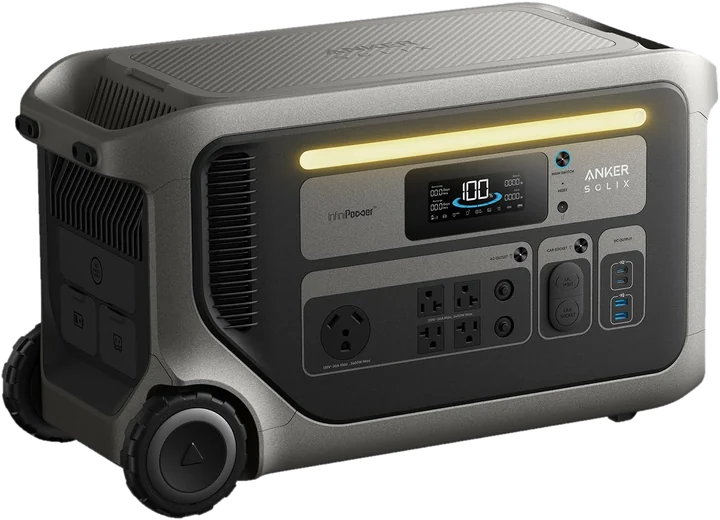
Anker SOLIX F3800 Plus : the right number on paper, no pump on record
Anker's user guide does something we wish every maker did. It states a locked-rotor rating of
The rest of the sheet comes in smaller than the Jackery's. It's rated at
Idle is a better story than it used to be. On its first firmware, a day-long check with nothing plugged in found half the battery gone. Anker then said an update would cut idle use in half. After it, the same tester's day-long check found a quarter gone. At that pace, a full charge projects to about four days of sitting idle. Good on Anker for fixing it rather than arguing.
The honest catch is light loads, which is what a house mostly is overnight. In CNET's refrigerator test, a full-size fridge kept going for
Where it beats the Jackery is generator charging. Its
So it isn't our pick for this house. On what is known today, the Jackery is the battery we'd buy to carry a whole home's
Jackery 5000 Plus vs Anker F3800 Plus : what decides it
| What decides it | Jackery Explorer | Anker SOLIX |
|---|---|---|
| Energy you can actually use | ||
| Steady power at | ||
| Real | None on this model (a | |
| Maker's motor-start rating | None published; | |
| Idle, inverter on, nothing running | Day-long tests: half the battery on launch firmware, a quarter after the update | |
| Left after a day of idling (projected) | Close to what a full Anker delivers | About three quarters of its usable energy |
| Lab fridge test | Not measured on this model | |
| Panel link and switchover | Smart Transfer Switch subpanel; about | Home Power Panel; |
| Neutral and ground | Outputs float (two testers); how it's wired in matters | Not stated by Anker; not measured |
| Charging from a portable generator | ||
| Solar input | ||
| Charging in the cold | Not below | Not published |
| Weight | ||
| Where it lands | Buy View on Amazon | Weighed, not picked |
However either box joins your house, utility co-ops and electrical inspectors agree. It goes through a transfer switch, never a cord with a plug on each end. Power fed back up the line can kill the lineworker fixing it.
Our pick: the Jackery Explorer 5000 Plus
Both are five-year-warranty batteries heavier than most refrigerators. Both bolt into your panel through a transfer switch. At the pace testers measured, both would lose about a quarter of their charge in a day just being on. What separates them is what has been proven. Anker wrote down the number; Jackery went and started the pump. The Jackery holds more, pushes more down each leg, and has run the motors a whole home depends on. For the wider field of panel-connected batteries, see whole house battery backup without solar.
Buy the Jackery Explorer
The evidence in full
Jackery Explorer 5000 Plus (US model JE-5000A): what each source found
| Source | Unit and terms | What it found |
|---|---|---|
| Jackery US manual and FAQ | Maker | |
| The Solar Lab, April 2025 | US unit | |
| The Solar Lab, transfer switch article | US unit | About |
| ReeWray Outdoors, September 2026 | US unit | |
| Herb-O-Matic, October 2026 | US unit | Started an AC compressor and a large air compressor; overload near |
| Will Prowse, November 2024 | US launch unit | Transfer switch took about three seconds, and with the inverter on did not switch at all; app pairing and expansion battery recognition trouble; Tesla connector refused it for grounding |
| GearDiary (M Thorne), September 2026 | US owner, about four weeks; site discloses ad income and supplied products | |
| Snowstead, March 2026 | Sponsored by Jackery | Well pump cycled normally beside a dryer, fridge and lights through a Jackery transfer panel; no pump size or numbers |
| CPSC recall search | Searched | No Jackery recall found |
Anker SOLIX F3800 Plus (US model A1790P): what each source found
| Source | Unit and terms | What it found |
|---|---|---|
| Anker spec page and FAQ | Maker | |
| Anker user guide, May 2025 | Maker | |
| Anker firmware blog | Maker | Update halves idle use; no watt figure |
| Silver Cymbal, April 2025 | Market not stated | |
| The Solar Lab, March 2025 | Market not stated | |
| CNET Labs, July and August 2026 | Firmware not stated | Full-size fridge ran |
| Bertel King, owner of about a year (Yahoo Tech) | Owner | |
| Android Authority, May 2025 | Unit supplied by Anker | Home Power Panel fitted by a certified technician, with his furnace on a backup circuit (no start test reported); rated at |
| CPSC recall listing | Downloaded | No recall names an Anker SOLIX power station |
Where sources disagree
- Jackery transfer switch timing: about three seconds on the launch unit in late 2024, about
20 ms in later tests. GearDiary's owner shows the delay depends on the switch's UPS setting; whether firmware also fixed the launch behavior isn't documented. - Jackery central AC: one 3-ton unit started, one large AC did not. Different compressors, tested 17 months apart, firmware not stated. Open.
- Jackery surge: the
14,400 W claim against9,500 W measured reflects a brief surge test, not a failure of the rating; no test has pushed both legs to their limit at once. - Jackery warranty: the FAQ says extended warranty isn't supported, while the series page lists a 2-year extension fee. Open.
- Jackery hookup with a floating neutral: GearDiary reports that Jackery requires a neutral-switching transfer switch; the Jackery documents in this evidence don't spell out the wiring. Which arrangement suits a given furnace is for the installing electrician. Open.
- Anker generator charging: the footnote says
6,000 W with one or more expansion batteries; testing found it needs two. - Anker idle against fridge overhead: the firmware fix halved idle use, yet CNET's later fridge test still lost 46.63% to overhead. Possible reasons are older firmware on CNET's unit or a fix that only helps at zero load. Open.
- A 2023 whole-house test of the original F3800 (model A1790) started a well pump and a heat pump. It's a different model, with a different charging setup, so we don't count it for the Plus.
What's missing
No clamp-meter peak on any pump start for either unit, and no runtime across pressure-tank cycles. No furnace start on either in the tests weighed for this comparison. No idle test run all the way to empty on either unit, so the days-of-standby figures are projections. No published neutral bonding or cold-charging limit for the
Research count: 2 models weighed; 1 maker manuals among them; across Porchlight's research, 589 sources kept in full.
Sources
- Jackery Explorer
5000 Plus User Manual(US) (opens in a new tab) - Jackery Explorer
5000 Plus product page(US) (opens in a new tab) - Jackery FAQ: Explorer
5000 Plus basicinformation (opens in a new tab) - Anker SOLIX
F3800 Plus specs, comparison andFAQ (opens in a new tab) - Anker SOLIX
F3800 Plus user guide (A1790P, May2025) (opens in a new tab) - Anker:
F3800 Plus standby firmwareupdate (opens in a new tab) - Franklin Electric AIM manual, generator sizing
table (opens in a new tab) CPSC recall search: Jackery (opens in a new tab) CPSC recall listing (opens in a new tab) - DEMCO: Backfeeding, when electricity flows
backward (opens in a new tab) - IAEI Magazine: Winter electrical safety and
generators (opens in a new tab) - CNET Labs: Best portable power
stations (opens in a new tab) - ReeWray Outdoors: Jackery Explorer 5000
Plus (opens in a new tab) - The Solar Lab: Jackery Explorer 5000
Plus (opens in a new tab) - The Solar Lab: What is a smart transfer
switch (opens in a new tab) - Herb-O-Matic: Jackery Explorer 5000
Plus (opens in a new tab) - Will Prowse: Jackery Explorer
5000 Plus (launchunit) (opens in a new tab) - GearDiary: Jackery Explorer
5000 Plus review (opens in a new tab) - Snowstead: whole-house Jackery test
(sponsored) (opens in a new tab) - The Solar Lab: Anker SOLIX F3800
Plus (opens in a new tab) - Silver Cymbal: Anker SOLIX F3800
Plus (opens in a new tab) - Yahoo Tech: one software update fixed the
F3800 Plus 's biggestproblem (opens in a new tab) - Android Authority: Anker SOLIX
F3800 Plus review (opens in a new tab)