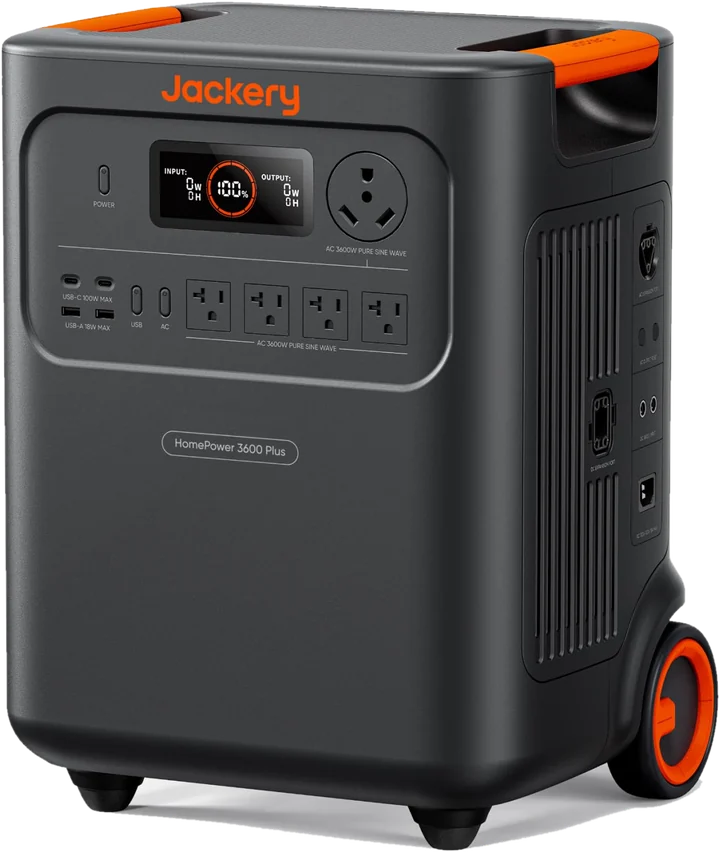
Jackery HomePower 3600 Plus review for home backup: measured against the maker's claims
As an Amazon Associate I earn from qualifying purchases.
Porchlight's call: buy the Jackery HomePower
- Who it’s forHouseholds that need food cold, lights on and
Wi-Fi up through a short outage, all on standard outlets - The catchIt spends a real slice of its battery on itself: idle draw measured at
21–34 W , and the testers disagree
In the evidence table
Open the full row- Idle draw with the AC on
34 W measured- Usable energy, measured
3,201.32 Wh measured- Rated capacity
3,584 Wh claimed- Continuous output (gas: running watts)
3,600 W claimed- Surge (gas: starting watts)
7,200 W claimed240 V output- only with two units paralleledclaimed
- Neutral-ground bond
- not stated by the maker
- UPS switchover
10 ms claimed
Jackery's banner says the HomePower
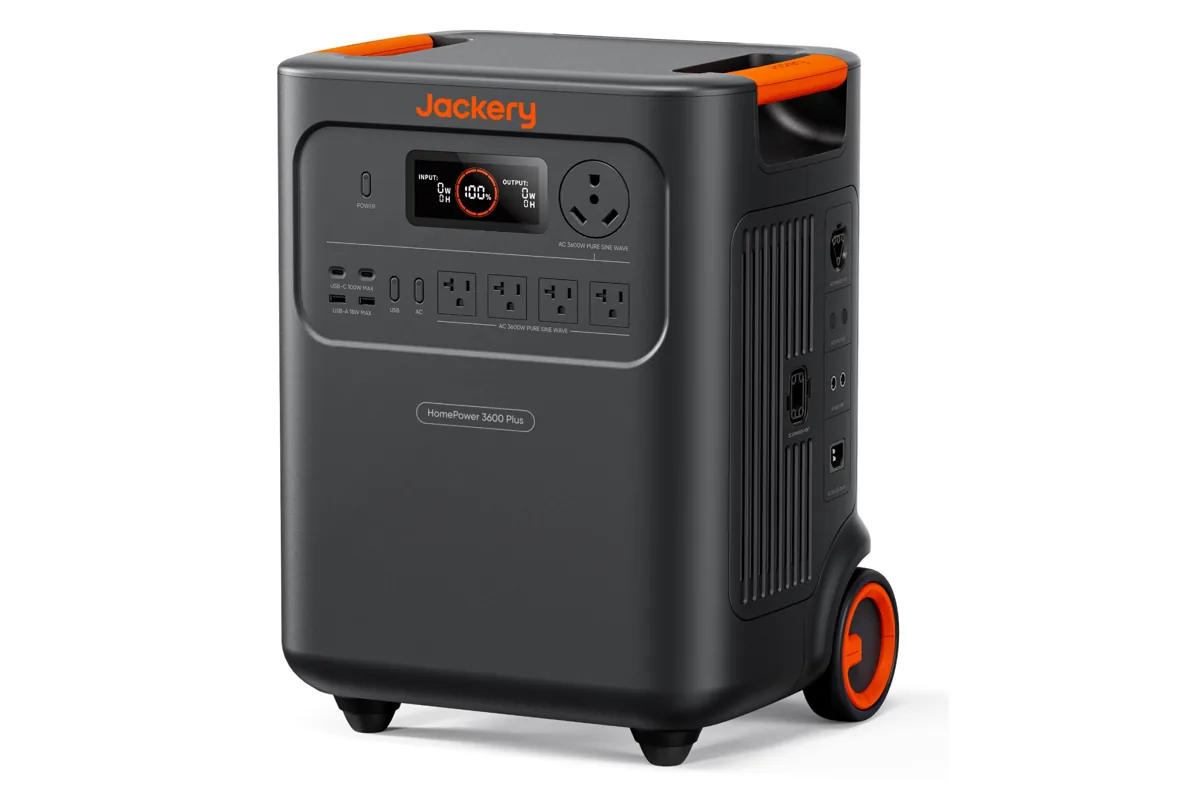
What you get with the HomePower 3600 Plus
It's a
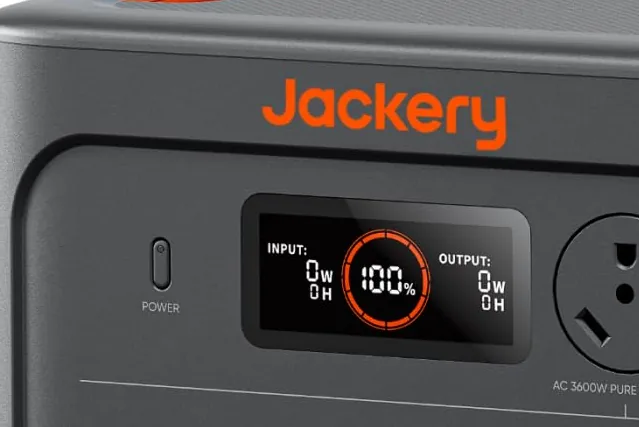
Day to day, it's quiet; a teardown found very quiet fans. The small irritations are a pull handle that doesn't lock when fully extended and no built-in light. You'll notice the second one the first time you hunt for the outlets in the dark. Neither is a reason to pass. For food and essentials through a short outage, it's a buy.
Jackery's spec sheet against the measurements: mostly true, three questions open
Every figure below is for the US model, JHP-3600A. Each row names who checked it and whether Jackery paid.
| What Jackery claims | What testers measured | Who measured, and when | Paid by Jackery? |
|---|---|---|---|
| CNET Labs, Jul 2026 | None disclosed | ||
| HOBOTECH, Sep 2025 | None disclosed | ||
| Adventure Gear TV, Sep 2025 | Yes, sponsored | ||
| Fridge for "up to" two weeks (needs the | CNET Labs, Jul 2026 | None disclosed | |
| The Solar Lab, Oct 2026 | None disclosed | ||
| No idle figure published | The Solar Lab, Oct 2026 | None disclosed | |
| HOBOTECH, Sep 2025 | None disclosed | ||
| Load capped at | Held loads up to | The Solar Lab, Oct 2026 | None disclosed |
| Switches to battery "within | Not timed; a running computer stayed on through a cut | HOBOTECH, Sep 2025 | None disclosed |
| Full wall charge in | CNET Labs, Jul 2026 | None disclosed | |
| About | The Solar Lab, Oct 2026 | None disclosed | |
| Charges down to -4°F, per the manual and US page | Not tested. Jackery's own FAQ, as reported by BackupPowerHub, said not below freezing | BackupPowerHub | Not applicable |
| No round-trip claim | 79.66% of the wall energy comes back out | CNET Labs, Jul 2026 | None disclosed |
The battery figure is the one to trust. Three tests landed within a couple of percent of each other, and only one had Jackery's money behind it. Three gauges reading that close is how I was taught to know a part is to spec. The two-week fridge banner is the opposite: a sedan's range quoted with a fuel truck following behind it.
How long will it run my fridge?
A day and a half and then some, from a full battery. That figure already includes what the box spends on itself, so it's the number to plan around. One charge gets the food through the first night and well into the second day. A couple of hours on the wall, or a sunny afternoon on panels, covers the rest. Your fridge will differ from a test fridge; our measured fridge runtimes show how much.
How much battery does it burn doing nothing?
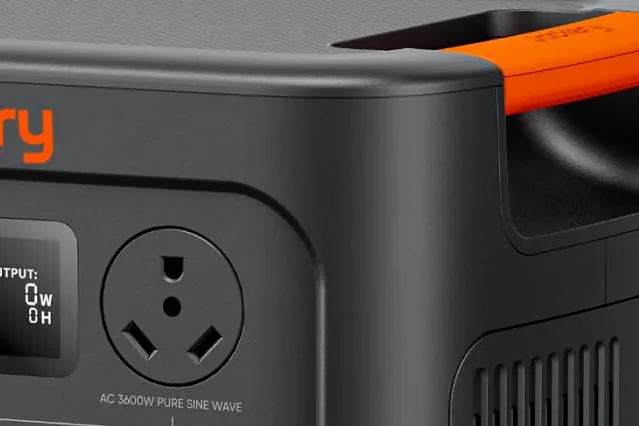
This is the open sore. Idle draw is what the station consumes just keeping its outlets live. The Solar Lab measured
Nobody has settled why the two differ; the testers used different methods a year apart. The cost bites hardest on small loads. Keep only a router and a lamp alive, and the box spends much of its battery on itself.
Will it charge in a freezing garage?
Don't count on it. Jackery's manual and US page say it charges down to -4°F. That would be unusual, because this battery chemistry normally refuses a charge below freezing. BackupPowerHub reports that Jackery's own FAQ for this model gave freezing as the floor. That page now returns an error, and nobody has tested the unit cold. When a supplier hands me two specs for the same part, I build to the tighter one. We'd treat this box as charging only above freezing until Jackery says otherwise in writing.
Will it start a motor, and how much can it run at once?
On battery, it's strong. Its
The catch is on wall power. While it's plugged in and passing grid power through, everything on it shares
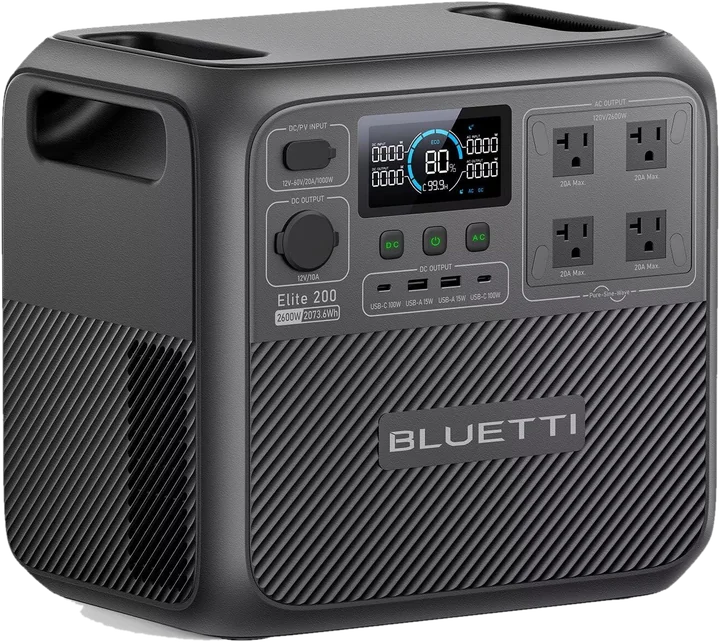
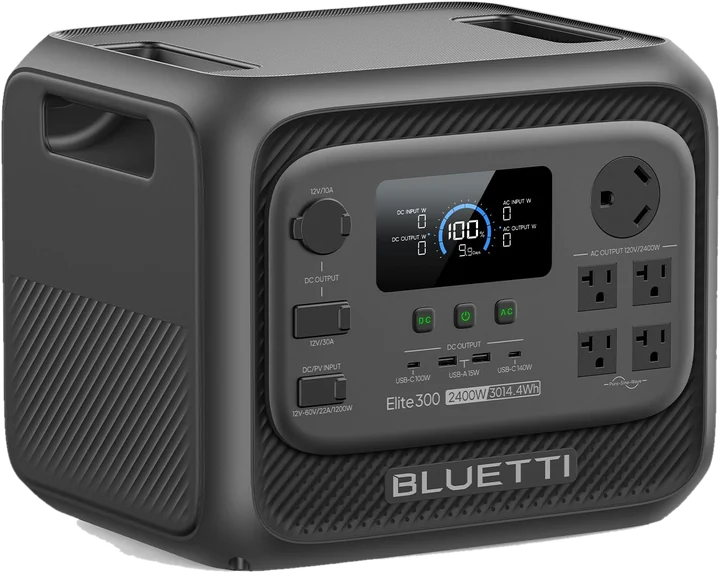
Nobody has tried a sump pump on it. If a pump guarding the basement while nobody's home is your worry, our backup power for a sump pump page picks the BLUETTI Elite 300 for that job.
Will it keep the Wi-Fi up when the power blinks?
Very likely. Jackery promises a switch to battery within
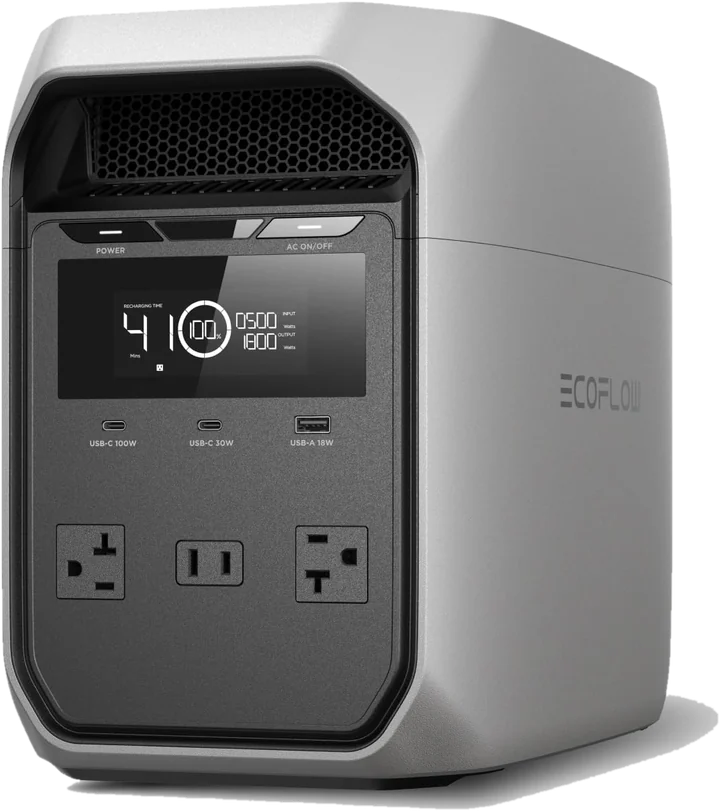
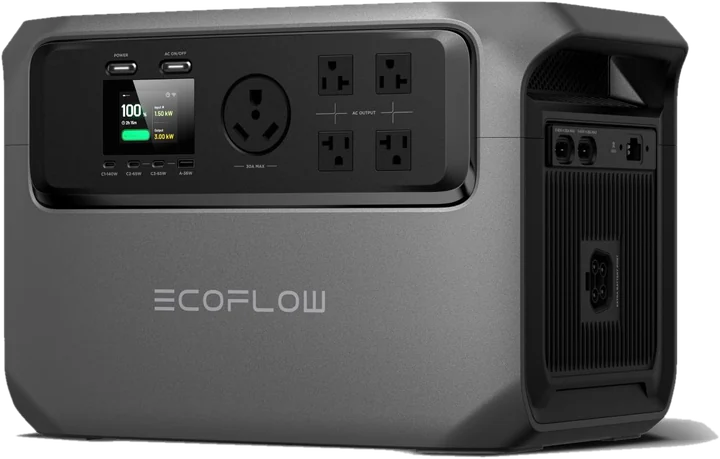
If your outages are measured in hours and the router and the home office are all you're protecting, this box is more than you need. For that household, our budget power station roundup picks the EcoFlow DELTA 3 Classic, which rides through the blinks and refills fast. The
One setting matters. Energy Saving Mode comes switched on. The manual says it cuts the outputs once
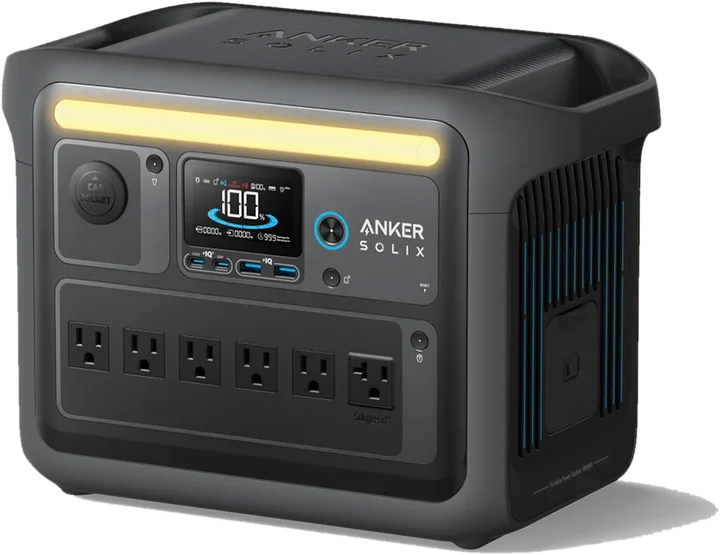
A CPAP is where the size of this box decides things, and it depends on what the fridge asks of the same battery. If the CPAP is the main job and the fridge only gets what's left over, our home page picks the BLUETTI Elite 300. If a full-size fridge has to run full-time beside the CPAP through a multi-day outage, our power station for a CPAP machine page picks this one. When the CPAP sits alone at the bedside, a box this heavy is overkill. Our Anker SOLIX C1000
Will it run my well pump, central AC or gas furnace?
Not from one unit, unless your well pump runs on standard outlet power. A single box supplies only that, not the higher household voltage most central AC and many well pumps need. Two units joined by a connecting cable supply that higher voltage. But the manual says a paralleled pair can only recharge from solar. Nobody has started a pump or an air conditioner on one.
If your pump's label reads 115 or
A gas furnace is a question we can't answer for this unit. Jackery doesn't say whether neutral and ground are bonded on this model. Furnace control boards can refuse to light without that bond, and nobody has tried a furnace on it. What we'd buy instead depends on how your furnace is connected:
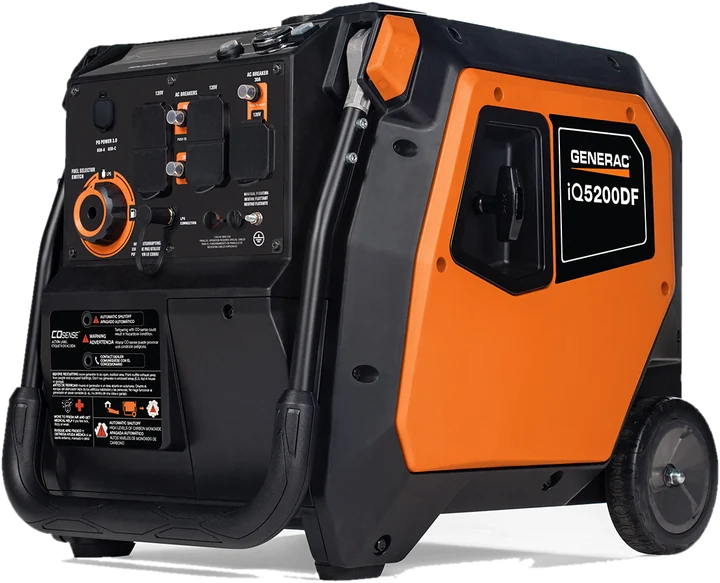
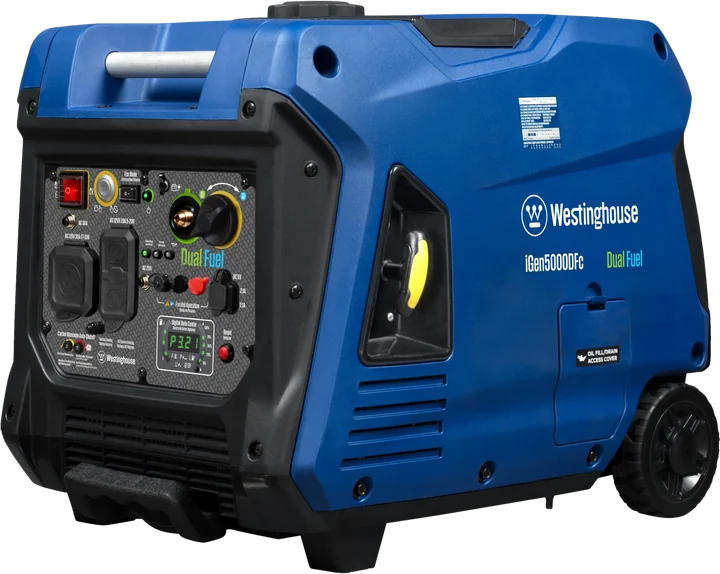
- Wired into the breaker box, with an electrician adding a power inlet on the outside wall and an interlock on the panel, in a state other than California: our backup power for a gas furnace page picks the Westinghouse iGen5000DFc generator.
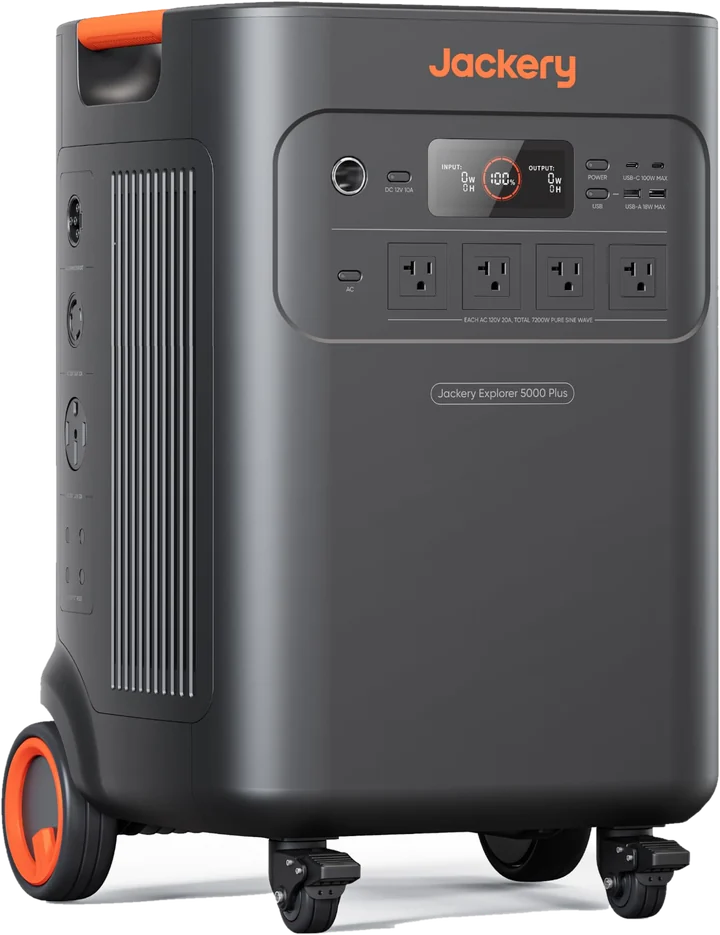
- Kept on battery through an interlock: our generator interlock vs transfer switch guide picks the Jackery Explorer
5000 Plus . - Plugged straight into a generator on a cord: we have no pick for that setup at the moment. The same gas furnace page explains the neutral-ground question that decides which generators will light it.
Is it safe, and will the warranty cover me?
The CPSC's database showed no Jackery recall when we searched on November 13, 2026. Two things deserve plain words.
- Medical equipment: Jackery's brand-wide FAQ advises against relying on its stations to power medical or life-support devices. If someone's breathing depends on it overnight, take that seriously.
- Warranty: the manual gives five years (three, plus two on registration), for the original buyer only. It covers only units bought from Jackery, a Jackery-branded store on another platform, or an authorized dealer. On Amazon, make sure the seller is Jackery's own storefront.
One trust note: The Solar Lab found Jackery's product page listing a smaller inverter than the one on the label. A maker underselling itself is a novelty, but it's still a reason to trust the manual over the web page.
Should you buy the Jackery HomePower 3600 Plus ? Yes, for food and essentials through a short outage
The battery holds what the label says, less about a tenth. It kept a test fridge running past the thirty-eight-hour mark and refills from the wall in about two and a half hours. It also rolls to where you need it. The idle appetite is the price, and for a one-to-three-day outage it's worth paying. The banner oversells it. The battery inside doesn't.
What would change our mind is something we can't see yet: owners in numbers. Our owner evidence is one sponsored video, so a pattern of failures would reach us late.
Two households want something else. Renters who haul a battery up a walk-up alone, and whose outages are usually over by the next morning, get a lighter pick in our best portable power station for home backup roundup: the Anker SOLIX C2000
Weighing it against EcoFlow's big unit? EcoFlow vs Jackery for home backup puts them side by side. You can add up your own essentials in the home backup power calculator and see whether this battery covers them.
Buy it if your outages last a few days at most and the fridge, the lamps and the router are what must stay on.
The evidence in full
What this review covers: the US HomePower
- the Red Cross Edition (Jackery doesn't state its hardware differences);
- the HomePower
3600 Pro Max, a different model; - the HomePower 3000, the smaller predecessor.
No FCC ID was found, either printed in Jackery's documents or by a search on the model code. No firmware versions were stated by any tester.
Jackery manual, on UPS use: it says the unit does not support zero-gap switching. It tells owners to test compatibility several times and to connect one device at a time.
CNET Labs (Jul 2026, US):
3,201.32 Wh of usable "active energy" from a full charge.- 79.66% round-trip efficiency.
- A test fridge ran
38.58 h , with CNET counting the station's own overhead as part of that run. - Full wall charge in
2.52 h .
CNET's method page wasn't found, and the load used for its capacity test isn't stated.
The Solar Lab (Oct 2026, US):
- 89% inverter efficiency.
- About
34 W idle with the inverter on and no load. The method isn't stated. - Surged to
5,900 W several times without tripping and didn't reach7,200 W . Its load may not have gone higher. - Bypass (UPS) mode held up to
1,400 W , consistent with the1,440 W limit in the manual. - Wall charge in about
2.5 h ; full from solar in about four hours on a1,000 W array in clear sun. - Found Jackery's runtime calculator accurate.
- Its own arithmetic puts a fully expanded system's fridge time at about nine and a half days, not two weeks.
- Noted the non-locking handle, the missing light and the web page's understated inverter figure.
HOBOTECH (Sep 2025, US, launch unit):
3,240 Wh in an AC capacity test.- About
21 W idle, worked out from the battery display falling over a full day with the inverter on and no load. A whole-percent display makes this a coarse estimate. - Carried a heavy load without tripping.
- A running computer stayed on when wall power was pulled and restored.
- The output passed an audio interference test for clean power.
Mike Builds (Jun 2026, US):
- The display showed
1,655 W drawn from a household outlet while charging. - A French-door fridge ran more than a day with about a fifth of the battery left.
- Started a large air compressor ("struggled a little bit") and ran two compressors at once.
- Overloading two outlets tripped their outlet breakers.
- The teardown showed very quiet fans.
Adventure Gear TV (Sep 2025, sponsored by Jackery):
3,270 Wh into a heat gun, run to shutdown.- Traced the two-week fridge banner to the fully expanded
21 kWh system. - Did not actually test UPS switchover.
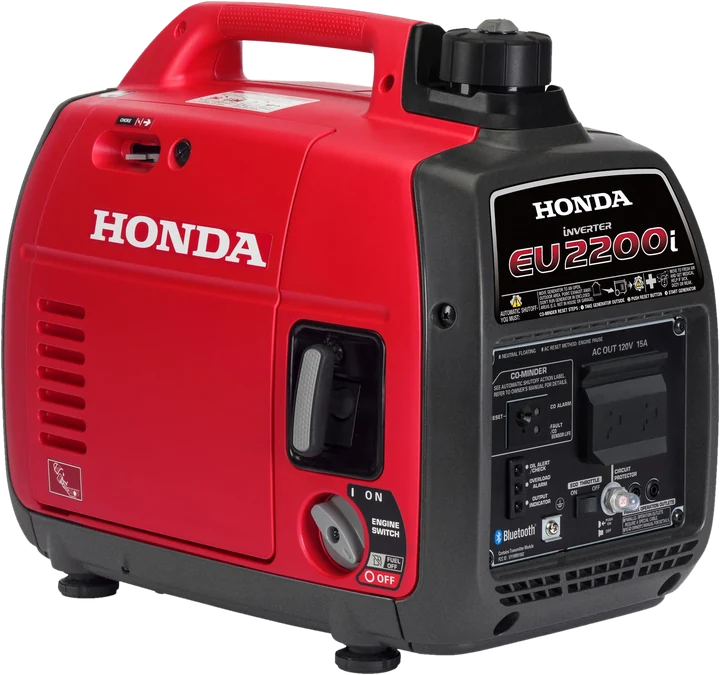
Ruby's Adventures Unplugged (Aug 27, 2026, affiliate links) ran the unit for a day in an RV with a fixed load profile and a small propane inverter generator:
- Paired with the
3600 Plus , the generator ran6 h 2 min on an estimated7.5 lb of propane. Running the generator alone took24 h and a measured29.9 lb . - A solar panel stayed connected throughout, which flatters every hybrid figure. The hybrid propane numbers are the tester's estimates.
- This is a pace measured in one RV, not a rundown of the battery, and it tests none of Jackery's claims.
Joe The Farmer (Jun 2026, sponsored by Jackery) gives a single owner's account of a five-day ice-storm outage, running the unit through a panel interlock. One night on camera it carried two refrigerators, a deep freezer, the lights and the internet. He credits the wheels with letting his household move it. It is one home, and it is sponsored.
Disagreements that don't change the call:
- Idle draw (
21 W against34 W ): open. The likely causes are method (display reading against an unstated method) and possibly the unit or firmware, since the tests were a year apart. - Surge: open. The test may not have loaded the inverter far enough to reach the claim.
- Cold charging (-4°F against freezing): open. The FAQ that BackupPowerHub cites now returns an error, so it can't be checked.
- Expansion size: Jackery's page and The Solar Lab describe the same six-battery system, one rounded and one not. Settled.
- Load level: heavy-load capacity tests tend to flatter runtime at the light loads typical of home backup. That's why we plan around CNET's fridge run rather than the capacity figures alone.
Still unmeasured on this unit:
- Owner reports at scale: Reddit couldn't be gathered for this review.
- UPS switchover time in milliseconds.
- A sump pump start.
- Neutral-ground bonding, and whether it will light a furnace.
- A paralleled pair running a well pump or central AC at the higher voltage, including the per-line limit when paralleled.
- A cold-charging test on this unit.
Research count: 1 models weighed; 1 maker manuals among them; across this site's research, 589 sources kept in full.
Sources
- Jackery HomePower
3600 Plus user manual(JHP-3600A) (opens in a new tab) - Jackery HomePower
3600 Plus US productpage (opens in a new tab) - Jackery Explorer
5000 Plus page (brand-wide medical-useFAQ) (opens in a new tab) - CPSC recall database, searched for
Jackery (opens in a new tab) - CNET Labs: best portable power
stations (opens in a new tab) - The Solar Lab: Jackery HomePower
3600 Plus review (opens in a new tab) - HOBOTECH: HomePower
3600 Plus tests(YouTube) (opens in a new tab) - Mike Builds: HomePower
3600 Plus tests and teardown(YouTube) (opens in a new tab) - Adventure Gear TV: HomePower
3600 Plus (YouTube, sponsored byJackery) (opens in a new tab) - Ruby's Adventures Unplugged: generator hybrid run
(YouTube) (opens in a new tab) - Joe The Farmer: five days without power (YouTube, sponsored by
Jackery) (opens in a new tab) - BackupPowerHub: power stations in freezing
temperatures (opens in a new tab)