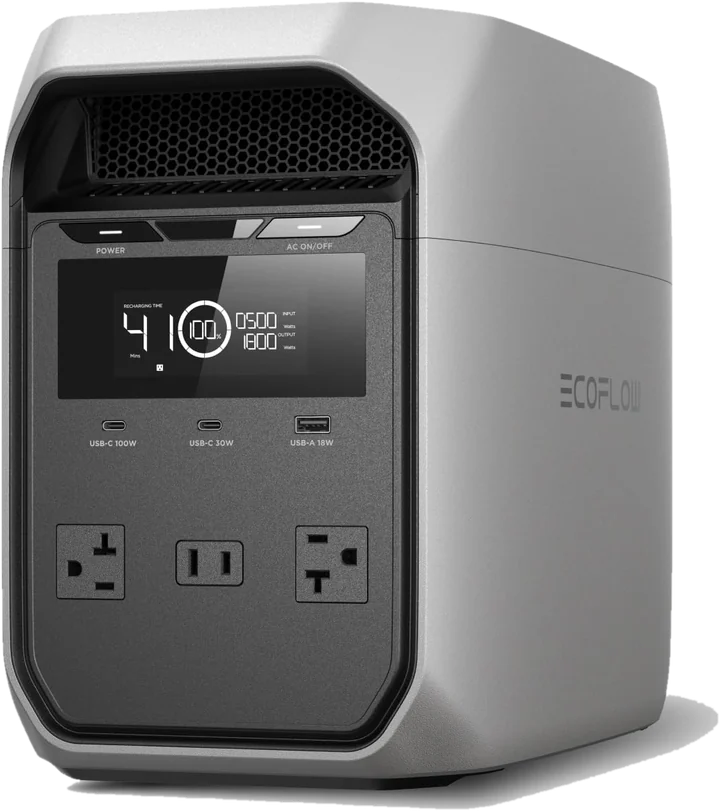
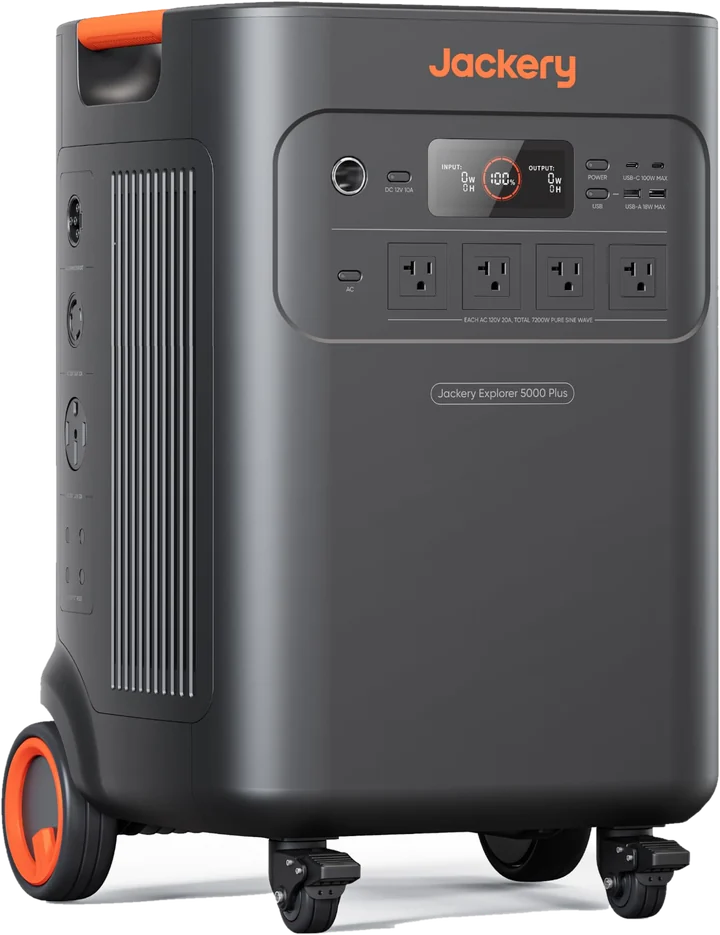
EcoFlow DELTA 3800 Gen4 review for home backup: measured against the maker's claims
As an Amazon Associate I earn from qualifying purchases.
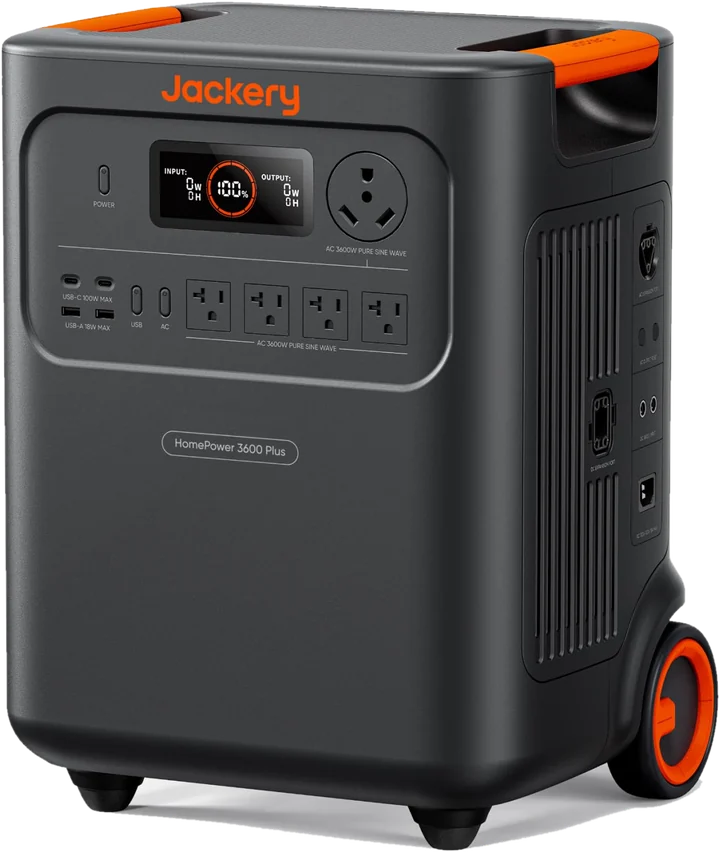 Jackery HomePower
If you need a station before the next storm rather than after the first lab test, buy the Jackery HomePower
Porchlight's call: wait. The DELTA 3800 Gen4's early fridge and idle numbers are strong, but both come from EcoFlow-supported launch videos and one unit shut down below its rating. Wait for an independent lab and the first owners after late-November shipping.
- Who it’s forA US household weighing a big
120 V box for fridge, lights andWi-Fi that can wait for independent tests - The catchIts only measurements are two EcoFlow-supported launch videos, and its
30 A outlet shut down below the rated load on one unit
In the evidence table
Open the full row- Idle draw with the AC on
11 W measured- Usable energy, measured
3,330 Wh measured- Rated capacity
3,763 Wh claimed- Continuous output (gas: running watts)
3,600 W claimed- Surge (gas: starting watts)
7,200 W claimed240 V output- 120V onlyclaimed
- Neutral-ground bond
- not stated by the maker
- UPS switchover
- <
10 ms claimed
The DELTA 3800 Gen4 reached the US in November with a launch-week result any fridge owner will notice: about
EcoFlow DELTA 3800 Gen4: what's promised and what was measured
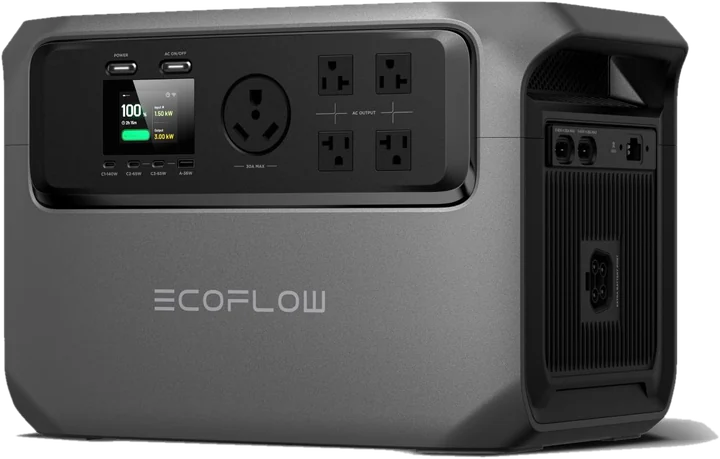
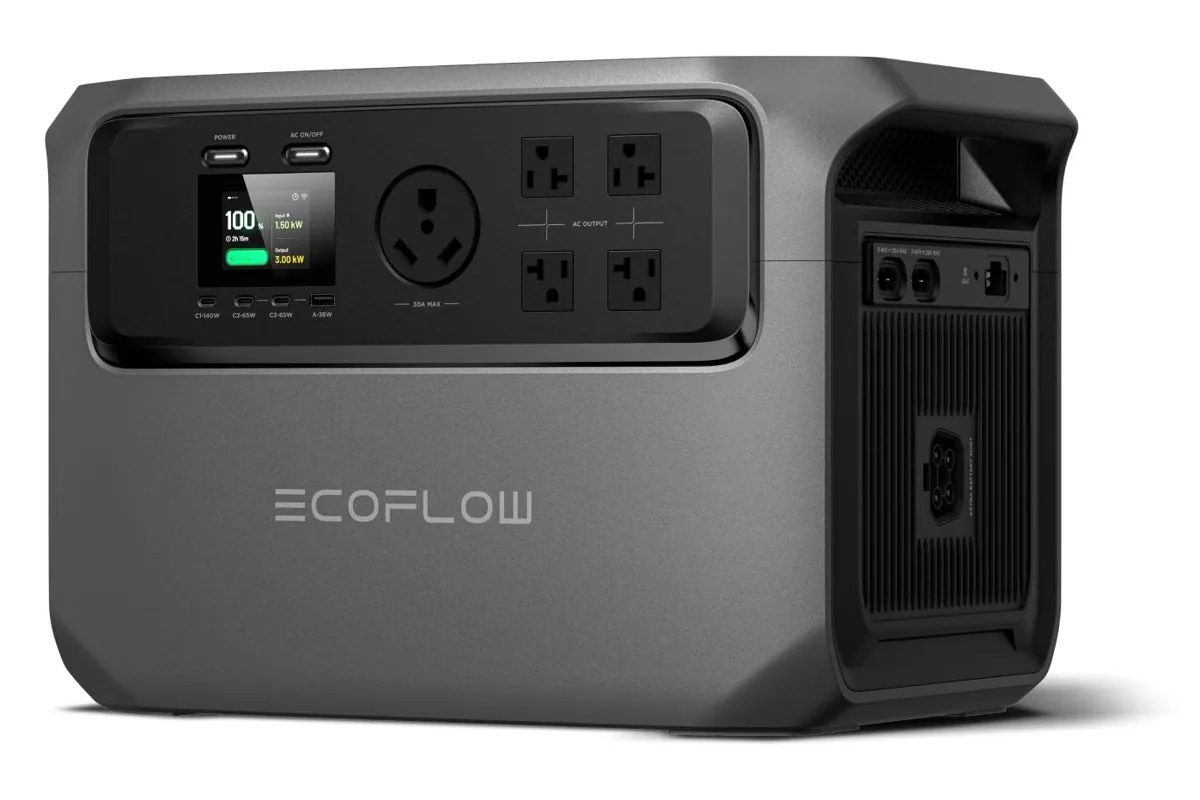
The DELTA 3800 Gen4 is a
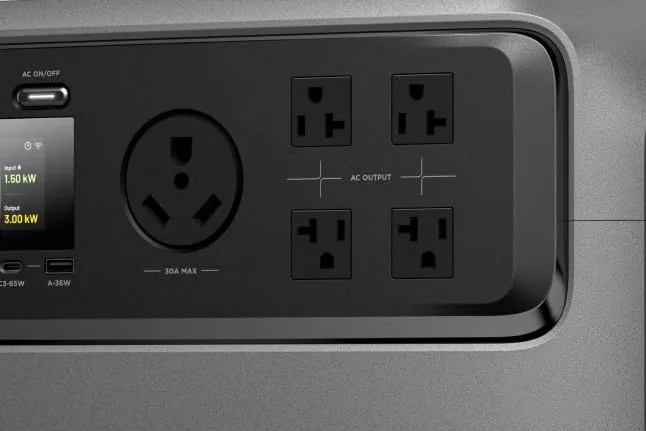
Don't confuse it with the smaller DELTA 3000 Gen4 sold beside it. That box has a smaller battery and no extra-battery port, and none of the measurements on this page came from it.
Here is every claim on record for the exact US unit (EFDELTA3800G4-US), set beside what testers measured and who backed each test.
| What you're promised | EcoFlow's figure | What was measured | Measured by, when | Who backed the test |
|---|---|---|---|---|
| Energy you can actually use | HOBOTECH, launch day, Nov 2026 | Probably an EcoFlow-supplied unit; affiliate links and an EcoFlow discount code | ||
| A full-size fridge | About | Outdoor Prepper, Nov 8, 2026 | EcoFlow tagged, EcoFlow discount code | |
| Cost of leaving the outlets on | About | HOBOTECH, Nov 2026 | As above | |
| Continuous output | Held | HOBOTECH, Nov 2026 | As above | |
| Noise at full load | About | HOBOTECH, Nov 2026 | As above | |
| Switch to battery when the grid drops | Under | A desktop PC stayed on; switch time not measured | HOBOTECH, Nov 2026 | As above |
| Surge for motor starts | Not measured | Nobody yet | ||
| Neutral-ground bond (matters to some furnaces) | Not stated | Not measured | Nobody yet |
Where testers checked the claims, most held or came close, and on idle draw the unit beat its own box. That deserves credit. But both witnesses are friendly ones. No independent lab had published a test by November 13, there are no owner reports yet, and EcoFlow hasn't posted a US manual.
How long will it keep my fridge cold?
Close to three days on one charge, on the only real-world test so far. EcoFlow's 70-hour figure came from an empty fridge, which is the refrigerator version of quoting a pickup's mileage with nothing in the bed. The measured run used a full-size household fridge, opened often, with several defrost cycles thrown in. It still lasted about
In the same EcoFlow-tagged video, that was almost a day longer than Jackery's HomePower
If your outages are usually over by breakfast, you're paying for days you won't use. For a single night of cold food,
Some blackouts end before the ice cream in the freezer starts to soften. If yours are like that, and the router and the home-office desk are what you can't do without, our budget roundup sends you elsewhere. Its choice is EcoFlow's little DELTA 3 Classic, a different and far smaller model, and nothing measured on this page applies to it.
Will the 30 A outlet carry a full load?
Not on the one unit that has been pushed. With everything on the
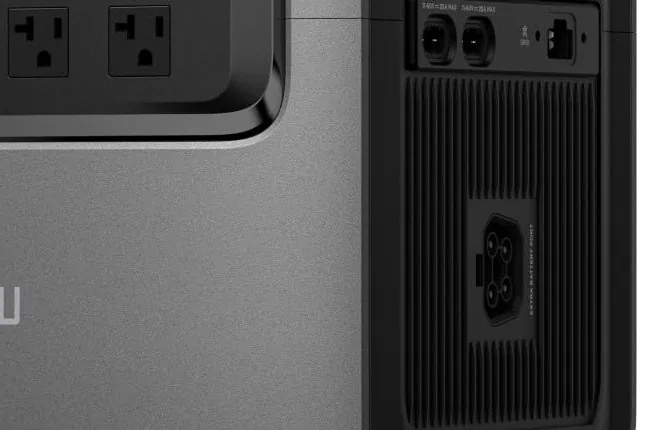
It's annoying, and it won't touch a home running a fridge and a few lamps. It matters if you planned to send a heavy load down one cord, a route nobody has tested on this box yet. In my old trade, a part that passed once, on a rig its supplier paid for, hadn't passed. It had auditioned.
If what you really want is the house's ordinary
What does it cost just to leave it switched on?
Less than EcoFlow says, which is a sentence we don't get to write often. Over a full day with the outlets live and nothing plugged in, it used 7% of its battery, about
Is it quiet enough to live with indoors?
Probably at the loads a real outage runs, though nobody has checked. EcoFlow claims
Can it keep a computer or CPAP running when the power cuts?
A computer, yes, on the evidence so far. A desktop PC and monitor stayed on when wall power was cut while the station was charging, though nobody has timed the switch.
For medical equipment, read EcoFlow's own store page. It says this is not a professional zero-delay UPS and is not recommended for life-support or first-aid equipment such as ventilators. We'd take the maker at its word.
If what really keeps you up is a sleep-apnea machine, buy for that job rather than for this page's fridge-first outage:
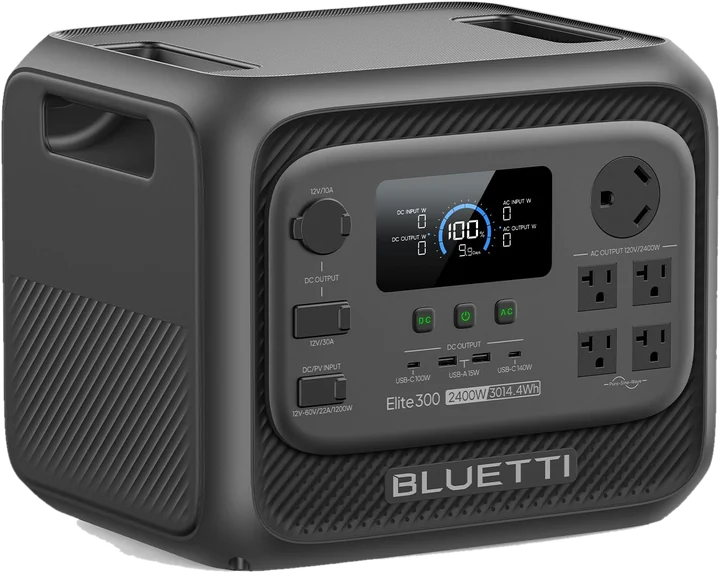
- Our home page chooses the BLUETTI Elite 300 to keep watch over a CPAP or a sump pump, with power left over for the fridge.
- For one or two dark nights with only the machine and the
Wi-Fi , our CPAP guide also backs Anker's SOLIX C1000Gen 2 , a box small enough to sit beside the nightstand. - Where the breathing machine and the fridge must share one battery, that guide's choice is the Jackery HomePower
3600 Plus .
Will it run my well pump, central AC or gas furnace?
Not if the appliance sits on a double-pole breaker in your panel. This station puts out
If the deep-well pump and the air conditioning are the whole reason you're shopping, this is the wrong box. For a household that wants one battery to start those big split-phase loads through a transfer switch, our home page names the Jackery Explorer
A gas furnace's blower is a small load, so power isn't the question. Wiring is. Furnace control boards can be fussy about how their power source is grounded, and EcoFlow is silent on how this unit ties its neutral to ground. Nobody has run a furnace on it yet.
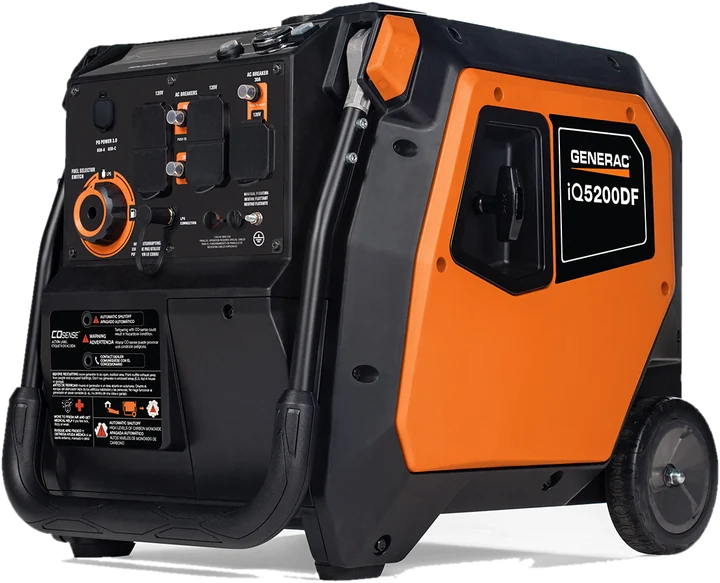
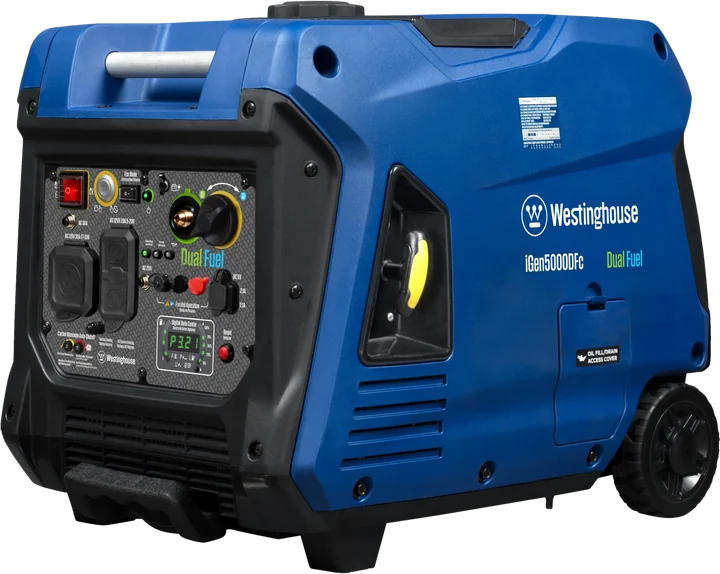
If keeping the furnace lit is the whole job, our gas-furnace roundup answers with an engine rather than this battery. Its pick is the Westinghouse iGen5000DFc, feeding the furnace's circuit from outside through a wall inlet and a breaker lockout in the panel. Households that would sooner run the furnace, along with the heavy split-phase loads, from a battery than an engine get a different answer. For them it's the Jackery Explorer
Is it a pain to move and charge?
To move, yes. It weighs
Charging is quick: up to
EcoFlow's store page sets three limits:
- It won't charge below
32 °F , though it will keep powering things down to14 °F , so an unheated garage in January is the wrong home for it. - It can't charge while switched off.
- Automatic generator start works only with EcoFlow's own Smart Generator, connected through the extra-battery port.
Some households plan to ride out a week-long outage by topping a battery up from their own
Should you buy the DELTA 3800 Gen4 now?
Not yet. The early numbers are strong and mostly honest. But they rest on two launch videos, both backed by EcoFlow, and one of those videos found a fault. That's below our bar for recommending anything. On safety, the CPSC database lists no recall for this model, and EcoFlow's one recall there covers a different, older station.
Four things would change our mind:
- An independent lab confirming the usable energy and the idle draw.
- A retest showing the
30 A outlet carries its full rating on shipping firmware. - A US manual that says how the outlets are grounded.
- A few weeks of owners living with it through real outages.
If those land the way the launch videos did, this is the one to watch for a fridge-first outage. If you buy anyway, EcoFlow's store page says registering in its app or on its website stretches the 3-year warranty to 5 years.
Our call for the DELTA 3800 Gen4 is wait, and that call is for the reader who can afford to. If you need a station before the next storm rather than after the first lab test, buy the Jackery HomePower
What to do before the next outage
If outage season is already at your door, don't sit in the dark waiting for a lab report. Run your appliances through the calculator first to see how many hours you need. Then buy the Jackery HomePower
If you can wait, check back once units have been in homes for a few weeks after late-November shipping and the first independent tests are out. Right now the DELTA 3800 Gen4 has a good story and two friendly witnesses. We'd like to hear from a stranger.
The evidence in full
Everything here concerns the exact US unit, EcoFlow SKU EFDELTA3800G4-US.
EcoFlow's US store page went up on November 4, 2026, the day US pre-orders opened. Popular Science reports shipping in late November, and the unit launched in Japan on October 30.
The Tech Specs list
HOBOTECH tested a US
- A steady AC discharge at a moderate load delivered
3,330 Wh , 88% of rated. - Left for a full day with the inverter on, nothing plugged in and Fridge Runtime Boost enabled, it used 7% of the battery, about
11 W . The display rounds to whole percents, so the true draw could be slightly higher, still under EcoFlow's claim. - With everything on the
30 A outlet, it shut down with an "unknown error" after about a minute just short of3,600 W , and again at a slightly lower load. With the load split across outlets, it held3,600 W for10 min . - Noise reached about
56 dB at3.3 ft (1 m) after10 min at full load. Room acoustics and ambient temperature weren't stated. EcoFlow's50 dB claim is at the same distance, at room temperature. - A PC and monitor kept running when wall power was cut while the station was charging hard from the wall. The switch time wasn't measured.
- The tester's own check showed a clean sine wave under load.
- The bundled solar lead is a proprietary-to-XT60 adapter, and no MC4 adapter comes in the box.
Outdoor Prepper published its test on November 8, 2026. EcoFlow is tagged in the description, which also gives an EcoFlow discount code.
- A full-size household fridge with an inverter compressor ran about
66 h from 100% to 0%. The door was opened often, and several defrost cycles happened during the run. - The fridge drew modestly while cooling and roughly double that during defrost.
- In the same video, the same fridge ran for almost a day less on a Jackery HomePower
3600 Plus . - The transcript describes Fridge Runtime Boost before the test but never says outright that it was switched on.
Where claim and measurement disagree:
| Point | EcoFlow's claim | Measured | Status |
|---|---|---|---|
| Idle draw | About | Explained: Fridge Runtime Boost was on, and the display rounds to whole percents | |
| Fridge runtime | Explained: door openings and defrosts in the real test | ||
| Noise at full load | Partly explained: test conditions not fully stated | ||
| Output on the | Shutdowns just short of | Open: one unit, one test, possibly early firmware | |
| Capacity | "3800" in the name | Explained: the name rounds up |
Claims nobody has measured yet:
- The
7,200 W surge. - The
4,600 W X-Boost, which EcoFlow says is unavailable while grid-connected. - The
3 W standby, whose 52-day figure EcoFlow itself calls a theoretical calculation. - The
30 dB light-load noise figure. - Cells keeping 70% after 6,000 cycles. That's EcoFlow's lab figure, from cell-level
UL 9540A testing, and noUL 9540 system listing is claimed. - The under
10 ms switch time.
No independent lab (CNET, Consumer Reports, Wirecutter, The Solar Lab) had published a test by November 13, 2026. Backup Power Hub's write-up states it had not had a unit in hand. No owner reports were read: the unit had barely begun shipping, and our attempt to read owner forums failed.
Nobody has yet tested:
- Furnace starts, or how the neutral is grounded.
- Well-pump or compressor starts.
- Sump-pump switchover.
- An inlet or transfer-switch route through the
30 A outlet. - Generator auto-start.
No pass-through limit is published for the US unit.
A usable-energy figure taken at a moderate, steady load can flatter runtime at the light loads of a real outage, because an inverter loses a larger share of its energy when lightly loaded. For a fridge-first home, the 66-hour fridge run is the more direct guide.
The CPSC database search for EcoFlow returns one recall, 26-010, from October 2025. It covered about 25,030 DELTA Max 2000 (EFD310) units after six fires, and the remedy was a firmware repair. No recall names the DELTA 3800 Gen4.
HOBOTECH and Outdoor Prepper both tested the DELTA 3800 Gen4 itself. No result from these look-alikes was carried over to it:
- The DELTA 3000 Gen4, which has a smaller battery, one solar input and no extra-battery port.
- The DELTA Pro 3, EcoFlow's larger split-phase model.
- The DELTA 3 Classic.
- The previous DELTA 3 Ultra generation.
Research count: 1 models weighed; 0 maker manuals among them; across this site's research, 589 sources kept in full.
Sources
- EcoFlow DELTA 3800 Gen4, US store page, Tech Specs and
FAQ (opens in a new tab) - EcoFlow DELTA 3800 Gen4, US store
page (opens in a new tab) - CPSC recall database search:
EcoFlow (opens in a new tab) - CPSC: EcoFlow Technology Recalls Delta Max 2000 Power
Stations (opens in a new tab) - HOBOTECH: EcoFlow DELTA 3800 Gen4 launch test
(YouTube) (opens in a new tab) - Outdoor Prepper: DELTA 3800 Gen4 fridge runtime test
(YouTube) (opens in a new tab) - Popular Science: EcoFlow DELTA
Gen 4 portable powerstations (opens in a new tab) - Backup Power Hub: DELTA Gen4
overview (opens in a new tab)