Best backup power for well pump: which boxes start a 240 V pump, checked against Franklin's sizing
As an Amazon Associate I earn from qualifying purchases.
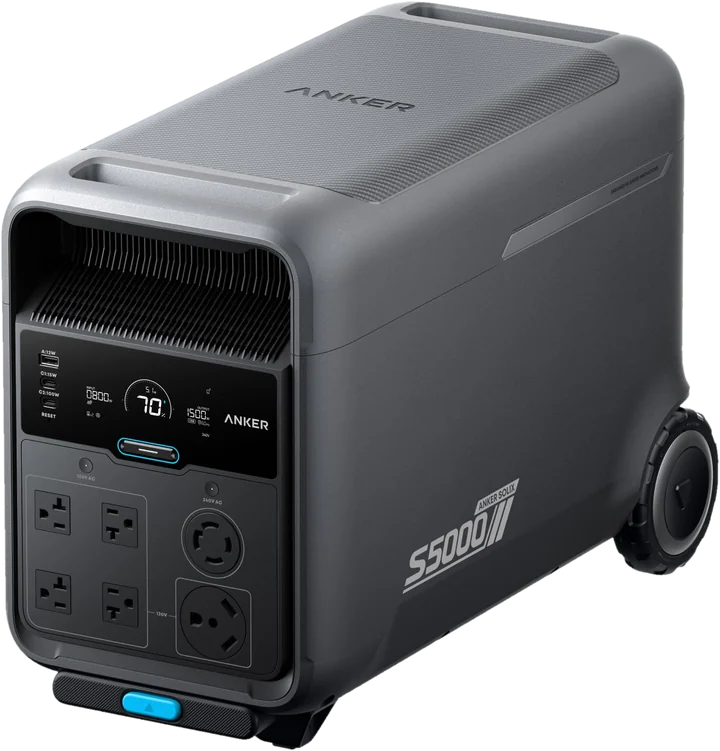 Worth watching for a
240 V pumpAnker SOLIX S5000
Porchlight's pick for a well pump is the Jackery Explorer
On a well, a power cut is also a water cut. No shower, no flush, no glass of water at 3 a.m. The cruel turn: most big batteries sold as home backup can't fix it, however much they hold. Most deep submersible pumps want
What changes the answer for a well home
Look at your pump before you look at any box. Four things decide this page.
- Its voltage. A 230 or
240 V pump can't run on a120 V station, whatever its battery. If the label says 115 or120 V , see our120 V pick below. - Its size and wiring. Horsepower sets how hard the start is. A two-wire pump (no separate control box) needs half as much again as a three-wire one.
- How long you need water. A battery switches over in a blink and makes no fumes. But it is a bucket, not a well: once empty, it needs the wall, the sun or a generator. A generator runs as long as you feed it, outdoors, with its noise and carbon monoxide.
- The per-leg limit. A power station builds
240 V from two120 V halves, each with its own limit. A240 V pump starts through both at once, so that per-half limit is the real ceiling. It is rarely the number on the box.
If the well isn't your worry and you only need the fridge, lights and
Best overall for a 240 V well pump: Jackery Explorer 5000 Plus
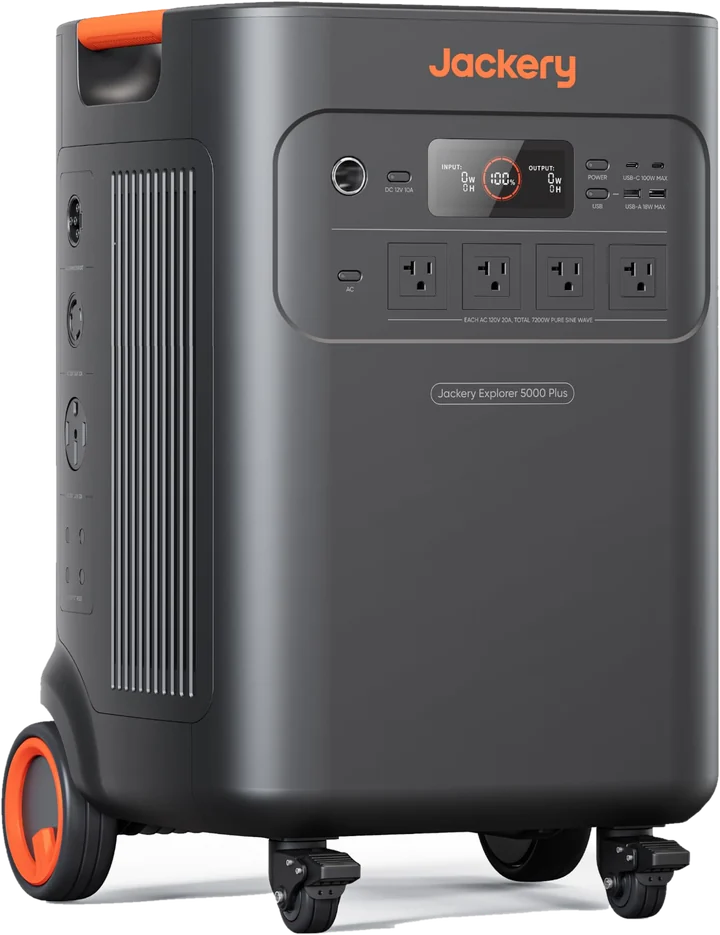
Jackery prints
What settles it is a real well. In one home, written up by GearDiary, a
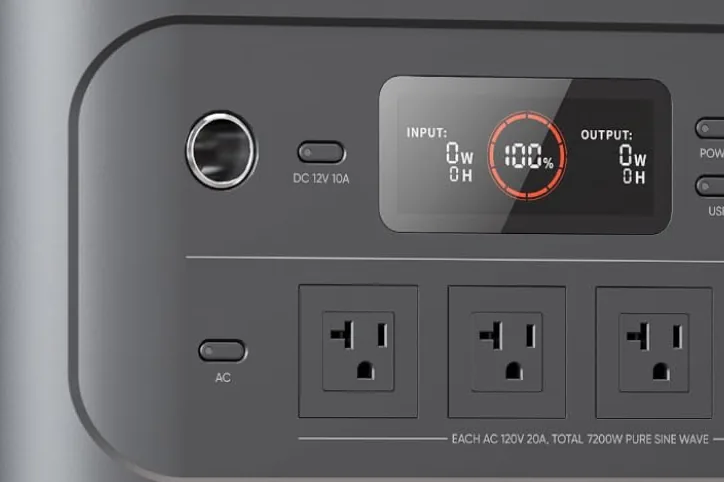
At
The catch is the standing charge. Jackery lists
We'd buy it for a
Best for a smaller 240 V pump: BLUETTI Apex 300
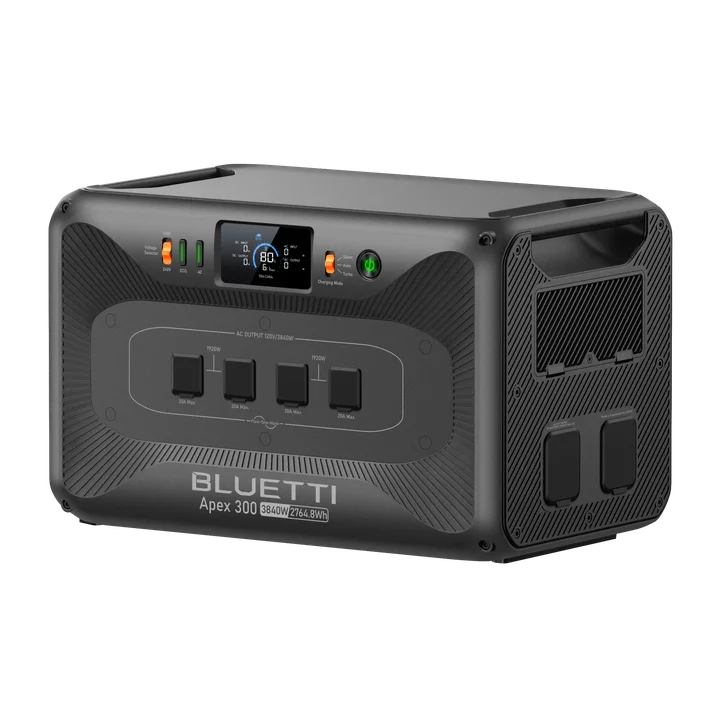
BLUETTI's landing page offers
Its motor evidence is borrowed from air conditioning. It started a 3-ton central AC at
It is gentler to live with than the Jackery. It idles at
The catch: nobody has documented a pump start on it.
We'd buy it for a three-quarter horsepower pump or smaller. For anything bigger, the Jackery has the proof this lacks. Our BLUETTI Apex 300 review covers the rest.
Best if your pump turns out to be 120 V : Jackery HomePower 3600 Plus
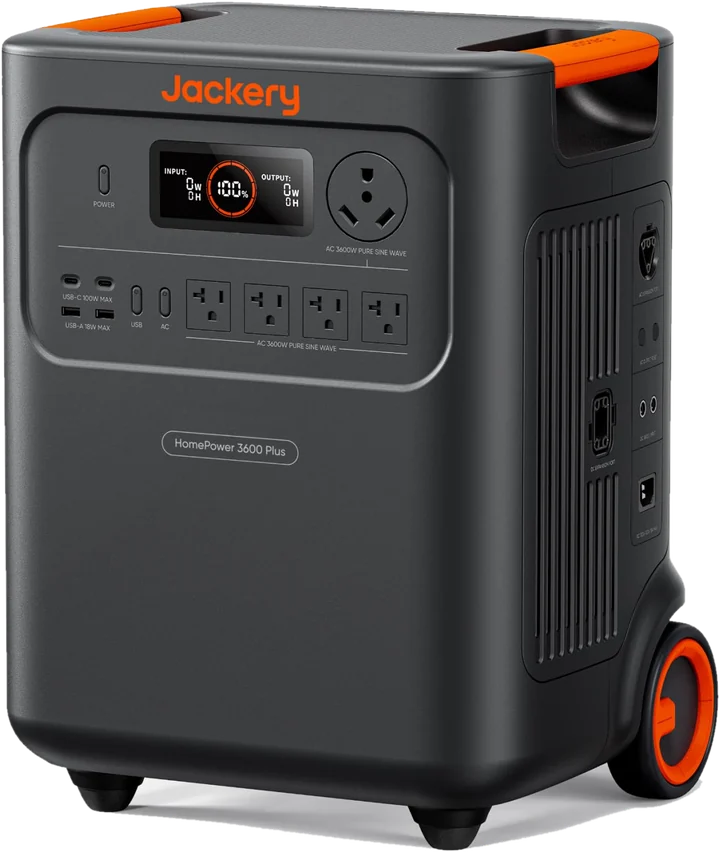
Not every well pump is
Don't build a
The catch: no one has started a well pump on it. A compressor is the nearest thing on record.
We'd buy it if your pump is
New this year, and what we're watching
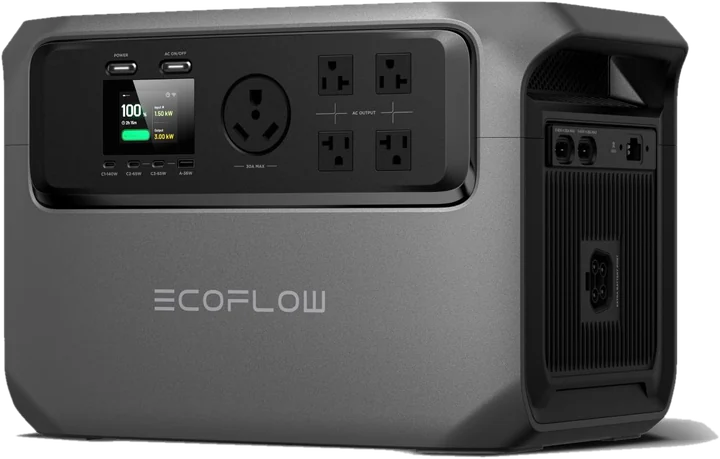
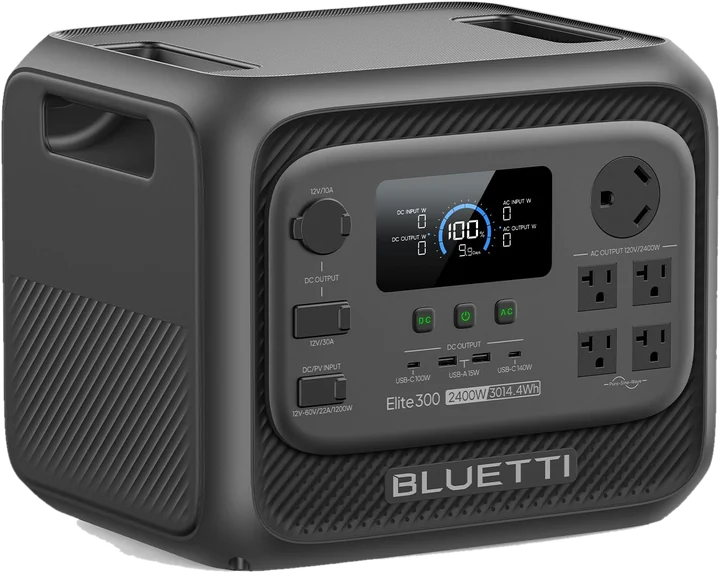
Three models in this field are new this year. The EcoFlow DELTA 3800 Gen4 and the BLUETTI Elite 300 are
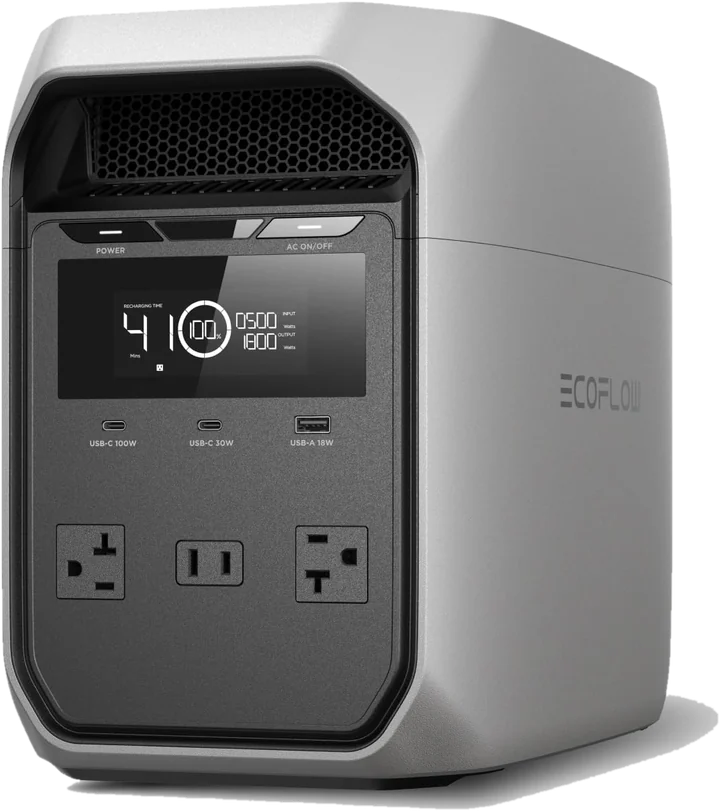
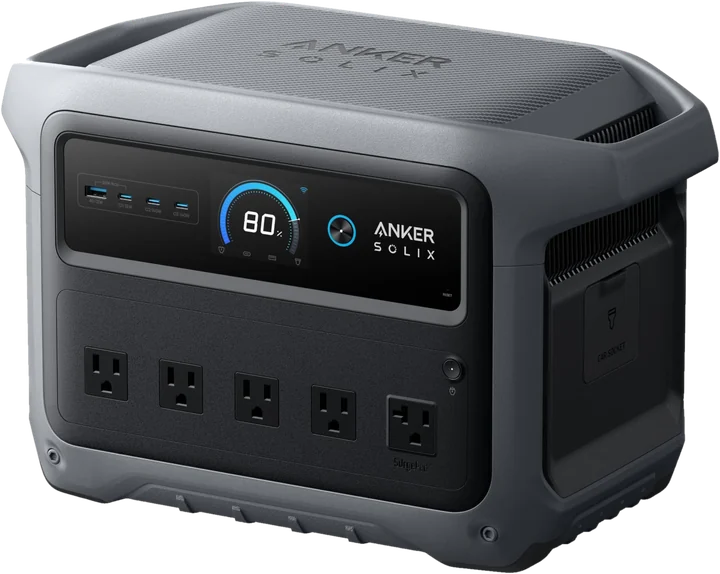
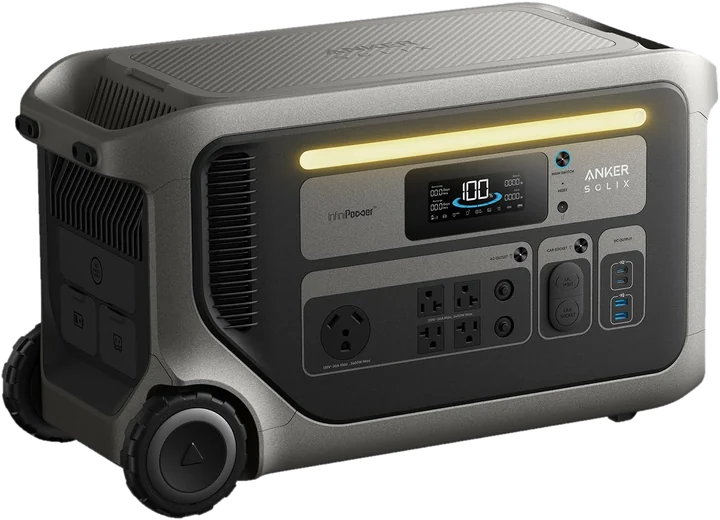
Worth watching for a 240 V pump: Anker SOLIX S5000
Price band: under $3,000
WaitOn paper this is the box we'd most like to recommend. It promises
How the picks were decided
We started from the pump, not the box. Every unit got three checks. Does it make
Will a power station run my well pump?
Only one that makes
How big a generator does my well pump need?
Franklin Electric publishes the chart, and Goulds reprints it. For common sizes, its conservative column asks four kilowatts for a one-horsepower three-wire pump and five for
Should I run my well pump from a generator instead?
Only one that makes
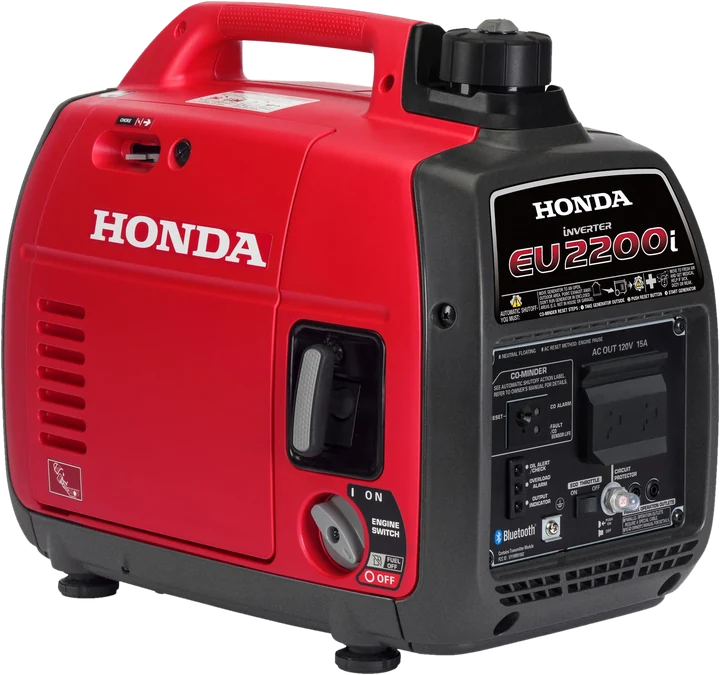
A different buyer wants a generator for the house's
How do I connect backup power to my well pump?
Through your breaker panel, by a transfer switch or an interlock with an inlet. Never a cord into an outlet. Champion's manual says a transfer switch must be used when connecting to a building, and the backfeed it prevents can kill a utility worker. The Jackery pump start ran through Jackery's own Smart Transfer Switch. Our guide to generator interlock vs transfer switch explains which fits your box. The modular
What about the Anker SOLIX F3800 Plus ?
Anker does something we wish every maker did. Its user guide prints a motor-starting rating,
What about the Westinghouse WGen9500DFc?
On paper it is the strongest
The picks side by side
| Pick | Who it's for | What it has started | Buy | |
|---|---|---|---|---|
| Jackery Explorer | A | One box, | A | View on Amazon |
| BLUETTI Apex 300 | A three-quarter horsepower pump or smaller | One box, | A 3-ton AC, with a soft starter | View at BLUETTI |
| Jackery HomePower | A | None from one unit | A large air compressor at | View on Amazon |
| Anker SOLIX S5000 | A buyer who can wait for a | One box, per-leg figure not published | Nothing at | Wait |
Our pick: Jackery Explorer 5000 Plus
For a house on a
The evidence in full
Franklin Electric's generator sizing, by pump size
From Table 5, "Engine Driven Generators", in Franklin Electric's AIM manual (2007 edition as hosted online; older than 12 months, and the current edition did not load). Goulds' IM096 instructions reprint the same figures "courtesy of Franklin Electric". The chart assumes continuous-duty generators with a limited voltage dip during starting, for three-wire or three-phase motors. For two-wire motors Franklin says the minimum rating is half again higher.
| Pump size (horsepower) | Externally regulated generator, minimum (kW) | Internally regulated generator, minimum (kW) |
|---|---|---|
| 1/3 | 1.5 | 1.2 |
| 1/2 | 2 | 1.5 |
| 3/4 | 3 | 2 |
| 1 | 4 | 2.5 |
| 1.5 | 5 | 3 |
| 2 | 7.5 | 4 |
| 3 | 10 | 5 |
| 5 | 15 | 7.5 |
We read every unit against the conservative (externally regulated) column. For battery inverters the chart is a yardstick, not a pass or fail.
Every unit's 240 V status, against the chart
| Unit | Per-leg limit | Rating | Franklin check (conservative column) | |
|---|---|---|---|---|
| Jackery Explorer | One box | Clears the | ||
| Anker SOLIX S5000 | One box (claimed, untested) | Not published | Clears one horsepower; under | |
| Anker SOLIX | One box | Clears | ||
| BLUETTI Apex 300 | One box, in | Clears three-quarter horsepower; under one | ||
| Anker SOLIX F3000 | Only with two units and a Double Voltage Hub | Not applicable to one unit | Not applicable; pair untested | |
| Jackery HomePower | Only with two units paralleled | Not stated for a pair | Pair untested | |
| EcoFlow DELTA 3800 Gen4 | None | Not applicable | Not applicable | |
| BLUETTI Elite 300 | None | Not applicable | Not applicable | |
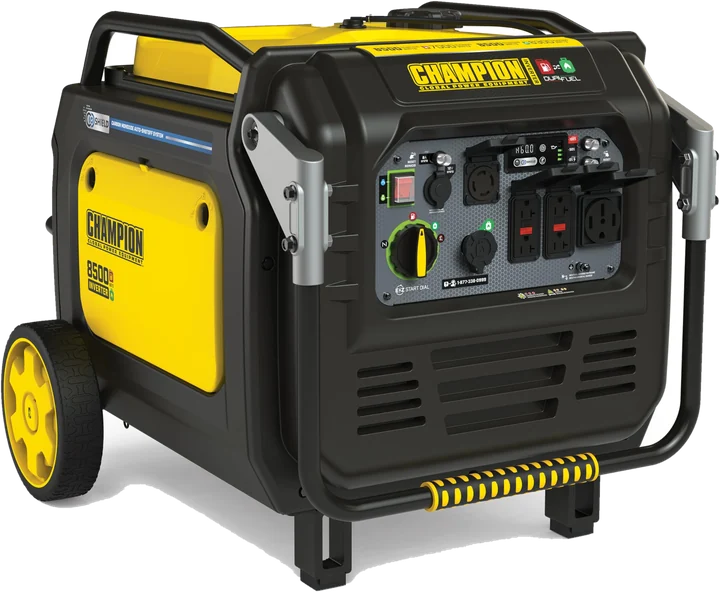
| Champion 201175 | Generator, 120/ | Not stated | Clears | |
| Westinghouse WGen9500DFc | Generator, 120/ | Not stated | Clears two horsepower; under three | |
| Generac | None (paralleled units stay | Not applicable | Not applicable | |
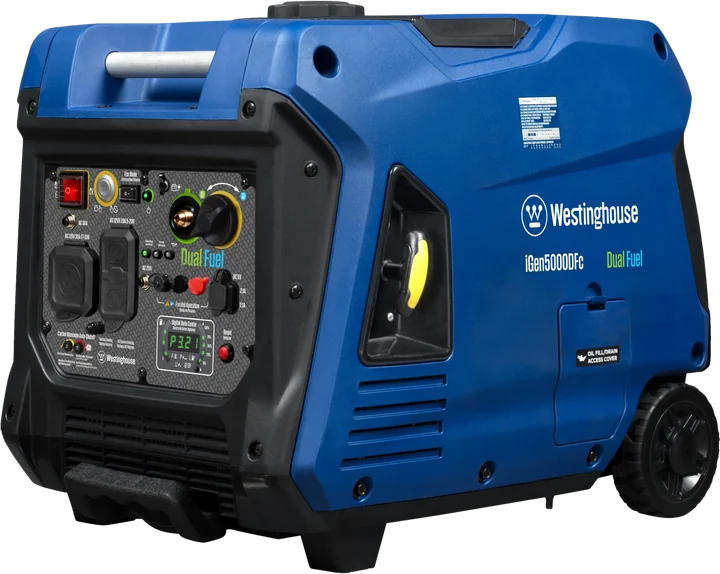
| Westinghouse iGen5000DFc | None, per the iGen5000DFcv manual (the DFc with a wheel kit; no separate DFc manual) | Not applicable | Not applicable |
Every motor start on record
| Unit | Who recorded it | Motor | Wiring and soft start | Result |
|---|---|---|---|---|
| Jackery Explorer | GearDiary (M Thorne, about a month of use, US; GearDiary discloses advertising income and supplied products) | Franklin control box (three-wire), no soft starter, through the Smart Transfer Switch | Started in a brief outage; app showed about | |
| Jackery Explorer | Snowstead (Jackery-sponsored) | Well pump, size not given | Jackery transfer panel; voltage and current not given | Cycled normally alongside a dryer, fridge and lights |
| Jackery Explorer | ReeWray Outdoors (Sep 2026, US) | 3-ton central AC | Manual switch; soft start not mentioned | Started without a trip; the locked-rotor figure on screen was the nameplate value, as the app was too slow to catch the inrush |
| Jackery Explorer | Herb-O-Matic (Oct 2026, US) | AC compressor and a large air compressor | Not stated | Both started |
| Jackery Explorer | The Solar Lab (Apr 2025, US) | Large AC unit, tonnage not stated | Not stated | Failed to start (the lab's own surge estimate) |
| BLUETTI Apex 300 | There's A Trick For That (Oct 2025, US) | 3-ton two-stage central AC | Single unit at | Started |
| BLUETTI Apex 300 | There's A Trick For That (Oct 2025, US) | No soft start | Overloaded one | |
| BLUETTI Apex 300 | Backyard Solar Project (Jun 2025, US early test unit) | Heat pump | Ran in cooling; its resistive heat strip tripped the unit | |
| Jackery HomePower | Mike Builds (Jun 2026, US) | Large air compressor, then two at once | Started ("struggled a little bit") |
Nothing is on record for the
Lab and tester detail
The Jackery Explorer
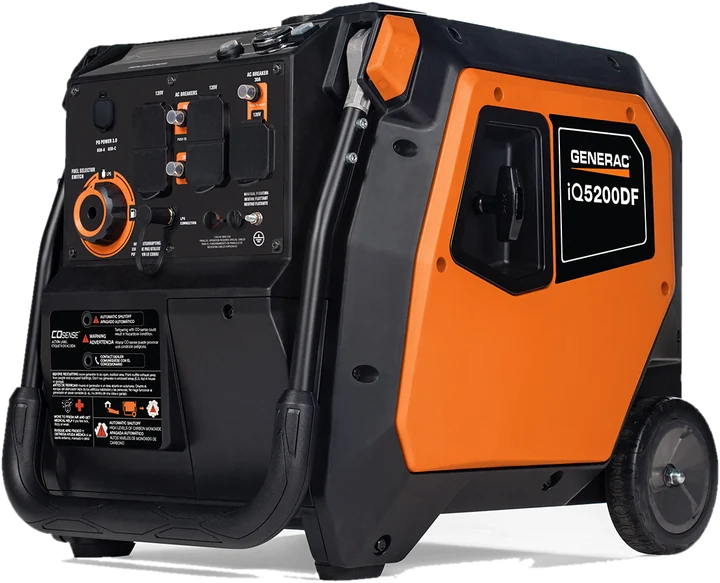
Our view of the Champion 201175 rests on the maker's manual and product page for the exact model, plus all 231 Lowe's reviews, whose 3 problem reports were oil use after a year with a backed-up repair network, overloads above its rating, and a proprietary propane hose. Three of those owners describe prompt starts in freezing weather, including on propane. Champion rates it to start down to
For the BLUETTI Apex 300, also US units, There's A Trick For That (Oct 2025) measured
The Jackery HomePower
The Anker SOLIX S5000 has only pre-release results. pv magazine USA (Oct 2026) read
The Anker SOLIX
Where sources disagree
- Jackery Explorer
5000 Plus surge:14,400 W claimed,9,500 W held briefly, overload near7,800 W under sustained load. These are different tests (brief surge against sustained overload), and the call rests on the pump start, not the surge. - Jackery Explorer
5000 Plus air conditioners: a 3-ton unit started in Sep 2026, a large unit failed in Apr 2025. Different compressors, 17 months apart, firmware not stated. Open. - The Jackery Smart Transfer Switch changeover took about three seconds on a launch unit and about
20 ms later, depending on the switch's UPS mode setting. Partly explained by mode; whether firmware fixed the launch behavior is open. - Jackery's FAQ says an extended warranty isn't supported for the Explorer
5000 Plus , while the series page lists a 2-year extension. Open. - BLUETTI's landing page offers the Apex 300's
7,680 W for motors; its manual limits it to resistive loads. The maker contradicts itself, and no motor rating is published. - The HomePower
3600 Plus shows three open gaps, none of which changes the120 V call: surge of7,200 W claimed against5,900 W reached; idle of21 W against34 W , from different methods and units; and a cold charging floor of -4 °F in the manual against a reported32 °F in a product FAQ that no longer loads.
Skip these, and also considered
| Model | Why it lost here | Our review |
|---|---|---|
| Champion 201175 | The | Champion 201175 review |
| Anker SOLIX | One-box | Anker SOLIX |
| Westinghouse WGen9500DFc | The biggest | None |
| Anker SOLIX F3000 | An able | Anker SOLIX F3000 review |
| EcoFlow DELTA 3800 Gen4 | New this month and | EcoFlow DELTA 3800 Gen4 review |
| BLUETTI Elite 300 | BLUETTI Elite 300 review | |
| Generac | Generac | |
| Westinghouse iGen5000DFc | Westinghouse iGen5000DFc review |
The research count
Behind this page sit 12 models, the manuals of 9 of their makers, and 589 sources this site has kept in full. Reddit owner evidence was unavailable for this round, so owner patterns come from retailer review pools and individual owner write-ups only.
Sources
- Jackery Explorer
5000 Plus user manual (US,JE-5000A) (opens in a new tab) - Jackery FAQ: Explorer
5000 Plus basicinformation (opens in a new tab) - Champion 201175 operator's
manual (opens in a new tab) Champion 201175 product page (opens in a new tab) - BLUETTI Apex 300 user manual
(US) (opens in a new tab) - BLUETTI Apex 300 home backup
page (opens in a new tab) - Jackery HomePower
3600 Plus usermanual (opens in a new tab) - Anker SOLIX
F3800 Plus user guide(A1790P) (opens in a new tab) Anker SOLIX S5000 product page (opens in a new tab) - Westinghouse WGen9500DFc user
manual (opens in a new tab) - Westinghouse iGen5000DFcv user
manual (opens in a new tab) - Franklin Electric AIM manual, engine-driven generator
sizing (opens in a new tab) - Goulds 4-inch submersible instructions
(IM096) (opens in a new tab) - GearDiary: Jackery Explorer
5000 Plus review (well pumpinstall) (opens in a new tab) - ReeWray Outdoors: Jackery Explorer 5000
Plus (opens in a new tab) - The Solar Lab: Jackery Explorer 5000
Plus (opens in a new tab) - The Solar Lab: what is a smart transfer
switch (opens in a new tab) - Will Prowse: Jackery Explorer
5000 Plus launchunit (opens in a new tab) - Herb-O-Matic: Jackery Explorer 5000
Plus (opens in a new tab) - Snowstead: Jackery whole-house test
(Jackery-sponsored) (opens in a new tab) - There's A Trick For That: BLUETTI Apex
300 (opens in a new tab) - StorageReview: BLUETTI Apex 300
review (opens in a new tab) - Backyard Solar Project: BLUETTI Apex
300 (opens in a new tab) The Solar Lab: BLUETTI Apex 300 (opens in a new tab) - CNET Labs: best portable power
stations (opens in a new tab) - The Solar Lab: Jackery HomePower
3600 Plus review (opens in a new tab) - HOBOTECH: Jackery HomePower 3600
Plus (opens in a new tab) - Mike Builds: Jackery HomePower 3600
Plus (opens in a new tab) - pv magazine USA: Anker SOLIX S5000 deep-dive
review (opens in a new tab) - Lowe's owner reviews: Champion
201175 (opens in a new tab) - Lowe's owner reviews: Westinghouse
WGen9500DFc (opens in a new tab) - DEMCO: backfeeding, when electricity flows
backward (opens in a new tab)