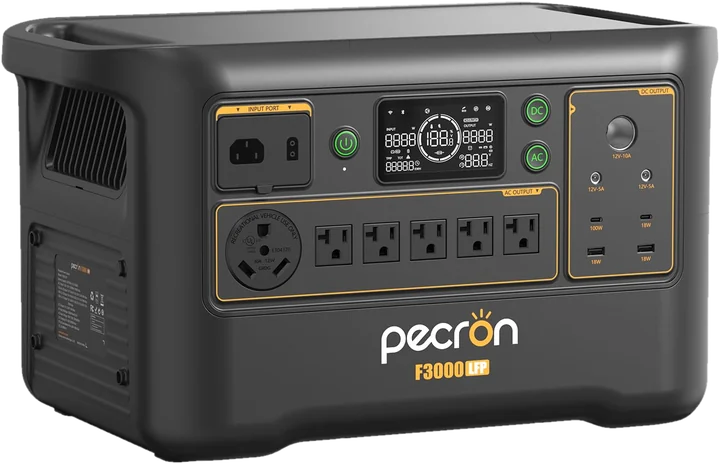
Best portable generator for whole house backup: the 240 V units checked, and the one we'd wire in today
As an Amazon Associate I earn from qualifying purchases.
Porchlight's pick for putting a house on a portable generator through an interlock is the Westinghouse iGen5000DFc, run on the
 Most
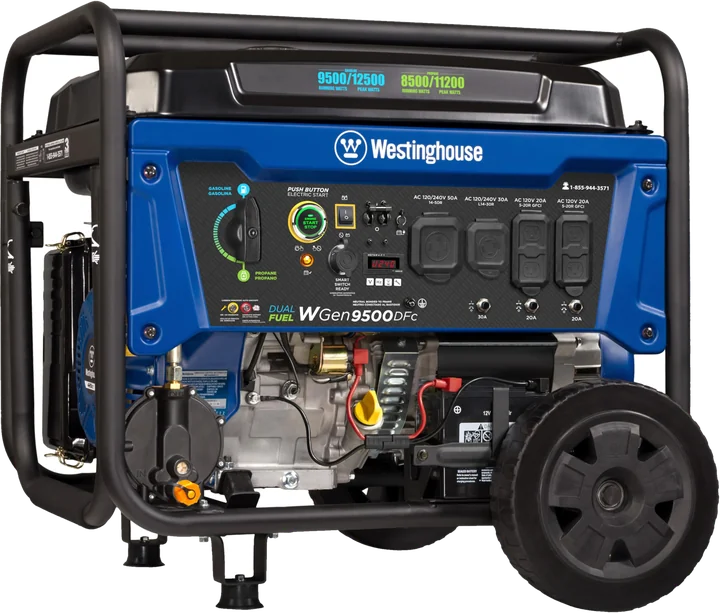
240 V watts, roughest powerWestinghouse WGen9500DFc
The portable generator that runs a whole house,
What changes the answer for a whole-house buyer
Start with the load list, not the square footage. Here the deciding loads are the well pump, the furnace, the central air and the sump. The home backup power calculator adds up the watts on your list for you. Start there before choosing anything with an engine.
- A
240 V well pump you can't go without. No generator here is a buy for that today. The one we're waiting on is the Champion 201175, below. Our well pump page weighs what has actually started a240 V pump. - Central air. Expect to need a soft start on either
240 V portable. Our air conditioner page explains why. - A plug-in furnace, or a transfer switch that also breaks the neutral. Those homes suit a bonded-neutral generator such as the Generac
iQ5200 DF . Even there, its review says it's one to watch until independent tests arrive, not one to buy yet. - California. Our pick isn't sold there. The iQ5200 we weighed is Generac's 49-state model.
- A house that must switch over by itself, or no fuel at all. That's a standby generator or a whole-house battery. A portable on an interlock needs you, in the yard, in the weather.
One thing is not negotiable. A generator reaches the panel only through an interlock or transfer switch fitted by an electrician. Champion's manual insists on a transfer switch for any hookup to a building. A utility co-op warns that power fed back through home wiring can energize the lines outside, enough to kill a lineman. Our interlock vs transfer switch guide covers which one your generator needs.
Best overall for the house's 120 V circuits: Westinghouse iGen5000DFc
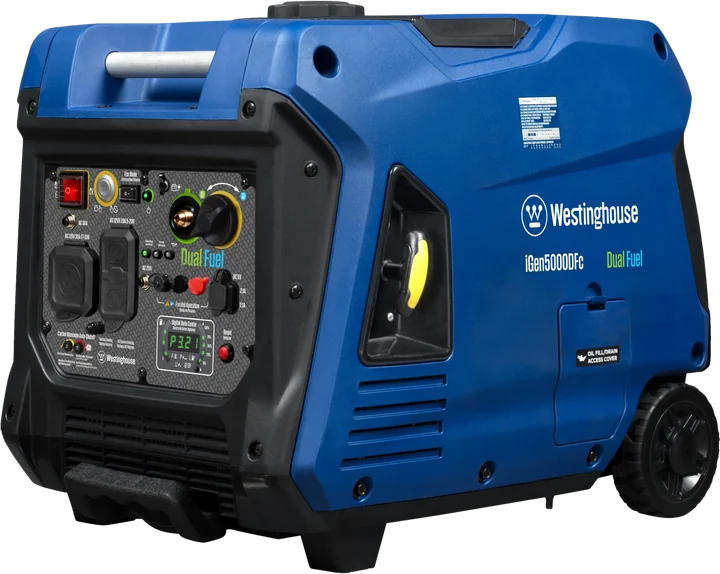
Westinghouse sells the iGen5000DFc on clean inverter power, under 3% distortion. It adds a carbon monoxide sensor that kills the engine when fumes build. The 3.4-gallon tank, it says, lasts
What makes it our interlock pick is a wire. Westinghouse's manuals for this family, including the wheel-kit DFcv's, say the neutral floats rather than tying to the frame. That's the arrangement our interlock guide pairs with an inlet and interlock. The DFc's own manual couldn't be obtained, so this is the family's word rather than this model's.
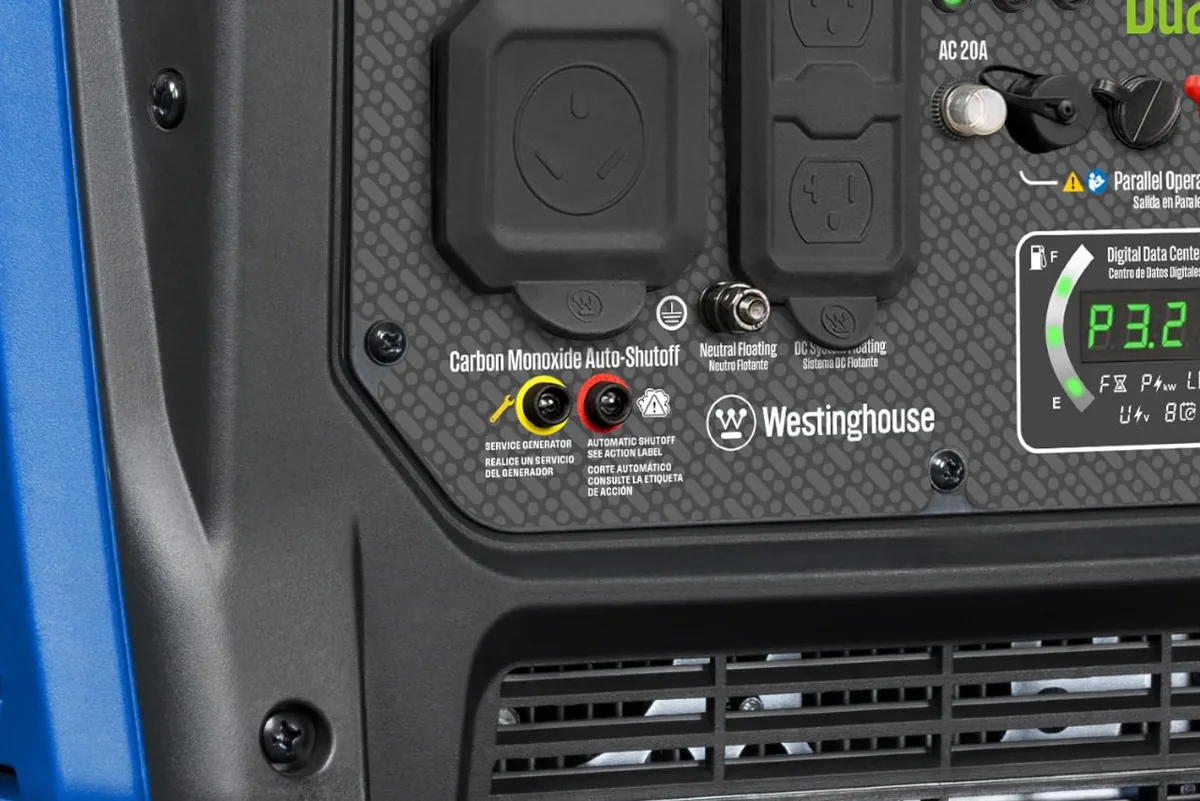
Living with it is mostly pleasant. A key fob starts it from the kitchen, which at 2 a.m. in sleet is worth more than another thousand watts. Propane in the shed keeps it going when the gas stations go dark. The display reads like a pocket calculator that lost its labels: "P 1.76" means kilowatts, if you've read the manual.
The one real catch: there is no
We'd buy it. It's for putting the furnace, fridge, lights and the rest of the
The 240 V generator we're waiting on: Champion 201175
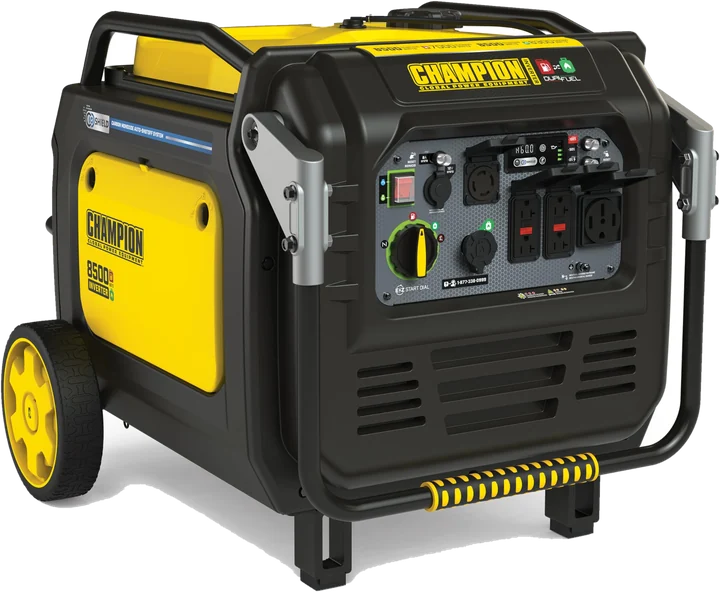
On paper, Champion's 8500-Watt Electric Start Dual Fuel Inverter Generator is what this whole search is looking for. It's rated
Read the outlets carefully. The
The owner record is the best in this field. Of 231 reviews of this exact model at one big-box retailer, three reported a problem. One owner saw oil use after a year, with a repair network months behind. Another hit overloads above about
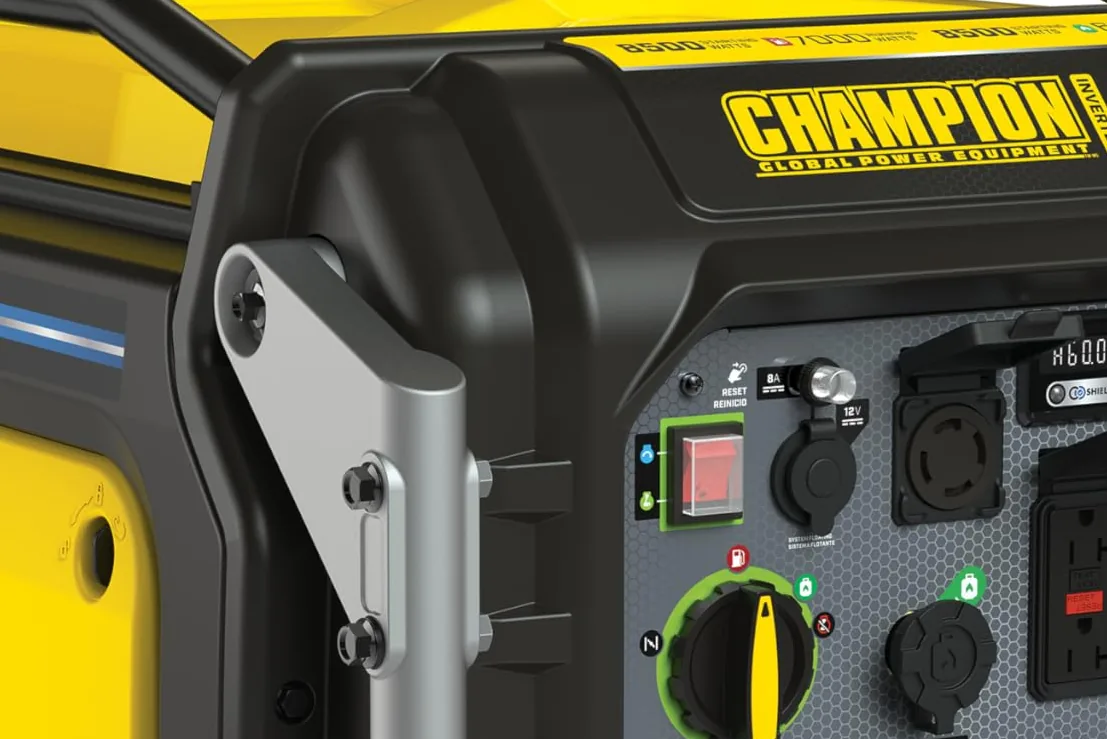
What's missing is the test sheet, and for a
What would change our mind: a measured distortion figure under heavy load on the exact 201175, or a
Most 240 V watts, roughest power: Westinghouse WGen9500DFc
The WGen9500DFc is the most generator here for the money by a distance. On gasoline it's rated
They aren't. Westinghouse's own manual lets the open-frame alternator's distortion run as high as 23%. Every inverter on this page claims under 3%. Westinghouse is honest enough to print it. It's the kind of honesty you admire and then keep away from your furnace board.
The owner record is the bigger worry. One retailer page mixes this model with the DF, its twin without a CO sensor. In its lowest-rated reviews, 13 describe an engine that runs with no power coming out. Three name the DFc, one of them dead in a winter storm, well below freezing. These are counts from the worst reviews, not a failure rate. Still, a generator that sounds fine and powers nothing leaves a family cold while believing they're covered.
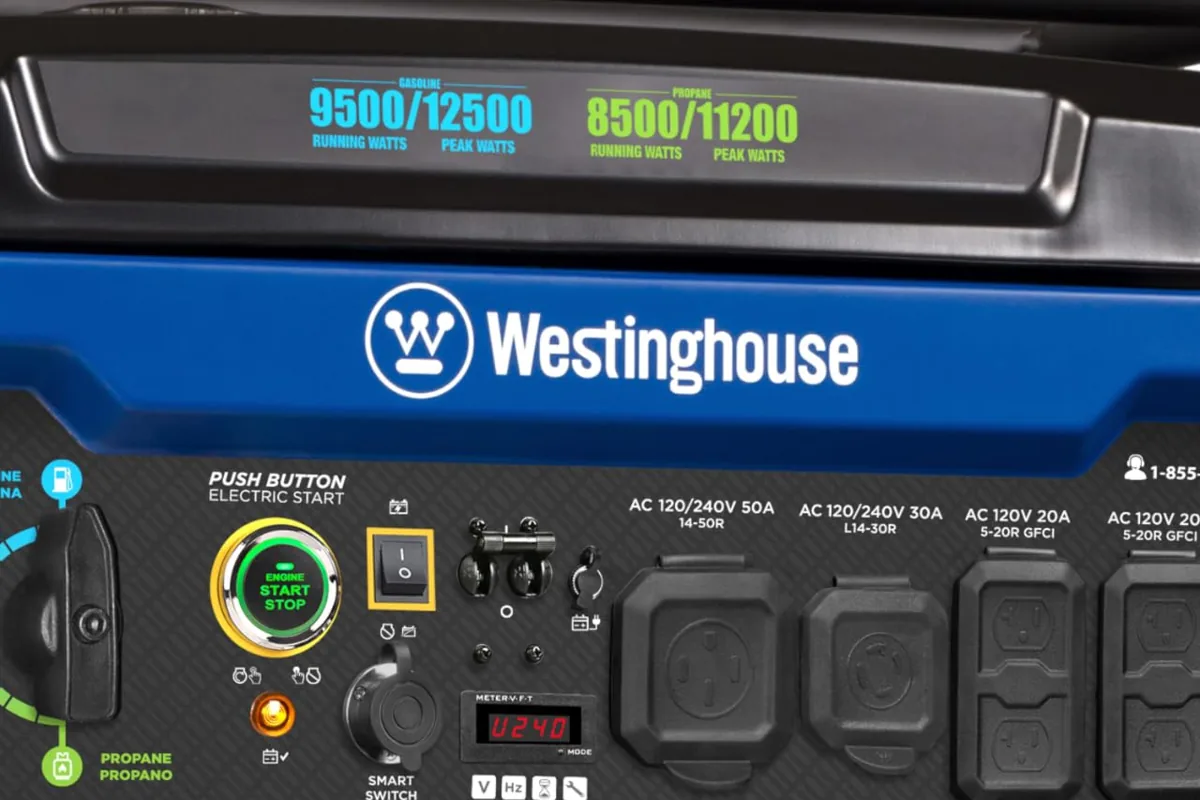
No independent test of the exact DFc turned up anywhere we looked. The central air start people quote belongs to a gas-only WGen9500, a different model.
We'd skip it. If your house has
What we know about the Generac iQ5200 DF , and what we don't
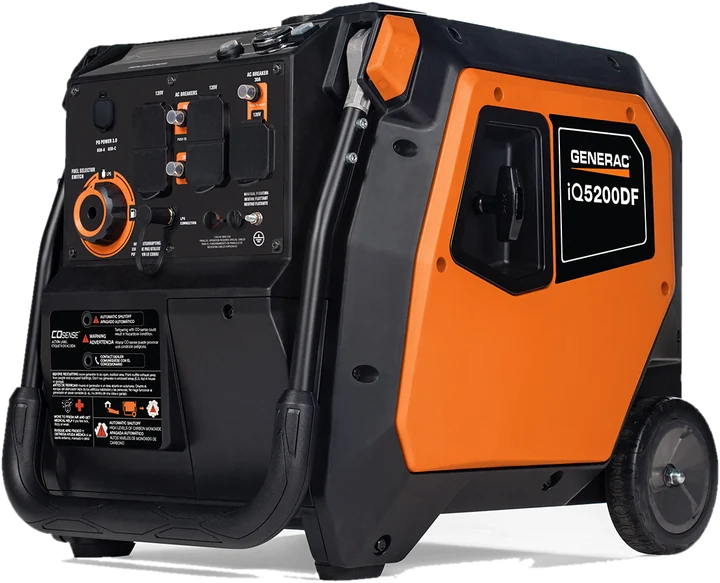
Generac publishes the dull, useful numbers most makers bury. Its spec sheet states a neutral bonded to ground and distortion under 3%. The
What we can't yet say is how the exact 8945 behaves. Wirecutter's testers ran the California model, the 8947. It handled a pressure washer near capacity, and they struggled with its pull-start. Only ten reviews on the 8945's retailer page could be tied to this model, and three of those owners needed a shop. One unit quit in its first month, and the closest authorized shop was 102 miles off.
On an interlock, the Westinghouse fits better. The iQ5200's bonded neutral suits a home whose furnace runs on a cord, or whose electrician fits a transfer switch that also breaks the neutral. Even for that home, the Generac
How the picks were decided
We started from the house's load list. On the
Will it run my well pump?
Only a
Will it start my central air?
Three central air starts are on record, none on the exact models. One owner's generator matches the Champion 201175's specs, though no model code shows. Through a
Will my furnace take the power?
Furnace control boards are fussy about ragged power and about the neutral. The inverters here all claim under 3% distortion. The WGen9500DFc allows up to 23%, which is why our furnace pages skip it. For the iGen5000DFc, the neutral question rests on Westinghouse's manuals for its family, including the wheel-kit DFcv's, which say the neutral floats; the DFc's own manual wasn't obtained. A floating neutral suits an interlock, which is why it's our pick for a hard-wired furnace fed that way. The other three state that they bond theirs, which pairs them with a cord-connected furnace or a transfer switch that also breaks the neutral. For that furnace, the iQ5200 is one to watch, not to buy yet. No source we found has tested a furnace on any of them.
When does a portable on an interlock beat a standby generator?
When someone is home for the outages, and a five-figure standby quote buys more than you need. A standby unit starts and switches the house over by itself. One owner's Generac invoice ran to five figures, before the yearly dealer plan. A portable on an interlock asks more of you. You wheel it out, start it and bring circuits on one at a time, the routine Westinghouse's WGen9500DFc manual describes. For a few outages a year, that's a fair trade. Our portable vs standby guide prices both routes.
Is the CO shut-off enough to keep us safe?
No, and every maker here says so. Each manual on this page says the CO shut-off is no substitute for indoor CO alarms. Champion's even names a garage with the door partly open as a place it would trip. The Consumer Product Safety Commission counts nearly a hundred deaths a year from portable generator CO. Its rule is plain. Run it outside only, at least twenty feet from the house, exhaust pointed away. Keep it out of the garage and off the porch or carport. Put battery-backed CO alarms on every level indoors. The shut-off is a backstop, not permission.
The picks side by side
| Pick | Who it's for | Runs | Maker's distortion figure | Our call |
|---|---|---|---|---|
| Westinghouse iGen5000DFc | No | Under 3% | Buy: View on Amazon | |
| Westinghouse WGen9500DFc | No one on this page | Yes, full output | Up to 23% | Skip |
Our pick for whole-house backup on an interlock: Westinghouse iGen5000DFc
The honest answer to "whole house" today is most of the house, done properly. The iGen5000DFc keeps the furnace lit and the food cold through an interlock. Its maker's promises held where anyone checked them. The
The evidence in full
Research count for this page: 5 models weighed; 6 maker manuals among them; across this site's research, 589 sources kept in full.
Every product considered
| Product | Exact model | Volts | Running watts on gas (maker) | Distortion (maker) | Neutral (maker) | Evidence on the exact model | Call |
|---|---|---|---|---|---|---|---|
| Westinghouse iGen5000DFc | iGen5000DFc, SKU 4523 | Under 3% | Floating (family manuals; DFc's own not obtained) | Wirecutter's testers ran it; maker page; one owner video | Buy | ||
| Westinghouse WGen9500DFc | WGen9500DFc, SKU 9523 | 120/ | Up to 23% | Bonded | Manual; one unboxing; owner pool mixed with the DF | Skip | |
| Champion 201175 | 201175 | 120/ | Under 3% | Bonded | Manual and maker page; 231 owner reviews; no instrumented test | Considered; wait | |
| Generac | 8945 (G0089450, 49-state) | Under 3% | Bonded | Spec sheet and manual; ten attributable owner reviews; Wirecutter's testers ran the 8947 | Considered; our other pages say wait | ||
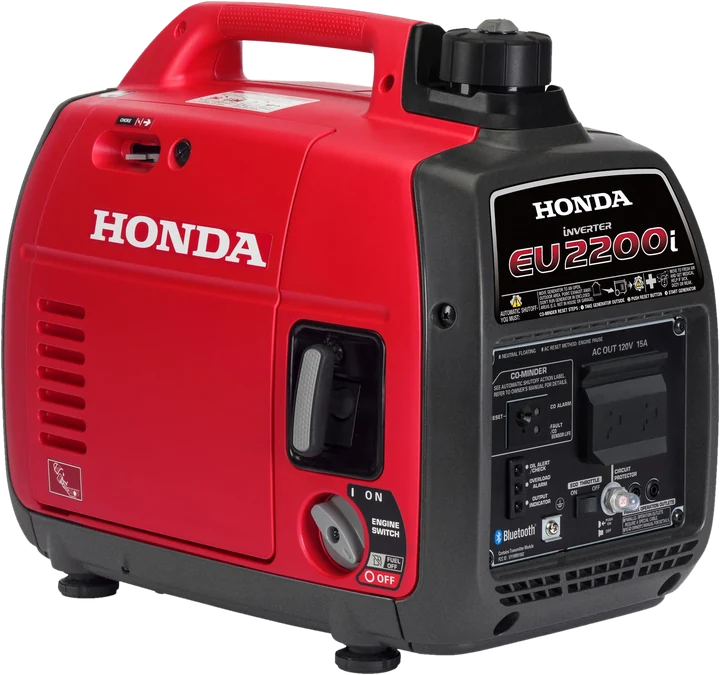
| Honda EU2200i | EU2200ITAN | None found | Floating | Manual; owner videos; a CO-MINDER test | Considered |
Skip these, and also considered
- Westinghouse WGen9500DFc (skip). Most watts and the only
240 V unit with a fob and CARB certification, but its maker allows up to 23% distortion, no independent test of the exact DFc exists in our evidence, and the retailer pool's lowest-rated reviews include 13 reports of an engine running with no power output, three naming the DFc. The Champion 201175 is the240 V unit to wait for, and the iGen5000DFc is the buy for the120 V side. - Champion 201175 (considered, wait). The strongest paper case and owner record for a
240 V panel feed, but no instrumented test of the exact model and no pump start on record. Its review tracks it. - Generac
iQ5200 DF (considered). Its paper case is strong, but nothing beyond Generac's own sheets speaks for the exact 8945 on the questions this page asks. For a home with a plug-in furnace or a transfer switch that also breaks the neutral, our pages call it one to watch and wait on until independent tests arrive; the GeneraciQ5200 DF review has the detail. - Honda EU2200i (considered). Quiet and well made, with
1,800 W running and2,200 W starting at120 V only and a floating neutral per its manual. That's a short-list generator, not a whole-house one; our home backup generator page buys it for exactly that list, and the Honda EU2200i review has the detail.
Westinghouse iGen5000DFc: what each source measured or saw
- Maker page: under 3% distortion,
18 h from the3.4 gal tank at a quarter load, "as low as52 dBA ", CO shut-off, parallel capable with a second unit and kit,TT-30R 30 A ,5-20R duplex and two USB outlets. - iGen5000DFcv manual (the DFc with a wheel-and-handle kit; no separate DFc manual in Westinghouse's library):
3,900 W running and5,000 W starting on gas,3,500 W and4,500 W on propane,120 V only, "Neutral floating", continuous rating from23 °F . The iGen4000DFc and iGen2800DFc manuals also say neutral floating. - Wirecutter (guide updated November 2026): its testers ran the exact DFc at low, medium and heavy loads; it kept up at its rated output and stayed at or under
80 dBA at5 ft under heavy load; they found the display and symbol-only switches hard to read; it is not sold in California. No fuel-use or distortion figure. - One owner (2024): the fob started it after
9 h on standby; it ran a travel trailer's air conditioner at about half load; display readings carry no labels. - Retailer owner pool across the iGen4500 and iGen5000 family: reports of running on one fuel only, stepper-motor choke faults and fuel leaks, none naming the DFc; the iGen4500DF was recalled for fuel leaks in 2020. Reports naming the DFc: three shutdowns running an RV air conditioner at altitude, eight to ten phone calls before Westinghouse replaced a defective unit, and a starter battery dead on arrival.
- The same retailer's listing titled iGen5000DFc carries the model number IGEN4500DFC, and three reviewers complain about it.
- CPSC recall listing: no recall names the iGen5000DFc.
- Call: buy, for homes outside California putting their
120 V circuits on an inlet and interlock.
Champion 201175: what each source measured or saw
- Manual and maker page:
7,000 W running and8,500 W starting on gas,6,300 W and8,500 W on propane, 120/240 V ,14-50R limited to29.2 A ,L14-30R , two GFCI duplexes, under 3% distortion, neutral bonded to frame,14 h on5.33 gal of gas at a quarter load and12 h on a barbecue-size propane tank at the same load,64 dBA at23 ft , starting range from5 °F ,213.9 lb with wheel kit, no remote start, not parallel capable, 3-year warranty. EPA certified; CARB not stated. - Retailer reviews of the exact model, all 231 read: the three problem reports and three cold-weather starts above; no reports of surging, running only on choke, CO false trips or failure on propane. One owner says he converted it from a bonded to a floating neutral following a Champion video; that procedure is not in the manual.
- The Solar Lab (June 2026, a unit matching the 201175's specs, model code not stated, bought through an affiliate retailer): ran at rated output, electric start worked every time including in cold and snow, no remote, app or auto-start contacts.
- Signature Solar (August 2025, a retailer of this generator): its oscilloscope showed a clean wave at no and light load, slight distortion under heavy load and a little more on propane, no percentage. Its phone decibel app put the unit louder on gasoline than on propane, with the distance not stated and an interstate running alongside.
- Wirecutter's testers have not yet put it through their load tests. A review elsewhere that "tested" a Champion
8,500 W describes a larger-tanked open-frame model, not the 201175; don't buy on its numbers. - The Champion 201536, an 8500W wireless-start model with auto start, is a different generator.
- CPSC recall listing: no recall names the 201175.
- Call: wait, for homes planning a
240 V panel feed; buy the iGen5000DFc for the120 V side meanwhile.
Westinghouse WGen9500DFc: what each source measured or saw
- Manual:
9,500 W running and12,500 W starting on gas,8,500 W and11,200 W on propane, 120/240 V ,L14-30R and14-50R , distortion up to 23% (open frame, brushed alternator with AVR), neutral bonded to frame,6.6 gal tank, short-period operation from5 °F , EPA and CARB. A red CO light means a CO shutdown; a yellow light is a sensor fault that only an authorized Westinghouse service center can repair. After an automatic shutdown, remote-start units must be restarted at the panel. The manual advises adding loads one at a time and letting output stabilize. - Maker page: up to
12 h on the6.6 gal tank, load not stated. - Retailer reviews, lowest-rated 198 read, pool mixing the DF and DFc: 13 with no power output (three naming the DFc, one dead in a storm well below freezing, one just after the warranty ended), 37 hard-start keyword matches, five running on propane but not gas, two CO lockouts or fault lights, two stepper-motor choke faults.
- Bob Vila's tester ran the WGen9500DF, the edition without a CO sensor:
89–90 dB at about6 ft ; about two-thirds of the6.6 gal tank in a6 h day running a shop compressor with air tools, which she judged a moderate load; started first pull; ran a dryer and a range one at a time. - One new DFc owner's unboxing (2024): bought for fridge, freezer and lights, with a
50 A interlock planned. - CPSC recall listing: no recall names the WGen9500DFc.
- Call: skip. A
240 V home is better served waiting for the Champion 201175 and running the Westinghouse iGen5000DFc on its120 V circuits meanwhile.
Generac iQ5200 DF : what each source measured or saw
- Spec sheet (Rev. B) and the iQ3800DF/iQ5200DF manual:
3,900 W running and5,200 W starting on gas,3,500 W and4,700 W on propane,120 V only,3,600 W continuous on theL5-30R , under 3% distortion, neutral bonded to ground,3.2 gal tank,15 h on gas and20 h on a barbecue-size propane tank, both at a quarter load,111 lb , operating down to0 °F , 3-year residential warranty, no remote start, COsense shut-off. The manual recommends a transfer switch fitted by a qualified electrician. - Wirecutter: its testers ran the 50-state 8947, not the 8945; it handled large loads including a pressure washer switched on and off near capacity; the pull-start was a struggle while the electric start worked; the propane hose blocks the outlet above it. No dB or fuel figures.
- Retailer reviews: 165 in all, only ten attributable to the iQ5200; the rest are syndicated from Generac with no model named or name other Generacs. Among the ten, three needed a shop: one quit in its first month with the closest authorized shop 102 miles off and the extended warranty refused; one refused propane from delivery, and the local shop wanted labor paid up front; one made two shop visits before Generac swapped it. Also among the ten: a starter battery that arrived uncharged, a CO shutdown with the exhaust pointed at a wall (the sensor working as designed), and a propane run through an outage with two fridges and a freezer.
- Generac's web page lists natural gas as a fuel; its own manual and spec sheet say gasoline or propane, which we trust.
- CPSC recall 26-407 covers GP-series portables only; the iQ5200 is not on it.
- Who it suits: a home whose furnace runs on a cord, or whose electrician fits a transfer switch that also breaks the neutral, and that can wait for independent tests; our other pages call it one to watch.
Every central air start on record
| Generator | Exact model? | System | Soft start | What happened |
|---|---|---|---|---|
| Champion 8500 inverter (YellowDogs World, 2024) | Specs match the 201175; model code not shown | 4-ton central AC, 2,500 sq ft house, | Yes | Started; the starting draw fell from |
| Westinghouse WGen9500, gas only (Big Country's Way, 2021) | No, a different model | 3-ton central AC, interlock and 50A cord | No | Started with the engine audibly bogging; his |
| Westinghouse WGen9500, variant not stated (DIY Source, 2021) | No | 5-ton AC with the whole house | Not stated | Shown running; the start itself not quantified |
No well pump start is on record for the 201175 or the WGen9500DFc, and no source gave a clamp-meter peak for any pump start on these units.
Where sources disagree, and why it doesn't change the call
- Champion distortion (open). Champion claims under 3%; the oscilloscope look showed more distortion under heavy load and on propane but gave no number. It's why the Champion is a wait.
- Champion propane runtime (open). Champion claims
12 h at a quarter load on a barbecue-size propane tank, and no test in our evidence has run one empty on propane at that load. One owner reports about12 h from a tank at a load he didn't state, which can't speak to the quarter-load claim. Another reports far less on "small" tanks of unclear size. - Noise (explained). Maker figures are at light load and set distances; measured readings were at closer range or heavier load, so they run higher.
- iGen5000DFc display (explained). It does show power, as an unlabeled "P" reading in kilowatts.
Gaps
- No measured distortion figure for any of the generators on this page.
- No furnace test, and no
240 V pump start, on any exact model here. - No measured fuel use at a quarter load or less on the exact models, and no propane run to empty at any stated load.
- Reddit owner evidence was unavailable this run, and the iGen5000DFc's own manual was not obtained.
Sources
Champion 201175 owner's manual (opens in a new tab) - Champion 8500-Watt Electric Start Dual Fuel Inverter Generator (201175) product
page (opens in a new tab) - Westinghouse WGen9500DFc user
manual (opens in a new tab) - Westinghouse WGen9500DFc product
page (opens in a new tab) - Westinghouse iGen5000DFcv user
manual (opens in a new tab) - Westinghouse iGen5000DFc product
page (opens in a new tab) Generac iQ5200 DF spec sheet (opens in a new tab)- Generac iQ3800DF / iQ5200DF owner's
manual (opens in a new tab) Honda EU2200i owner's manual (opens in a new tab) Honda EU2200i product page (opens in a new tab) - Franklin Electric AIM manual, generator sizing
table (opens in a new tab) - CPSC: Winter storms aren't over, CPSC warns of deadly carbon monoxide
risks (opens in a new tab) CPSC recall listing (opens in a new tab) - CPSC: Generac portable generator recall
26-407 (opens in a new tab) - DEMCO: Backfeeding, when electricity flows
backward (opens in a new tab) - Wirecutter: The best portable
generator (opens in a new tab) - Lowe's owner reviews: Champion
201175 (opens in a new tab) - Lowe's owner reviews: Westinghouse
WGen9500DFc (opens in a new tab) - Lowe's owner reviews: Generac
iQ5200 (opens in a new tab) - Lowe's owner reviews: Westinghouse
iGen5000DFc (opens in a new tab) - Signature Solar: Champion
8500 W inverter on anoscilloscope (opens in a new tab) - The Solar Lab: Champion 8500 dual fuel generator
review (opens in a new tab) - YellowDogs World: central AC start on a Champion 8500 through an
interlock (opens in a new tab) - Big Country's Way: WGen9500 starting a 3-ton central
AC (opens in a new tab) - DIY Source: WGen9500 running a 5-ton
AC (opens in a new tab) - Bob Vila: Westinghouse WGen9500DF
review (opens in a new tab) - Andy Lippold: iGen5000DFc owner
video (opens in a new tab) - Diesel Legiance: WGen9500DFc
unboxing (opens in a new tab) - Owner's standby generator invoice and
upkeep (opens in a new tab)