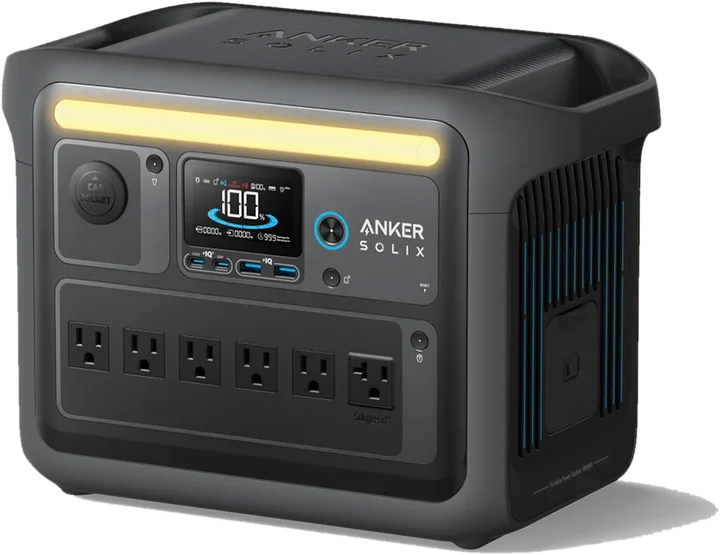
Anker SOLIX C1000 review for home backup: measured against the maker's claims
As an Amazon Associate I earn from qualifying purchases.
Buy the first-generation Anker SOLIX C1000 if your home needs the fridge, router, phones and lights through a night without power.
- Who it’s forHomes that need the fridge, router, phones and lights through a night without power
- The catchIts power-saving timers can switch off a fridge unless you change them in the app first
In the evidence table
Open the full row- Idle draw with the AC on
6.2 W measured- Usable energy, measured
897 Wh measured- Rated capacity
1,056 Wh claimed- Continuous output (gas: running watts)
1,800 W claimed- Surge (gas: starting watts)
- not measured
240 V output- not measured
- Neutral-ground bond
- not stated by the maker
- UPS switchover
16.1 ms measured
The best numbers on the first-generation Anker SOLIX C1000 are the ones Anker doesn't print. The box promises a battery you'll never fully see. It says nothing about fridge hours, or what the station burns sitting idle. On both, testers found it good. Kitchen fridges ran through the night on it. It idles on very little, and its switchover beat Anker's own promise. This exact model also carries a real safety listing. The catch is a set of power-saving timers that can switch off the fridge you bought it for. Anker's FAQ shows where to turn them off. Porchlight's verdict on it is a buy, for the household that has to keep the fridge, router, phones and lights going through one night without power.
Living with the Anker SOLIX C1000
It's a
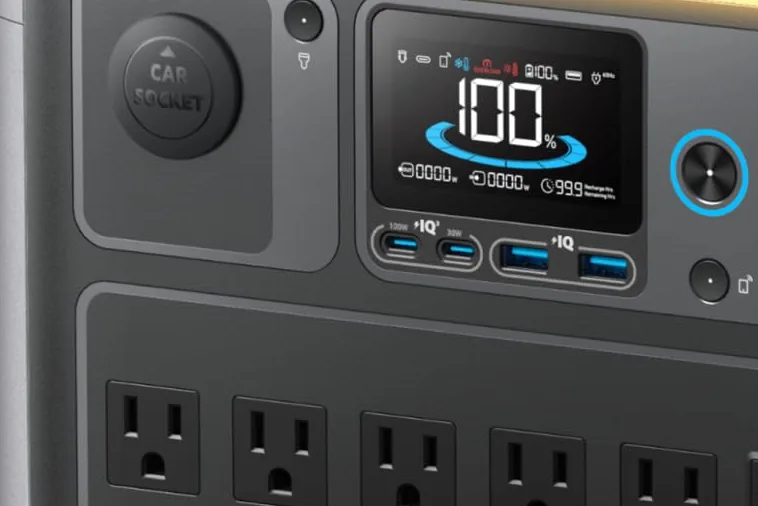
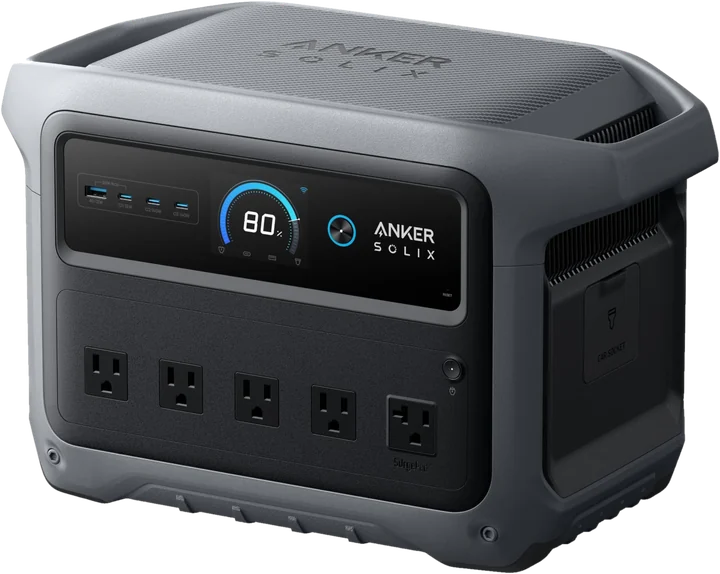
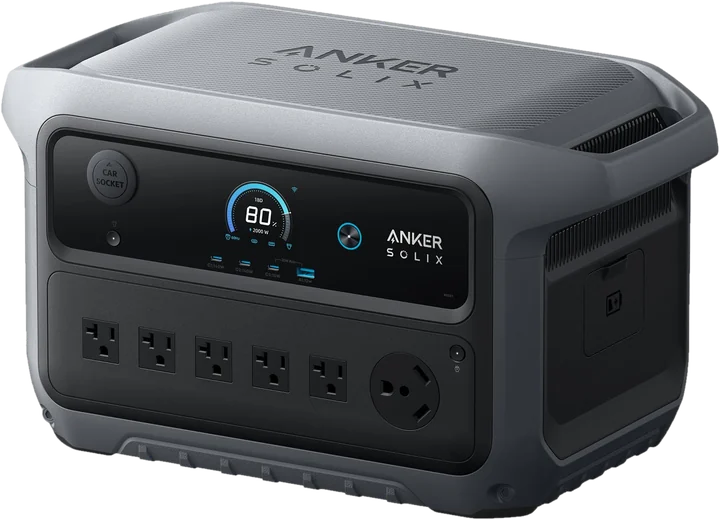
Check the model code. Anker's US page now calls this unit "C1000X", a name also used on a
Day to day, it waits for a storm, and it waits well. After three months switched off on a garage shelf, one lab still got
Does it live up to the box?
Mostly, and in two places it beats the box. Here is each claim beside what testers got on this exact model.
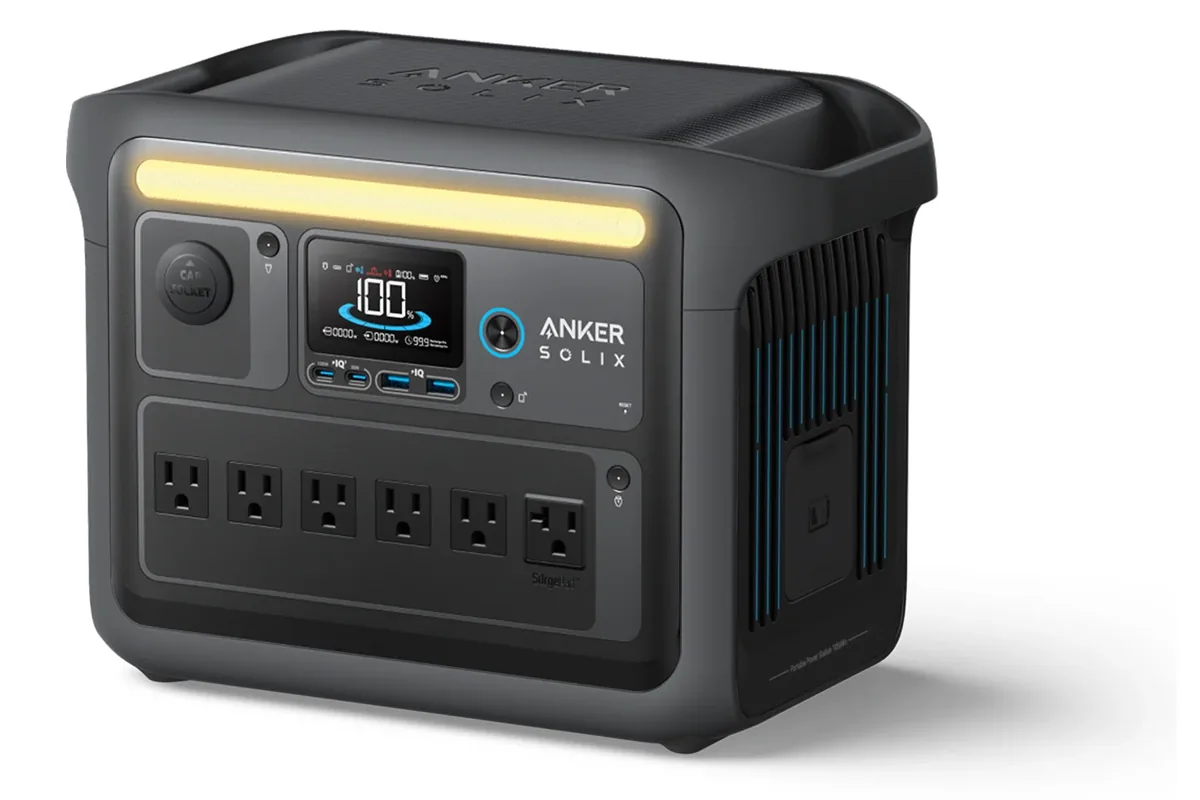
| What Anker promises | What testers got | Who, and when |
|---|---|---|
| OutdoorGearLab, | ||
| Outdoor Life, May 2025 | ||
| Held it for about half an hour flat out before the battery ran dry | OutdoorGearLab, | |
| Idle draw: not published | About | Jasonoid, |
| Fridge runtime: not published (only a sizing rule in the FAQ) | There's A Trick For That, | |
| Fridge runtime: not published | Footprint Hero, | |
| UPS switchover under | Jasonoid, | |
| Full charge in just under an hour (UltraFast) | A few minutes over the hour with UltraFast on; | OutdoorGearLab, |
| "Certified by SGS" (product page) or "by ITS" (FAQ PDF) to | ETL listed by Intertek to | Intertek directory, read |
| A little less battery, more output, a faster switchover and faster charging; no add-on battery port, no light bar | Anker's |
How much of the 1,056 Wh do you actually get?
At a heavy load, about nine tenths of the label:
How long will it keep the fridge cold?
Through the night, and no further. Two kitchen fridges ran 14, 13.5 and
What does it burn just being switched on?
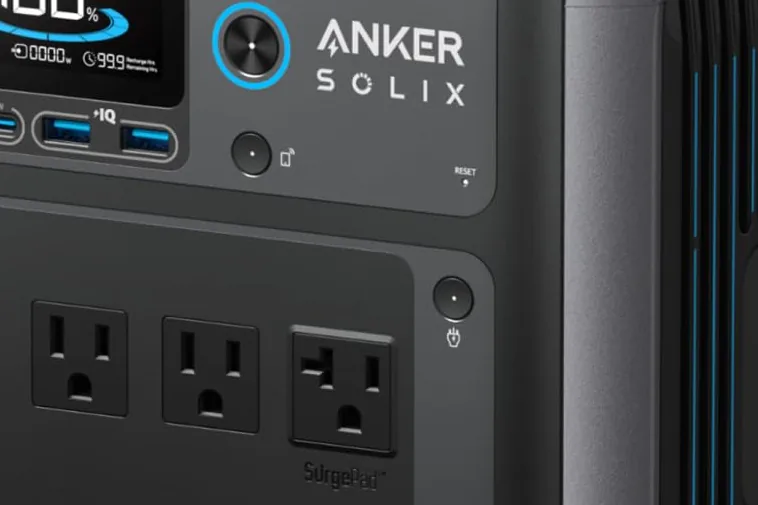
Very little, and Anker undersells it by printing no figure at all. Idling with its inverter running and nothing connected, Jasonoid's unit lost 0.58 %/h on its screen, about
Will the Wi-Fi and the desktop ride through when the power drops?
Yes. Anker promises a switchover under
Here the ride-through is a bonus, not the job. Some homes lose power often but only for an hour or so at a time, and for them keeping the router and the desk alive is the whole point. For those homes, our best power station under $500 page picks the EcoFlow DELTA 3 Classic instead. This page's buyer is the one with a fridge to keep cold all night.
What won't it start?
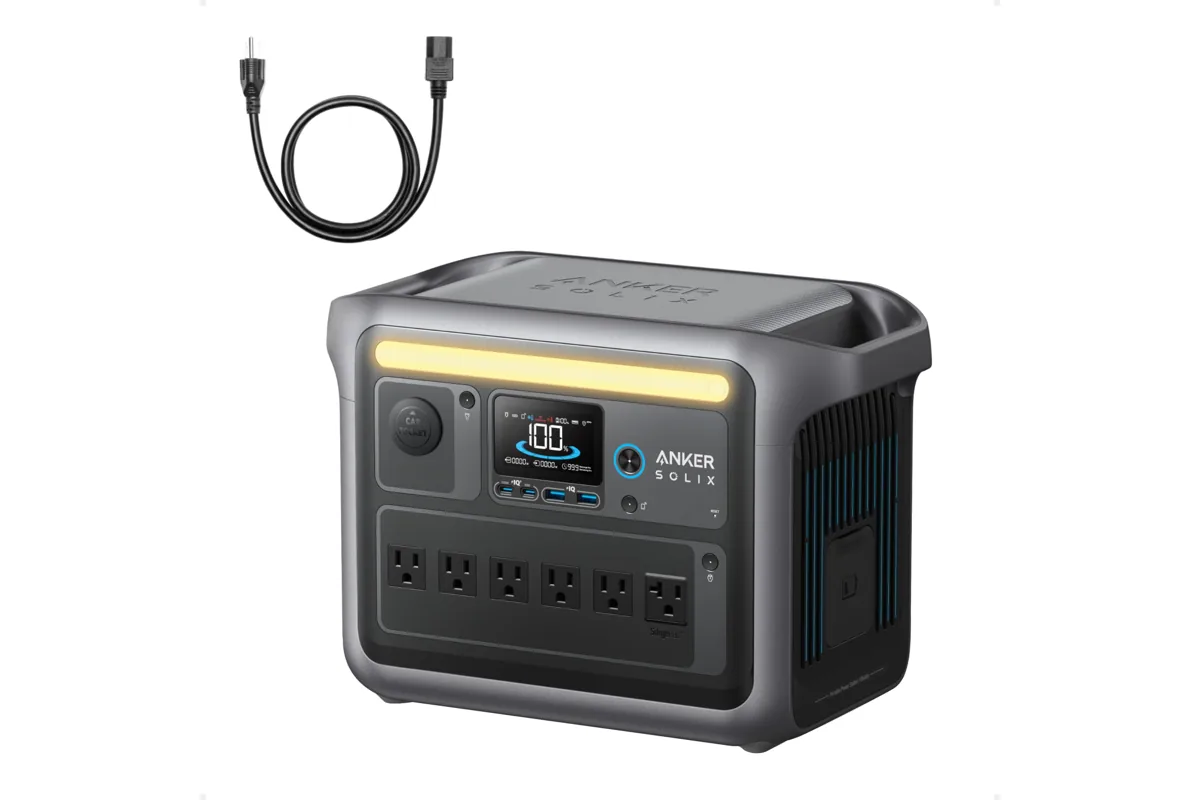
Big motors. The SurgePad outlet stretches to
Is it safety-listed?
Yes, properly. Intertek's directory lists model A1761 under
Will it switch off my fridge in the night?
It might, and this is the one real catch. Anker's FAQ says the AC switches itself off after
The same FAQ says AC Smart Mode and Car Port Saving Mode both switch off in the app, and the whole-unit timeout is set there too. Following the FAQ, we'd update the firmware, turn both modes off and set the longest timeout, all on the day it arrives. Annoying, and free to fix, as long as it's done before the storm and not at 2 a.m. with the freezer thawing.
We'd buy it to keep the fridge cold and the
What changed in the Gen 2 ?
The
The call: buy the Anker SOLIX C1000 for a fridge through the night
For a home that needs the fridge cold and the
The evidence in full
Which unit. Every result below is tied to the first-generation C1000, model A1761 (FCC ID 2AOKB-A1761, latest application
Usable energy, by tester.
| Tester | Load | Result | Date |
|---|---|---|---|
| OutdoorGearLab | Light-bar jig at about four fifths of rated output; lab buys its own units | ||
| Outdoor Life | Small grow light, Kill A Watt | May 2025 | |
| Outdoor Life | Dehumidifier, Kill A Watt | May 2025 | |
| Outdoor Life | Same dehumidifier after three months switched off on a garage shelf | May 2025 | |
| Footprint Hero | Small window air conditioner, smart plug | ||
| Footprint Hero | TV, smart plug | ||
| Footprint Hero | Laptop and monitor, smart plug | ||
| Footprint Hero | Fiber jack and one | Ran | |
| Jasonoid | AC drained to shutdown, load not stated | ||
| The Solar Pit | Load and method not stated |
The spread is explained by load: at moderate to heavy loads every result falls between about 85 and 92 percent of the rating, and at light loads the inverter's own running cost takes a growing share. The Footprint Hero results run in the same order, from the air conditioner down to the router.
Fridge runs. There's A Trick For That ran a full-size kitchen fridge from full to "just over
Idle draw. Over half a day with the inverter running and no load, Jasonoid's screen fell from 100 to 93 percent, his 0.58 %/h. The
Switchover. Jasonoid timed
Noise. Jasonoid measured
Charging. OutdoorGearLab needed a few minutes more than Anker's promised hour with UltraFast on, and
Motors and big loads. There's A Trick For That couldn't start a gas dryer full of wet towels from a normal outlet or the SurgePad outlet. The same video ran a gas furnace through an inlet transfer switch, but nobody checked how the neutral and ground are handled, so we don't read it as a furnace recommendation. Jasonoid saw a load a little above the continuous rating trip it after about half a minute, and his bigger saws tripped it on start-up.
Auto-off. Two answers in the same Anker FAQ give different low-load cut-off thresholds; both apply only when nothing is plugged in, so neither matters for a plugged-in fridge. The November 2023 shutdown predates the firmware the FAQ now recommends, and no test on current firmware was found. Paul Vang, an owner of about a year, reports that the car socket cut his cooler until firmware 1.5.1 added the Car Port Saving Mode switch, after about three months of support tickets; before that his workaround was a port timer reset every day. One owner, not a counted pattern.
Owners. One owner, UnBoxington Reviews, describes keeping his fridge and an espresso machine going through a two-day storm outage, refilling the station from a gas generator in about an hour. A Reddit owner's discharge runs reported by The Cool Down, on a unit called "C1000X
Safety listings. The Intertek ETL record names model A1761 under
Gaps. Every timed measurement here is from 2023 to 2025, more than a year old. Nobody has tested the claimed 3,000 cycles, the -4°F discharge floor or the add-on battery. No fridge test on current firmware exists. Anker's full English user guide didn't load; its Instructions & FAQ for this model did, and all settings advice above comes from it. The release date wasn't found.
Research count for this page: 1 models weighed; 1 maker manuals among them; across this site's research, 589 sources kept in full.
Sources
- Anker SOLIX C1000 US product page and
FAQ (opens in a new tab) - Anker SOLIX C1000 (A1761) Instructions & FAQ, hosted by
Lowe's (opens in a new tab) - Intertek ETL Listed Mark Directory: Anker SOLIX C1000, Model Nos.
A1761 (opens in a new tab) FCC ID 2AOKB-A1761 via fccid.io (opens in a new tab) CPSC recall listing (opens in a new tab) - OutdoorGearLab: Anker SOLIX C1000 review (Kenji
Mowrey) (opens in a new tab) - Outdoor Life: Best portable power stations (Laura
Lancaster) (opens in a new tab) - WIRED: Best portable power stations (Simon
Hill) (opens in a new tab) - Jasonoid: Anker SOLIX C1000 tested
(YouTube) (opens in a new tab) - Jasonoid: C1000 vs AC180 vs DELTA 2
(YouTube) (opens in a new tab) - Footprint Hero: Anker SOLIX C1000 runtime tests, 2024
(YouTube) (opens in a new tab) - Footprint Hero: Anker SOLIX C1000 review, 2023
(YouTube) (opens in a new tab) - There's A Trick For That: Anker SOLIX C1000 home backup tests
(YouTube) (opens in a new tab) - The Solar Pit: Anker SOLIX C1000 review
(YouTube) (opens in a new tab) - Paul Vang: one year with the Anker SOLIX C1000
(YouTube) (opens in a new tab) - UnBoxington Reviews: C1000 through a storm outage
(YouTube) (opens in a new tab) - The Cool Down: Anker SOLIX C1000X usable capacity owner
report (opens in a new tab)