Generator vs battery backup for home: which one your house needs after the tax credit ended
As an Amazon Associate I earn from qualifying purchases.
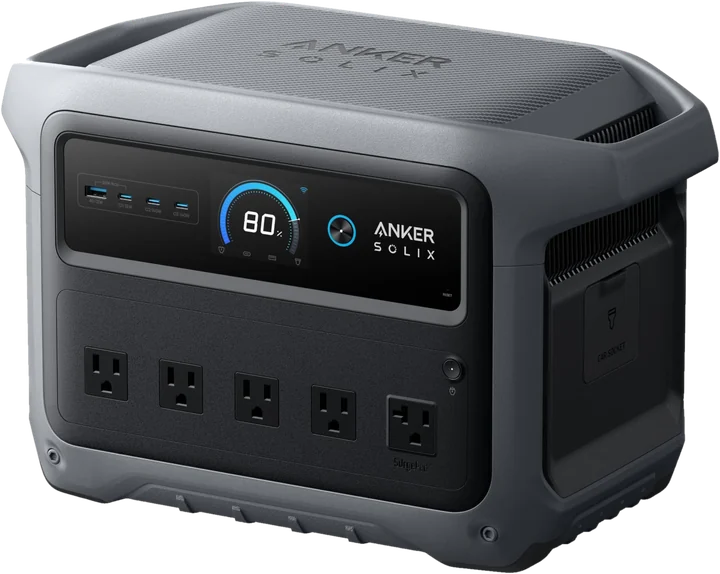
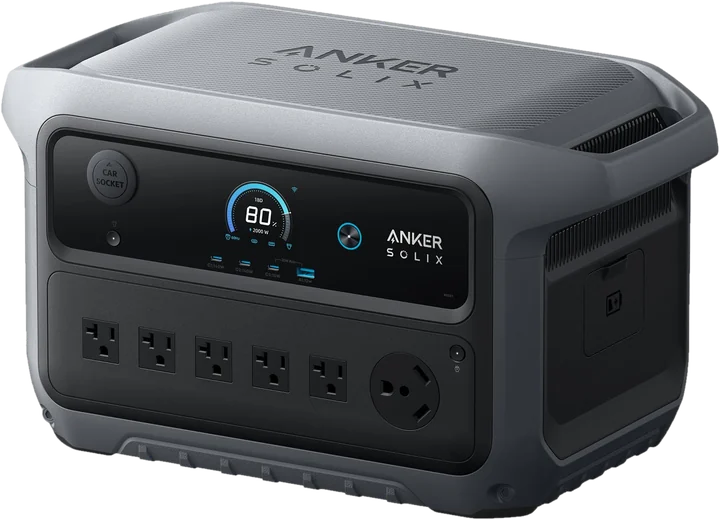
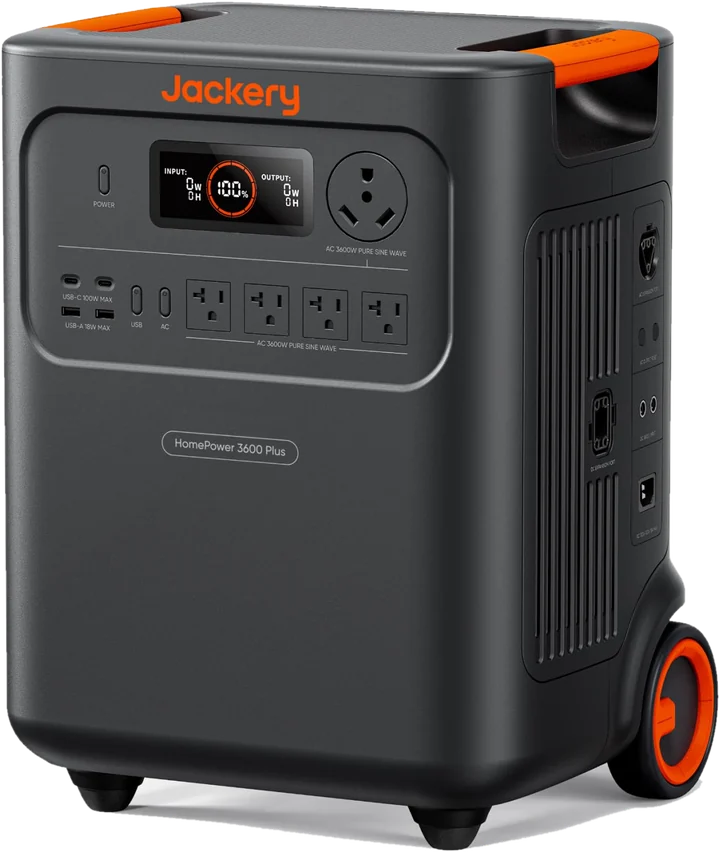 Start here: battery backup for the fridge, internet and lightsJackery HomePower
3600 Plus Check price on Amazon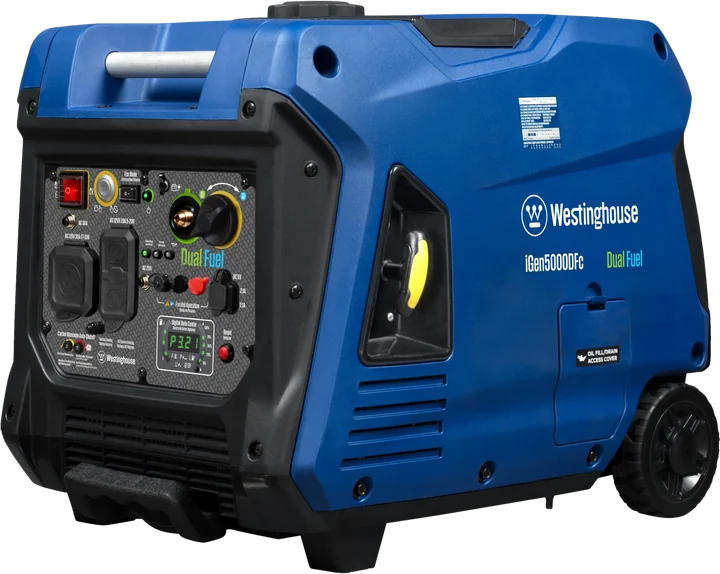 The
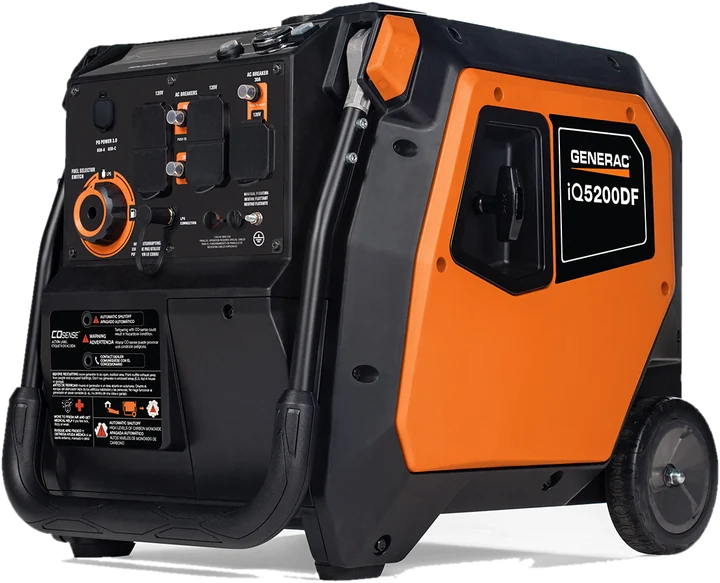
120 V generator: refilling a battery, or feeding an inlet and interlockWestinghouse iGen5000DFc Check price on Amazon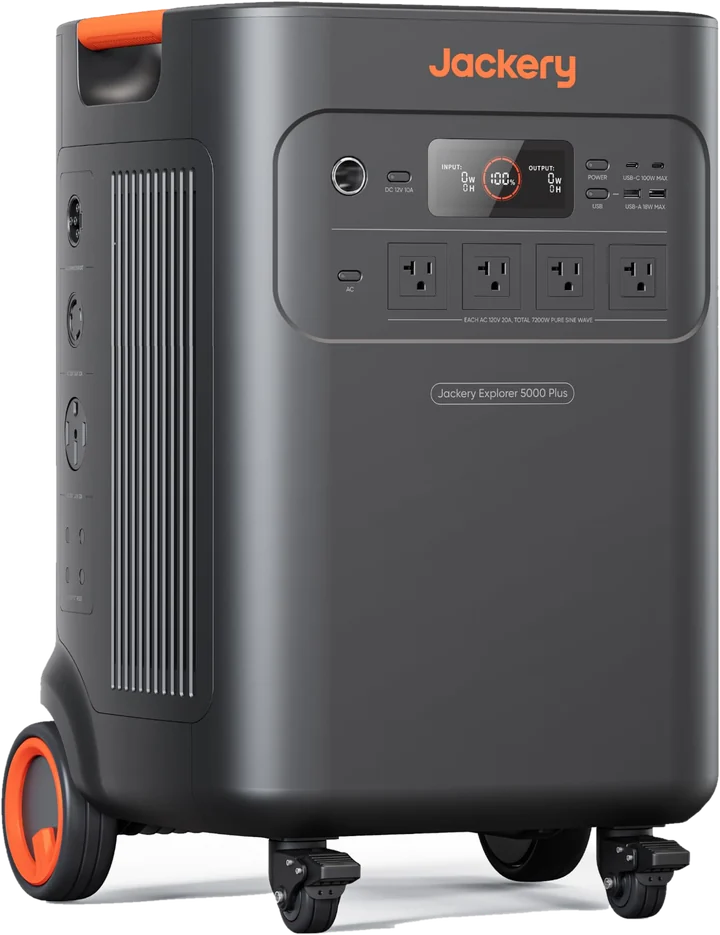 Fuel-free
240 V : well pump, central air or most of the houseJackery Explorer5000 Plus Check price on Amazon
Porchlight's answer to generator vs battery: start with a battery, the Jackery HomePower
Buy the battery first. Across all of 2024, the average US customer spent nearly half a day without power in total, by the Energy Information Administration's count. A battery covers that silently and indoors, with no fuel and no carbon monoxide. A generator earns its place when outages run for days, or when the load you can't lose runs on
A battery stores power; a generator makes it
A battery is a tank of electricity you filled before the storm. A generator is a small power plant that runs for as long as someone feeds it gas or propane.
How much of my house can a battery run?
Less than the box suggests. CNET's lab got about nine tenths of the
In the jet engine plant where my career was spent, a figure with no measurement behind it stayed on the shop floor. "Whole-home" printed on a box that holds a ninth of a home's day would have stayed there with it.
The good news is that the loads that hurt most when they stop are small. FoodSafety.gov says a closed fridge keeps meat, milk and eggs safe for only about an afternoon. With nothing else plugged in, CNET's test fridge stayed cold on the
A generator is the reverse: modest power, endless energy. Westinghouse claims up to
How close to the house can a generator run?
Outdoors, at least 20 feet from the house, and never in a garage, on a porch or in a carport. That is the Consumer Product Safety Commission's rule. Opening doors or windows, it warns, will not provide enough ventilation. Nearly 100 people a year die in the US from carbon monoxide from portable generators.
Generator manuals print a shorter clearance, but that figure is about fire, not the air your family breathes. The CPSC also advises buying a generator with a CO shutoff and fitting battery-backed CO alarms on every level. Champion's own manual says its shutoff is no substitute for those alarms.
In an apartment or a condo, the 20-foot rule settles it: buy a battery. Our guide to backup power for apartments picks one you can carry upstairs.
Will either one start my well pump or light my furnace?
First, voltage. A
Second, a wire nobody thinks about. Many gas furnace control boards check that neutral and ground are tied together (bonded) before they light. A "floating" neutral, left unconnected, is a known cause of lockouts.
Testers measured a floating neutral on the Explorer
Nobody in our evidence has lit a furnace on any of the five, so how the furnace is wired in matters. For a furnace fed by a generator, start with our
Is there still a tax credit for a home battery?
No. The IRS says the Residential Clean Energy Credit "is not available for any property placed in service after December 31, 2025." Older IRS wording still describes the credit running on, and many search results still promise it, Google's AI summary among them. The end date is the sentence that counts.
An installed whole-home battery now costs its full price. EnergySage's 2026 average runs to five figures before incentives, and one owner's standby generator install did too. See why the credit is gone and what backup costs now and real installed costs for standby generators.
What this means for what you buy
Start with a battery that:
- kept a lone full-size fridge cold right through CNET's rundown, well past a full day, with less in hand once the router, lights and phones join in;
- rolls from room to room;
- delivers close to what its box promises;
- charges fast enough to make a generator worth adding later.
That's the HomePower
Which one fits your outages?
The 2024 averages hide a long tail. South Carolina customers averaged more than two full days without power, mostly from three hurricanes. Arizona's averaged less than a feature film. Find your situation:
- Outages from a few hours up to a couple of days, for the fridge,
Wi-Fi and lights: one battery, the Jackery HomePower3600 Plus . - An apartment or condo, whatever the outage: a battery only. Backup power for apartments has the pick.
- Outages that run a week on
120 V loads: a battery refilled by a generator. The station-and-generator pairing guide picks the Anker SOLIX F3000, refilled by the Westinghouse iGen5000DFc. - A
240 V well pump or central air, with no fuel in the shed: the Jackery Explorer5000 Plus on a transfer switch. - Most of the house on battery,
240 V included, with no engine to run: our whole-house battery guide picks the same Explorer5000 Plus . - The house's
120 V circuits, furnace included, fed from a portable generator via an inlet box and panel interlock that an electrician installs: our whole-house generator guide picks the Westinghouse. 240 V at the panel without a standby install: our portable-vs-standby guide picks the Explorer5000 Plus if you want power back by itself. If you'd rather wire a fuel generator to the panel on an interlock, the240 V model we've weighed for that job is the Champion 201175, and its review carries the current call.
Running both is the long-outage answer
How much fuel does a battery save a generator?
A generator wastes fuel loafing along on a light load, and an outage's essentials are light. Put a battery between them and the generator only runs to refill it, hard and briefly.
One tester ran the same RV loads for a day both ways, air conditioning included. On its own, a propane inverter generator ran all
It was one RV on one day, with a solar panel quietly helping and the hybrid propane estimated. So take the size of the saving as a strong hint, not a promise. The direction isn't in doubt. A generator that runs a quarter of the day is one you refuel less often and hear less at night. The tester's own lesson: how fast the battery charges matters as much as its size.
Start here: Jackery HomePower 3600 Plus
Jackery's banner promises up to
The box alone is honest. Three capacity tests, CNET's among them, each got about nine tenths of the claimed
It refilled from a wall outlet in about two and a half hours in two labs. One tester saw it draw
The surge claim oversells. Jackery prints
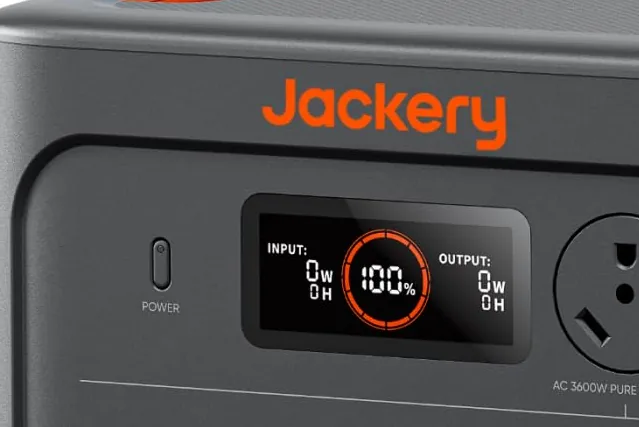
If a CPAP has to share one battery with the fridge, our CPAP guide picks this station for that job. Read Jackery's own FAQ first, though: it doesn't recommend its stations for medical equipment.
The one real catch: it is
We'd buy it. It covers the outages you actually get, from a few hours to a day or more, all on ordinary outlets. If food is your first worry and a small generator may follow, it's also the battery with a measured generator day.
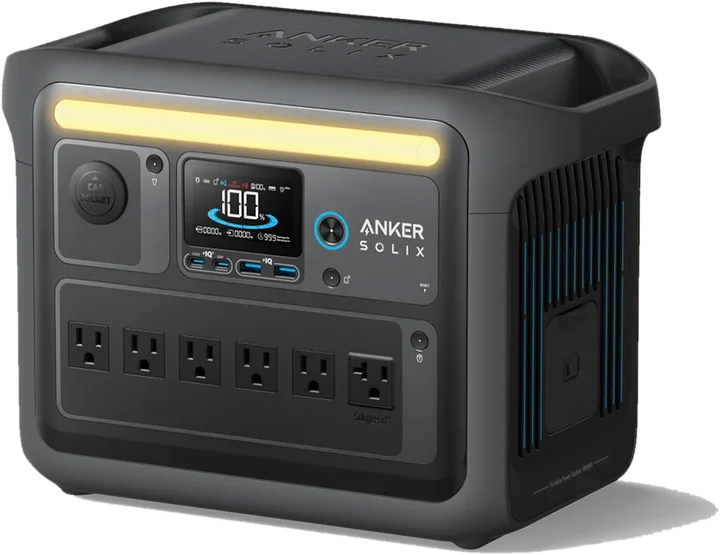
If outages run for a week: Anker SOLIX F3000
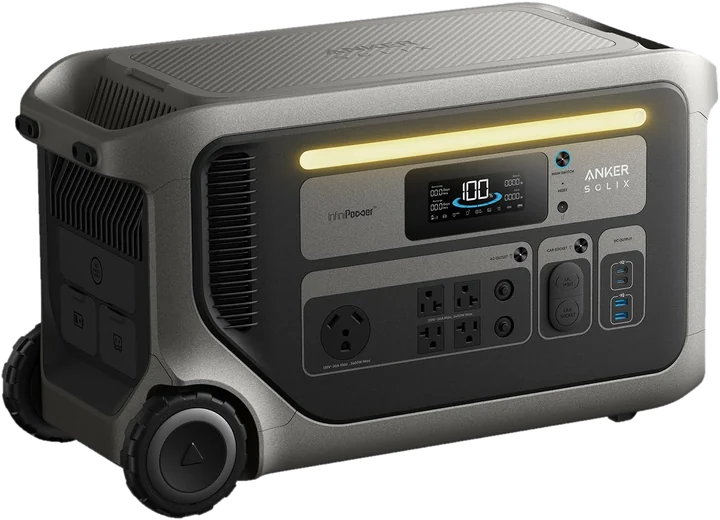
For a week-long outage, what matters is how fast the battery refills, and that is this box's strength. With Anker's charging cable in a generator's
Its switchover is quicker than Anker promises. One tester's oscilloscope caught it moving from grid to battery in
The one real catch: on its own, it's the weaker fridge battery. In CNET's fridge test it ran
We'd buy it for week-long outages with a
The 120 V generator: Westinghouse iGen5000DFc
Westinghouse promises a quiet, clean dual-fuel inverter generator with a CO sensor that shuts it down. Where checked, the claims hold. Wirecutter ran it from light loads up to a pressure washer and a space heater, and it delivered its promised power.
On gas, the manual for its wheel-kit sibling, the iGen5000DFcv, rates it to carry
"As low as
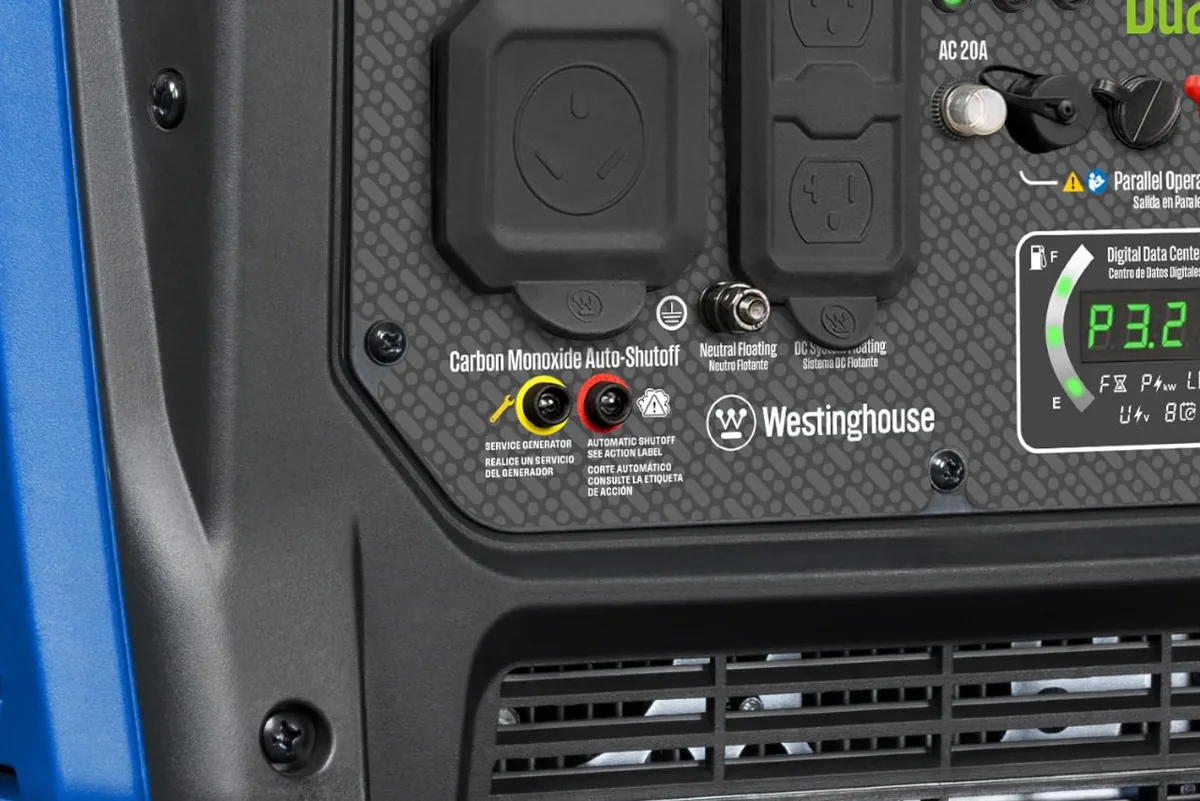
The one real catch: its sibling's manual says the neutral floats, and no one in our evidence has lit a furnace on it. Our
We'd buy it as the
If you need 240 V without fuel: Jackery Explorer 5000 Plus
This is the one battery here that makes
A separate tester held it just under its rated
The headline to read twice is "True 0ms UPS switching". Jackery's own manual limits that to one mode on the
The one real catch is the tax it pays for being switched on. With nothing plugged in, The Solar Lab measured it drawing
We'd buy it if a
Weighed and left out here: Champion 201175
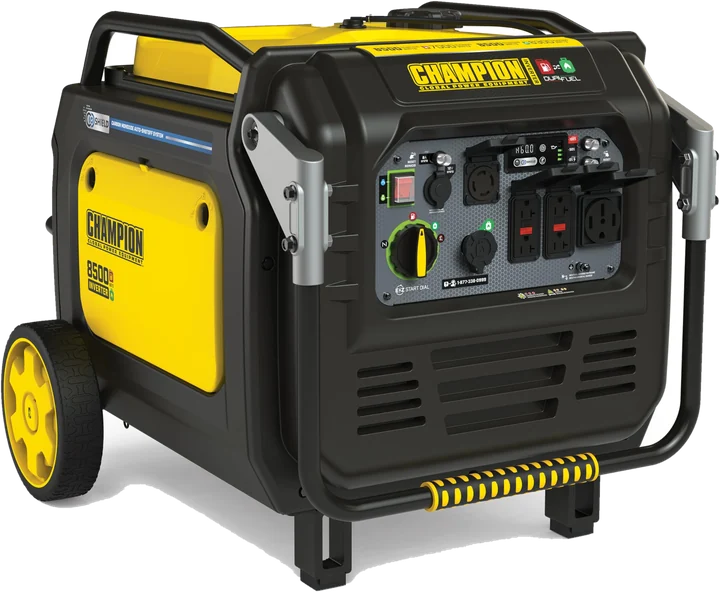
This page gives no call on the Champion, because its buyer is a narrower one: a home wiring a fuel generator to the panel through an interlock for
On paper it suits the interlock job well. It makes
Owners report prompt starts in freezing weather, propane included, and complaints are few. Its record rests on the maker's manual and owners rather than an instrumented test of this exact model. At
Generator or battery: what we'd buy
Buy the battery. The Jackery HomePower
If your outages run for a week, pair the Anker SOLIX F3000 with the Westinghouse iGen5000DFc, and let the generator work a few hours instead of all day. If a
| Pick | Who it's for | Call | |
|---|---|---|---|
| Jackery HomePower | Fridge, internet and lights through outages of a few hours to a day or more | Buy | View on Amazon |
| Anker SOLIX F3000 | Week-long outages, refilled from a | Buy | View on Amazon |
| Westinghouse iGen5000DFc | The | Buy | View on Amazon |
| Jackery Explorer | A | Buy | View on Amazon |
Either way, the best backup is the one that doesn't need you in the yard at 3 a.m. with a gas can.
The evidence in full
Research count: 5 models weighed; 4 maker manuals among them; across this site's research, 589 sources kept in full.
Which option fits which outage
| Your outages | What must keep running | What to buy |
|---|---|---|
| A few hours up to a couple of days | Fridge, | One battery: Jackery HomePower |
| Any length, in an apartment or condo | The same, indoors only | A battery only (apartment guide) |
| A week or more | Anker SOLIX F3000 refilled by the Westinghouse iGen5000DFc (pairing guide's pick) | |
| Any length | A | Jackery Explorer |
| Any length | Most of the house on battery, | Jackery Explorer |
| Days | The house's | Westinghouse iGen5000DFc (whole-house generator guide's pick) |
| Any length | Power back by itself at | Jackery Explorer |
| Days | A fuel generator on a panel interlock, | Champion 201175 is the |
Neutral and ground, by machine
| Machine | Neutral, and whose finding it is |
|---|---|
| Explorer | Floating, measured by ReeWray Outdoors and Will Prowse |
| Anker F3000 | Floating on battery, measured by Jasonoid |
| Westinghouse iGen5000DFc | Floating, per the manual for its sibling, the iGen5000DFcv |
| HomePower | Not stated by Jackery |
| Champion 201175 | Bonded to the frame, per its own manual |
The measured hybrid day
| Setup | Generator run over the day | Propane burned |
|---|---|---|
| Generator alone | ||
| Generator plus the | about |
Jackery HomePower 3600 Plus (US model JHP-3600A)
| What | Jackery says | Measured or seen |
|---|---|---|
| Capacity | ||
| Fridge | "up to | |
| Round-trip efficiency | not stated | 79.66% (CNET) |
| Inverter efficiency | not stated | 89% (The Solar Lab, Oct 2026) |
| Surge | ||
| Idle, inverter on | not stated | |
| Wall charging | ||
| Backup (UPS) switchover | within | worked up to |
| only from two paralleled units | not tested on any motor | |
| Neutral | not stated for this model | not measured; Jackery's FAQ for the different HomePower |
| Cold charging | - | BackupPowerHub reports a Jackery FAQ giving |
The hybrid day comes from Ruby's Adventures Unplugged (Aug 2026), whose video carries affiliate links and discount codes. A solar panel stayed connected for every run, which flatters the hybrid result. This was a single day with the battery refilled from about a tenth to full, so it is not a projection for longer outages.
The manual says Energy Saving Mode is on by default and turns the outputs off after
Reddit couldn't be read this run. One Jackery-sponsored owner ran the unit through a panel interlock during a five-day Nashville ice storm and credits the wheels for being able to move it. That is a single, sponsored report. The CPSC database holds no Jackery recall, and no FCC ID turned up.
On this evidence our call stands: buy it for the fridge, internet and lights through the outages you actually get.
Jackery Explorer 5000 Plus (US model JE-5000A)
| What | Jackery says | Measured or seen |
|---|---|---|
| Capacity | ||
| Continuous output | just under | |
| Surge | ||
| Motor starts | not stated | 3-ton central air started (ReeWray; the amp figure on screen is the compressor's nameplate value, not a measured start); |
| Idle | ||
| UPS switchover | "0ms" headline; manual: | about |
| Neutral | not stated | floating; an EV charger refused it until a bonding plug was fitted (ReeWray; Will Prowse saw the same) |
| Wall charging | ||
| Cold charging | won't charge below | one Jackery partner-channel owner keeps it on a heat pad in a barn |
Software has been the weak spot. Will Prowse's launch unit had trouble connecting to the app and the transfer switch. A GearDiary owner has to power-cycle it before it rejoins
It charges from a portable generator only at
Our call stands: buy it if a
Anker SOLIX F3000 (US model A1782, FCC ID 2AOKB-A1782)
| What | Anker says | Measured or seen |
|---|---|---|
| Capacity | ||
| Efficiency | not stated | round trip 74.62% (CNET); inverter 84%, both new and after a year (The Solar Lab) |
| Fridge | ||
| Idle | not stated | |
| UPS switchover | ||
| Wall charging | ||
| Surge | ||
| Noise | not stated | |
| Generator charging | refill in under an hour by that route (The Solar Lab); no full-day fuel test | |
| Neutral | not stated | floating on battery; takes ground from the charging source on AC; bonded in EV mode (Jasonoid) |
A rubber port flap broke within a year on The Solar Lab's long-term unit. The US manual couldn't be obtained, so specs come from Anker's US page. No CPSC recall names this model.
Our call: buy it for week-long outages refilled from a
Westinghouse iGen5000DFc
Westinghouse publishes only the iGen5000DFcv manual for this family, and its figures belong to that wheel-kit sibling:
Wirecutter ran it at loads from light to heavy. It delivered its promised power and never exceeded
Lowe's reviews across the iGen4500 and iGen5000 family describe generators that run on only one fuel, choke faults and fuel leaks, but none of those reviews names the iGen5000DFc. Single reviews that do name it report shutdowns while running an air conditioner at altitude, many phone calls before a defective unit was replaced, and a starter battery that arrived dead.
Lowe's item 6021833 is titled iGen5000DFc, but its model field reads IGEN4500DFC, and one reviewer received an iGen4500. That is a retail listing problem involving the sibling, and checking the label on delivery catches it. No CPSC recall names the iGen5000DFc; Westinghouse recalled the iGen4500DF for fuel leaks in 2020.
Our call stands: buy it as the
Champion 201175
Champion's page and manual give these figures:
8,500 W starting,7,000 W running on gas and6,300 W running on propane, at 120/240 V ;- distortion under 3%, with the neutral bonded to the frame;
- a 5.33-gallon tank and
14 h at a quarter load; 64 dBA at the maker's stated distance;- starting down to
5 °F , and a weight of213.9 lb ; - a 3-year warranty, no parallel kit and no remote start.
No instrumented test exists for this exact model, and Wirecutter has published no measurements of it. The Solar Lab's months-long review and Signature Solar's oscilloscope test cover a Champion
All 231 Lowe's reviews were read. Three owners report prompt starts in freezing weather, propane included. There are three problem reports in total: oil use after a year with a slow repair network, overloads near the top of its rating, and a proprietary propane hose. One owner says he converted it from a bonded to a floating neutral using a Champion video, which the manual doesn't mention. No recall names the 201175.
No call on this page; its review carries the current call for a fuel generator wired to the panel at
Shared sources
| Source | What it says |
|---|---|
| EIA, 2024 outage data | Nearly half a day of interruptions per customer, almost twice the previous decade's average, with three 2024 hurricanes behind most of the hours |
| EIA, 2024 household use | An average US home's daily use came to almost nine times the energy CNET drew from a |
| CPSC release 26-237, Jan 2026 | Nearly 100 deaths a year from portable-generator carbon monoxide; run generators outside only, at least 20 feet from the house; the regulator's figure governs over manuals' shorter fire clearances |
| IRS | The credit is not available for property placed in service after December 31, 2025; passages on the same pages that mention a 2033 phase-out are outdated text |
| EnergySage, 2026 | The average installed home battery runs to five figures before incentives |
| One owner's 2021 standby invoice | Ran to five figures; unsourced cost ranges in search summaries were left out |
| Other hybrid videos | The "fuel saved" figures checked were extrapolated, not measured, so they were left out |
Sources
- Jackery HomePower
3600 Plus user manual(JHP-3600A) (opens in a new tab) - Jackery Explorer
5000 Plus user manual, US(JE-5000A) (opens in a new tab) - Westinghouse iGen5000DFcv manual (sibling of the
iGen5000DFc) (opens in a new tab) - Champion 201175 operator's
manual (opens in a new tab) - IRS: Residential Clean Energy
Credit (opens in a new tab) - IRS: FAQ on energy efficient home improvement and residential clean energy property
credits (opens in a new tab) - EIA: US electricity customers averaged
11 hours of interruptions in2024 (opens in a new tab) - EIA: average US residential electricity use,
2024 (opens in a new tab) - CPSC release 26-237: carbon monoxide risks during power
outages (opens in a new tab) - FoodSafety.gov: keeping food safe when you lose
power (opens in a new tab) CPSC recall listing (opens in a new tab) CPSC recall API search: Jackery (opens in a new tab) - Jackery US page: HomePower 3600
Plus (opens in a new tab) - Jackery US page: Explorer 5000
Plus (opens in a new tab) - Jackery FAQ: Explorer
5000 Plus basicinformation (opens in a new tab) - Jackery FAQ: HomePower
3600 Pro Max basic information (a differentmodel) (opens in a new tab) - Anker SOLIX F3000 US product
page (opens in a new tab) - FCC ID 2AOKB-A1782 (Anker SOLIX
F3000) (opens in a new tab) - Westinghouse iGen5000DFc store
page (opens in a new tab) Champion 201175 product page (opens in a new tab) - EnergySage: home energy storage costs,
2026 (opens in a new tab) - CNET Labs: best portable power
stations (opens in a new tab) - Wirecutter: best portable
generator (opens in a new tab) - The Solar Lab: Jackery HomePower
3600 Plus review (opens in a new tab) - The Solar Lab: what is a smart transfer
switch (opens in a new tab) - The Solar Lab: Jackery Explorer
5000 Plus (video) (opens in a new tab) - The Solar Lab: Anker F3000
review (opens in a new tab) - The Solar Lab: Anker F3000 after one year
(video) (opens in a new tab) - The Solar Lab: Champion 8500 dual fuel generator
review (opens in a new tab) - Ruby's Adventures Unplugged: generator fuel with and without a power
station (opens in a new tab) - HOBOTECH: Jackery HomePower 3600
Plus (opens in a new tab) - Mike Builds: Jackery HomePower 3600
Plus (opens in a new tab) - Adventure Gear TV: Jackery HomePower
3600 Plus (Jackery-sponsored) (opens in a new tab) - Joe The Farmer: five days without power
(Jackery-sponsored) (opens in a new tab) - BackupPowerHub: power stations in freezing
temperatures (opens in a new tab) - ReeWray Outdoors: Jackery Explorer 5000
Plus (opens in a new tab) - Will Prowse: Jackery Explorer
5000 Plus launchunit (opens in a new tab) - Herb-O-Matic: Jackery Explorer 5000
Plus (opens in a new tab) - GearDiary: Jackery Explorer
5000 Plus review (opens in a new tab) - Snowstead: whole-house test on a Jackery transfer panel
(Jackery-sponsored) (opens in a new tab) - Brian's Farming Videos: a year with the Explorer
5000 Plus in abarn (opens in a new tab) Jasonoid: Anker SOLIX F3000 (opens in a new tab) HOBOTECH: Anker SOLIX F3000 (opens in a new tab) - Floating neutral and furnace board lockout
(video) (opens in a new tab) - Andy Lippold: Westinghouse iGen5000DFc owner
video (opens in a new tab) - Lowe's reviews: Westinghouse iGen5000DFc
listing (opens in a new tab) Lowe's reviews: Champion 201175 (opens in a new tab) - Signature Solar: Champion
8500 W inverter on anoscilloscope (opens in a new tab) - Owner video: standby generator install and
upkeep (opens in a new tab) - Google search results for generator vs battery backup for
home (opens in a new tab)