Best backup power for apartment living: fuel-free stations you can carry upstairs
As an Amazon Associate I earn from qualifying purchases.
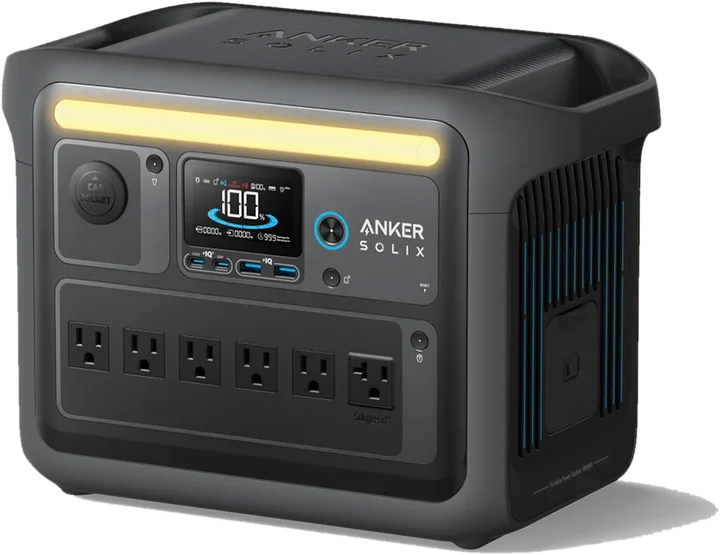
Porchlight's pick for apartment backup is the Anker SOLIX C2000
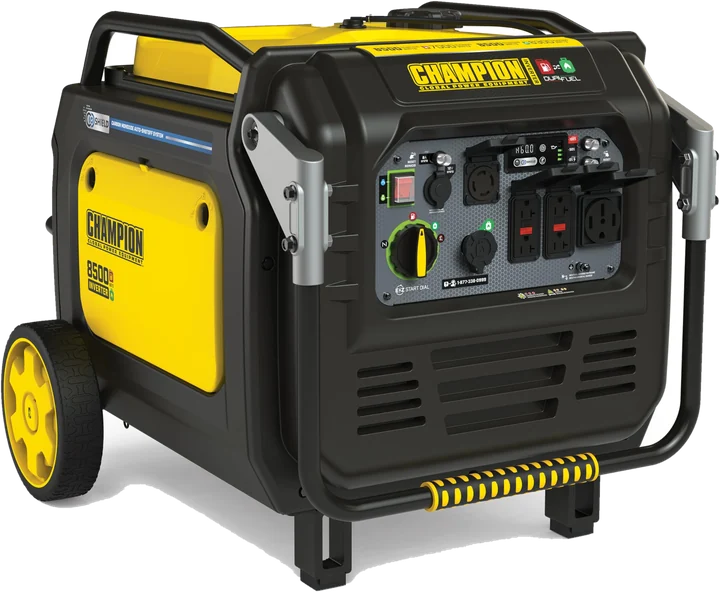
Type "backup generator for apartment" into a search bar and you get a list of generators. The federal safety regulator says never to run one on a porch, and most apartments have no other outside. What works is a battery that burns nothing, sits quietly by the fridge and refills from the outlet behind the couch. Porchlight's pick for apartment backup is the Anker SOLIX C2000
What changes the answer in an apartment
Three things decide it, and none of them is watts.
Fuel is out. The Consumer Product Safety Commission leaves no gray area: a portable generator never runs inside the home or garage, never on a porch or under a carport. The regulator also sets a minimum distance from the house that a balcony or a parking spot by the door can't meet, and it says opening windows won't make an indoor generator safe. It counts nearly 100 deaths a year from generator carbon monoxide. Most apartments and many townhouses have no spot that meets that rule, so every pick here is a battery. Our guide to generator against battery backup covers homes that do have a yard, and the exact placement rule.
The stairs come next. We held every pick under sixty pounds. Above that, makers add wheels for a reason, and wheels don't climb stairs. Within that limit we ranked on what you get back for each pound you haul: measured usable energy divided by weight.
Then the neighbors and the outlet. A station is silent until its fans spin up, and in a building that matters. With one wall outlet to refill from, recharge time decides whether you're ready for a storm's second blackout.
Best for most apartments: Anker SOLIX C2000 Gen 2
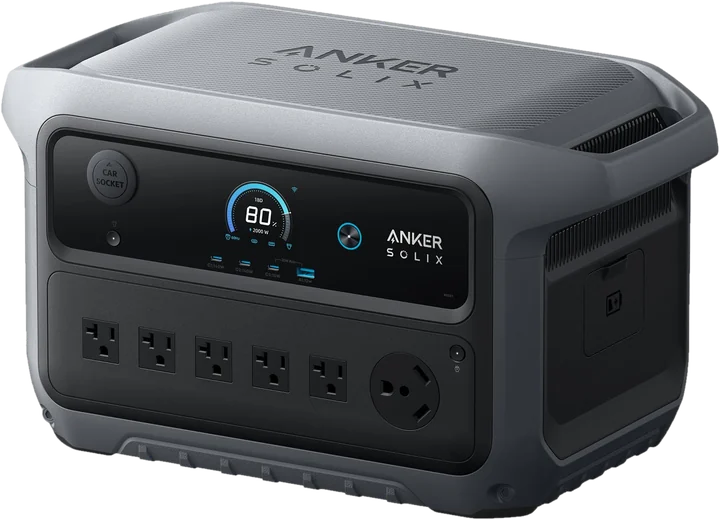
Anker sells it on three numbers, and two of them survive a meter. The battery is labeled
The third number is the charging headline:
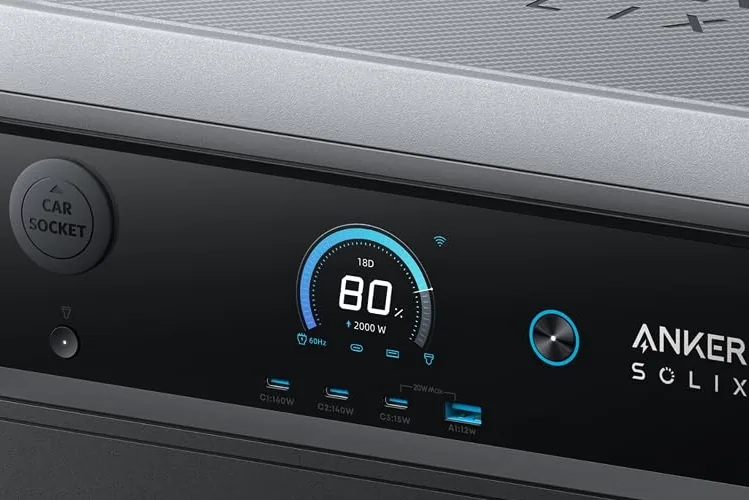
The catch: on its own this is a day of fridge, not a weekend. For longer outages, Anker's matching
We'd buy it for cold food, a working router and lamps through a full day without power. Our home page and our home backup roundup both name this same C2000 for apartments and walk-ups. For most houses, both pick the Jackery HomePower
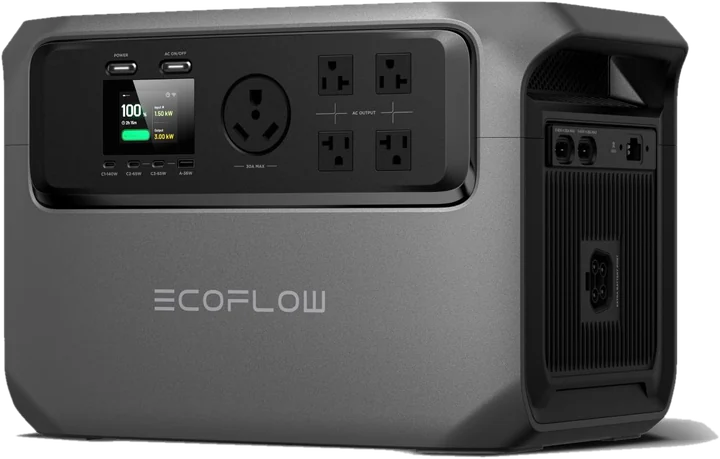
Best on a tight budget for short outages: EcoFlow DELTA 3 Classic
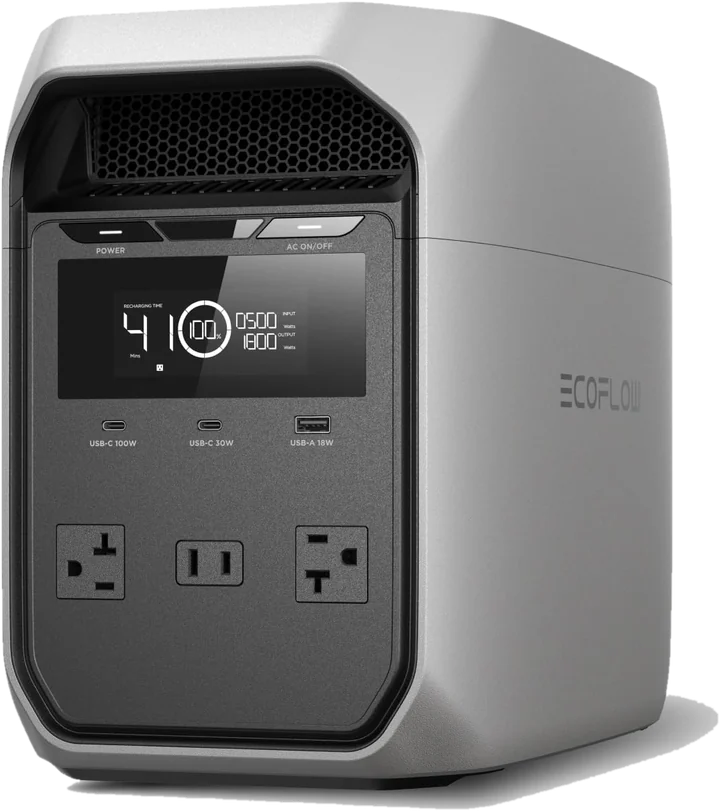
This is the station for a building where the power drops for an evening every few weeks and the real casualty is a video call. EcoFlow's claims are modest and, for once, mostly true. The label says
The catch is what it spends doing nothing. Switched on with nothing plugged in, it burned 30% of its battery in a day for one tester. Another measured
We'd buy it for
Lightest to carry, for a CPAP and the router: Anker SOLIX C1000 Gen 2
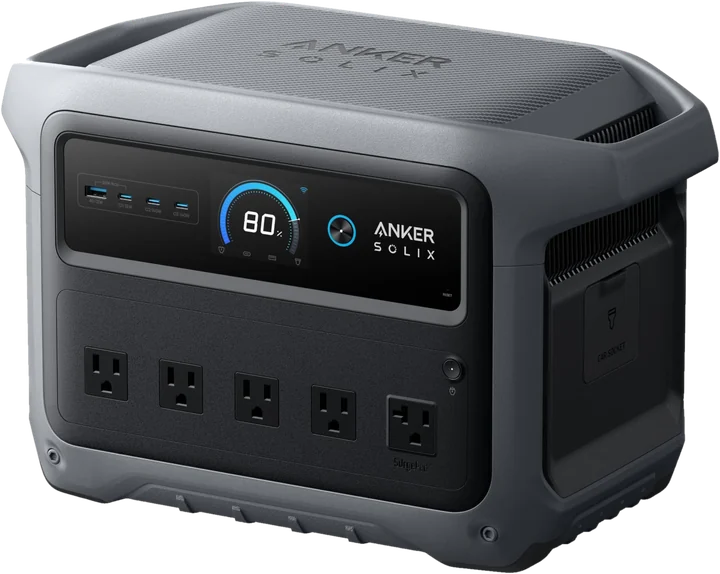
At
What it does well is ride through a cut. One owner pulled the wall plug with a PC and a 3D printer mid-print running, and nothing stopped. That's one person's untimed report, but it's exactly the job a CPAP needs done at 3 a.m.
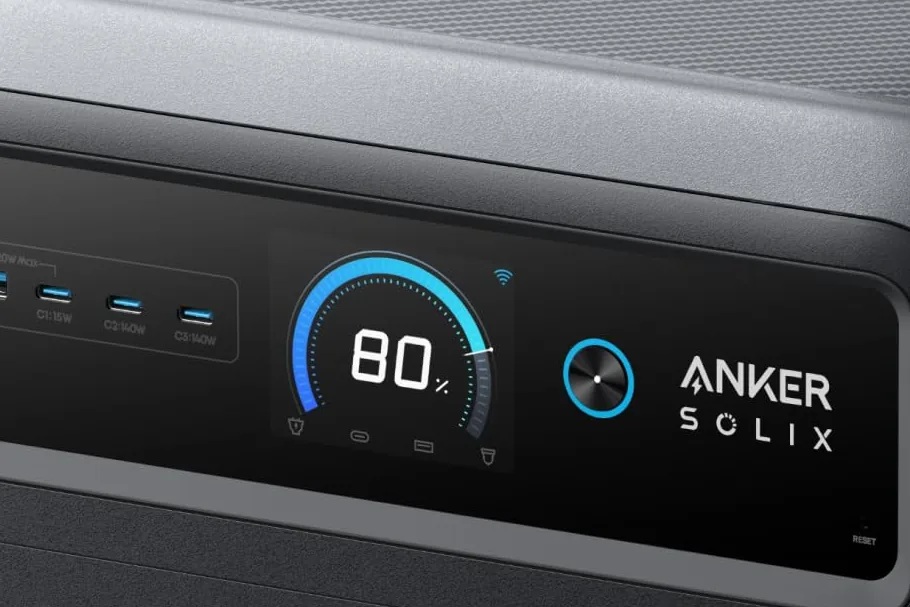
The catch: it isn't a fridge box. One reviewer's large refrigerator ran
For one or two nights of breathing machine and
A day of fridge for less, if you can lift it: BLUETTI Elite 200 V2
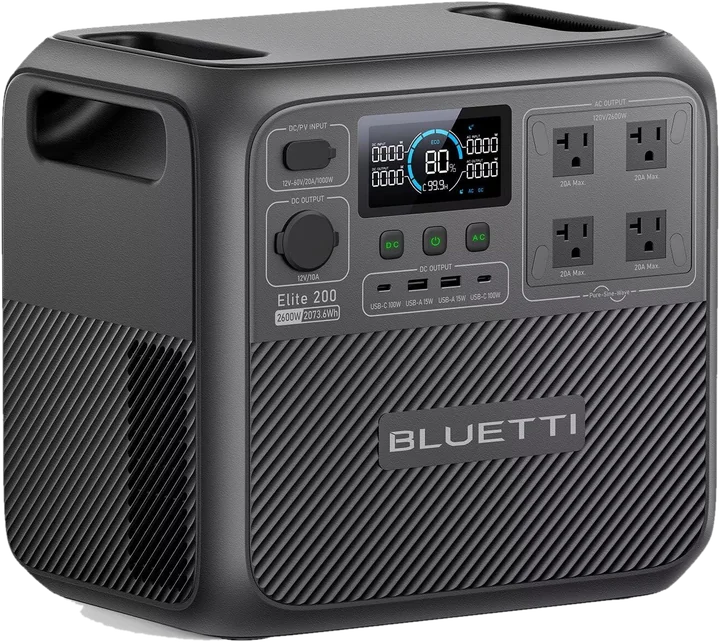
Most stations here hand back somewhere under nine-tenths of their label. This one hands back nearly all of it: four testers measured
Two settings need attention, and both are in BLUETTI's US manual. It ships with ECO mode active, which shuts the outlets down when the draw is small. The manual tells owners to disable ECO for a fridge or lamps, the very loads you'll plug in. The
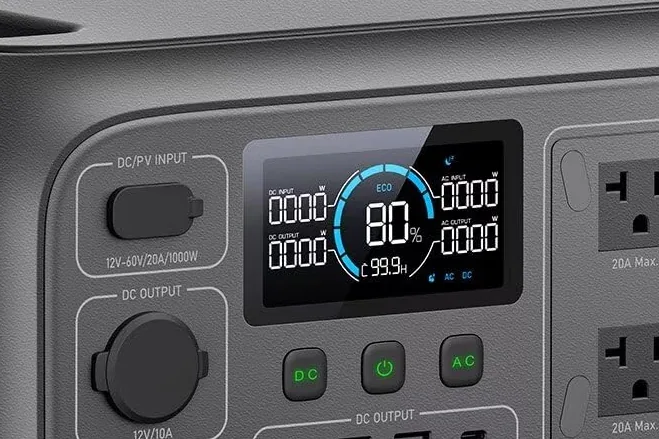
The catch is weight. At
We'd buy it on a tighter budget if your stairs are short or someone strong lives with you. The Elite
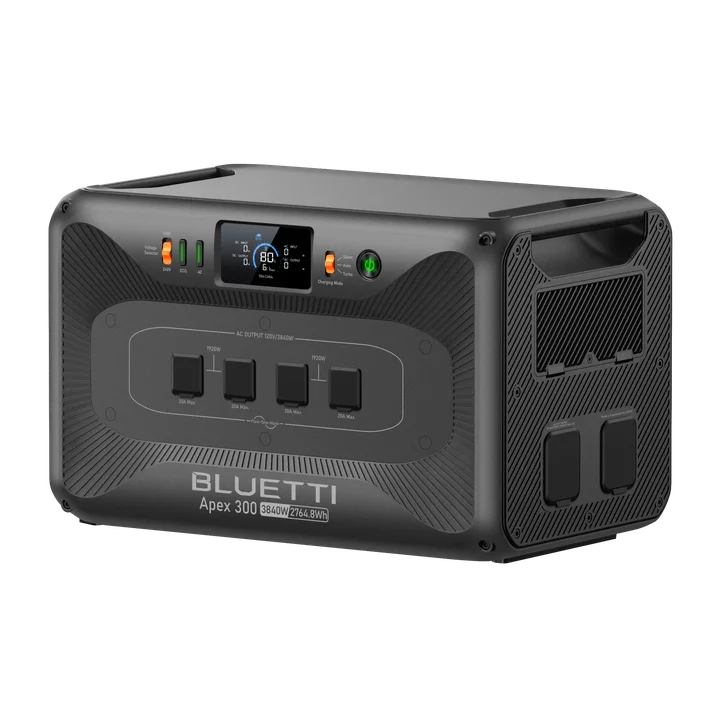
Most energy you can still carry: BLUETTI Elite 300
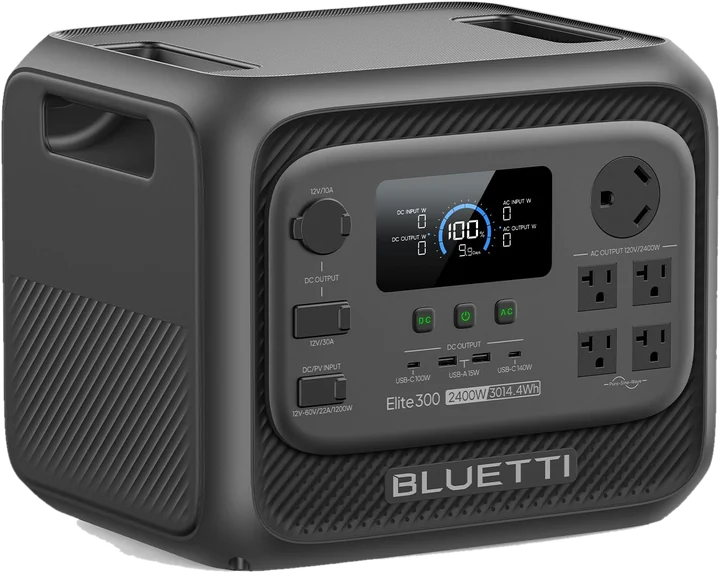
BLUETTI calls it the world's smallest portable power station in its capacity class, with a market-research firm's certificate to prove it. That's a lot of paperwork for a box that still weighs
Two claims need translating. The "4800W Surge" in Amazon titles is a mode for kettles and heaters; BLUETTI's manual says real output stays at
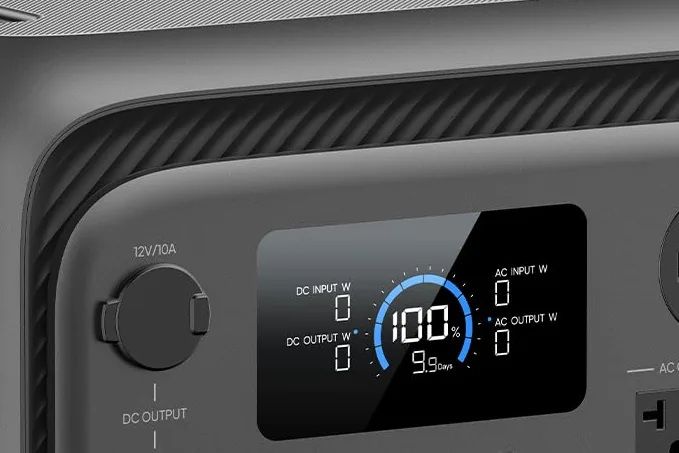
The catch is noise. A tester's meter showed
We'd buy it for outages that run past a day, if someone at home can lift a box just under sixty pounds and the fan won't bother anyone. The Elite 300 review has the full record.
New this year, and what we're watching
EcoFlow's DELTA 3800 Gen4 went on US pre-order this month and ships late in November. On paper it's a big step:
For an apartment, the number that matters most won't change with testing:
The Elite 300 is also a 2026 model, but it has already earned its place above on independent tests.
How the picks were decided
We began with what an apartment rules out: fuel, and anything too heavy for the stairs. Every winner charges from a wall outlet and weighs under sixty pounds. We divided each station's measured usable energy by its weight. We compared fridge hours per usable kilowatt-hour on the one lab fridge several stations shared. Measured noise and wall-recharge times sat beside that. No station won unless two separate types of evidence covered its exact model, at least one from someone other than the maker. Our count: 10 models weighed, with 8 maker manuals among them, and 589 sources kept in full across this site's research. To check what your own fridge and router need, try the home backup power calculator.
Will my building let me keep a big lithium battery?
Probably, but check, because this is where the evidence runs out. The building-code limits people quote are written for installed home batteries listed to
How long will it keep my fridge cold?
That depends on your fridge, so we compare stations on one fridge. CNET ran the same full-size Whirlpool on two of our picks until the battery quit. The C2000 lasted
Will the neighbors hear it?
Makers claim near-silence at light loads, and nobody in our evidence measured them there. Our numbers come from moments when a station works hard or refills fast. On those, the DELTA 3 Classic (
The five picks side by side
Usable watt-hours per pound is our division of measured usable energy by the maker's weight.
| Pick | Weight | Usable watt-hours per pound | Loudest measured | Full wall recharge, measured | Amazon |
|---|---|---|---|---|---|
| Anker SOLIX C2000 | 43 | View on Amazon | |||
| EcoFlow DELTA 3 Classic: tight budget, short outages | 35 | View on Amazon | |||
| Anker SOLIX C1000 | 35 | not measured in decibels | View on Amazon | ||
| BLUETTI Elite | 36–38 | View on Amazon | |||
| BLUETTI Elite 300: most energy you can carry | 46–48 | View on Amazon |
Our pick for apartment backup: Anker SOLIX C2000 Gen 2
It's the one we'd carry up the stairs. On lab evidence it holds a big kitchen fridge at temperature for a little over a day. It's quiet enough not to start a conversation with the neighbors. A single outlet takes it from flat to full in under an hour and a half, and when you need more, it grows in a second box you carry separately. The C2000
The evidence in full
Every station we weighed
Usable watt-hours per pound: measured usable energy divided by the maker's weight (our division). Fridge hours per usable kWh: CNET's fridge hours divided by CNET's measured usable kWh, on the same full-size Whirlpool fridge (our division). Stations without a CNET fridge rundown can't be compared on that column.
| Station | Weight | Measured usable energy | Usable watt-hours per pound | Fridge hours per usable kWh | Measured noise | Measured wall recharge | Measured idle, AC on | Call here |
|---|---|---|---|---|---|---|---|---|
| Anker SOLIX C2000 | 43 | 15.1 | Buy | |||||
| EcoFlow DELTA 3 Classic | 35 | no lab rundown | Buy | |||||
| Anker SOLIX C1000 | 35 | no lab rundown | no decibel reading | about | Buy | |||
| BLUETTI Elite | 36–38 | 13.2 | Buy | |||||
| BLUETTI Elite 300 | 46–48 | no lab rundown | Buy | |||||
| Jackery Explorer 1000 v2 | not measured | not measured | no lab rundown | no decibel reading | Considered | |||
| EcoFlow DELTA 3 Max | not measured by a lab | not measured | no lab rundown | no decibel reading | Considered | |||
| EcoFlow DELTA 3800 Gen4 | 49 (maker-supported test) | not comparable: different fridge | not measured | Wait | ||||
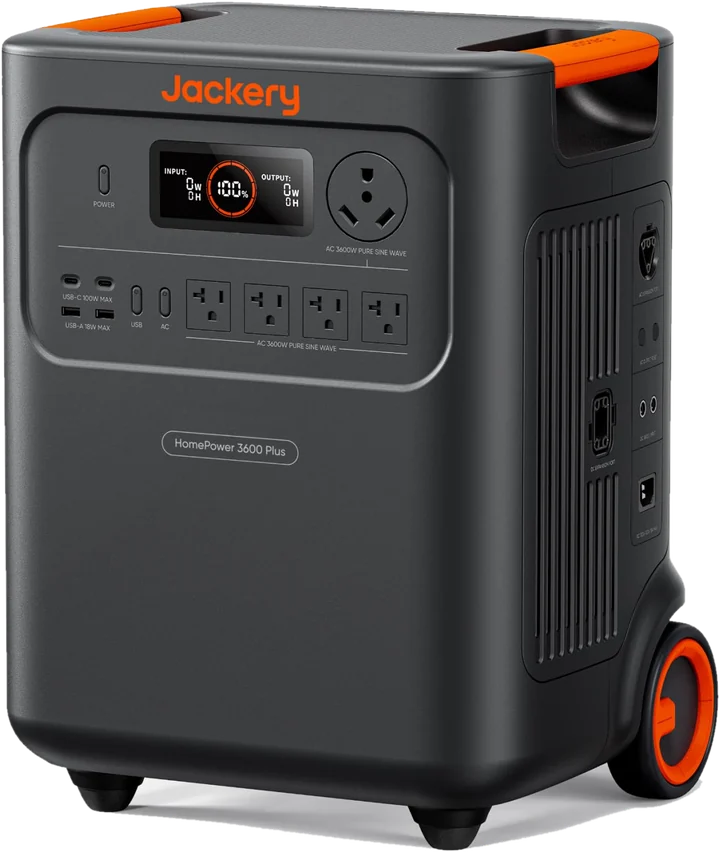
| Jackery HomePower | 41–42 | 12.1 | no decibel reading | Considered | ||||
| Anker SOLIX F3000 | 29 | 10.9 | Considered |
Skip these, and also considered
- Jackery Explorer 1000 v2. The lightest station weighed, at
23.8 lb , but nobody in our evidence measured its usable energy, its idle draw or a fridge run on this exact model. Jackery's own US page lists both1,070 Wh and1,024 Wh for it and links a European manual; the18 W standby figure is Jackery's own. One tester warns that Jackery's web specs have been unreliable. We can't award a box we can only describe from its maker's pages, and our EcoFlow-against-Jackery comparison skips it for home backup on the same grounds. - EcoFlow DELTA 3 Max. At
44.8 lb and2,048 Wh claimed, it should be the C2000's rival. One tester measured27 W idle, which by our arithmetic is close to a third of the battery a day spent on nothing, and 79% efficiency. No lab has measured its usable energy or run a fridge on it. It lost to the C2000 at nearly the same weight, and our EcoFlow-against-Jackery comparison skips it for home backup too. - Jackery HomePower
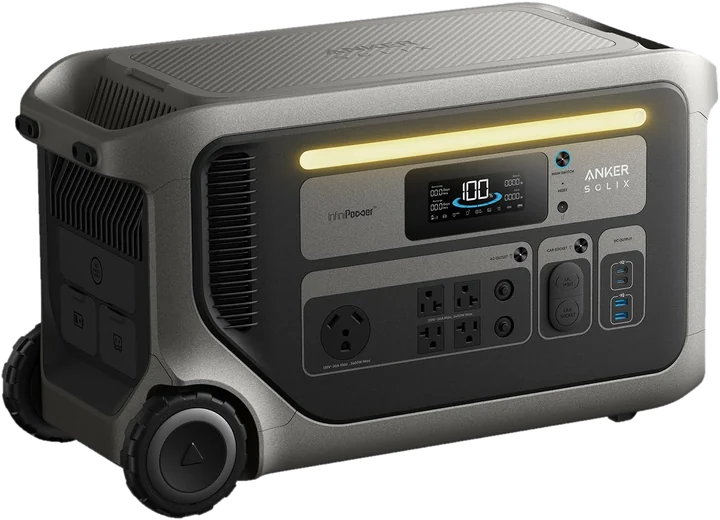
3600 Plus . The fridge champion of the bigger boxes:38.58 hours on CNET's fridge from3,201.32 Wh usable. It is our home page's pick for most homes and a buy on our home backup roundup for houses, and our CPAP guide picks it where one station must run both the CPAP and the fridge. Here it loses at the first stair, at77.16 lb on wheels. Its idle draw measured21–34 W , and while plugged in its outlets share1,440 W . - Anker SOLIX F3000. Built to pair with a generator, which this reader can't run; our home page, sump pump and fridge guides recommend it for homes that will refill it from one through week-long outages. At
91.5 lb it had the lowest energy per pound in the field and the highest fridge overhead in CNET's test (28.97 hours from2,645.91 Wh ).
Who measured what, and where sources disagree
Anker SOLIX C2000
- CNET Labs:
1,812.04 Wh at CNET's standard test load, 74.02% round trip, a full AC charge in88 minutes , and27.4 hours on a full-size Whirlpool fridge run to depletion. Market of the unit not stated. - The Solar Lab (US):
18 W idle with the AC on,88 minutes from the wall (the same video also gives a shorter time), and a brief surge near6,000 W . - Adventure Gear TV (US, unit supplied by Anker):
9 W idle over almost two days,43 dB while charging at about a foot, and about3,000 Wh from the C2000 plus its expansion battery (he also gives a higher figure in the same video). He timed his kitchen fridge for one hour, and that pace projects to about16.5 hours . It is a pace over part of the battery, not a rundown, and the hour may have caught a compressor or defrost cycle. - Round-trip efficiency (CNET) and discharge efficiency (The Solar Lab) are different measures, so their figures don't conflict.
- A compilation of unnamed user complaints says the app sends no alert when wall power fails. Another tester did receive an overload alert. These aren't counted as an owner pattern.
- Anker's manual says the outputs use a floating ground. That doesn't matter for an apartment fridge.
EcoFlow DELTA 3 Classic (EF-DL3-C).
- CNET:
947.47 Wh at CNET's standard test load, 81.34% round trip, 55-minute charge. CNET's port line doesn't match the Classic, but its product image and charge time do, and we treat the port line as a spec-box error. - The Solar Pit (US):
940 Wh (load not stated),13 W idle read from the screen over a full day, and39–40 dB under a heavy load (distance not stated). Its UPS check used a light that shows flicker at very short dropouts, and the light stayed steady; the switch was not timed. - The Solar Lab (US):
17 W idle and 83% discharge efficiency, a different measure from CNET's. - One widely read "EcoFlow Delta 3" review tested the original, expandable DELTA 3, and its usable-energy figure belongs to that model, not the Classic. Don't buy the Classic on it.
- No safety listing for this model turned up in the Intertek, CSA or TÜV directories. UL's directory couldn't be read, so not found is not the same as not listed.
- Our roundup for the under $500 band also picks the Classic, for homes with short, frequent outages that want the router and desk to ride through and recharge fast. This page agrees, and adds its weight and quiet fan for apartment stairs and walls.
Anker SOLIX C1000
- CNET:
870.08 Wh at CNET's standard test load, 72.15% round trip, 59-minute charge. - Minute Man Solar (US): idle from
13.6 W upward over several runs at launch, about14 W in a later video, and8.3 hours on his own large refrigerator, model not named. Both idle figures come from this one tester. - Jungle River:
875 Wh under a heavy constant load. - The UPS owner report comes from a buyer who bought the C1000
Gen 2 to replace a computer UPS; the switch was not timed. - The Solar Lab tested the C1000X
Gen 2 , a big-box sibling that shares the FCC filing but has four AC outlets, not five; its13.8 W idle is that sibling's figure. Its other results are kept apart. - The safety listing found in Intertek's directory names the first-generation C1000 (A1761), not the
Gen 2 .
BLUETTI Elite
- CNET:
1,987.98 Wh , 81.08% round trip,26.32 hours on its fridge, 1.82-hour charge. - StorageReview:
1,910 Wh on a Kill-A-Watt. - HOBOTECH (maker unit, discount code, Nov 2024):
1,990 Wh and50 dB at full load. - ReeWray Outdoors (discount code, Nov 2024):
2,030 Wh and54 dB at full load. - The Solar Lab bought its unit anonymously, saying BLUETTI declined to send units after a negative review. Its numbers agree with those from testers who were sent units.
- Idle figures run
5–14.7 W . The method explains it: screen-percentage reads are coarse, and recharge-energy reads include charging losses. BLUETTI's manual says about10 W .
BLUETTI Elite 300 (EL300).
- StorageReview (US):
2,670 Wh out on a Kill-A-Watt, and an8 ms switchover on a Quarch analyzer with a workstation load. - HOBOTECH (US, affiliate code):
2,810 Wh at a slow discharge rate,15 W idle,53 dB at full load,49 dB charging. Turbo charging fell well short of the manual's figure, and1,765 W came only in Pro mode. - The Solar Lab (US):
15 W idle, 2.73-hour full charge, charge mode not stated. - No lab has run a fridge to empty on this model.
- One six-month owner who says the unit was unsponsored reports app and
Wi-Fi trouble, and a unit that wouldn't wake for solar after shutting down overnight. That's one person's report. - Cycle life is open: BLUETTI says 6,000 or more, and one tester quotes 4,000.
- Every figure in this list comes from a US unit.
- Our home page picks it for a home that wants one station guarding a sump pump or a CPAP with power to spare for the fridge; this page picks it for the most stored energy a person can still carry.
EcoFlow DELTA 3800 Gen4. Both tests are maker-supported launch videos. HOBOTECH's unit shut down just below its rated output with the whole load on its single high-current outlet, then held its full
Building rules: what is and isn't sourced
- The 2021 residential code section on energy storage systems requires installed systems to be listed to
UL 9540 . It sets per-unit and total caps measured in tens of kilowatt-hours, and lists allowed locations such as garages, utility closets and basements with finished walls. Systems marked for use in dwelling units follow the maker's instructions. - How officials apply these rules varies, and the local authority decides. A 2026 edition of the related fire standard reportedly changes the tables; we haven't read it.
- Whether any of this covers a plug-in portable station: not found in any kept source.
- Lease clauses, landlord policies and local fire-department rules on lithium storage in multifamily buildings: not found.
- Generator placement: the CPSC's rule, outdoors and well away from the house, is the one to follow. Some generator manuals show much shorter clearances, but those are fire clearances from objects, not carbon monoxide distances from a home. Makers also say their CO shut-offs don't replace indoor CO alarms.
Sources
- CPSC: Winter storms aren't over, CPSC warns of deadly carbon monoxide risks and fires during power
outages (opens in a new tab) CPSC recall listing (opens in a new tab) - Anker SOLIX C2000
Gen 2 usermanual (opens in a new tab) - Anker SOLIX C2000
Gen 2 productpage (opens in a new tab) - Anker SOLIX C1000
Gen 2 productpage (opens in a new tab) - EcoFlow DELTA 3 Classic user manual
(US) (opens in a new tab) EcoFlow DELTA 3 Classic specs (opens in a new tab) - EcoFlow DELTA 3 Classic support
FAQ (opens in a new tab) - BLUETTI Elite
200 V2 user manual(US) (opens in a new tab) - BLUETTI Elite 300 user manual
(US) (opens in a new tab) BLUETTI Elite 300 product page (opens in a new tab) - EcoFlow DELTA 3800 Gen4 product page and tech
specs (opens in a new tab) EcoFlow DELTA 3 Max product page (opens in a new tab) - Jackery Explorer 1000 v2 basic information
(FAQ) (opens in a new tab) - Jackery HomePower
3600 Plus usermanual (opens in a new tab) Anker SOLIX F3000 product page (opens in a new tab) - CNET: Best portable power stations (lab
results) (opens in a new tab) - StorageReview: BLUETTI Elite 300
review (opens in a new tab) - StorageReview: BLUETTI Elite
200 V2 review (opens in a new tab) - The Solar Lab: Anker SOLIX C2000 Gen
2 (opens in a new tab) - Adventure Gear TV: Anker SOLIX C2000 Gen
2 (opens in a new tab) - Brutal Reviews: Anker SOLIX C2000
Gen 2 usercomplaints (opens in a new tab) - The Solar Lab: EcoFlow DELTA 3
Classic (opens in a new tab) - The Solar Pit: EcoFlow DELTA 3
Classic (opens in a new tab) - Minute Man Solar: Anker SOLIX C1000
Gen 2 launchreview (opens in a new tab) - The Solar Lab: Anker SOLIX C1000X Gen
2 (opens in a new tab) - Jungle River: Anker SOLIX C1000 Gen
2 (opens in a new tab) - 2TWENTY2 tech reviews: Anker SOLIX C1000
Gen 2 as aUPS (opens in a new tab) HOBOTECH: BLUETTI Elite 200 V2 (opens in a new tab)- ReeWray Outdoors: BLUETTI Elite 200
V2 (opens in a new tab) HOBOTECH: BLUETTI Elite 300 (opens in a new tab) The Solar Lab: BLUETTI Elite 300 (opens in a new tab) - Bren Unplugged: BLUETTI Elite 300 after six
months (opens in a new tab) - HOBOTECH: EcoFlow DELTA 3800
Gen4 (opens in a new tab) - Outdoor Prepper: EcoFlow DELTA 3800 Gen4 fridge
run (opens in a new tab) - The Solar Lab: EcoFlow DELTA 3 Max
review (opens in a new tab) - Fine Homebuilding: energy storage systems in the residential
code (opens in a new tab) - The Solar Lab Plus: Apartment blackout
solutions (opens in a new tab)