Portable generator vs standby generator: real installed costs and when an interlock is enough
As an Amazon Associate I earn from qualifying purchases.
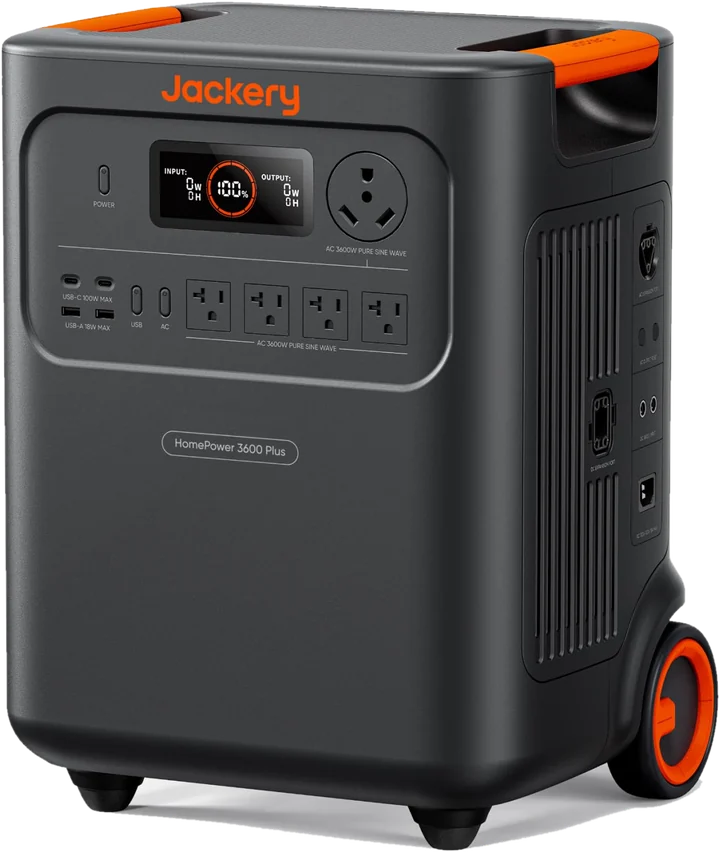
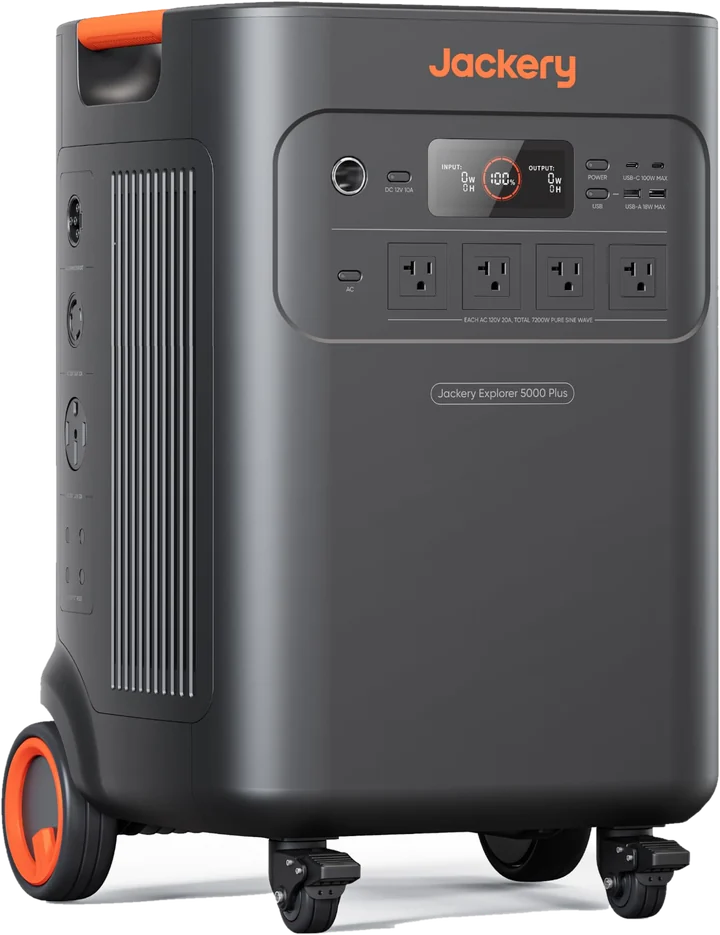 Best for a long-outage home that wants standby-style switchoverJackery Explorer
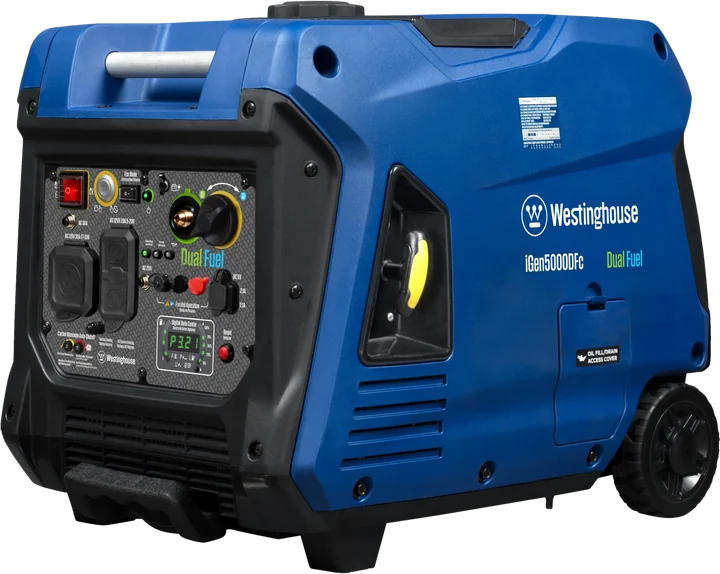
5000 Plus Check price on Amazon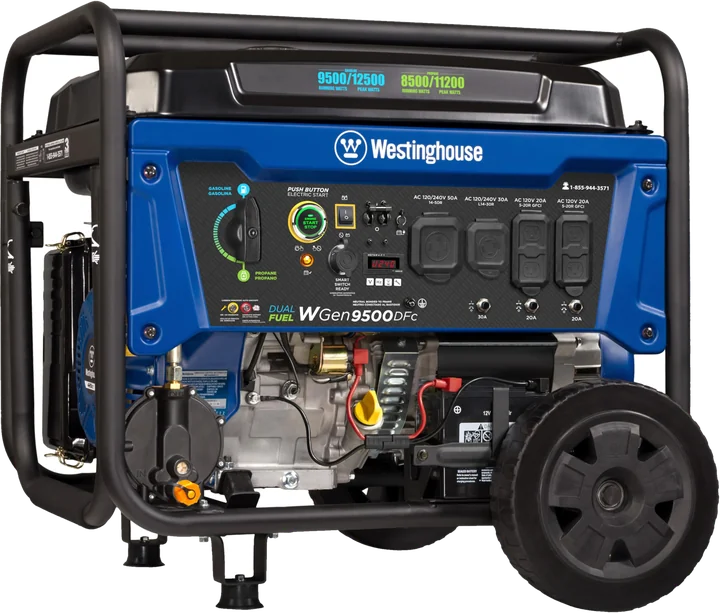 More watts, rougher powerWestinghouse WGen9500DFc
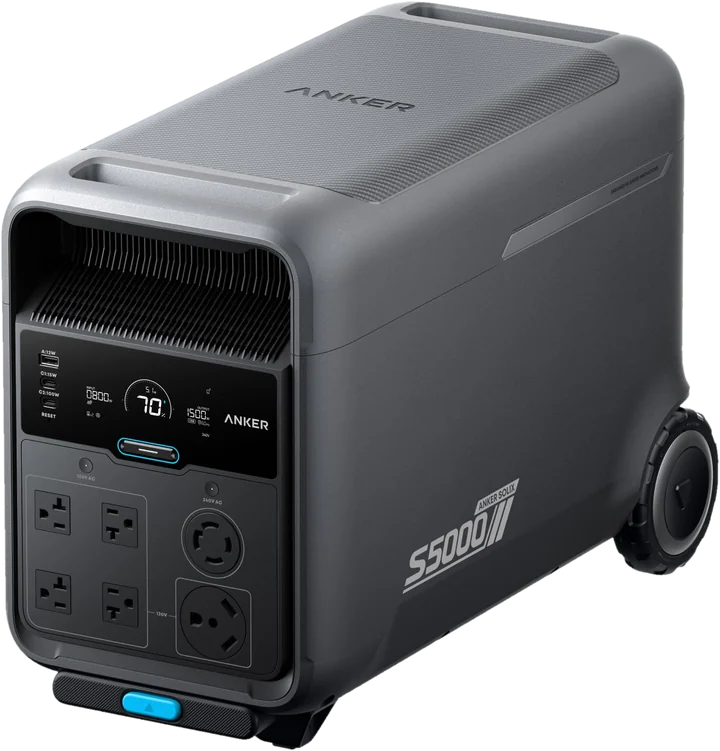 New battery,
240 V side untestedAnker SOLIX S5000
Porchlight's pick for a long-outage home weighing a standby is the Jackery Explorer
Most of what a five-figure standby generator buys you is not more house. It buys not walking out into the sleet at 2 a.m. to start the thing and feed it. You can have that part without a pad, a gas line or a dealer plan. Porchlight's pick for a long-outage home is the Jackery Explorer
How each route gets power into your panel
Every route's first job is keeping your power off the utility's lines. A generator wired in without a switch can push voltage back down the street. One electric co-op warns that's enough to kill a line worker instantly. The residential code, as a code-reference site summarizes it, allows two fixes. One is a transfer switch. The other is a listed interlock that physically stops the utility and the generator feeding the panel at once. Either goes in with a permit, at the hands of a licensed electrician. Feeding a house through a wall outlet with a double-ended cord is illegal, and it can kill someone.
- Standby: a permanent engine on a pad, fed by natural gas or propane. Its automatic transfer switch notices the outage, starts the engine and moves the house over. The install needs gas and electrical inspections.
- Portable on an interlock: an inlet box on the outside wall, plus a sliding plate in your panel so the main breaker and the generator breaker are never on together. You roll the generator out, plug in, start it and flip the breakers.
- Battery with a transfer switch: a large power station feeding a subpanel that switches by itself. Jackery's version handles up to 12 circuits at
120 V or 6 at240 V .
The panel side is covered in our guide to interlock against transfer switch. We reach the same conclusion there: the Jackery is what we'd buy to keep a furnace running through an interlock.
What this means for what you buy
In a long outage, the question isn't watts. It's what keeps the power on by day four. A standby on natural gas draws from the street. A portable needs you and a propane tank. A battery needs a generator or the sun. Only the standby does everything by itself, and it costs five figures.
The Jackery gets you the part people really pay a standby for: power back with nobody touching a breaker. It also handles the
A different reader wants a fuel generator wired to the panel as the whole plan, with no battery in it. That reader's question is which generator to hang on the interlock, and our whole-house generator roundup is the page that answers it. This page's reader wants the house to switch over without anyone going outside, which is why the Jackery wins here.
What each route really costs
| Route | Who switches over | What keeps it going on day four | Shop | |
|---|---|---|---|---|
| Standby generator | It does, automatically | Yes | The gas main, or a large propane tank | Through a dealer |
| Jackery Explorer | It does, in about | Yes, | A generator or solar to refill it | View on Amazon |
| Champion 201175 on an interlock | You, by hand | Yes, through a | Gas or propane you supply | Worth waiting for |
Is a standby generator worth the extra money?
The firmest number we have is one owner's 2021 invoice for a Generac Guardian
Upkeep is a dealer plan that costs, by the owner's account, a few hundred dollars a year. The technician comes whether you're home or not. The generator runs itself for five minutes every week, which is more than most of us do for our smoke alarms.
Fuel is where standby earns its keep. On natural gas, a week-long outage means no hauling at all. Propane is another story. Generac's own hourly figures add up to a large tank and a delivery truck that can reach you down an icy road. On natural gas it's rated a kilowatt lower, at
What it doesn't buy is proof of higher resale value. We found no study showing one, so treat a dealer's "investment" pitch as sales talk. It's worth the money where nobody at home can run a generator, or the house sits empty in storm season. For everyone else, it's a lot of money spent on not going outside.
Is an interlock enough to run my house?
For what keeps a house livable, yes. Take the Champion 201175: its
On cost, the Champion sits in the under $1,900 band, plus an electrician's bill for the inlet and interlock. We found no survey of installed interlock prices. Even if your electrician charged what the standby's installer did, this route totals well under the standby invoice.
Champion quotes
Can a battery carry my house through a long outage?
Not on its own. The Jackery is the most thoroughly tested battery we weighed, and one tester got
That's why we'd pair it with a generator or solar rather than trust the battery alone. In a long outage, a battery is a fine way to store generator power, not a replacement for it. The federal credit that once knocked a share off a home battery's bill ended with 2025, per the IRS. The full trade is in our guide to generator against battery backup.
Jackery Explorer 5000 Plus : our pick for a long-outage home
Jackery's banner claims a single unit delivers
Where it falls short: the
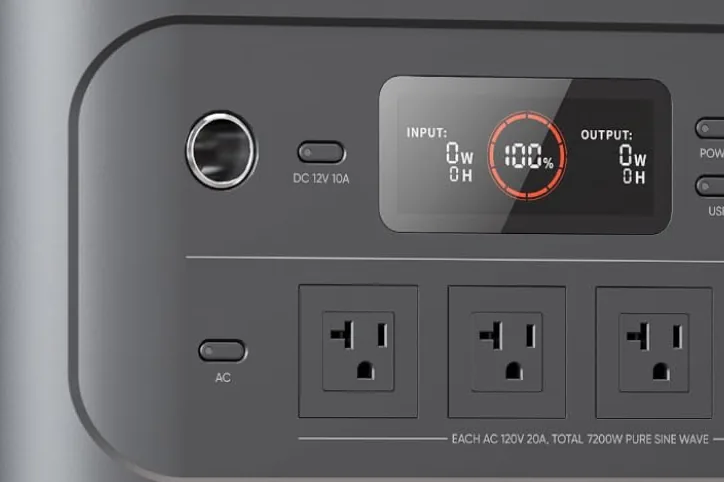
The one real catch for a long-outage home is the refill. Generator recharging tops out at
We'd buy it for a long-outage home that wants a standby's automatic switchover without the standby. Plan its refills from a generator or solar from day one. Our Jackery Explorer
Champion 201175: the generator worth waiting for
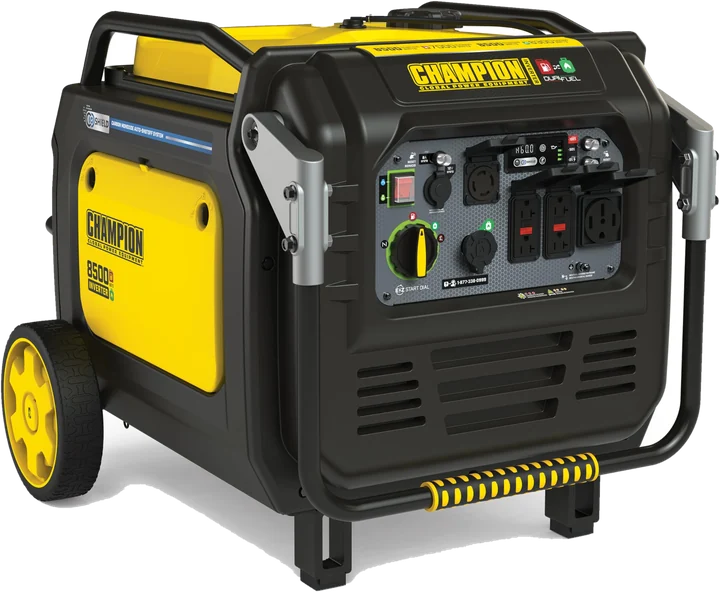
Champion's spec sheet reads like an answer to the long-outage question. On gas it's rated to carry
Now the reality. No lab has put the exact 201175 on instruments, so that distortion figure is a promise. In aerospace, a part with a drawing and no test sheet doesn't ship, and I read this one the same way. What it has instead is a long, consistent record from buyers. Of all 231 reviews at Lowe's, only three describe a problem, and none is an engine that won't start. Several describe quick starts on propane in freezing weather and two weeks of running around the clock.
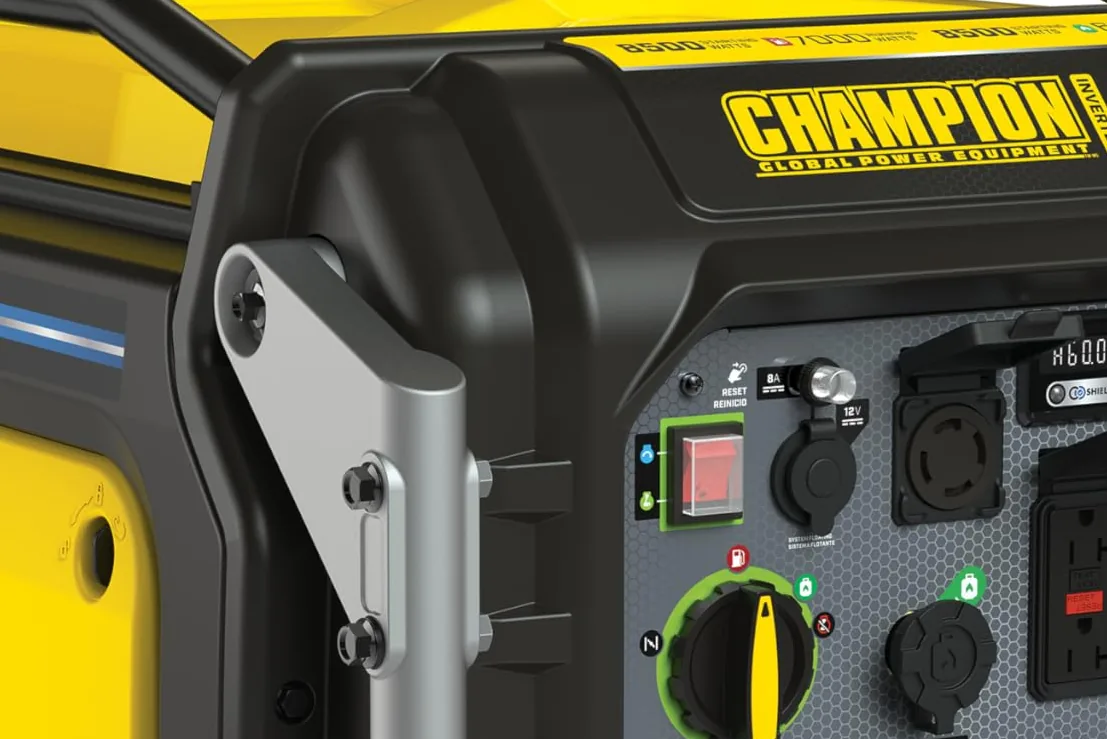
The manual says plainly that CO Shield doesn't replace indoor carbon monoxide alarms. CPSC says to run a portable generator outdoors only, at least
The one real catch: it never starts itself. There's no remote and no automatic start. When the lights go out, someone wheels all
It's the
Westinghouse WGen9500DFc: skip it for the Jackery Explorer 5000 Plus
Westinghouse promises more of everything for less:
The trouble is in its own manual. It's open-frame with a brushed alternator, and Westinghouse puts its distortion ceiling at 23%. That can upset furnace boards, and some battery stations may refuse to charge from it. Nobody has tested this exact model either way. The manual also says a flashing yellow CO-sensor light is a fault that only an authorized Westinghouse service center can diagnose and repair. On day two of an ice storm, that's the wrong sentence to read.
A handful of buyers naming the DFc describe the engine running with no power coming out, one in the middle of a winter storm. The Bob Vila review often cited for this generator measured the WGen9500DF, the version without the CO sensor. Its numbers don't belong to this model.
Skip it. For this page's reader, the money is better spent on the Jackery Explorer
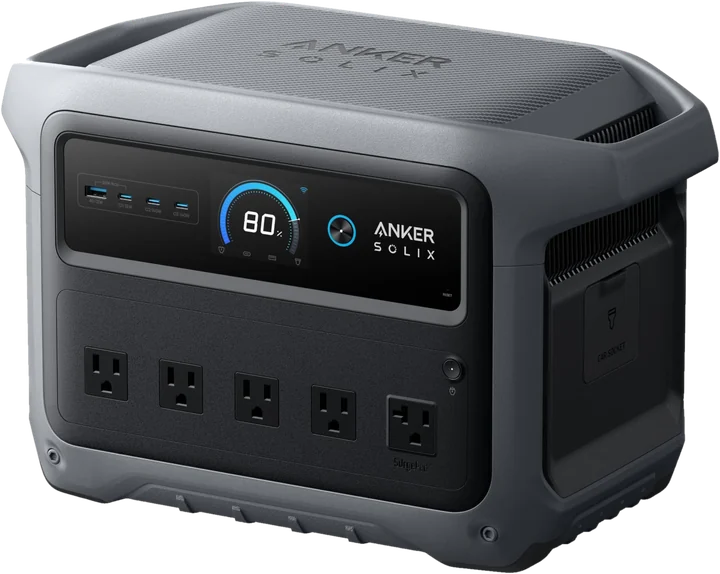
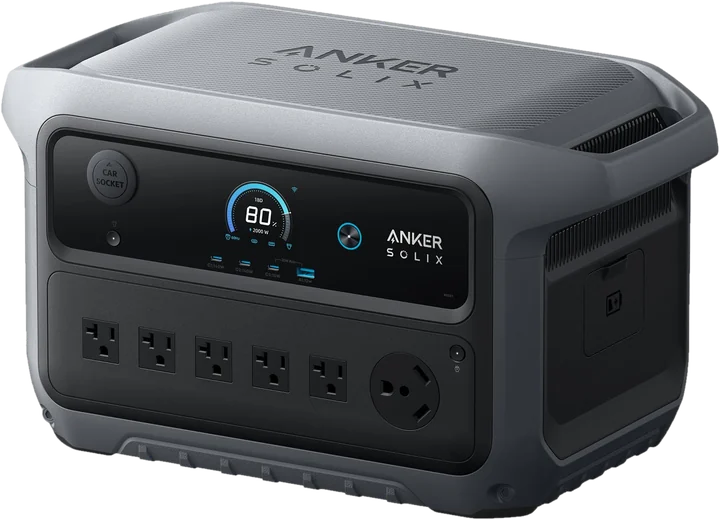
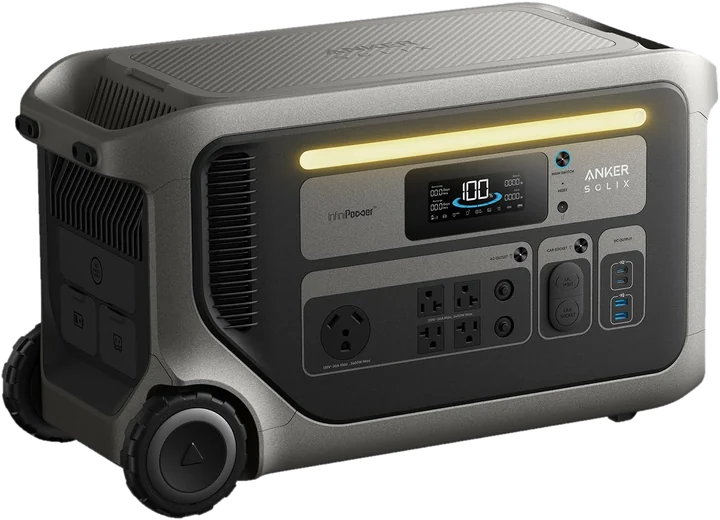
Anker SOLIX S5000: wait for someone to test its 240 V side
Anker launched this in October 2026. Its numbers:
Wait. Until retail units are tested at
Our pick for a long-outage home: Jackery Explorer 5000 Plus
We'd buy the Jackery Explorer
The evidence in full
Standby route. The invoice is from one owner's video (2021), for a Generac Guardian
Connecting to the house. Backfeed danger: DEMCO (an electric co-op, undated). Code: Jaspector's summary of IRC 2024 Chapter 36 and NEC Article 702 (a secondary source; the code text itself wasn't read, and local adoption varies). One widely watched build of a manual transfer switch, the pricier of the two options, needed a few hundred dollars in parts and wire (How To Home, 2021), which recommends that route for generators of roughly 7 to
Champion 201175. Maker claims are from Champion's product page and the 201175 manual. No independent instrumented test of the exact 201175 exists in our evidence. Lowe's buyers (all 231 reviews read) filed three problem reports: oil use after a year with a slow repair network, an overload short of the rating, and a proprietary propane hookup that fits only small tanks. Three more describe prompt cold starts, one of them on propane at freezing and another after two weeks of round-the-clock running. Three further tests cover a look-alike Champion
Westinghouse WGen9500DFc. Claims are from its manual and Westinghouse's product page. No independent test of the DFc exists. Bob Vila's 2023 review is of the WGen9500DF (no CO sensor): 89 to
Jackery Explorer
- The Solar Lab (April 2025): wall charge slightly quicker than Jackery's quoted
3.5 hours ; idle58 W with AC on; held9,500 W for about 20 s and8,000 W for about 30 s; could not start an AC it judged to need more surge than that. Its transfer switch article timed the switchover at about20 ms . - ReeWray Outdoors (September 2026):
4,374 Wh usable at a moderate household load, a little under nine tenths of the rating; ten minutes just under7,200 W at240 V ; started a 3-ton central AC (the74 A shown is the compressor's nameplate locked-rotor figure, not a measured inrush); idle close to Jackery's claimed50 W ; floating neutral confirmed when an EV charger refused to run until a bonding plug went in. - Will Prowse (November 2024, launch unit): switchover through the transfer switch took about 3 s and failed to take over with the inverter on; app and switch would not connect. Later tests got about
20 ms , so mode settings or launch firmware are the likely cause; no firmware notes show a fix. - Herb-O-Matic (October 2026): ran a
240 V stove continuously; overload at about7,800 W ;240 V output disappears while it's plugged into house power. - GearDiary (one owner, about four weeks, September 2026; the site discloses supplied products and advertising):
1.5 hp 230 V three-wire well pump with no soft starter; about2,400 W while running; switchover about20 ms with UPS mode on, about 1 s while charging, about 5 s with it off;Wi-Fi needs a power cycle to reconnect. - Jackery's FAQ gives the wall charge input as
120 V at15 A ;240 V charging works only through its Smart Transfer Switch. - Conflicts that don't change the call: the AC start (3-ton passed, The Solar Lab's larger unit failed; different compressors, 17 months apart); Jackery's FAQ says extended warranty is not supported while its series page sells one. CPSC lists no Jackery recall.
Anker SOLIX S5000 (AS510, new release). Anker states it is not compatible with its own Home Power Panel. pv magazine USA (pre-release unit, October 2026):
Gaps. Reddit owner evidence was unavailable for every model this run. No source tested a furnace on any of these four.
Research behind this page: 4 models weighed; 3 maker manuals among them; across this site's research, 589 sources kept in full.
Sources
Champion 201175 owner's manual (opens in a new tab) Champion 201175 product page (opens in a new tab) - Westinghouse WGen9500DFc user
manual (opens in a new tab) - Westinghouse WGen9500DFc product
page (opens in a new tab) - Jackery Explorer
5000 Plus user manual(US) (opens in a new tab) - Jackery Explorer
5000 Plus productpage (opens in a new tab) - Jackery FAQ: Explorer
5000 Plus basicinformation (opens in a new tab) Anker SOLIX S5000 product page (opens in a new tab) - FCC ID 2AOKB-AS510 (Anker SOLIX
S5000) (opens in a new tab) - Generac
22 kW standby generatorpage (opens in a new tab) - CPSC: winter storm carbon monoxide warning (release
26-237) (opens in a new tab) CPSC recall listing (opens in a new tab) CPSC recall API search: Jackery (opens in a new tab) - IRS: Residential Clean Energy
Credit (opens in a new tab) - DEMCO: Backfeeding, when electricity flows
backward (opens in a new tab) - Jaspector: generator transfer switch requirements, IRC
2024 (opens in a new tab) - How To Home: manual transfer switch install
(video) (opens in a new tab) - Owner's Generac Guardian
22 kW installed cost and upkeep(video) (opens in a new tab) - ReeWray Outdoors: Jackery Explorer
5000 Plus test(video) (opens in a new tab) - The Solar Lab: Jackery Explorer
5000 Plus test(video) (opens in a new tab) - The Solar Lab: what is a smart transfer
switch (opens in a new tab) - Will Prowse: Jackery Explorer
5000 Plus launch unit(video) (opens in a new tab) - Herb-O-Matic: Jackery Explorer
5000 Plus (video) (opens in a new tab) - GearDiary: Jackery Explorer
5000 Plus review (opens in a new tab) - pv magazine USA (via now.solar): Anker SOLIX S5000 deep-dive
review (opens in a new tab) - Bob Vila: Anker SOLIX S5000
review (opens in a new tab) - BackupPowerHub: Anker SOLIX
S5000 (opens in a new tab) - Lowe's owner reviews: Champion
201175 (opens in a new tab) - Lowe's owner reviews: Westinghouse
WGen9500DFc (opens in a new tab) - Bob Vila: Westinghouse WGen9500DF review (the no-sensor
look-alike) (opens in a new tab) - The Solar Lab: Champion 8500 dual fuel generator
review (opens in a new tab) - YellowDogs World: Champion 8500 on an interlock with central AC
(video) (opens in a new tab) - Signature Solar: Champion 8500 inverter scope test
(video) (opens in a new tab)