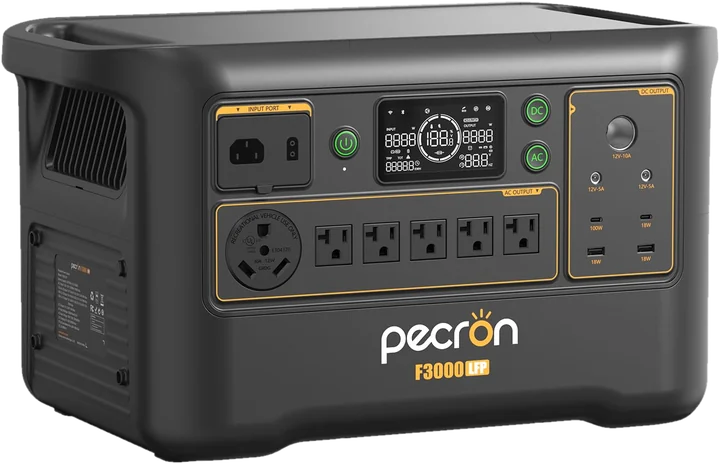
PECRON F3000LFP review for home backup: measured against the maker's claims
As an Amazon Associate I earn from qualifying purchases.
Buy the PECRON F3000LFP if solar panels can refill it every day: it delivers every watt it promises. For days on battery alone, or refilling from a generator, other stations suit better.
- Who it’s forHomes with solar panels to top it up every day
- The catchIdles at
40.4 W , nearly a third of its battery a day
In the evidence table
Open the full row- Idle draw with the AC on
37.81 W measured- Usable energy, measured
- not measured
- Rated capacity
3,072 Wh claimed- Continuous output (gas: running watts)
3,600 W claimed- Surge (gas: starting watts)
4,500 W claimed240 V output- 120V onlyclaimed
- Neutral-ground bond
- not stated by the maker
- UPS switchover
8-20 ms
Most budget power stations oversell their muscle. The PECRON F3000LFP undersells it, then oversells its patience. Porchlight says buy it if solar panels can refill it every day. It delivers the full
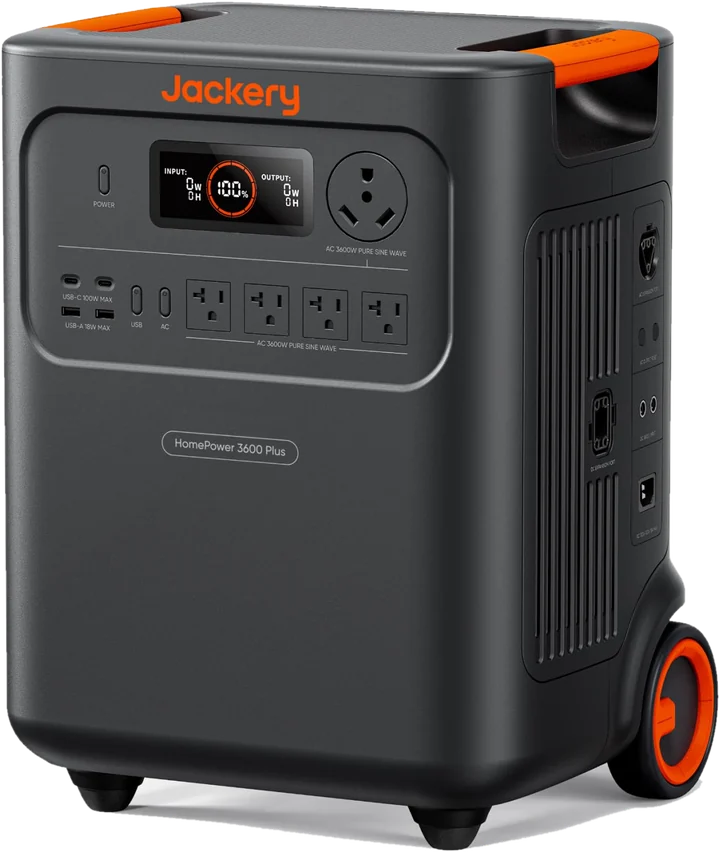
So two readers belong elsewhere. For days on battery alone, the guide to the best portable power station for home backup picks the Jackery HomePower
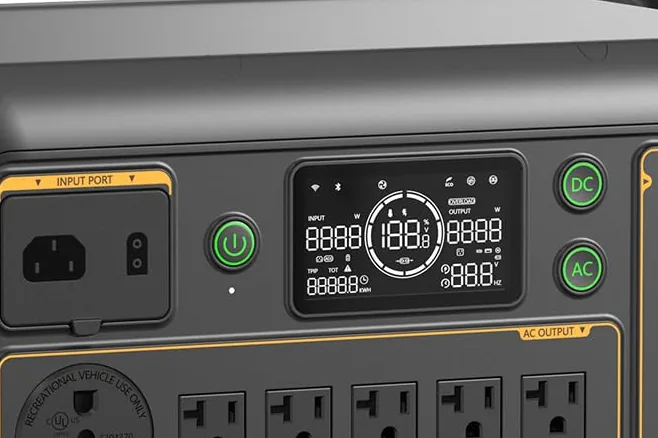
What you get with the PECRON F3000LFP
Inside the
Nearly everything measured on this exact model comes from one tester, The Solar Lab. It ran the station when new and again after a year of daily use in a tiny home. The lab earns commission through its links and offers discount codes on this station. Its pages don't say whether it bought the unit or was sent one. One careful tester, twice, a year apart, is a decent foundation. It isn't a crowd.
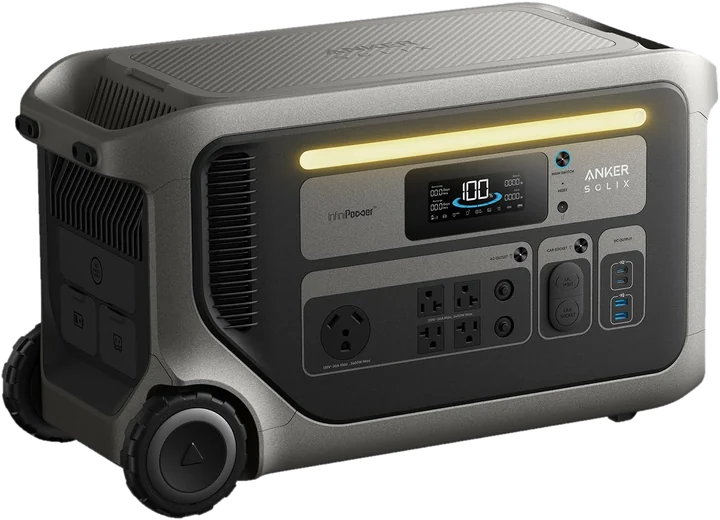
Anker's SOLIX F3000 shares this station's headline numbers, but it is a different maker's machine, and its results don't carry over. Likewise, the CNET lab result you may find for PECRON belongs to the older E3600LFP.
Does it live up to PECRON's numbers?
| PECRON promises | Measured on the F3000LFP | Who, and when | What it means at home |
|---|---|---|---|
| Held | The Solar Lab, written review (page dated | Promise kept | |
| Carried | The Solar Lab, written review and one-year retest (video, | Beats the claim, so motor starts get headroom | |
| Self-consumption "approximately | The Solar Lab, one-year retest (video, | The gap that matters; see below | |
| Just over two hours new; | The Solar Lab, written review and one-year retest | Holds | |
| Reached | The Solar Lab, written review | Holds | |
| Not measured | Nobody in our evidence | How much you actually get is unknown | |
| No efficiency figure in our evidence | 83% at full load new; 84.5% after a year | The Solar Lab, written review and one-year retest | Healthy at heavy load; light loads untested |
| UPS switchover in | Took over in a simulated outage; not timed | The Solar Lab, head-to-head with the Anker F3000 (undated) | Works; speed unproven |
| Under | "Pretty quiet" at full load when new; fans "really loud" charging and discharging a year on | The Solar Lab | An open question |
| 3,500 cycles before the battery fades to four fifths of its capacity | No loss reported after a year; capacity not re-measured | The Solar Lab, one-year retest | Too early to judge |
The output rows deserve admiration. PECRON prints a five-second surge and delivers about twice that. That is margin left in the engineering, which is how a spec sheet should be written. A year of hard use left efficiency, surge and charge time where they started. No failures were reported, and the plastics held up. For a home with solar to top it up every day, we'd buy it.
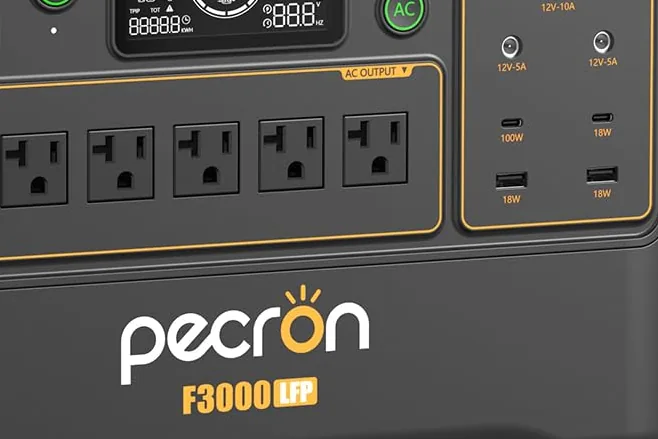
The catch: it never stops sipping
How much of its battery does it burn doing nothing?
Left switched on with no load, it drew
PECRON deserves credit for printing a self-consumption figure at all. Most makers don't. But its
It matters because home backup loads are light. A cycling fridge, a router and a few lights draw little, so a fixed overhead takes a big share of every hour. Solar turns the sums around. At the full
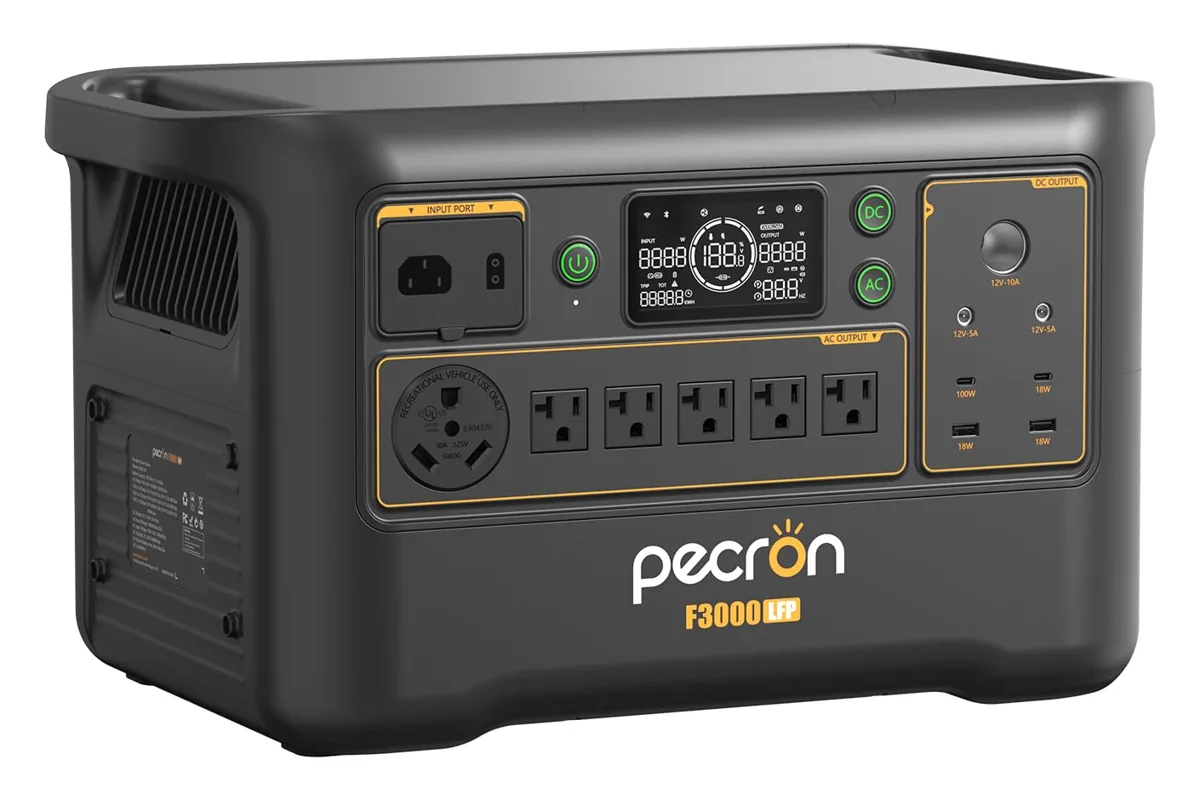
What will it run in my house?
Will it keep my fridge cold for two days?
Nobody has run a fridge on this exact model, so we can't give you hours. On paper, the battery covers about two days of a typical fridge. The idle draw comes off the top of each day, so expect less, by an amount nobody has measured. To work out your own appliances, try the home backup power calculator.
Can it run a sump pump, a CPAP or a gas furnace?
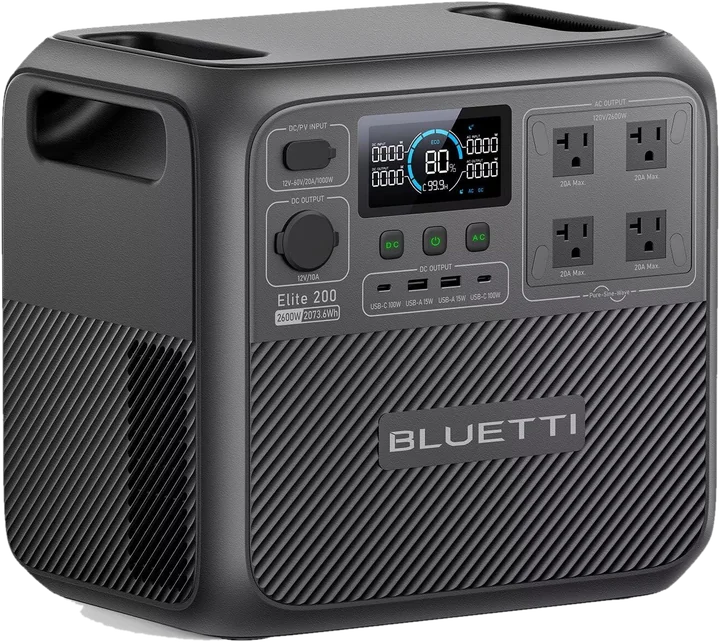
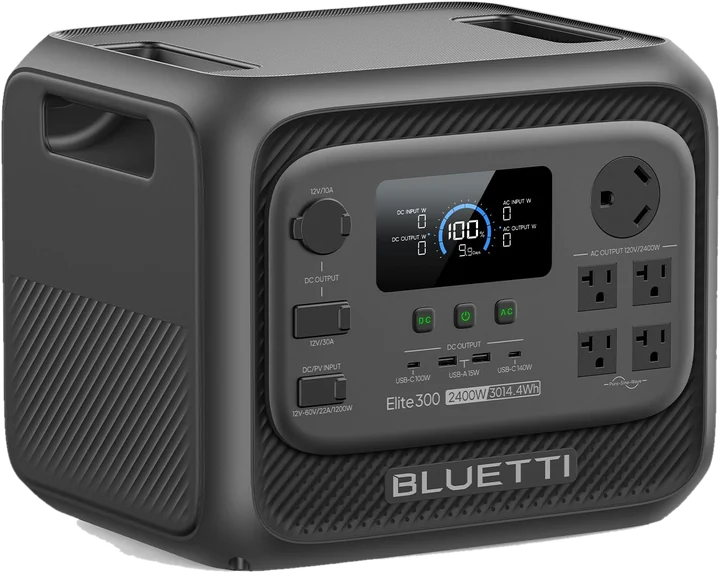
A sump pump is its worst match. The station waits for hours on a pump that runs for minutes, paying its idle bill the whole time. The Solar Lab warns about exactly this. For a pump left to look after itself, the sump pump backup power guide picks the BLUETTI Elite 300.
For a CPAP, PECRON's manual promises a switchover of
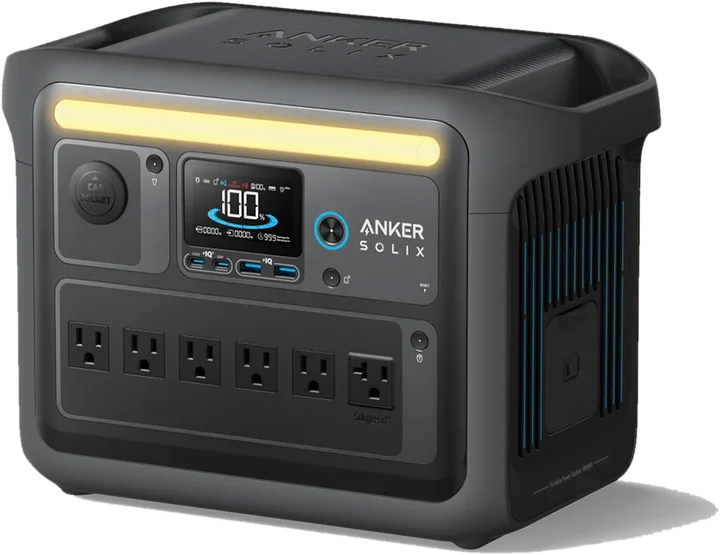
A gas furnace is an unknown. The manual shows a grounding port but says nothing about bonding neutral and ground. Some furnace control boards check for that before they will light. A furnace start on this unit appears nowhere in our evidence. Our furnace backup guide hands the job of running furnace and fridge together from one battery to the Anker SOLIX F3000. Keeping a furnace lit from a generator is a separate decision, and the home page covers that buyer.
Will it run a well pump or central air?
No. The US version gives
Living with it day to day
At
PECRON says it charges down to
Our call on the PECRON F3000LFP
Buy it if solar panels can refill it every day. It keeps every heavy-duty promise on its spec sheet. It has a year of hard use behind it without a reported fault. And the sun pays off its idle bill in under an hour. Days on battery alone are a different job, and the home backup guide gives that job to the Jackery HomePower
The evidence in full
Research count for this page: 1 models weighed; 1 maker manuals among them; across this site's research, 589 sources kept in full.
Exact variant. Every result here is filed against the F3000LFP with the US low-voltage (
The Solar Lab, three sources on this model.
| Source | What it measured | Date |
|---|---|---|
| Written review | Page dated | |
| One-year retest video | After a year of continuous tiny-home use: efficiency 84.5%; charge time | |
| Head-to-head with Anker F3000 | Both surged about | Undated |
Method for idle: charged full, then drained with only the inverter on, nothing plugged in. The Solar Lab says it tests idle draw in every review, buys many units and receives some free. For this model it earns affiliate commission and offers discount codes; whether the unit was bought or supplied is not stated. Capacity was not directly re-measured at one year.
Arithmetic. Idle share per day is ours: the measured draw times
Disagreements that don't change the call.
- Outlet count: the manual lists six AC outputs; The Solar Lab counts five household outlets plus the RV plug. The manual most likely counts the RV plug.
- Idle: PECRON's figure is a formula input; The Solar Lab's is a measured full drain. The direction is explained; the size of the gap is modest.
- Noise: the under-
30 dB claim comes from an unofficial manuals.plus summary for a solar-panel bundle listing, not PECRON's PDF. The first written review called it "pretty quiet" at full load; the one-year video calls the fans "really loud". Unresolved. - Discharge floor: the product page says
14 °F ; the manual lists a lower supply ambient. A maker inconsistency.
Left out, and why.
- CNET's lab result for PECRON is for the E3600LFP, a different model.
- A YouTube fridge test by Adam Recommends used a Pecron he identifies only by its rough battery size, never by model, so it isn't counted here.
- Battery Skills' charge time and runtime claims read like listing copy and confuse this model with the E3600LFP, so they are not treated as measurements.
- Anker SOLIX F3000 results describe a different maker's station.
Gaps. No independent usable-capacity test, fridge runtime or timed UPS switchover on this model. No statement or test of neutral-ground bonding, and no furnace start. Owner reports from Reddit and retailers were not available for this page.
Safety record. The CPSC recall listing, checked and re-checked on
Sources
PECRON F3000LFP product page (opens in a new tab) - PECRON F3000LFP user manual,
100-120 V , V2( 2026-03-10 ) (opens in a new tab) FCC ID 2BKWI-F3000LFP filing (opens in a new tab) CPSC recall listing (opens in a new tab) - CPSC recall listing, re-check for
Pecron (opens in a new tab) - The Solar Lab: PECRON F3000LFP
review (opens in a new tab) - The Solar Lab: PECRON F3000LFP one-year retest
(video) (opens in a new tab) - The Solar Lab: PECRON F3000 vs Anker
F3000 (opens in a new tab) - The Solar Lab: how it tests power
stations (opens in a new tab) - manuals.plus summary (unofficial, bundle
listing) (opens in a new tab)