Best power station under $500 for home backup: what one kilowatt-hour really runs in an outage
As an Amazon Associate I earn from qualifying purchases.
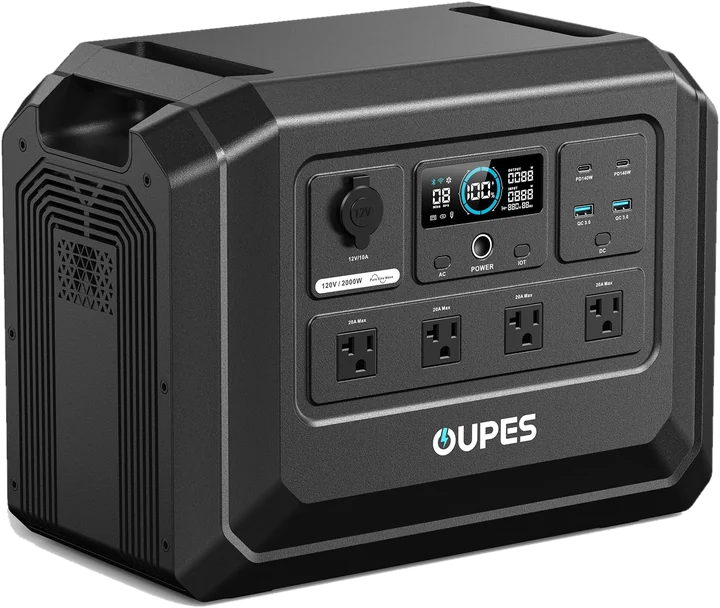 New this yearOUPES Mega 1 Lite
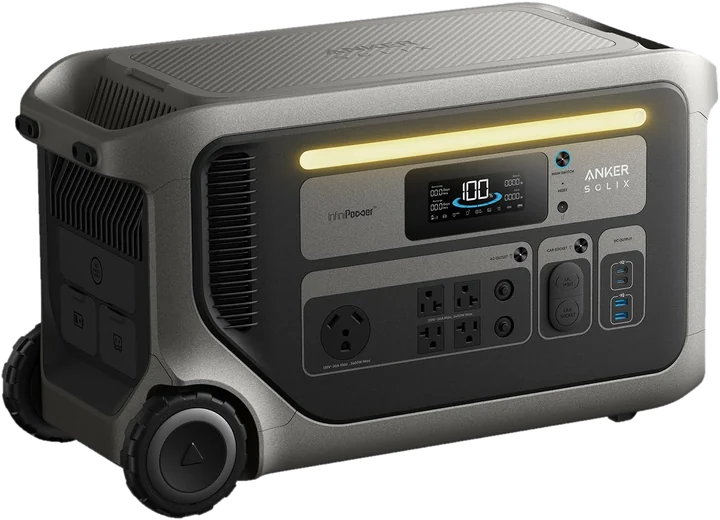
Porchlight's pick for a fridge, router and lights under $500 is the Anker SOLIX C1000: three measured kitchen-fridge nights and the lowest idle draw measured in this field.
Every station on this page holds about one kilowatt-hour, and every box says so. None prints the number that decides whether your milk is cold at breakfast: what the station burns just keeping itself on. Porchlight's pick for a fridge, a router, phones and lights under $500 is the Anker SOLIX C1000. Testers ran full-size kitchen fridges on it for 14, 13.5 and
What changes the answer under $500
Three things, and battery size isn't one of them.
How long must the fridge last? One kilowatt-hour is a night of fridge, not a weekend. For outages of a day or more, see our guide to keeping the fridge cold through a
Is the fridge in the plan at all? If you mainly need
Then there's idle draw. A fridge rests between compressor runs; the inverter never does. It pays a toll every hour the AC is on, and at small loads that toll is most of the bill. The home backup power calculator does that arithmetic for the appliances you list. Living in an apartment with outages that last hours? Our apartment picks go with the DELTA 3 Classic.
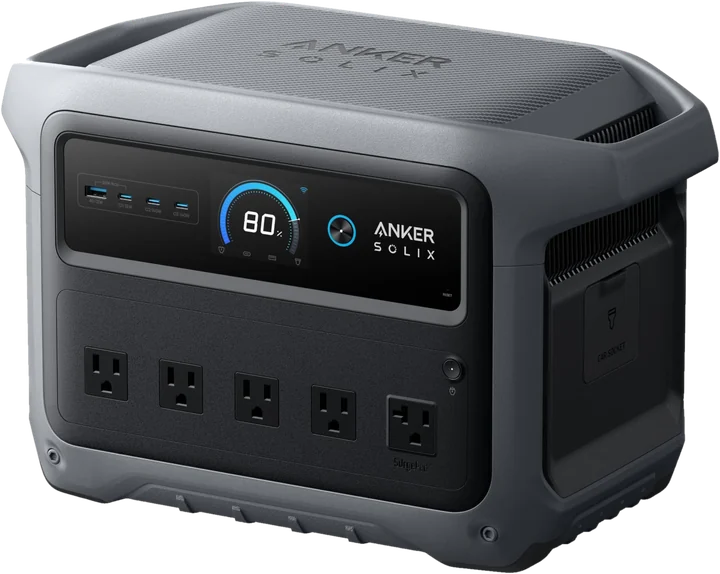
Best for the fridge overnight: Anker SOLIX C1000
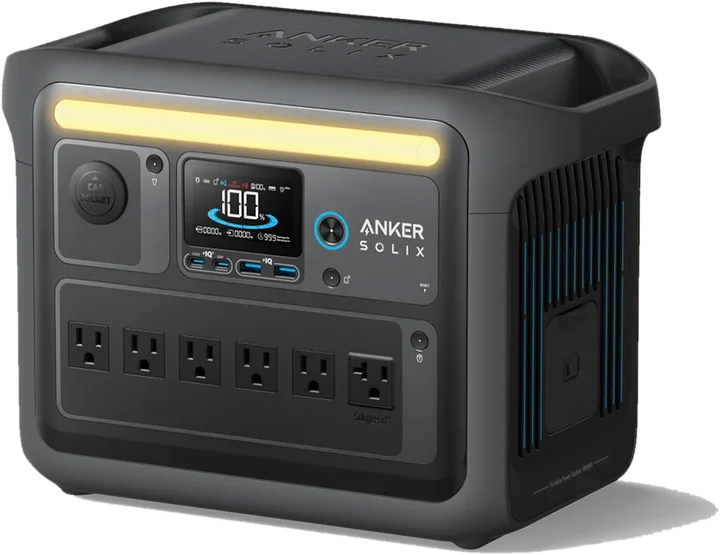
Anker prints
It has six AC outlets and a car socket. Oscilloscope runs timed its switchover at 16.1 and
Anker's US page now heads this model "C1000X", so check for model A1761. The C1000
The catch is that 2023 auto-off scare. Anker says it's fixed, but nobody has tested a fridge on current firmware. Follow the FAQ's setup and watch the first fridge cycle yourself.
We'd buy it for a fridge, router and lights through a night without power. Our Anker SOLIX C1000 review has the full working.
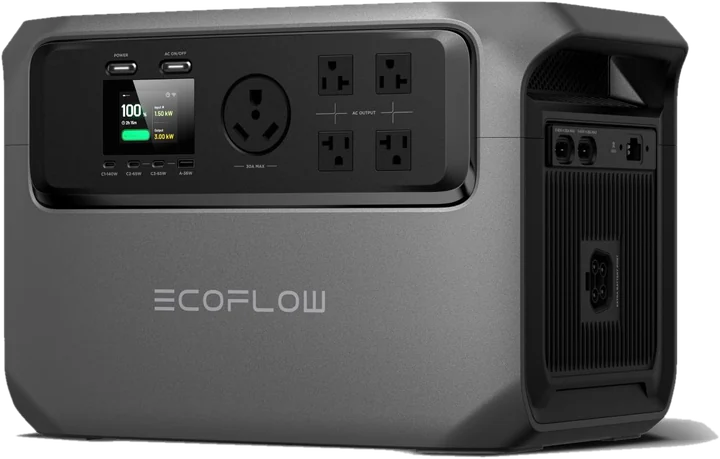
Best for short, frequent outages: EcoFlow DELTA 3 Classic
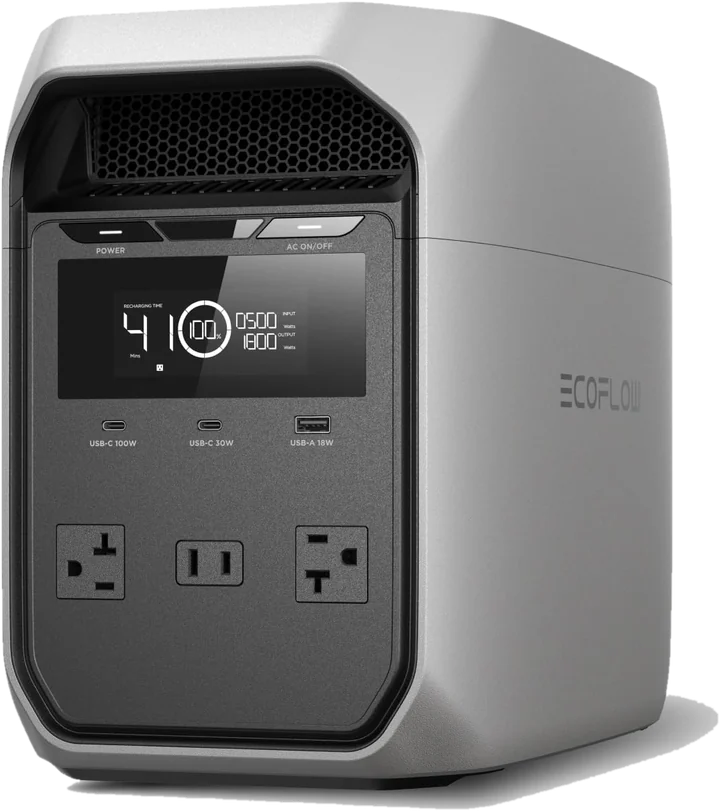
Count the outlets on EcoFlow's spec page and you get six. Three are USB ports. The front has three AC outlets, and the middle one has no ground pin. Counting a phone charger as an outlet would get a supplier's spec sheet sent straight back where I come from.
It earns its place on battery and speed. The Solar Pit drew
You may have seen a lower capacity figure for the Classic. It came from OutdoorGearLab's test of the original DELTA 3, the one with six AC outlets. Different machine; ignore it.
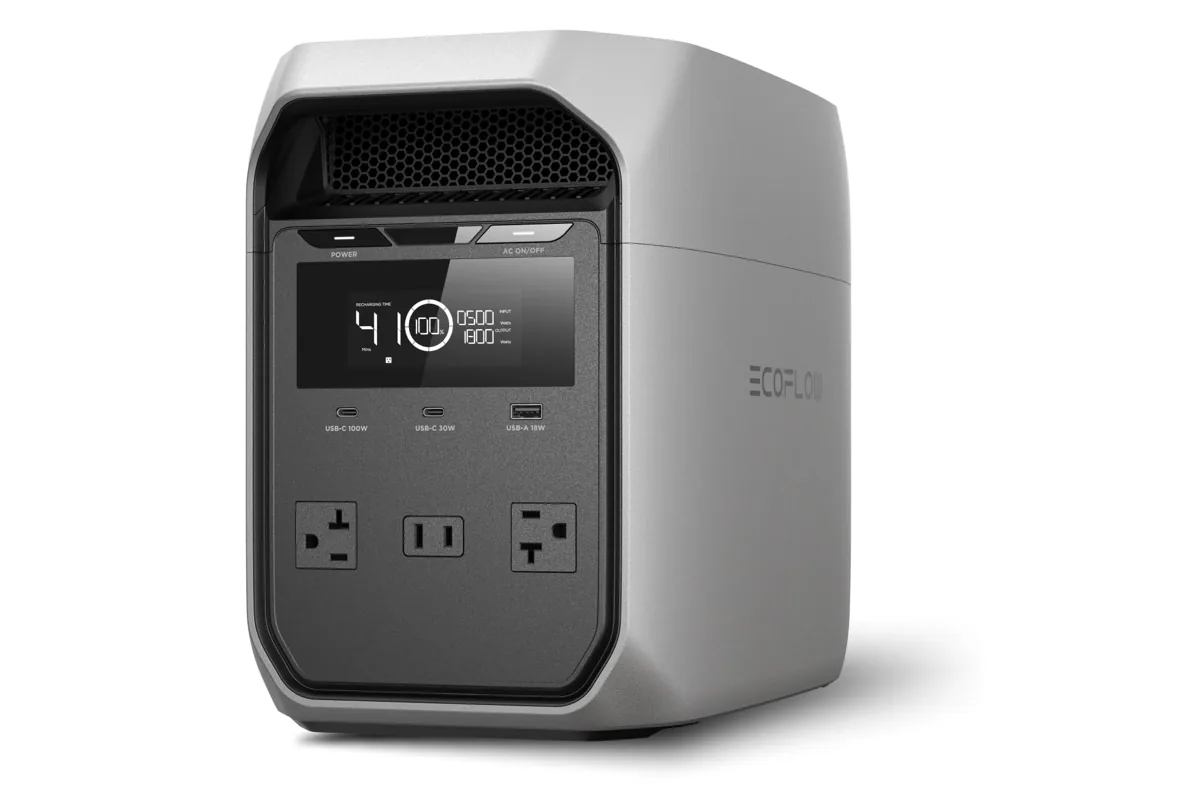
The catch is what it spends sitting still:
Buy it if your outages last hours and your power blinks more often than it fails. The
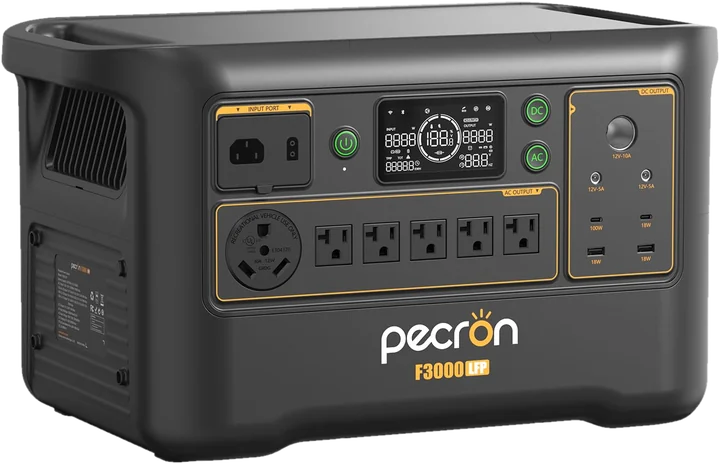
Best if the budget stops under $400: PECRON F1000LFP
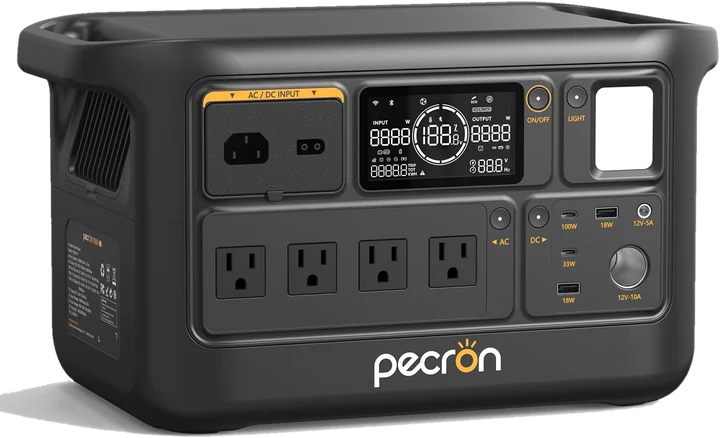
PECRON's manual says the F1000LFP spends about
The fridge evidence is good for the money. A newer full-size fridge ran
The catch is in the warranty. The manual voids it if the unit sits uncharged or unused for more than six months. That describes most backup gear in most closets. It's like a fire extinguisher that's only covered if there's a fire. Put a twice-a-year charge on the calendar.
We'd buy it when the budget has a hard ceiling under $400 and the house fridge still has to last the night. If you can stretch to the Anker SOLIX C1000, do: it's the better small-budget buy for the same night, and it's our home page's small-budget pick too. For an apartment where outages last hours, our apartment picks choose the DELTA 3 Classic instead.
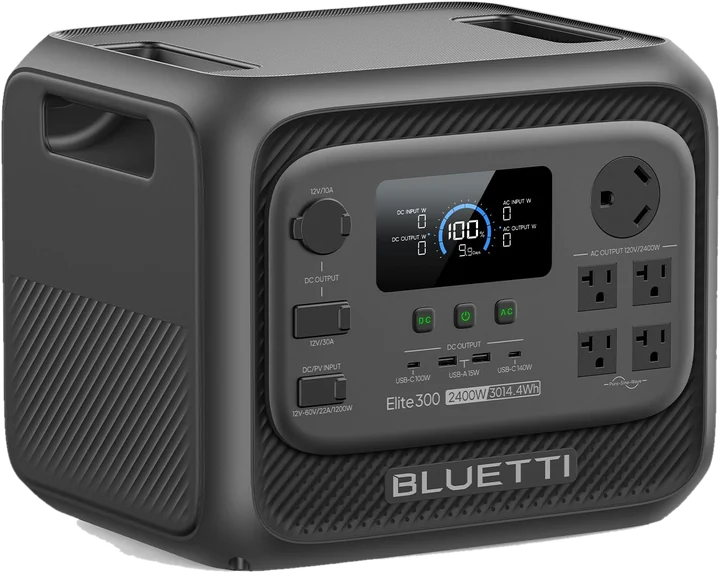
Best if you'll recharge from solar: BLUETTI Elite 100 V2
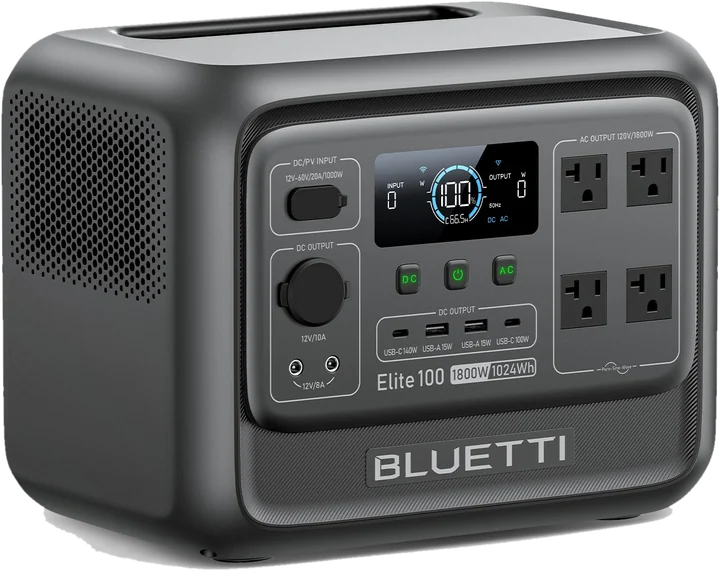
BLUETTI's headline is solar: up to
What has been measured holds up. OutdoorGearLab, which buys its own units, drew
Its one fridge test went wrong in a useful way. The reviewer had switched on ECO mode, which cut the AC while the compressor rested, around 5:30 a.m. His pace projected about
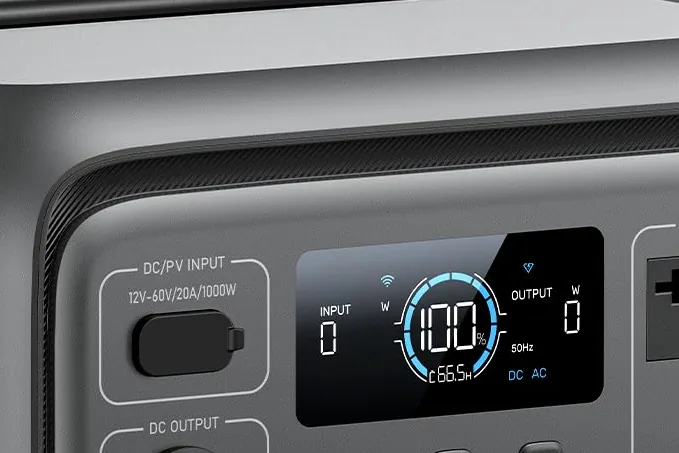
The catch: nobody has run a kitchen fridge on it to empty with the settings right. Its night of fridge is an inference, not a measurement.
Buy it if solar panels are part of your outage plan. No box this size on our list has a wider solar door.
New this year, and what we're watching
OUPES Mega 1 Lite: wait for one number
Price band: under $500
WaitReleased in April 2026, the Mega 1 Lite brings a
What's missing is the number this page is about: nobody has measured the Lite's idle draw. Its older sibling's figure doesn't carry over. OUPES also contradicts itself on medical use. The manual says not to power medical equipment; the US product page markets it for CPAP. Go by the manual. If a CPAP is your worry, our CPAP backup guide picks the EcoFlow DELTA 3 Classic.
Wait for an idle measurement. Until then, the Anker SOLIX C1000 is the safer buy for a fridge.
How the picks were decided
We weighed eight stations of about one kilowatt-hour, sold new on Amazon US. Two things decided it: hours of fridge, and what the inverter eats while doing nothing. Switchover and the maker's auto-off settings broke ties. A station could only win if an outside tester had measured that very model, not a sibling or an older version. It also had to sit inside this page's under-$500 budget. One with strong evidence, the PECRON E1000LFP, sits above that budget, so we weigh it below rather than pick it.
How many hours of fridge will a power station under $500 really give?
About a night. Measured runs on full-size fridges here landed between
Why does a power station lose charge with nothing plugged in?
Turning battery power into house current costs a fixed toll every hour the AC is on. It's paid whether the compressor runs or rests. In this field it ranges from about
Will my Wi-Fi stay up when the power cuts out?
Very likely, if the router is plugged into the station and the station into the wall. Three of the stations we weighed were timed by instrument: the C1000 at
Has anyone checked these are safe to use at home?
Two of the eight have a listing we could find in an independent directory. Intertek lists the Anker SOLIX C1000 (A1761) to
Why isn't the DJI Power 1000 (V2) on this list?
For a fridge it's the weakest here. Its only measured fridge run lasted
The picks side by side
| Pick | Best for | Kitchen-fridge run, measured | Battery lost to idle in a day | Buy |
|---|---|---|---|---|
| Anker SOLIX C1000 | The fridge overnight | About a seventh | View on Amazon | |
| EcoFlow DELTA 3 Classic | Short, frequent outages | Not yet tested | 30% | View on Amazon |
| PECRON F1000LFP | A hard ceiling under $400 | About a third | View on Amazon | |
| BLUETTI Elite | Recharging from solar | Not yet run to empty | A quarter to a third | View on Amazon |
Our pick: Anker SOLIX C1000
If the lights go out tonight with a full fridge, this is the box we'd want on the kitchen floor. It hands more of its battery to your food than anything else under $500 we weighed. It's the only pick with three measured fridge nights and an independent safety listing. Set it up as Anker's FAQ says before you need it. Our Anker SOLIX C1000 review goes deeper.
They all carry about the same battery. The C1000 is the one that doesn't eat it. We'd buy it for a fridge, router and lights through a night without power.
The evidence in full
What we weighed
For this page we weighed 8 models, with 7 maker manuals among them; across this site's research, 589 sources were kept in full. Owner evidence is thin across the field: our Reddit reader failed for every model, so no counted owner patterns are included, and single owner reports are labelled as such.
Every product considered, lab by lab
| Product (model) | Rated | Usable energy measured | Idle, AC on, no load | Kitchen-fridge runs | Switchover | Safety listing found |
|---|---|---|---|---|---|---|
| Anker SOLIX C1000 (A1761) | Intertek ETL, | |||||
| EcoFlow DELTA 3 Classic (EF-DL3-C) | None measured | Under | None found | |||
| PECRON F1000LFP | None found | |||||
| BLUETTI Elite | A pace projecting about | None found | ||||
| PECRON E1000LFP | 85% of rated (Jasonoid), 88% (The Solar Pit); | None found | ||||
| DJI Power 1000 (V2), model DYM1000V2L | Intertek ETL, | |||||
| BLUETTI AC180 | A pace projecting past | None found for the plain AC180 | ||||
| OUPES Mega 1 Lite (S1 Lite) | Not measured | None found |
Details from the picks, for checking
- DELTA 3 Classic ride-throughs: The Solar Pit used a lamp that shows any short gap, John's Off-Road a TV, and ReefDudes an aquarium's pumps and lights; none flickered or restarted. EcoFlow's FAQ also says it powers on by itself when charging resumes after an outage, and Port Memory restores the outputs.
- PECRON F1000LFP ports: four AC outlets, a 12V car socket and USB-C, all on the front.
- The C1000 router run: Footprint Hero's fiber box and
Wi-Fi point ran nearly two days; he concluded most of the battery went to the inverter itself.
Who tested what, and how
- OutdoorGearLab buys its units and drains them into a light-bar load set to about 80% of rated output. Heavy-load results flatter home-backup runtime, because fridges and routers are light loads.
- CNET Labs discharges into a fixed standard load with a data logger. Its port list for the DELTA 3 Classic matches the bigger DELTA 3, but its product photo shows the Classic's three outlets with the two-prong one in the middle, and its 55-minute charge matches The Solar Lab's Classic result, so we count its figure as the Classic's.
- Outdoor Life used a Kill A Watt at a small load and a medium load, which is where the C1000's and AC180's low-load penalty shows up.
- Jasonoid reads idle from the screen's battery percentage over half a day, so his figures carry roughly a percent of reading error; he times switchover with an oscilloscope on a stressed desktop PC.
- The Solar Pit reads idle from the screen over a full day with the display always on. The Solar Lab gives idle figures without stating a method in the videos we read.
- Footprint Hero logged every C1000 run with a smart plug or Kill A Watt; Anker sent him a solar panel for his 2023 video.
- Most YouTube tests here carry affiliate links or discount codes. DJI supplied Minute Man Solar's unit; CleanTechnica's Elite
100 V2 review was a BLUETTI-supplied, sponsored piece; PECRON supplied The Solar Pit's E1000LFP, which was still the only negative E1000LFP review. - Every timed C1000 test is from 2023-2024, and most E1000LFP tests are more than 12 months old. The DELTA 3 Classic, F1000LFP, Elite
100 V2 and Mega 1 Lite tests are from the past year. - All results above are on US 120V units, except where a tester didn't state the market (51 Drones on the DJI, not used in the table).
Where sources disagree, and why it doesn't change the call
- C1000 idle: Jasonoid's direct test gives
6.2 W . Footprint Hero's small-load runs imply more overhead under a load, since conversion losses add to the no-load draw. Either way it's the lowest in the field. - C1000 fridge runs: the same fridge gave
13.5 hours in 2023 and11.65 hours in 2024; the tester puts it down to house temperature. - C1000 auto-off: Anker's A1761 FAQ says the
15 min auto-off applies only when no device is detected, and that a plugged-in device keeps the AC on. In November 2023, There's A Trick For That lost AC a few minutes into a fridge run until he raised the app's AC timer to its maximum. The FAQ points to firmware v1.5.4 for this complaint. No fridge test on current firmware was found. - C1000 12V socket: one owner's 12V fridge on the car socket kept getting cut until Anker pushed firmware 1.5.1 with a "Car Port Saving Mode" switch, after about three months of support tickets. Anker's FAQ now documents the switch. One owner, not a pattern.
- C1000 certification wording: Anker's US page says SGS certified it to
UL 1012 ,UL 1778 ,UL 1973 andUL 60730 ; Anker's FAQ PDF says ITS (Intertek) for the same four. Intertek's directory lists it toUL 2743 , which neither document mentions. - DELTA 3 Classic idle,
13 W against17 W : different methods five months apart; the gap is too big for screen-reading error alone. - DELTA 3 Classic capacity elsewhere: OutdoorGearLab's "EcoFlow Delta 3" review is the expandable original DELTA 3 with six AC outlets, three of them ungrounded. Its figure belongs to that model, not the Classic.
- DELTA 3 Classic surge: EcoFlow's store says
3,600 W and the specs page gives no surge figure. Nobody has measured a motor start. - Elite
100 V2 : CNET tested the Bio-based version, a look-alike in a different enclosure, so its result isn't counted here. The Amazon title says3,600 W surge; BLUETTI's own page gives only2,700 W of Power Lifting, which is for heating loads, not motor starts. - F1000LFP capacity: the Amazon title gives a smaller capacity than PECRON's manual; testers read
1,004 Wh off the unit's label, and we use that. - E1000LFP heat: The Solar Pit's unit overheated at sustained high loads in an ordinary room-temperature test, while Jasonoid's passed a quarter of an hour at full output. That could be unit-to-unit variation or firmware. It's unresolved, and it matters little for a cycling fridge.
- DJI's second-generation Power 1000: OutdoorGearLab's text quotes the first-generation model's inverter rating. DJI's warranty term reads 3 or 5 years depending on region and app registration; for a US buyer the open question is whether DJI covers a third-party Amazon purchase at all.
- Mega 1 Lite: results from the full Mega 1 (S1) sibling, including its high idle figure, are left out. An unsourced listicle idle figure for the Lite is ignored.
Skip these, and also considered
- PECRON E1000LFP, also considered: its band sits above this page's budget. It expands to
4,096 Wh with one EP3000 battery, ran a basement fridge for16.5 hours and timed its switchover at13.5 ms . Against it: an18 W idle, a surge that tripped at about1,970 W against a3,000 W figure missing from PECRON's own manual, one tester's unit overheating under long heavy loads, and one owner's report of a tingle from the unplugged input cord, which PECRON put down to a faulty unit. - DJI Power 1000 (V2), skip: it's well built, quiet, and the only unit here listed to the UPS safety standard. But it has the shortest measured fridge run and the highest idle in the field, and its US warranty route is unconfirmed (see the question above).
- BLUETTI AC180, also considered: its timed switchover of
8.7 ms is the fastest anyone measured here, and its1,152 Wh battery is the biggest. It lost to its own replacement, the Elite100 V2 : the AC180 weighs37 lb , claims a slower20 ms switchover, its tests are older, and we found no safety listing for the plain AC180 (Intertek lists only its AC180P and AC180T look-alikes). - OUPES Mega 1 Lite, wait: it's a new release with its idle draw unmeasured; see "New this year".
Sources
- Anker SOLIX C1000 US product
page (opens in a new tab) - Anker SOLIX C1000 (A1761) Instructions &
FAQ (opens in a new tab) - Intertek ETL directory: Anker SOLIX C1000,
A1761 (opens in a new tab) EcoFlow DELTA 3 Classic US specs (opens in a new tab) - EcoFlow DELTA 3 Classic US support
FAQ (opens in a new tab) - EcoFlow DELTA 3 Classic US user
manual (opens in a new tab) - PECRON F1000LFP US user manual
V2 (opens in a new tab) PECRON E1000LFP US user manual (opens in a new tab) - BLUETTI Elite
100 V2 US storepage (opens in a new tab) - BLUETTI Elite
100 V2 user manualV5.1 (opens in a new tab) BLUETTI AC180 user manual (opens in a new tab) - DJI Power 1000 (V2) user manual
v1.0 (opens in a new tab) DJI After-Sales Service Policies (opens in a new tab) - Intertek ETL directory: DJI Power 1000 (V2),
DYM1000V2L (opens in a new tab) OUPES Mega 1 Lite user manual (opens in a new tab) CPSC recall listing (opens in a new tab) - CNET Labs: best portable power
stations (opens in a new tab) - OutdoorGearLab: Anker SOLIX
C1000 (opens in a new tab) - OutdoorGearLab: BLUETTI Elite 100
V2 (opens in a new tab) - OutdoorGearLab: DJI Power 1000
(V2) (opens in a new tab) - OutdoorGearLab: EcoFlow Delta 3 (the original DELTA
3) (opens in a new tab) - Outdoor Life: best portable power
stations (opens in a new tab) - Jasonoid: Anker SOLIX C1000
tests (opens in a new tab) - Jasonoid: C1000 vs AC180 vs DELTA
2 (opens in a new tab) - Footprint Hero: Anker SOLIX C1000 load
runs (opens in a new tab) - There's A Trick For That: Anker SOLIX
C1000 (opens in a new tab) - The Solar Lab: EcoFlow DELTA 3
Classic (opens in a new tab) - The Solar Pit: EcoFlow DELTA 3
Classic (opens in a new tab) - The Solar Lab: PECRON F1000
review (opens in a new tab) JM Pure Reviews: PECRON F1000LFP (opens in a new tab) - Outdoor Prepper: PECRON F1000LFP fridge
run (opens in a new tab) - ReeWray Outdoors: BLUETTI Elite 100
V2 (opens in a new tab) - The Solar Lab: BLUETTI Elite 100
V2 (opens in a new tab) - CleanTechnica: BLUETTI Elite
100 V2 tested (opens in a new tab) Jasonoid: PECRON E1000LFP (opens in a new tab) The Solar Pit: PECRON E1000LFP (opens in a new tab) - The Solar Lab: PECRON E1000LFP
review (opens in a new tab) - Minute Man Solar: DJI Power 1000
(V2) (opens in a new tab) - EAST KY PREPPER: OUPES Mega 1
Lite (opens in a new tab)