Backup power for gas furnace: which units will light it, by neutral bond and connection
As an Amazon Associate I earn from qualifying purchases.
 Cheapest way to keep the furnace lit through a short outageEcoFlow DELTA 3 Classic
Check price on Amazon
 Skip for a furnaceWestinghouse WGen9500DFc
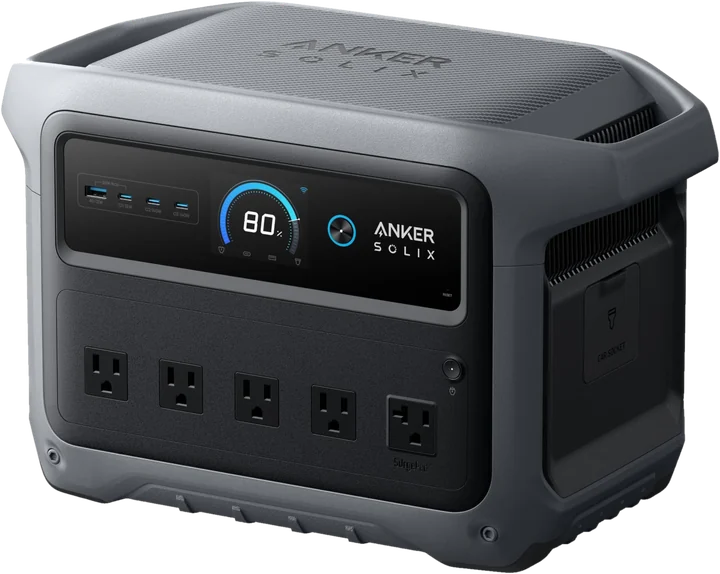
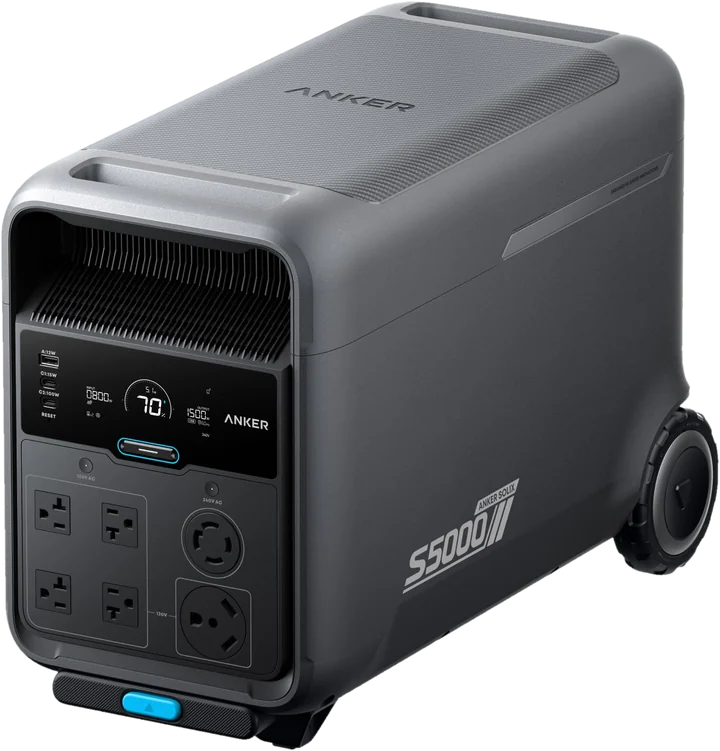 New this year: wait for Anker's own wordAnker SOLIX S5000
Porchlight's pick for keeping a gas furnace lit is the Westinghouse iGen5000DFc on an electrician-fitted inlet and panel interlock, where its floating neutral borrows the house's bond.
Porchlight's pick for keeping a gas furnace lit in an outage is the Westinghouse iGen5000DFc, fed through an electrician-fitted inlet and panel interlock. A furnace burns gas, so it seems unreasonable that it sulks without electricity. Watts aren't the reason: it asks for a few hundred, a sliver of what anything here delivers. The reason is a check its control board runs before it lights, looking for neutral and ground tied together. On an interlock, your house panel already ties them, and a generator whose neutral floats borrows that bond. Westinghouse's manuals for this generator family say its neutral floats, and Wirecutter's load tests on this exact model found it delivered its rated power. The catch: there's no California-legal version, so it isn't sold there. A furnace that plugs straight into the backup, or an electrician's switch that breaks the neutral along with the hots, changes the answer; the sections below cover both.
What changes the answer: how power reaches your furnace
Why won't my furnace light on backup power?
Because the board is doing its job. Goodman lists "reversed line polarity or grounding error" among its furnace fault codes. Rheem's diagnostic light flashes for "improper ground and polarization". Feed either from a floating source with no bond anywhere, and the board finds no reference and holds the gas valve shut. One owner filmed it: blower spinning, no flame, and a light blinking nine times like a lighthouse with a grudge. Every floating source in the owner tests we found failed at ignition until a bond was added.
Power stations add a twist. Plugged into the wall, they pass the grid's bond through, so the furnace runs fine until the outage. When the station drops to battery, its neutral floats and the burner quits just when you need it. One owner of an EcoFlow DELTA 3 Plus, a sibling of the Classic below, found exactly that.
Which connection goes with which unit?
There are three routes, and the right unit for one is wrong for the next. Ask your electrician which you have before you buy.
- The furnace on a cord. An electrician swaps the hard-wired switch for an outlet and gives the furnace a plug. In an outage you plug it into the backup instead of the house, so nothing can backfeed. The unit must bring its own bond. A bonded generator works as it comes; a floating unit needs a neutral-ground bonding plug in a spare grounded outlet.
- An inlet box with a panel interlock, or a transfer switch that leaves the neutral connected. The panel keeps its bond, and the code guidance we read says the generator should float and borrow it. Floating units fit. A bonded one makes a second bond, which that guidance treats as a fault. So does a bonding plug added on top, including one left in a station still plugged into the wall.
- A transfer switch that switches the neutral. Now the generator is its own system and must carry its own bond. Bonded units fit.
House wiring is an electrician's job, and backfeed is not a theory. A generator tied into home wiring without a transfer switch or interlock can energize the street lines and kill the lineman working on them. Inspectors treat a homemade cord with male prongs at both ends as a hazard, full stop. Run a generator outside with at least twenty feet between it and the house. The CPSC adds that a garage, porch or carport is not outside. Its CO shut-off backs up your indoor CO alarms. It doesn't replace them. Our guide to interlocks and transfer switches covers the wiring.
Best for an inlet and panel interlock: Westinghouse iGen5000DFc
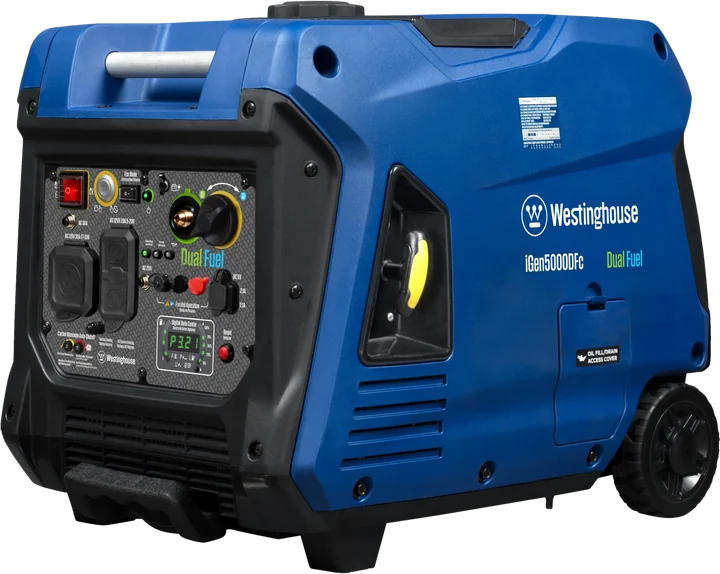
Westinghouse's store page promises under 3% distortion, a CO sensor, and up to
On the bond, the family speaks for it. The iGen5000DFcv is this generator with wheels and a handle bolted on, and its manual reads "Neutral floating". So does every other Westinghouse inverter manual we found. The DFc's own manual eluded us, so check the label: the code requires generator makers to mark the bond. Floating is exactly what an interlock wants. The panel keeps its bond and the generator borrows it.
Its catch is geography. There is no California-legal version, so it isn't sold there.
We'd buy it for a hard-wired furnace on an electrician-fitted inlet and interlock, in a home whose essentials all run on ordinary outlets. Plugged straight into a converted furnace, it needs a bonding plug, like every floating unit here.
Best quiet generator for the furnace and little else: Honda EU2200i
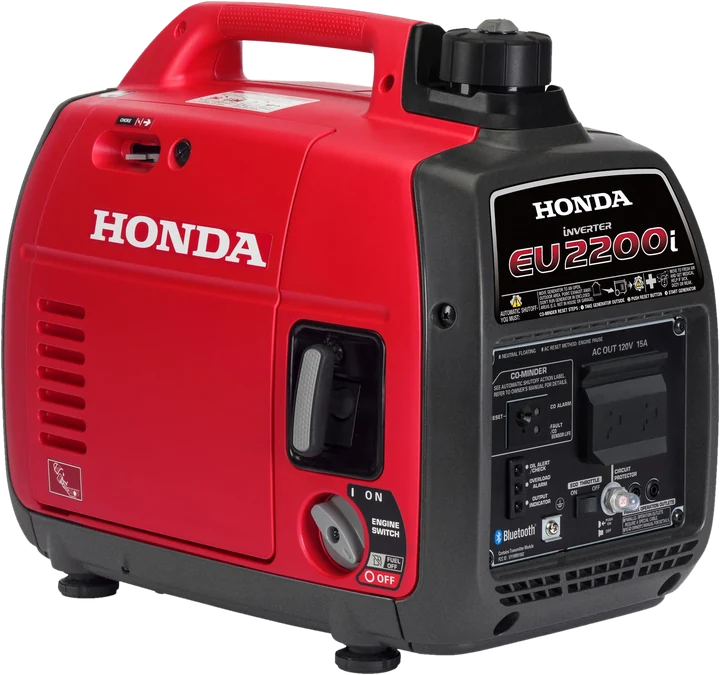
Honda's manual for the EU2200i is blunt: "The system ground is not connected to the AC neutral wire." It floats. No furnace test exists for this exact model. The closest one used a Honda that appears to be the Companion edition, and the furnace stopped halfway through its start with a polarity error. With a bonding plug in one outlet and the furnace cord in the other, it ran.
Its
The catch is the tank. It holds
We'd buy it for the furnace and a fridge where the neighbors are close, on an interlock or a cord with a bonding plug.
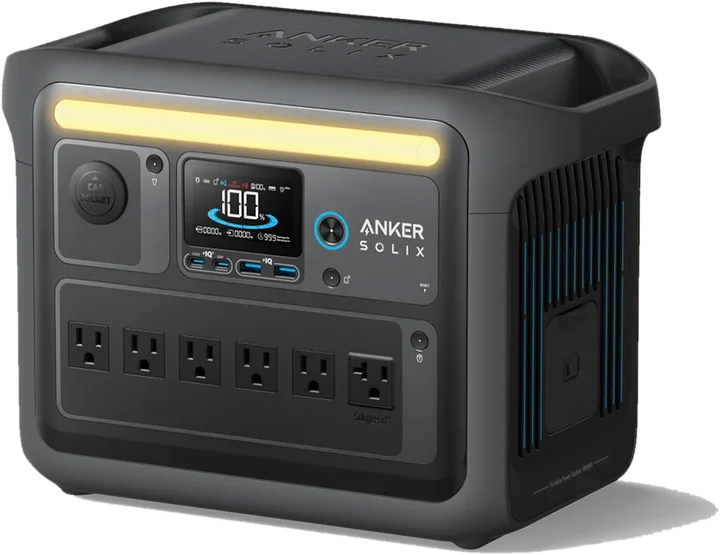
Best power station for a plug-in furnace: Anker SOLIX C2000 Gen 2
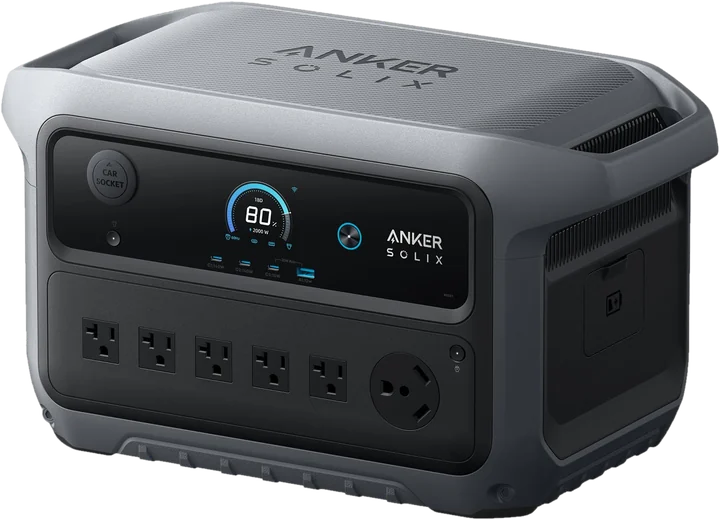
Here's a battery maker that answers before you ask. Anker's manual says the SOLIX C2000
CNET's lab got 88.5% of its
The catch: one charge won't carry a hard freeze to morning. Anker's expansion battery brings the total to
We'd buy it for a plug-in furnace in a home that can't or won't run a generator.
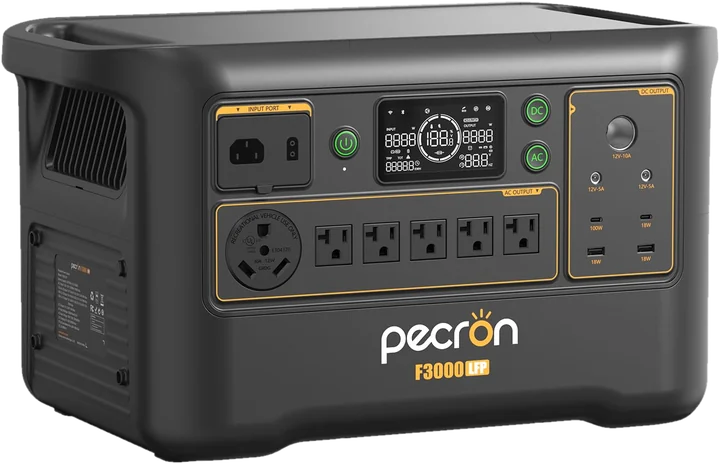
Best for outages longer than a battery: Anker SOLIX F3000
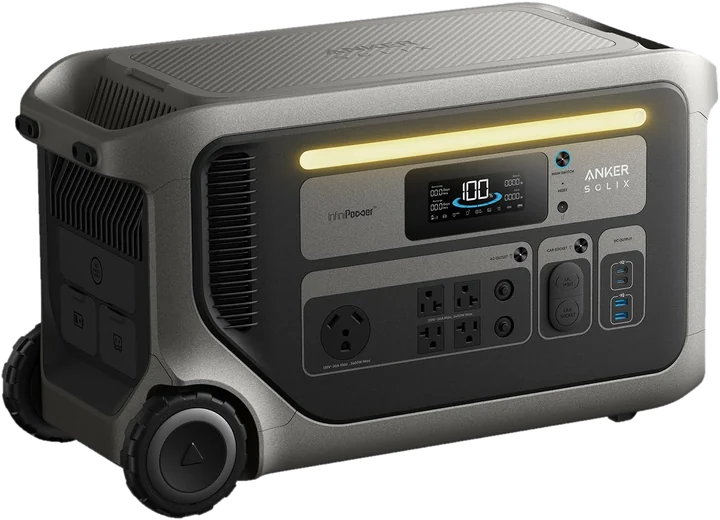
Anker doesn't say how the SOLIX F3000's neutral is wired, so a tester checked. It's the only measured check on any unit in our evidence. On battery the outlets float. On the wall they take ground from the charging source. In EV mode they bond, though that mode switches wall charging off. So a cord to the furnace needs a bonding plug, and an interlock gets the floating neutral it wants.
What it brings is staying power. The same tester's discharge got 89% of its
The catch is its appetite while idle. Switched on with nothing plugged in, it drew
When outages stretch to a week and a generator waits in the shed, this is the battery we'd buy. The Westinghouse above has the matching outlet.
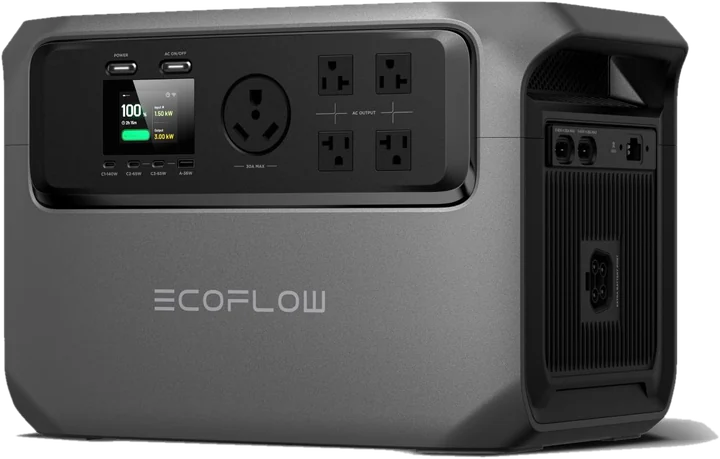
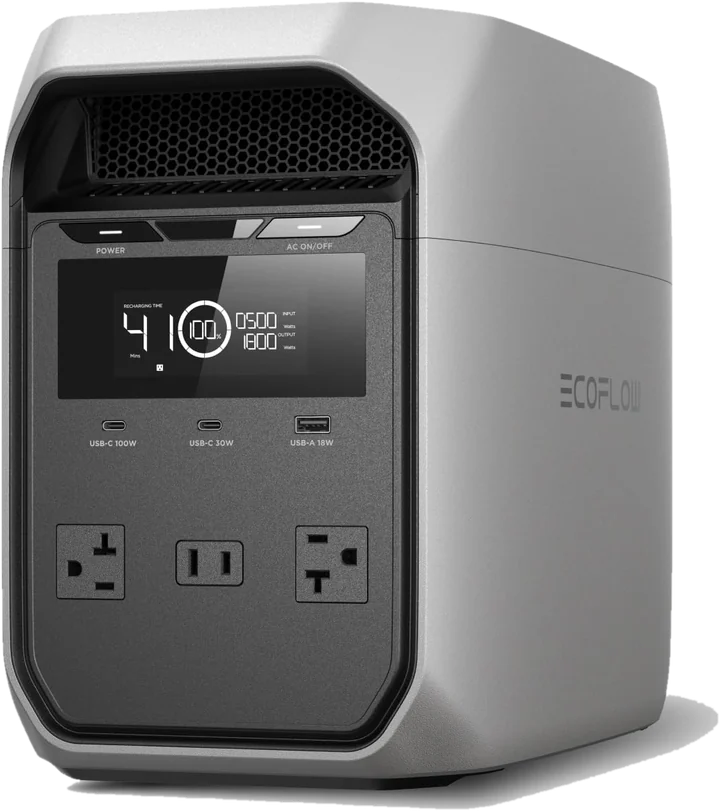
Cheapest way to keep the furnace lit through a short outage: EcoFlow DELTA 3 Classic
EcoFlow's FAQ calls the DELTA 3 Classic "a floating-ground system". That's more than several far bigger boxes manage. One tester drew
Two setup details matter. Its middle outlet has no ground pin, so the bonding plug belongs in one of the other two. EcoFlow's manual also says the AC output switches off when it sits idle, and a fridge can trigger it. It tells you to set the timeout to "never" in the app. A furnace waiting on the thermostat is a similar small load, so we'd set it before the storm. At
The catch is size. This is a battery for the outage that ends before bedtime.
For the least money that still lights a plug-in furnace through a short outage, we'd buy it.
Worth watching for a plug-in furnace: Generac iQ5200 DF
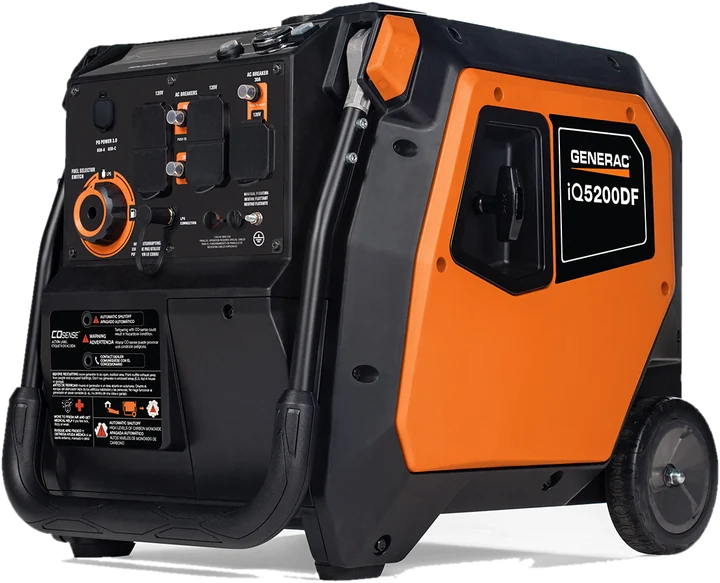
For a furnace that plugs into the generator, or one behind a switch that breaks the neutral as well as the hots, the Generac
What we don't know is whether those promises hold on this exact model. Every figure above is Generac's own. The one lab that ran an iQ5200 used the 50-state model 8947, the version California buyers would need, and that model isn't one we weighed. Owners of the exact 49-state model are few, and two describe long drives or upfront labor for repairs after early failures. No furnace ignition on this generator turns up anywhere in our evidence.
That is too little to buy on, and our Generac
New this year, and what we're watching
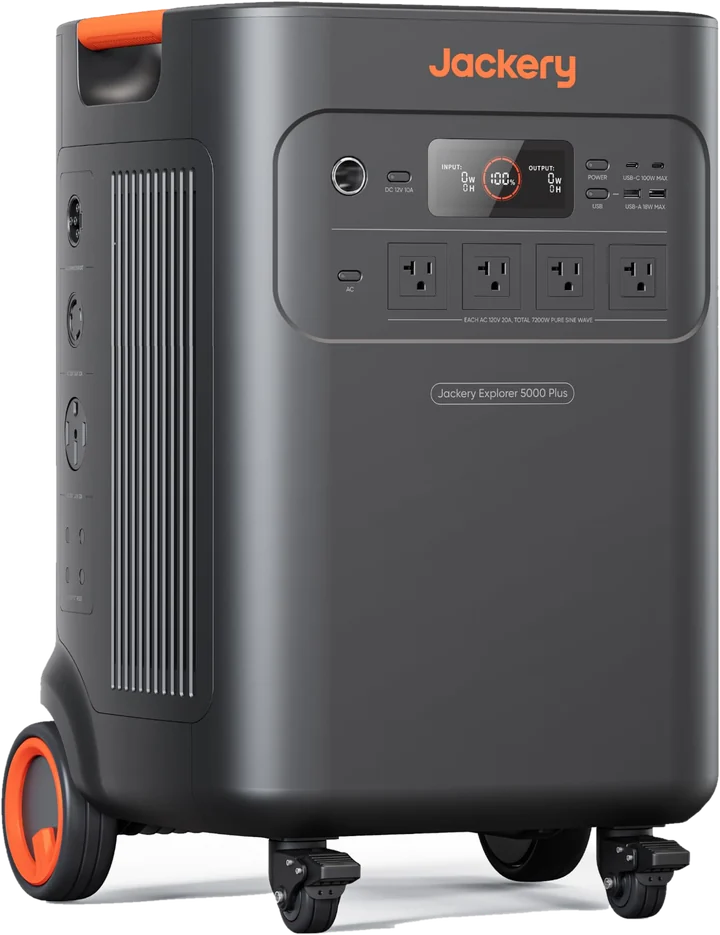
Three big batteries arrived this year, and none yet answers the furnace question. EcoFlow's DELTA 3800 Gen4 has no US manual we could find and says nothing about its neutral. Its two early tests, both maker-supported, drew
How the picks were decided
We started with the bond, because it decides whether the flame lights. Then we matched each unit to the connection it suits and weighed the evidence. A unit qualified only if its maker states the bond for that model or a near-identical sibling, or a tester measured it. To win or earn a buy, it also needed two kinds of evidence on the exact model, one of them not from the maker. That bar is why the Generac gets a wait despite its bond. For half the units we weighed, the maker says nothing about the exact model. Not one exact unit here has a furnace ignition on record, so every call rests on the maker's word and how the unit has done elsewhere.
How long will a battery keep my furnace running?
Owners who metered their furnaces found blower and inducer together drawing from under two hundred watts to just under five hundred. Big older blowers can ask more. Divide a station's usable energy by that for hours of nonstop heat. A cycling furnace goes further. The home backup power calculator works it out for your own furnace and station.
What if the maker doesn't say whether the neutral is bonded?
Then you're buying a question mark, because the answer decides which connection the unit can use. The code makes generator makers mark it; most battery makers we read don't say. Ask in writing before you buy. If no answer comes, buy one whose maker has already given it.
Can I just plug my furnace into a generator?
Only after an electrician converts it to a cord and plug. Whether that passes is up to your local inspector. The base code allows cord connection only for appliances made for it, though at least one county allows furnaces with conditions. Never push generator power back through a wall outlet. The person it endangers may be a lineman a mile away.
Will a big open-frame generator run my furnace?
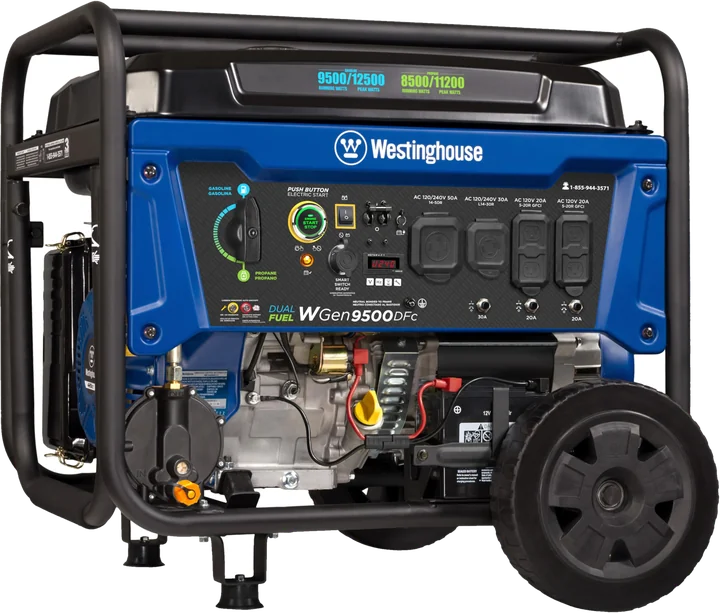
It might, but we wouldn't trust a furnace board to it. Skip the Westinghouse WGen9500DFc for this job. Its own manual allows up to 23% distortion, against under 3% for the inverter generators above. For a furnace home, the Westinghouse iGen5000DFc is the better generator, and it is also the pick in our guide to inverter and regular generators, which explains why distortion matters.
The picks side by side
| Unit | Best for | Neutral, and whose word | Connection it suits | Amazon |
|---|---|---|---|---|
| Westinghouse iGen5000DFc | Hard-wired furnace on an interlock | Floating (sibling manuals) | Inlet and interlock | View on Amazon |
| Honda EU2200i | Furnace and fridge, quietly | Floating (Honda) | Interlock, or cord with a bonding plug | View on Amazon |
| Anker SOLIX C2000 | Plug-in furnace, no generator | Floating (Anker) | Cord with a bonding plug | View on Amazon |
| Anker SOLIX F3000 | Week-long outages with a generator | Floating on battery (tester) | Interlock, or cord with a bonding plug | View on Amazon |
| EcoFlow DELTA 3 Classic | Short outages on a budget | Floating (EcoFlow) | Cord with a bonding plug | View on Amazon |
Our pick for a gas furnace: Westinghouse iGen5000DFc
Your furnace doesn't need much power. It needs the right kind, wired the right way. The Westinghouse iGen5000DFc is the generator whose floating neutral fits an inlet and interlock, and whose power a lab has checked on this exact model. If your furnace plugs in instead, the Honda or the C2000
The evidence in full
Research count: 14 models weighed, 11 maker manuals among them; across our research, 589 sources kept in full.
Every unit we weighed, by bond and route
| Unit | Neutral, and whose word | Cord into the furnace | Inlet with interlock | Neutral-switching transfer switch | Our call |
|---|---|---|---|---|---|
| Westinghouse iGen5000DFc | Floating (iGen5000DFcv, iGen4000DFc, iGen2800DFc manuals; DFc's own not obtained) | Needs a bonding plug | Works | Needs a bond added | Buy |
| Generac | Bonded (spec sheet and manual, exact model) | Works as it comes | Second bond: wrong route | Works | Wait |
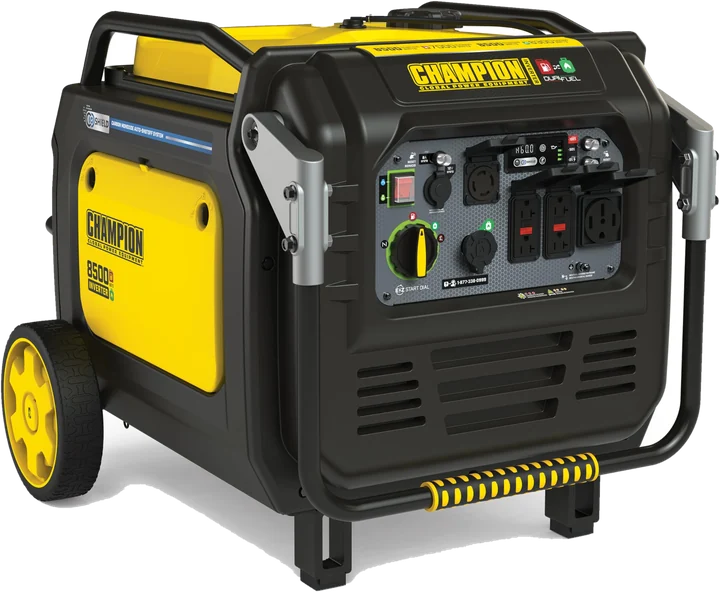
| Champion 201175 | Bonded (manual, exact model) | Works as it comes | Bonded: settle the second bond with your electrician | Works | Considered |
| Westinghouse WGen9500DFc | Bonded (manual, exact model) | Bond fine, power rough | Bonded: settle the second bond with your electrician | Bond fine, power rough | Skip |
| Honda EU2200i | Floating (manual, exact model) | Needs a bonding plug | Works | Needs a bond added | Buy |
| Anker SOLIX C2000 | Floating (manual, exact model) | Needs a bonding plug, as the manual says | Works | Needs a bond added | Buy |
| Anker SOLIX F3000 | Floating on battery, bonded in EV mode (one tester's measurement; maker silent) | Bonding plug on battery | Works on battery | Needs a bond added | Buy |
| EcoFlow DELTA 3 Classic | Floating on battery (FAQ, exact model); bypass mode not stated | Bonding plug in a grounded outlet | Untested, small for a panel | Needs a bond added | Buy |
| Jackery Explorer v2, US model JE-1000D | Floating (FAQ, exact model) | Bonding plug | Untested | Needs a bond added | Considered |
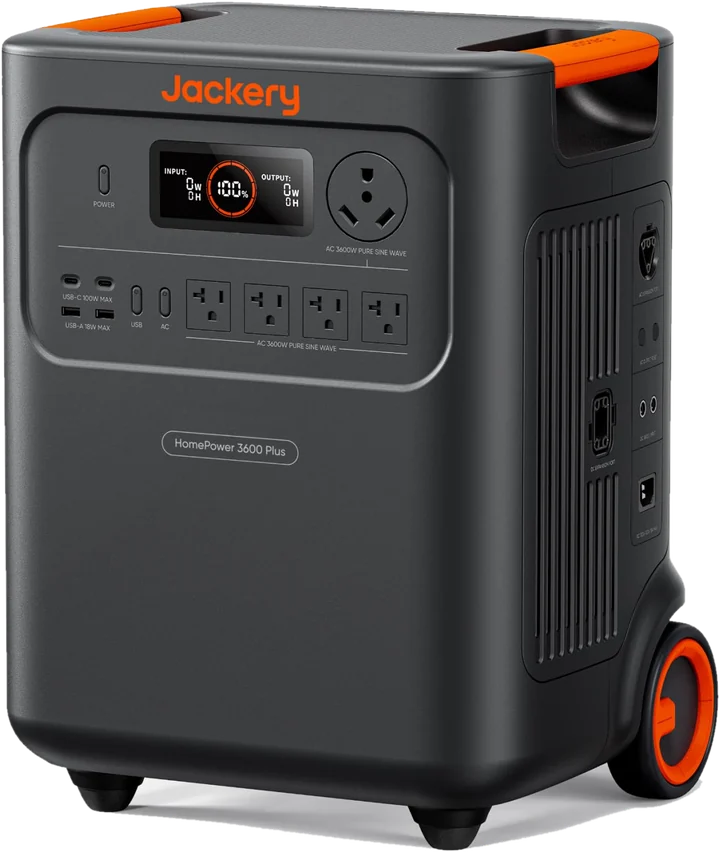
| Jackery HomePower | Floating per the FAQ for the | Ask the maker first | Ask the maker first | Ask the maker first | Considered |
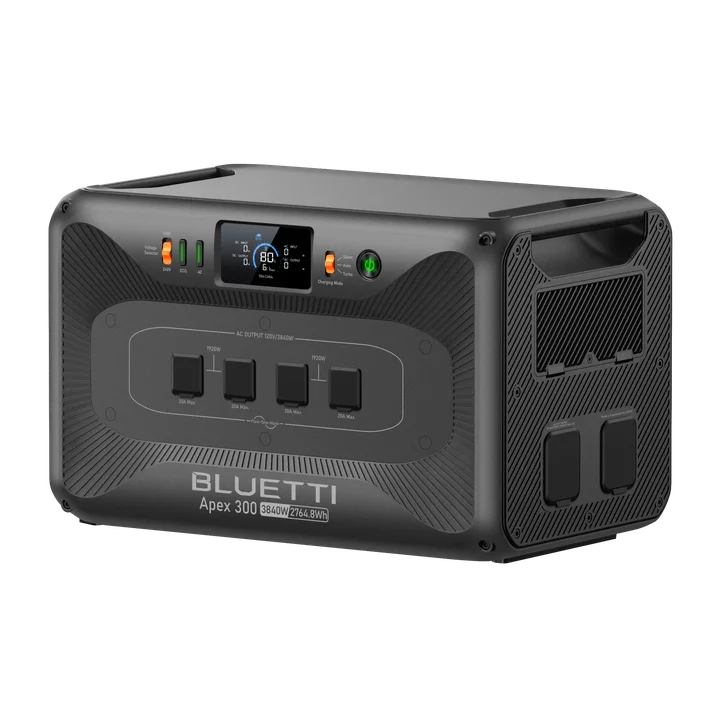
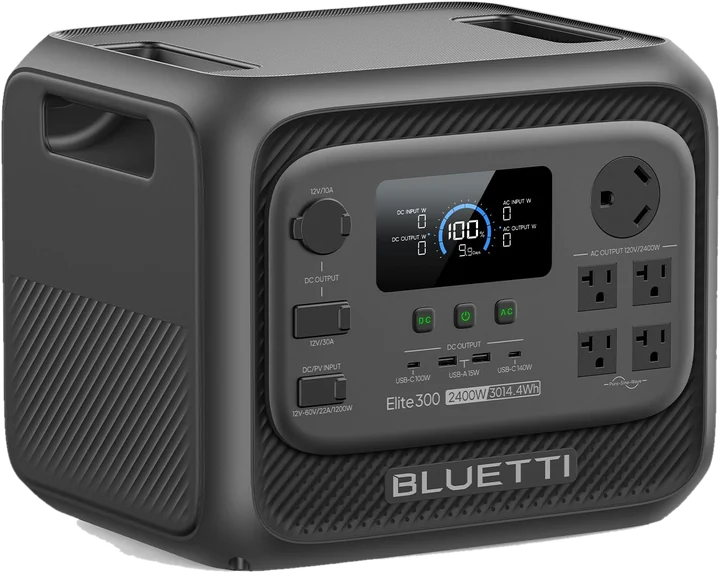
| BLUETTI Elite 300 | Not stated (manual covers a chassis ground screw only) | Ask the maker first | Ask the maker first | Ask the maker first | Considered |
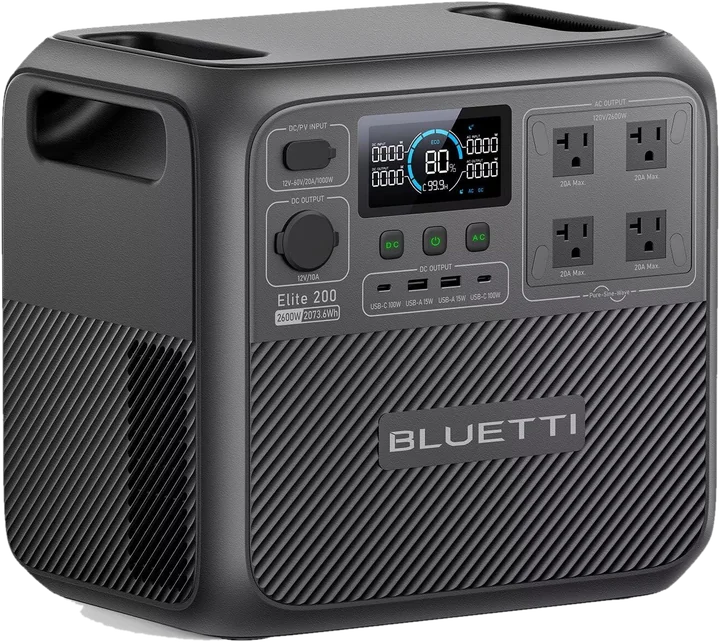
| BLUETTI Elite V2, US model EL200V2 | Not stated (manual covers a chassis ground screw only) | Ask the maker first | Ask the maker first | Ask the maker first | Considered |
| EcoFlow DELTA 3800 Gen4 | Not stated; no US manual found | Ask the maker first | Ask the maker first | Ask the maker first | Wait |
| Anker SOLIX S5000 | Floating per a secondary site quoting Anker; Anker's own statement not found | Ask the maker first | Ask the maker first | Ask the maker first | Wait |
Seven of the fourteen have no maker statement on the exact model: the iGen5000DFc, the F3000, the HomePower
Skip these, wait on these, and also considered
- Westinghouse WGen9500DFc (skip). Bonded, plenty of watts, but its own manual puts distortion at up to 23%, and among its lowest-rated Lowe's reviews, 13 describe an engine that runs with no power output, three naming the DFc. For a furnace home, the Westinghouse iGen5000DFc is the better buy: inverter power a lab has checked, on the interlock route most hard-wired furnaces use. A home that also has
240 V loads shouldn't settle for this one's rough power either; our Champion 201175 review covers the240 V inverter generator we'd wait for, and the iGen5000DFc can carry the120 V circuits in the meantime. - Generac
iQ5200 DF (wait). The only generator here whose maker states a bond on the exact model alongside clean inverter power. On this page's evidence that remains Generac's word: the one independent test was of the 50-state 8947, and owner reports on the 49-state model are few. Our GeneraciQ5200 DF review also says wait for a furnace on a cord or a neutral-switching transfer switch. - Champion 201175 (considered). Bonded and promised under 3% distortion, at
240 V . For a furnace alone it's far more generator than you need at213.9 lb . Its buyer is a home wiring a gas or propane generator to the panel at240 V , and for that home our Champion 201175 review calls it the240 V generator worth waiting for. - BLUETTI Elite 300 (considered). Testers drew
2,670 Wh to2,810 Wh from it, and three agree it idles at15 W , an excellent battery. BLUETTI's manual is silent on the neutral, so we can't match it to a furnace route. - BLUETTI's Elite V2, US model EL200V2 (considered). Testers drew
1,910 Wh to2,030 Wh from its2,073.6 Wh battery. Same silence on the neutral. An HVAC tech ran a gas furnace on its sibling, the AC200L, with a home-made cord tying the furnace ground to the house panel ground; that is not this model. - Jackery HomePower
3600 Plus (considered). One tester drew3,240 Wh from it. For keeping the fridge, lights andWi-Fi going through a one-to-three-day outage, it's the pick on our home page and in our power station roundup; see the HomePower3600 Plus review. It sits out here because its only neutral answer comes from the FAQ for the HomePower3600 Pro Max, a different model with a different inverter, and a furnace buyer needs that answer for the exact box. - Jackery's Explorer v2, US model JE-1000D (considered). Jackery's FAQ says floating, plainly, which earns credit. Nobody has measured the exact model's capacity, Jackery's own pages give both
1,070 Wh and a smaller figure, and the C2000Gen 2 pairs a stated bond with a measured battery.
Furnace starts on record
None is a clean test of an exact unit on this page.
- The exact Honda EU2200i has no furnace test. One owner's run on a Honda that appears to be the EU2200i Companion, an edition with an added RV outlet, showed a polarity error before combustion without a bond and a normal start with a bonding plug in one outlet and the furnace cord in the other. He says the same fix worked on several friends' furnaces.
- A Trane gas furnace on a Jackery rated "
1,000 watt ", possibly the original Explorer 1000, fed through a furnace transfer switch: blower ran, inducer and flame never did, nine flashes for "check igniter". A splitter with a bonding plug (continuity checked on a meter) lit it. That furnace switch did not supply a bond. - A newer gas furnace on a BLUETTI AC200L, with the furnace ground tied to the house panel ground: no error codes.
- An EcoFlow DELTA 3 Plus owner, as reported secondhand: the furnace worked on pass-through and misbehaved on battery; commenters warned that a bonding plug used while the unit is on the wall makes a second bond.
- Some stations' outlets lack ground contacts entirely; an RV electrical writer's fix is a three-way splitter carrying the bonding plug and the load cord. The DELTA 3 Classic's middle outlet is two-prong.
Furnace loads from the makers: Goodman's ECM airflow tables run from under a hundred watts at the lowest speed of the smallest model to nearly eight hundred at the top speed of the biggest, plus the inducer. Carrier's older two-speed PSC blowers carry nameplate ratings well over a thousand volt-amps, though they run below that.
Lab and tester detail
- Westinghouse iGen5000DFc. Watt ratings and the floating neutral come from the iGen5000DFcv manual. Wirecutter's testers ran it at low, medium and heavy loads and reported on power delivery and noise. They published no fuel-use, runtime or distortion figure, and no other source in the evidence pack measured those. One owner started it by key fob after nine hours on standby. Westinghouse's "as low as
52 dBA " and Wirecutter's80 dBA reflect different distances and loads. One Lowe's listing titled iGen5000DFc carries the iGen4500DFC model code, and one buyer received the smaller generator; the fuel-side, choke and leak complaints in that pool belong to the wider family, not to a named DFc. - Generac
iQ5200 DF . Generac's manual says the inverter is bonded to the frame so the GFCI outlets work, and recommends a manual transfer switch installed by a qualified electrician. Generac claims20 h at a quarter load on a grill-size propane tank. Wirecutter tested the 50-state CARB unit (8947), not the 49-state 8945. Its testers found the 8947 handled big loads well and was hard to pull-start on several occasions, though the electric start worked; they also noted the propane hose blocks the outlet above it. Of 165 Lowe's reviews on the iQ5200 page, only 10 are attributable to it; the rest are syndicated or name other Generac models. Among those 10, one owner ran two fridges and a freezer through a long outage on propane, and two describe failures followed by a distant authorized repair shop or labor paid up front. Generac's web page wrongly lists natural gas as a fuel; the spec sheet and manual say gasoline or propane. The April 2026 Generac recall covers GP-series models, not the iQ5200. No independent noise, fuel-use, distortion or cold-start figure exists for either version. - Honda EU2200i. Honda's manual says a house connection must be made by a qualified electrician and must keep the generator isolated from utility power. The CPSC recall of 2020 covers serials sold February 2018 to January 2020; current CO-MINDER units are later serials. Honda's manual says the CO sensor has a finite life, with dealer replacement. No independent distortion measurement exists for this model.
- Anker SOLIX C2000
Gen 2 . CNET's capacity run used a steady moderate load and got 88.5% of rated. Idle draw: Anker claims9 W ; one tester measured18 W and another9 W . Anker's manual says the outlets turn off after15 minutes with no plug detected, a default that can be disabled. - Anker SOLIX F3000. A second tester confirmed a full refill from a generator in under an hour through the 30-amp cable. Idle draw varies by tester and method:
20 W by screen percentage,35 W by metered refill on August 2025 firmware, and a spread across one tester's own runs a year apart. Anker's US manual was not obtained. - EcoFlow DELTA 3 Classic. Idle draw measured at
13 W and17 W on US units. EcoFlow's FAQ calls the unit both "grounded" and "a floating-ground system"; the first describes the ground pin's continuity to the chassis and to grid ground while plugged in, the second the neutral on battery, so both hold. - EcoFlow DELTA 3800 Gen4. Both measured sources are launch videos with maker discount codes; one saw shutdowns at near-rated load on the single high-current outlet, which held once the load was split.
- Code sources. The transfer-switch rule comes from an electrician's explainer citing the 2002 code and an inlet maker's article citing the 2020 code; the cord-connection rule comes from a 2009 Los Angeles County manual. Section numbers have changed since, so the principle stands and your local inspector has the final word.
Sources
- Westinghouse iGen5000DFc store
page (opens in a new tab) - Westinghouse iGen5000DFcv user
manual (opens in a new tab) - Generac
iQ5200 DF spec sheetA0006743922 (opens in a new tab) - Generac iQ3800DF / iQ5200DF owner's
manual (opens in a new tab) Honda EU2200i owner's manual (opens in a new tab) Honda EU2200i product page (opens in a new tab) Anker SOLIX C2000 Gen 2 manual (opens in a new tab)- Anker SOLIX C2000
Gen 2 productpage (opens in a new tab) Anker SOLIX F3000 product page (opens in a new tab) - EcoFlow DELTA 3 Classic support
FAQ (opens in a new tab) - EcoFlow DELTA 3 Classic user manual
(US) (opens in a new tab) EcoFlow DELTA 3 Classic specs (opens in a new tab) - EcoFlow DELTA 3800 Gen4 product
page (opens in a new tab) - Champion 201175 operator's
manual (opens in a new tab) - Westinghouse WGen9500DFc user
manual (opens in a new tab) - BLUETTI Elite 300 user manual
(US) (opens in a new tab) - BLUETTI Elite
200 V2 user manual(US) (opens in a new tab) - Jackery Explorer 1000 v2 basic information
FAQ (opens in a new tab) - Jackery HomePower
3600 Pro Max basic informationFAQ (opens in a new tab) - FCC filing 2AOKB-AS510 (Anker SOLIX
S5000) (opens in a new tab) - Goodman GR9S80 / GD9S80 furnace spec
sheet (opens in a new tab) - Rheem FG6T 80+ technical
specifications (opens in a new tab) Carrier 330JAV product data (opens in a new tab) - CPSC: winter storms and carbon monoxide risks during power
outages (opens in a new tab) - IAEI Magazine: winter electrical safety and
generators (opens in a new tab) - DEMCO: backfeeding, when electricity flows
backward (opens in a new tab) - Trystar: separately derived and non-separately derived generator
connections (opens in a new tab) - EC&M (Mike Holt): installation and operation of optional standby
systems (opens in a new tab) - County of Los Angeles ECM 422.16(A): flexible cord connected
appliances (opens in a new tab) - Wirecutter: best portable
generator (opens in a new tab) - CNET Labs: best portable power
stations (opens in a new tab) Jasonoid: Anker SOLIX F3000 test (opens in a new tab) HOBOTECH: Anker SOLIX F3000 test (opens in a new tab) - The Solar Lab: Anker F3000
review (opens in a new tab) - The Solar Lab: Anker SOLIX C2000
Gen 2 test (opens in a new tab) - Adventure Gear TV: Anker SOLIX C2000
Gen 2 test (opens in a new tab) - The Solar Pit: EcoFlow DELTA 3 Classic
test (opens in a new tab) - The Solar Lab: EcoFlow DELTA 3 Classic
test (opens in a new tab) HOBOTECH: BLUETTI Elite 300 test (opens in a new tab) - StorageReview: BLUETTI Elite 300
review (opens in a new tab) - HOBOTECH: BLUETTI Elite
200 V2 test (opens in a new tab) - StorageReview: BLUETTI Elite
200 V2 review (opens in a new tab) - ReeWray Outdoors: BLUETTI Elite
200 V2 test (opens in a new tab) - HOBOTECH: Jackery HomePower
3600 Plus test (opens in a new tab) - HOBOTECH: EcoFlow DELTA 3800 Gen4
test (opens in a new tab) - Outdoor Prepper: EcoFlow DELTA 3800 Gen4 fridge
run (opens in a new tab) - Johnny's Weekends: Honda EU2200i noise
test (opens in a new tab) - Computer Creationz: gas furnace on a Honda EU2200 with a bonding
plug (opens in a new tab) - The Chief's Way: furnace on a power station, with and without a
bond (opens in a new tab) - SmitHVAC: gas furnace on a BLUETTI
AC200L (opens in a new tab) - The Cool Down: EcoFlow DELTA 3 Plus furnace
workaround (opens in a new tab) - The DIY HVAC Guy: converting a furnace to plug
in (opens in a new tab) - RVelectricity (Mike Sokol): solar generator
bonding (opens in a new tab) - Andy Lippold: Westinghouse iGen5000DFc owner
video (opens in a new tab) Lowe's reviews: Generac iQ5200 (opens in a new tab) - Lowe's reviews: Westinghouse iGen5000DFc
listing (opens in a new tab) - Lowe's reviews: Westinghouse
WGen9500DFc (opens in a new tab) - BackupPowerHub: Anker SOLIX
S5000 (opens in a new tab)