Best backup power for sump pump: which stations switch over and come back on with nobody home
As an Amazon Associate I earn from qualifying purchases.
A dedicated sump battery backup is the better tool for the pump alone. Among power stations, Porchlight's pick is the BLUETTI Elite 300: a measured
The flood rarely comes from the outage itself. It comes when the power returns at 3 a.m. and the outlet stays switched off. The pump waits for current that never arrives. Of the power stations we weighed, Porchlight's pick for getting that moment right is the BLUETTI Elite 300. For the pump alone, though, a dedicated sump battery backup is the better tool.
That backup comes first for a reason. It is a second pump with its own battery, built for this one job. It also covers the day the main pump itself dies, which no power station can. Our evidence holds no tested model to name. So this page ranks power stations, for homes that want one box guarding the pump and keeping the fridge cold. The Elite 300 wins on three counts. StorageReview timed its switchover at
What changes the answer for a sump pump
Every station pays a tax just for being switched on. While the grid is up, the wall covers it. Once the grid drops, the tax comes out of the battery the pump needs, every hour, rain or no rain. So the first thing that moves the pick is how long your outages last. For storms that take the power for a few hours, the small DELTA 3 Classic is enough. Outages that run for days outlast every battery here. Then the Anker SOLIX F3000 refills fastest from a generator, if someone is home to run one.
The second is wiring. If your pump is hard-wired on its own circuit, only the BLUETTI Apex 300 is built to feed a panel through a transfer switch. The third is money. The Elite
The number that sizes all of this is printed on your pump: its running watts. The home backup power calculator turns that figure into an answer for each station.
Best for most basements: BLUETTI Elite 300
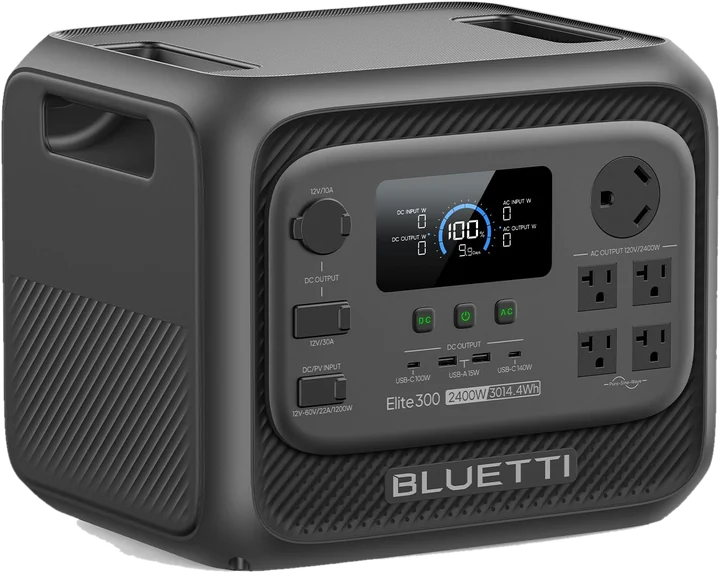
BLUETTI promises a
The morning after matters more for an empty house. Leave it in standard UPS mode, and BLUETTI's manual says returning utility power brings the outlets back after a dead battery. Nobody has to touch a button. A long outage ends with the pump working again, not sitting dark beside a live wall outlet. Its ECO modes ship off. Three testers agree it idles at
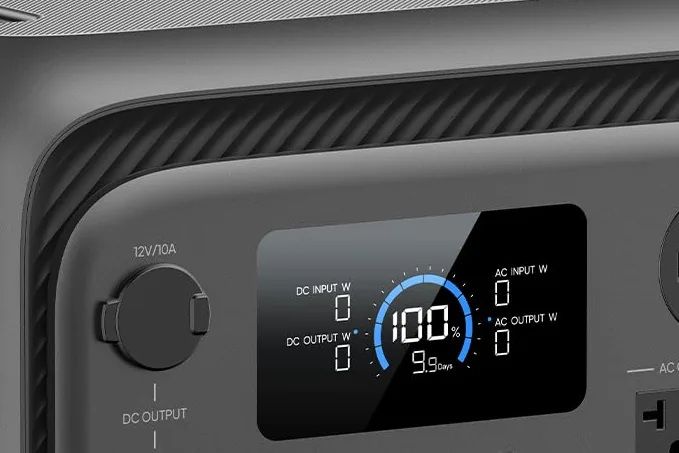
The one real catch is silence. A full-time RVer who has owned one for six months found it kept dropping into standby, so the app lost it. His
We'd buy it to guard a sump pump with nobody home. If the fridge, lights and
Best for less money: BLUETTI Elite 200 V2
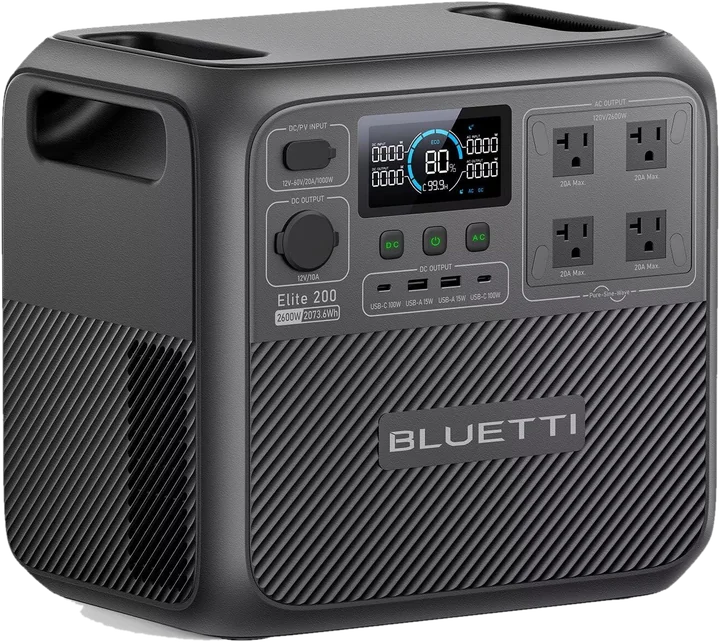
BLUETTI claims a switchover of
The catch is the factory setting. It arrives with ECO enabled. ECO switches the output off once the draw has sat near zero for a while. A sump pump resting between storms is exactly the load it was designed to give up on. BLUETTI's manual says to disable ECO for small loads and for fridges and lights. The pump belongs on that list. Make the change before the first storm, not after it. Once it's done, nothing here is easier to trust.
We'd buy it for a sump pump on a tighter budget. Switch ECO off first.
Best if the pump is on a wired-in circuit: BLUETTI Apex 300
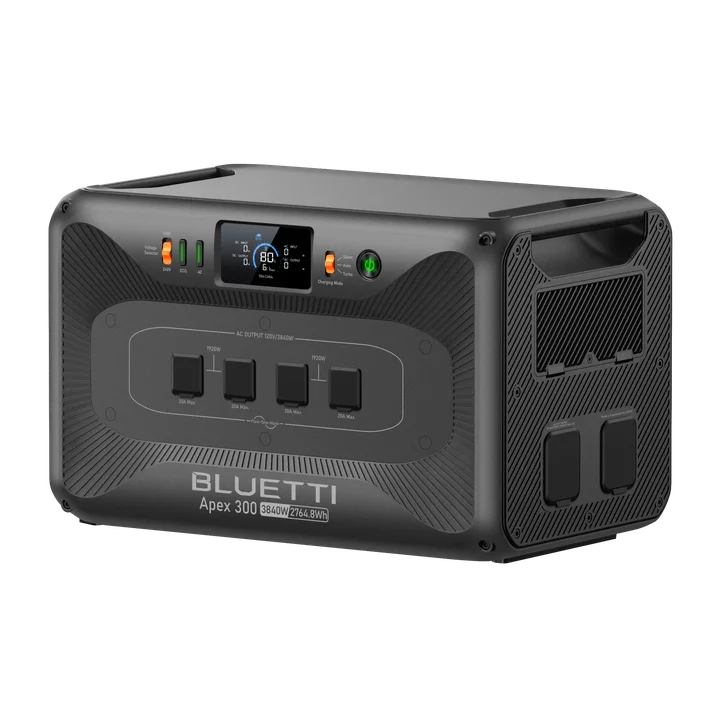
This is the only station here that feeds 120/
BLUETTI's manual says a licensed electrician should check the circuit before it goes live. That is not optional. A station wired into a house any other way can backfeed the lines a utility crew is working on.
The catch is a default with poor timing. Its power-saving mode starts enabled. It shuts the AC off after a few hours of near-zero load, which describes a sump pump on a dry night. The manual says to turn it off for small loads. Ask your electrician to confirm it's off before signing the job off.
We'd buy it for a sump pump on a wired-in circuit, installed by an electrician.
Best when the storm outage runs for days: Anker SOLIX F3000
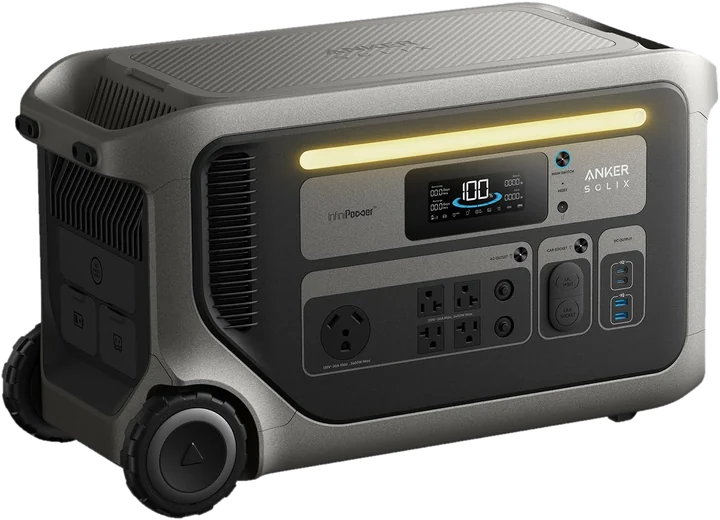
Anker claims
The catch: we can't tell you what it does after running flat. Nobody in our evidence tested a restart. Anker's US manual for it wasn't obtainable either, so we don't know which defaults might cut an idle outlet. For a pump left alone, that's a genuine unknown. For a home with someone there to pull the generator cord, it matters far less.
We'd buy it for multi-day outages with a generator and a person on hand. For a pump left alone, the Elite 300 is safer. Our generator vs battery guide covers the pairing.
Best for storms that pass in hours: EcoFlow DELTA 3 Classic
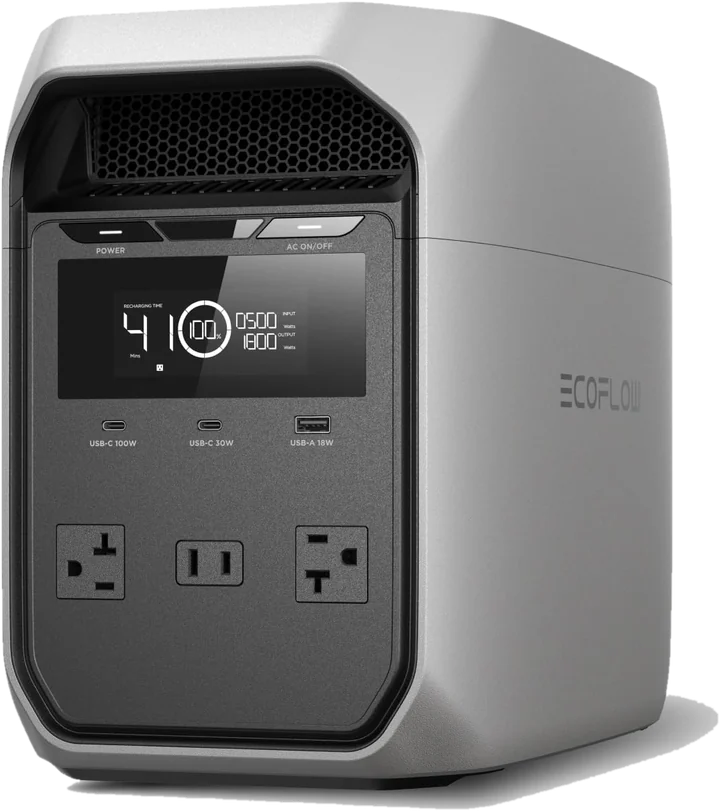
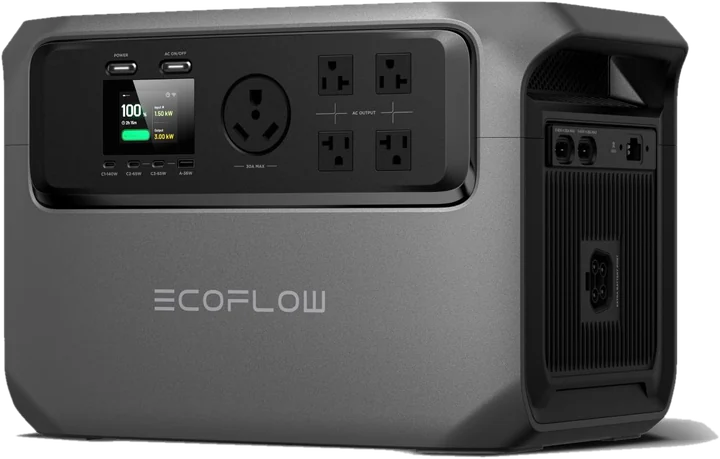
EcoFlow's FAQ says it powers on by itself when charging resumes. Its Port Memory then restores the outputs. That's exactly the restart this reader needs, in the maker's own words, on the smallest and lightest of our picks. EcoFlow claims a switchover under
EcoFlow's US manual names two settings to know. The AC output turns itself off when idle, so set the AC timeout to "never" in the app. And it only works as a UPS when the wall supplies more than the loads draw. The middle outlet of the three takes only a two-prong plug, which leaves the pump's grounded plug a choice of the outer two.
The catch is appetite. In one 24-hour test with nothing plugged in, it lost 30% of its battery. An overnight storm is fine. A two-day outage will find it empty with the pump still needed.
We'd buy it where storms take the power for an evening, not a weekend.
New this year, and what we're watching
The Elite 300 arrived in March. It wins because independent testing has already caught up with it. The EcoFlow DELTA 3800 Gen4 went on sale this month, with
How the picks were decided
We ranked on what floods a basement, in order. Does it switch over before the pump notices? A measured number beat a claimed one. When the battery has run flat and the grid returns, do the outlets come back too? Only manuals and owners answer that, and a documented restart counted heavily. Does a factory default switch off an outlet that looks idle? A pump can sit at zero watts for hours, the very load these modes hunt. And what does the station spend on itself once the grid is gone? We weighed 11 models and read 10 of their makers' manuals. Behind them sit 589 sources kept in full across our wider research.
Is a power station the right backup for a sump pump?
For the pump alone, no. A dedicated sump battery backup is the better tool. It protects you when the main pump fails, not just when the power does. A station earns its place when you also want the fridge, router and lights carried through the same outage.
Will a power station start my sump pump?
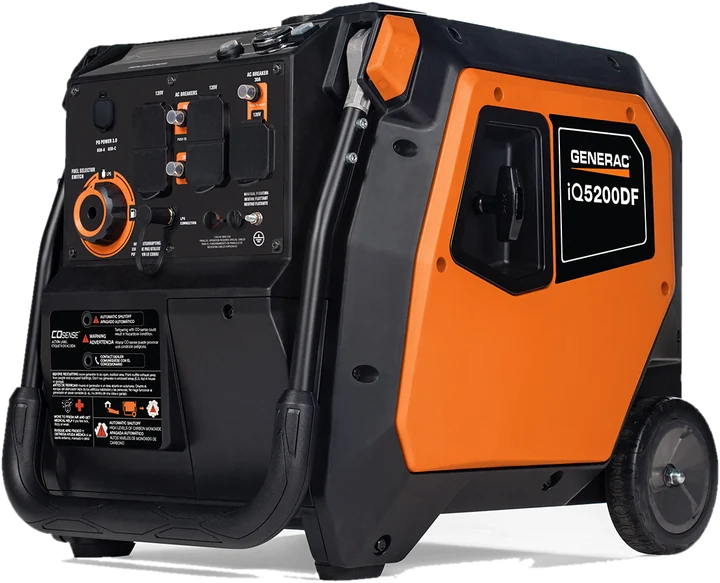
Probably, but nobody in our evidence has tested one on a sump pump. Generac's generator manual tells owners to allow three times a sump pump's running watts to start it. Triple the figure on your pump's label, then check it against the station. Our picks are rated between
What happens if the battery runs flat before the power comes back?
The pump stops, whichever box you own. What matters is whether it starts again when the grid returns. BLUETTI's manuals document that restart for the Elite 300, Elite
Will it tell me the pump is running on battery?
Don't count on it. None of these makers claims a water alarm. A compilation of user complaints about the Anker C2000
Does leaving it plugged in all the time wear out the battery?
Somewhat. Wirecutter says leaving a station plugged in will shorten the battery's life. Guarding a sump pump means doing exactly that. Treat it as the cost of the job.
The picks side by side
| Pick | Switchover | Back on after a flat battery? | Change this setting first | Battery lost to idle each day | |
|---|---|---|---|---|---|
| BLUETTI Elite 300 | Yes, in the manual | Nothing: ECO ships off | About an eighth | View on Amazon | |
| BLUETTI Elite | Yes, in the manual and FAQ | Turn off ECO | An eighth to a sixth | View on Amazon | |
| BLUETTI Apex 300 | Yes, in the manual | Turn off ECO | A sixth to a fifth | View at BLUETTI | |
| Anker SOLIX F3000 | Not documented | Unknown: no US manual found | A sixth to a third (of CNET's measured usable) | View on Amazon | |
| EcoFlow DELTA 3 Classic | Under | Yes, in the FAQ | Set the AC timeout to "never" | About a third | View on Amazon |
The pick for a sump pump nobody's watching: BLUETTI Elite 300
Most backup gear assumes someone will be home when the lights go out. The Elite 300 needs you least of anything here. Its switchover is measured, and its manual promises the restart. Nothing in its factory settings is waiting to switch the pump off. Leave it in standard UPS mode and plug the pump in. Buy it if the basement pump is what you worry about every time you leave in a storm.
The evidence in full
Every station weighed, for unattended use
| Station | Switchover | Restart after a flat battery | Default that cuts an idle outlet, and how to turn it off | Pass-through or UPS cap | Idle draw, AC on | Call here |
|---|---|---|---|---|---|---|
| BLUETTI Elite 300 | Manual: standard UPS mode restores AC once the grid returns | ECO off by default (manual 5.4) | Buy, winner | |||
| BLUETTI Elite | System Switch Recovery (product page FAQ, manual section 10) | AC-ECO and DC-ECO on by default; manual 5.4 says turn off for small loads, fridges, lights | Not published | Buy | ||
| BLUETTI Apex 300 | Manual: standard UPS mode restores AC once the grid returns | ECO on by default, AC off after hours at near-zero load; manual 5.4 says turn off | Buy | |||
| Anker SOLIX F3000 | Not documented | US manual not obtained | Not published | Buy | ||
| EcoFlow DELTA 3 Classic | Under | FAQ: powers on when charging resumes; Port Memory restores outputs | AC timeout on, length not stated; set to "never" in the app (US manual) | Manual: grid must supply more than the loads | Buy | |
| EcoFlow DELTA 3800 Gen4 | Under | Not documented; no US manual found | Not documented | Not published | Wait, new | |
| Jackery HomePower | Not documented | Energy Saving Mode: outputs off after | Left out | |||
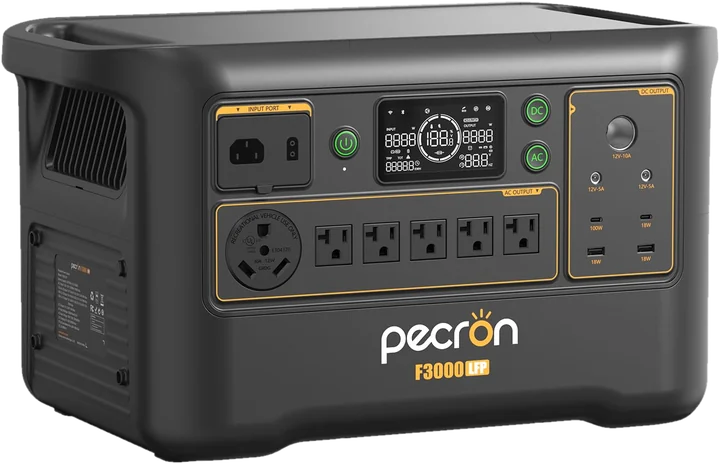
| PECRON F3000LFP | Manual: restores AC output when mains returns | ECO mode exists; default not stated | UPS protects loads under | Left out | ||
| Anker SOLIX C2000 | Not documented | AC off after | Not published | Left out | ||
| Anker SOLIX C1000 | One reviewer-owner saw the AC come back on by itself as solar refilled it | Not documented for this variant | Not published | Left out | ||
| EcoFlow DELTA 3 Max | Under | Not documented | AC idle timeout; set to "never" in the app (manual) | Bypass input 15A for | Left out |
Daily idle shares are our arithmetic: idle watts across
Skip these, and also considered
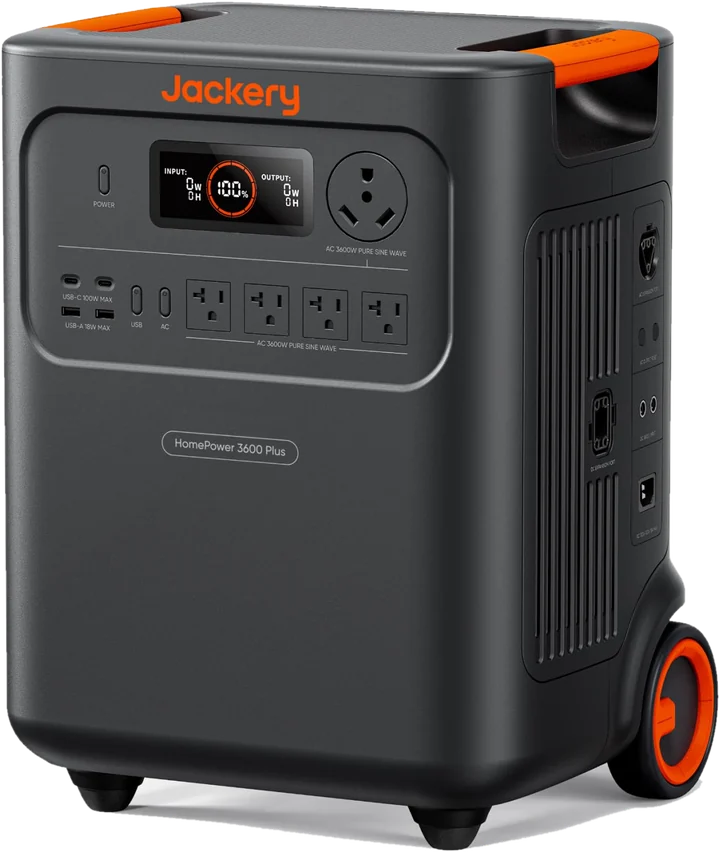
- Jackery HomePower
3600 Plus . Its Energy Saving Mode is the trap: a dry spell of twelve hours with the pump at rest would switch the outputs off before the next storm, unless you disable it first. Add the1,440 W pass-through ceiling the pump starts through every day, and idle of21–34 W , and it loses here. For keeping the fridge, lights andWi-Fi going through a one-to-three-day outage, it remains our pick for most homes, as the home backup roundup explains. - PECRON F3000LFP. PECRON documents the restart, which earns credit, but the idle draw of
37.81 W rising to40.4 W eats about a third of the battery a day, and The Solar Lab itself warns that makes sump standby costly. PECRON's manual also voids the warranty if the unit sits uncharged or unused for more than six months. Its own review recommends it for homes that refill from solar daily, a different buyer. - Anker SOLIX C2000
Gen 2 . A good station let down here by an undocumented restart and an outlet that switches off after15 minutes with no plug detected. Whether a resting pump counts as no plug, Anker doesn't say. Turn that off if you own one. It remains our pick for apartments and walk-ups, a different buyer. - Anker SOLIX C1000
Gen 2 . CNET measured870.08 Wh usable, and14 W of idle takes nearly two fifths of that a day. The restart rests on one owner's report. Better kept for a CPAP and router, its job on its own review. - EcoFlow DELTA 3 Max. Thin evidence: no lab usable-energy figure, no switchover test,
27 W idle, and an AC timeout to change. A table row, not a pick.
Methods, disagreements and owner reports
- Switchover: only StorageReview (Quarch analyzer) and Jasonoid (oscilloscope) timed any of these stations. Every other "passed" is a load that stayed on, which shows a ride-through but not the margin. No station in our evidence was tested on a sump pump, and no motor-start surge rating is published for any of them; BLUETTI's Power Lifting figures cover resistive loads only, per its manuals.
- Elite 300: the
2,670 Wh figure is StorageReview's Kill-A-Watt full discharge; HOBOTECH's2,810 Wh came from an AC test at a light rate. Bren Unplugged, a six-month owner, reports it does not wake for solar after powering down overnight. That concerns solar charging, not the grid restart the manual documents. Consumer Reports lists an "Elite 300 Compact", most likely this unit under the maker's tagline, unconfirmed. - Elite
200 V2 : idle figures differ by method. ReeWray read the display, which only moves in whole-percent steps, while HOBOTECH metered the recharge and so included charging losses. The computer ride-throughs included StorageReview's home lab, a NAS and hypervisors among it. ReeWray's unit, run to empty overnight, didn't wake for solar until the cable was replugged. HOBOTECH and ReeWray carried BLUETTI discount codes; their capacity results agree with CNET's and StorageReview's. - Apex 300: a licensed electrician installing one through a transfer switch found the app's frequency set to
50 Hz and had to change it to60 Hz before going live. One US owner received two units in a row at 0% with a battery-protection fault; BLUETTI replaced the first. Both are single reports. Check every setting before go-live. - F3000: The Solar Lab's two idle runs after a year of use disagreed widely with each other, and other testers found
20 W and35 W , which points to unit or firmware behavior as well as method. Its daily idle share is worked against CNET's2,645.91 Wh , measured on the US unit; against the3,072 Wh rating, the same draw comes to roughly a sixth to a quarter. No other market's unit is used. - DELTA 3 Classic: The Solar Pit's 30% came from the screen's percentage over
24 hours with the display always on; The Solar Lab's17 W method isn't stated. The untimed ride-throughs were The Solar Pit's flicker-sensitive light, a TV in one owner's video, and an aquarium's lights, return pump and wave-makers in another. - C1000
Gen 2 : The Solar Lab's idle and UPS results came from the C1000XGen 2 , a big-box sibling on the same FCC filing, and are not counted for this variant. - Owner evidence at scale was thin throughout: the Reddit reader failed this run and BLUETTI's forum could not be read.
- Research count: 11 models weighed; 10 maker manuals among them; across this site's research, 589 sources kept in full.
Sources
- BLUETTI Elite 300 user manual
(US) (opens in a new tab) - BLUETTI Elite
200 V2 user manual(US) (opens in a new tab) - BLUETTI Elite
200 V2 product page andFAQ (opens in a new tab) - BLUETTI Apex 300 user manual
(US) (opens in a new tab) - EcoFlow DELTA 3 Classic user manual
(US) (opens in a new tab) - EcoFlow DELTA 3 Classic support FAQ
(US) (opens in a new tab) - EcoFlow DELTA 3 Classic specs
(US) (opens in a new tab) EcoFlow DELTA 3 Max user manual (opens in a new tab) - EcoFlow DELTA 3800 Gen4 store page and tech specs
(US) (opens in a new tab) - Jackery HomePower
3600 Plus usermanual (opens in a new tab) - PECRON F3000LFP user manual (100-120
V) (opens in a new tab) Anker SOLIX C2000 Gen 2 manual (opens in a new tab)- Anker SOLIX F3000 product page
(US) (opens in a new tab) - Generac iQ generator manual (appliance wattage
table) (opens in a new tab) - StorageReview: BLUETTI Elite 300
review (opens in a new tab) - StorageReview: BLUETTI Apex 300
review (opens in a new tab) - StorageReview: BLUETTI Elite
200 V2 review (opens in a new tab) - CNET Labs: best portable power
stations (opens in a new tab) Jasonoid: Anker SOLIX F3000 test (opens in a new tab) HOBOTECH: BLUETTI Elite 300 test (opens in a new tab) - The Solar Lab: BLUETTI Elite 300
review (opens in a new tab) - Bren Unplugged: BLUETTI Elite 300 after six
months (opens in a new tab) - HOBOTECH: BLUETTI Elite
200 V2 test (opens in a new tab) - ReeWray Outdoors: BLUETTI Elite
200 V2 test (opens in a new tab) - There's A Trick For That: BLUETTI Apex 300
test (opens in a new tab) - Landers Electric: Apex 300 transfer switch
install (opens in a new tab) - Beer Money Cycle Works: Apex 300 owner
report (opens in a new tab) - The Solar Pit: EcoFlow DELTA 3 Classic
test (opens in a new tab) - The Solar Lab: EcoFlow DELTA 3 Classic
review (opens in a new tab) - HOBOTECH: EcoFlow DELTA 3800 Gen4 launch
test (opens in a new tab) - The Solar Lab: Jackery HomePower
3600 Plus review (opens in a new tab) - The Solar Lab: PECRON F3000LFP one-year
retest (opens in a new tab) - The Solar Lab: EcoFlow DELTA 3 Max
review (opens in a new tab) - Minute Man Solar: Anker SOLIX C1000
Gen 2 in regularuse (opens in a new tab) - Brutal Reviews: Anker SOLIX C2000
Gen 2 usercomplaints (opens in a new tab) - Wirecutter: best portable power
stations (opens in a new tab)