Best portable power station for home backup: fridge, lights and internet through a 1–3 day outage
As an Amazon Associate I earn from qualifying purchases.
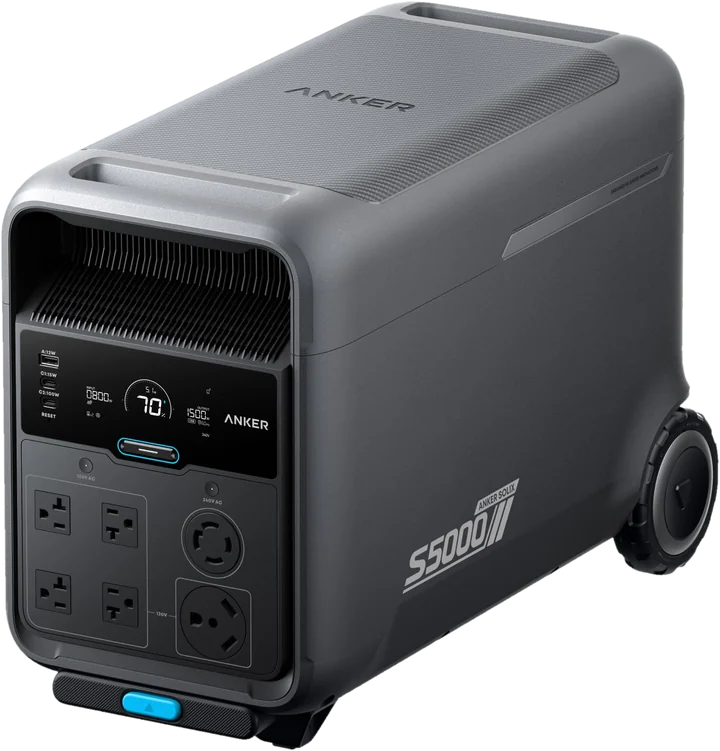 New: worth watching for multi-day outagesAnker SOLIX S5000
Porchlight's pick for keeping a fridge, lights and
Every power station on this page promises days of fridge. Trace those days back and many belong to an empty fridge in a maker's lab. Others belong to a row of extra batteries the box forgot to mention. Porchlight's pick for keeping food cold, lights on and the
What changes the answer for your house
Most homes in this situation should stop at the Jackery. A few things send you elsewhere:
- Your outages last hours, not days. The EcoFlow DELTA 3 Classic below covers the router and lamps, in the under $500 band.
- One person carries it up the stairs. Weight decides it, and the Anker SOLIX C2000
Gen 2 is the one we'd lift. - The budget stops short. The BLUETTI Elite 300 holds most of the Jackery's energy for less.
- A sump pump or a CPAP is the load you can't afford to lose. Then the station to buy is the BLUETTI Elite 300 below, which still has energy over for the fridge.
- The house depends on a well pump or central air wired at
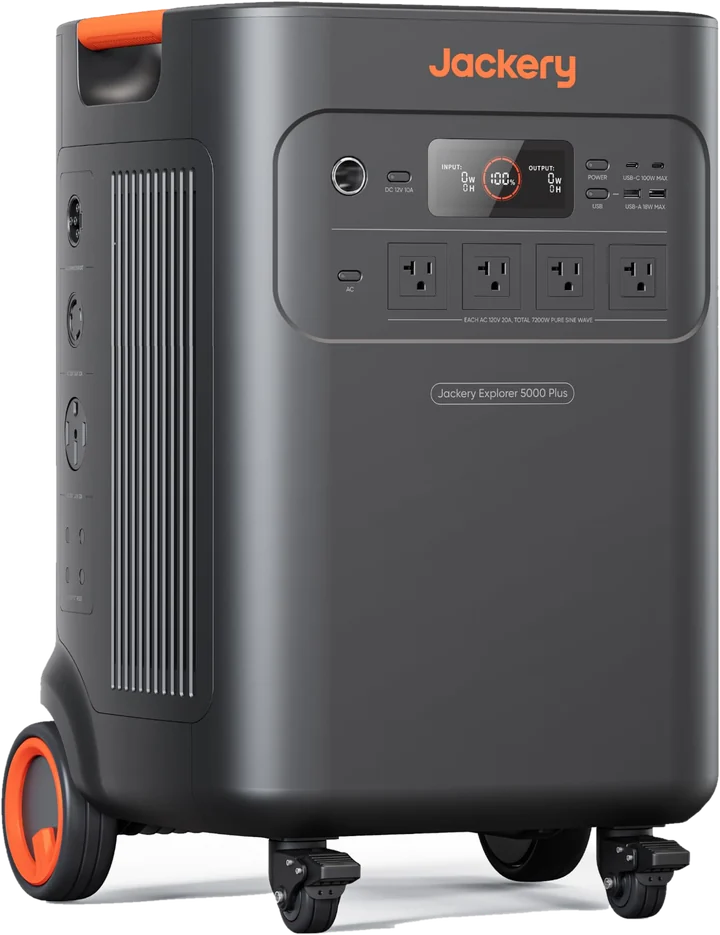
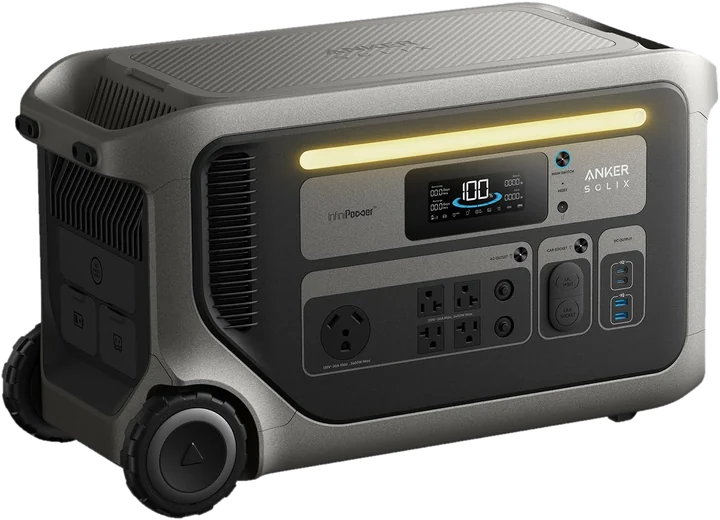
240 V . No plug-in box here can start those. For that job we'd pick the Jackery Explorer5000 Plus , wired into the panel. Our whole-house battery backup guide walks through wired-in setups. - Your outages run a week and you own a generator. Then the battery to pair with it is the Anker SOLIX F3000, which refills fast from a
120 V generator. Our generator vs battery backup guide covers that setup.
The home backup power calculator works out what your own fridge, router and CPAP will ask of a battery.
The overall pick for food cold through a long outage: Jackery HomePower 3600 Plus
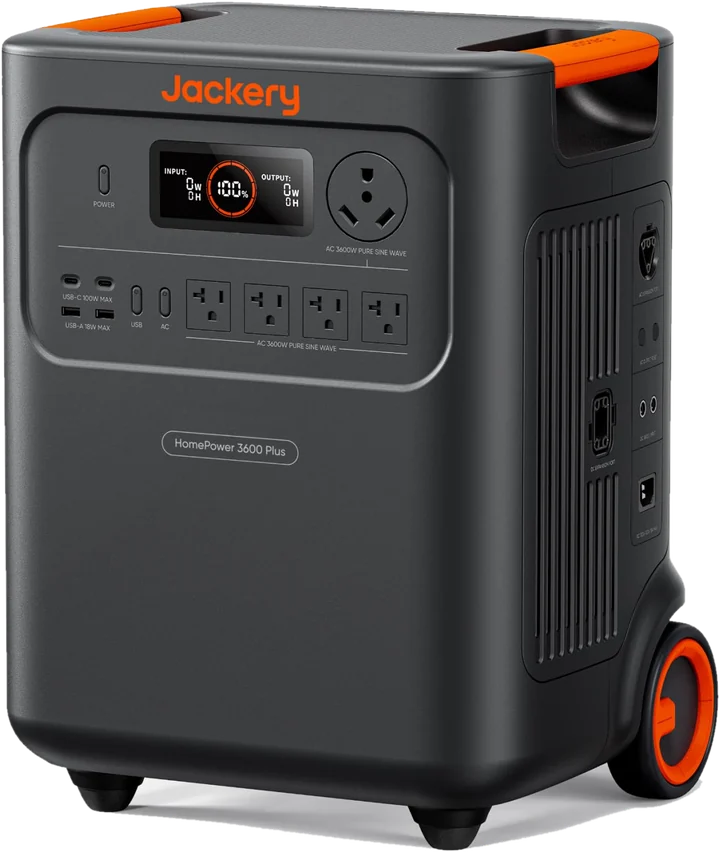
Jackery's page promises up to two weeks of fridge. Follow that figure back and it needs the full
What the
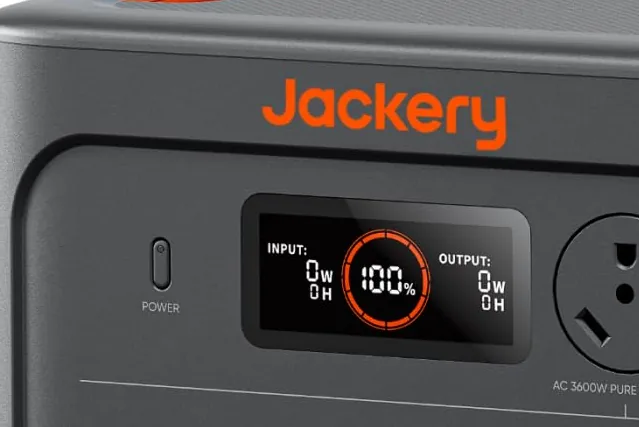
Change one factory setting. Jackery's manual says Energy Saving Mode ships switched on. It shuts the outlets once
The one real catch is the idle tax. Testers measured
We'd buy it to keep food cold, the lights on and the internet up through a one-to-three-day outage.
Most stored energy for less: BLUETTI Elite 300
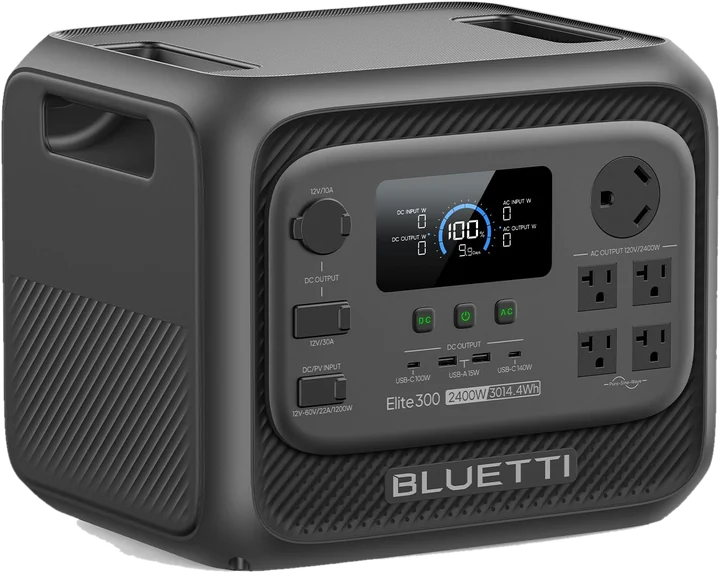
The Amazon listing sells it as a
Where it counts, the Elite 300 beats its own paperwork. Its idle draw is the one number everyone measured alike:
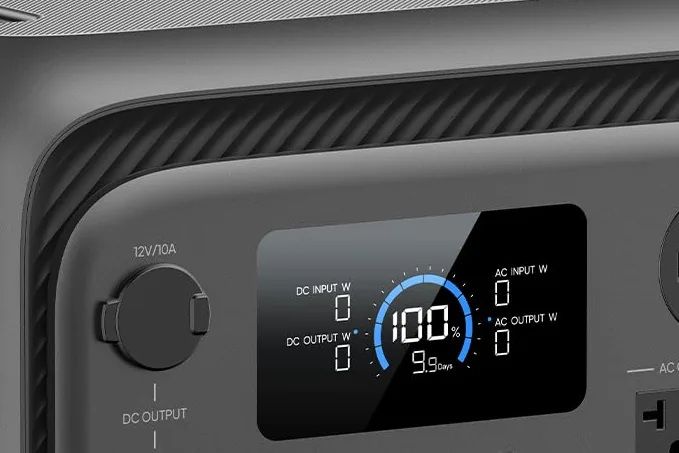
The catch is weight with nothing to roll it on:
We'd buy it for two or three days of essentials when the budget stops short of the Jackery.
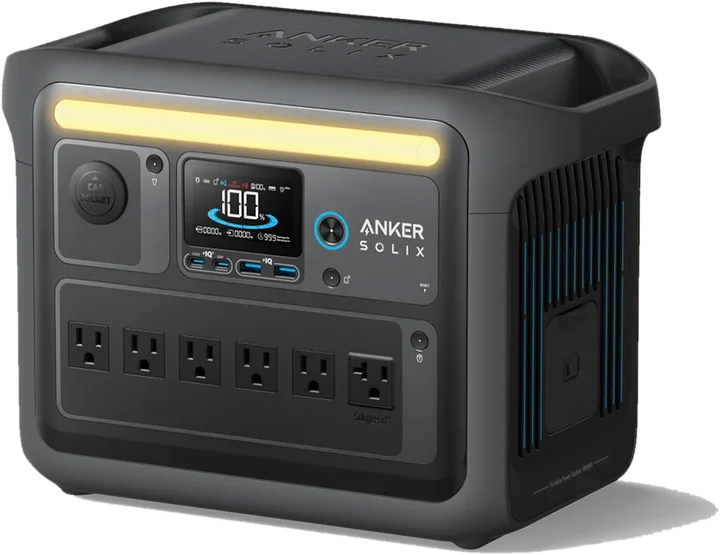
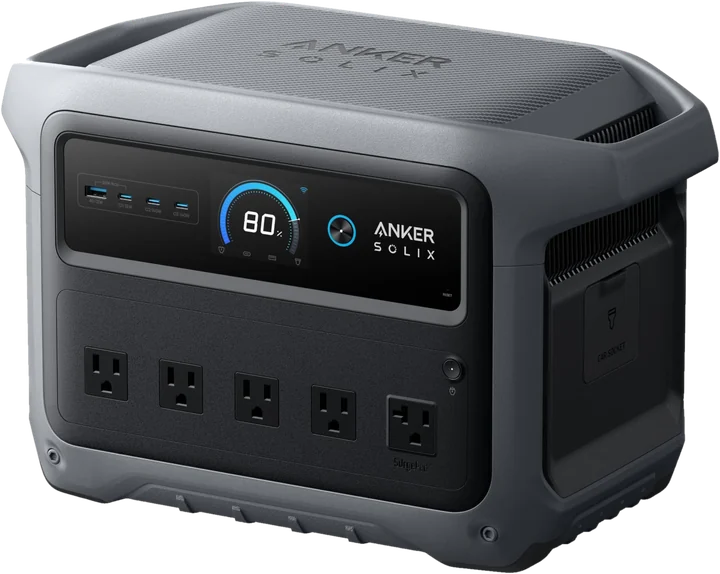
Best for an apartment or a walk-up: Anker SOLIX C2000 Gen 2
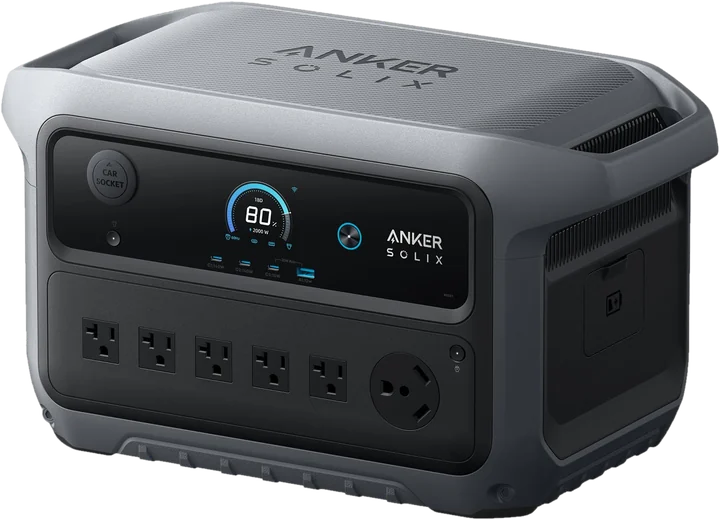
Anker advertises
The catch: on its own, a day is about the limit. A second day means adding Anker's matching expansion battery, for
We'd buy it for an apartment, or any home where one person carries the battery and outages rarely pass a day. It is also our pick for most apartments.
A day of fridge for the least money: BLUETTI Elite 200 V2
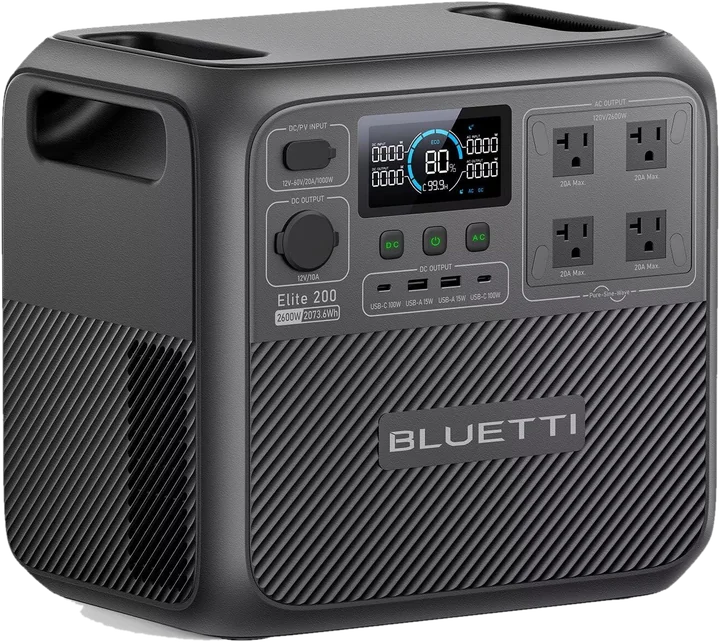
The listing rounds the manual's
The catch is a setting. This BLUETTI leaves the factory with ECO mode on, which cuts the power when the load runs low. Its own manual says to turn ECO off for fridges and lights. Left as shipped, it may save energy by switching off the fridge you bought it to save. Change it once, before the storm. Our review of this model walks through the rest.
We'd buy it when the fridge is the main job, outages run about a day and every dollar counts.
Best for outages measured in hours: EcoFlow DELTA 3 Classic
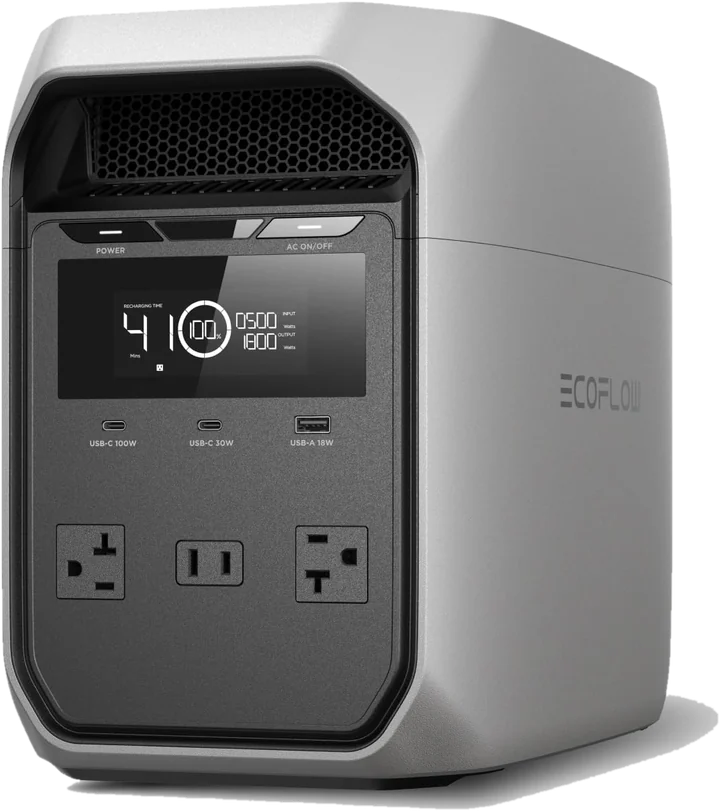
EcoFlow says
The catch: it idles at
We'd buy the DELTA 3 Classic for homes whose power blinks off for hours, often. It is also the pick for short, frequent outages in our budget power station roundup.
New this year, and what we're watching
EcoFlow DELTA 3800 Gen4. Released this month, this is the box most likely to change this page. The 3800 in its name is rounded up: EcoFlow's spec sheet lists
Anker SOLIX S5000. Out since October:
Is either worth waiting for? If outage season is already here, no: buy the Jackery. If you have a few weeks, see the 3800 Gen4's first independent lab result before you spend.
How the picks were decided
We weighed 15 models and read 11 of their makers' manuals. Behind them sits the site's wider research: 589 sources kept in full. We ranked the exact US models on what decides a home backup run: measured energy at a home-like load, idle draw, and lab fridge runs. Then we set each maker's promise against them.
How many hours of fridge will I really get?
Fewer than the label suggests, for two reasons. A fridge is a light load, and a big inverter wastes the most at light loads. CNET's runs show some stations losing far more energy than others on the same fridge. A fridge also cycles, so the inverter stays awake all day while the compressor rests. That is the idle tax. It is why a smaller battery with a frugal inverter can beat a bigger one. Our fridge runtime guide has the measured hours.
Will the power station switch my fridge off by itself?
Some will, as shipped, and the manuals say so plainly. Two BLUETTI models leave the factory with ECO mode on: the Apex 300 and our one-day budget pick above. BLUETTI says to turn it off for fridges and lights. EcoFlow's DELTA 3 Classic and DELTA 3 Max have an AC timeout a fridge can trigger. Set it to "never" in the app. Jackery's Energy Saving Mode rarely bothers a fridge but can catch a lone router. The Elite 300 ships with ECO off. Make the change before the storm, not during it.
Can it run my CPAP too?
Jackery and EcoFlow both say their stations are not for medical or life-support equipment. Nobody in our evidence has run a CPAP overnight on any pick here. Which box to buy depends on which load comes first. If the CPAP is the load the station exists to protect, we'd buy the Elite 300. Its switchover was timed at
Do I need an electrician for any of these?
No. Every pick works with plugs. The fridge cord goes into the station, and the station charges from a wall outlet. Wiring a station into your breaker panel is a different project, with a transfer switch or interlock and different boxes. Our whole-house battery backup guide covers it.
Why not just buy the biggest box?
Because the big
The picks side by side
| Pick | Who it's for | Fridge in CNET's lab | Battery spent per day doing nothing | Weight (lb) | Buy |
|---|---|---|---|---|---|
| Jackery HomePower | Food cold through one to three days | A day and a half | A sixth to a quarter | 77.16 | View on Amazon |
| BLUETTI Elite 300 | Two or three days for less, or a CPAP first | Not run yet | About an eighth | 57.98 | View on Amazon |
| Anker SOLIX C2000 | Apartments, one-person carry | A little over a day | An eighth to a quarter | 41.7 | View on Amazon |
| BLUETTI Elite | A day of fridge on a budget | A little over a day | About a tenth to a sixth | 53.35 | View on Amazon |
| EcoFlow DELTA 3 Classic | Outages of hours | Not run yet | A third or more | 26.7 | View on Amazon |
Our pick: Jackery HomePower 3600 Plus
If the lights go out tonight and stay out until Sunday, we'd want the Jackery HomePower
The evidence in full
The counts behind this page: 15 models weighed, 11 maker manuals among them, and 589 sources kept in full across the site's research. Every figure below belongs to the exact US model named. Watt-hours lost per day are our arithmetic: measured idle watts with the inverter on and nothing running, times 24. Fridge hours per usable kWh appear only where CNET published both its fridge run and its usable energy for that station.
| Station | Idle draw measured (W) | Lost per day just staying on (Wh) | Usable energy measured (Wh) | Fridge hours | CNET fridge hours per usable kWh |
|---|---|---|---|---|---|
| Anker SOLIX S5000 (pre-release unit) | 10 (8.8 claimed) | about 240 | 4,870 (app reading, not metered) | 86 (Bob Vila, to empty) | not run by CNET |
| EcoFlow DELTA 3800 Gen4 | 11 (14 claimed) | about 264 | 3,330 | 66 (maker-tagged video) | not run by CNET |
| BLUETTI Elite | 5 to 14.7, by method (10 claimed) | 120 to 353 | 1,910 to 2,030 (CNET 1,987.98) | 26.32 (CNET) | 13.2 |
| Anker SOLIX C2000 | 9 to 18 (9 claimed) | 216 to 432 | 1,812.04 (CNET) | 27.4 (CNET) | 15.1 |
| Anker SOLIX C1000 | 13.6 to 14 | 326 to 336 | 870.08 to 875 | 8.3 (one owner's large fridge) | no CNET fridge run |
| BLUETTI Elite 300 | 15 (three testers) | about 360 | 2,670 to 2,810 | no lab run | none |
| EcoFlow DELTA 3 Classic | 13 to 17 | 312 to 408 | 940 to 947.47 | no lab run | none |
| BLUETTI Apex 300 | 16 to 20 | 384 to 480 | 2,390 to 2,480 | 30.43 (CNET); 47.6 (one owner's fridge) | no CNET usable figure |
| Jackery Explorer 1000 v2 | 18 claimed, not measured | about 432, claimed | not measured | no lab run | none |
| Anker SOLIX F3000 | 20 to 35 | 480 to 840 | 2,645.91 (CNET) | 28.97 (CNET) | 10.9 |
| Jackery HomePower | 21 to 34 | 504 to 816 | 3,201.32 to 3,270 (CNET 3,201.32) | 38.58 (CNET) | 12.1 |
| EcoFlow DELTA 3 Max | 27 | about 648 | not measured | no lab run | none |
| PECRON F3000LFP | 37.81, then 40.4 after a year (30 claimed) | 907 to 970 | not measured | no lab run | none |
| Anker SOLIX | a quarter of the battery in | about 960 | 3,235 | 25.68 (CNET) | no CNET usable figure |
| Jackery Explorer | 58 (50 claimed) | about 1,390 | 4,374 | no lab run | none |
How the testers worked:
- CNET drained each unit into a steady, moderate resistive load to measure usable energy, and ran a full-size fridge until the battery quit.
- Most idle figures here come from watching the battery percentage on the display over many hours, which is coarse. For the cheaper BLUETTI pick, HOBOTECH instead counted the energy needed to refill the battery, so that idle figure includes charging losses and reads high.
- StorageReview timed the Elite 300's switchover with a Quarch analyzer under a workstation load.
- The Solar Lab buys many of its units, and its unit of the cheaper BLUETTI was bought anonymously. Several other units arrived with maker discount codes or sponsorship (HOBOTECH, ReeWray, Adventure Gear TV), and their numbers sit close to the independent ones. Both DELTA 3800 Gen4 tests are maker-supported launch videos; both S5000 tests used pre-release units.
Where sources disagree, without changing a call:
- Jackery
3600 Plus idle:21 W on HOBOTECH's launch unit (display reading over24 hours ) against34 W from The Solar Lab a year later (method not stated). Open. - Jackery
3600 Plus surge: The Solar Lab saw5,900 W several times without a trip, short of the7,200 W claim; their load may not have gone higher. - Jackery
3600 Plus cold charging: the manual says it charges down to -4°F; a Jackery product FAQ reportedly says freezing. Until Jackery settles it, we'd treat freezing as the floor for charging in a cold garage. - Elite 300 charging: the manual's
1,800 W Turbo gave less out of the box; HOBOTECH reached1,765 W only after unlocking a password-protected mode in the app. - C2000
Gen 2 idle:9 W on an Anker-supplied unit against18 W from The Solar Lab. Open. - The cheaper BLUETTI's efficiency: discharge-only tests read higher than CNET's round trip, which counts charging losses. Different measures, not a conflict.
- DELTA 3 Classic: OutdoorGearLab's "Delta 3" review tested the expandable original DELTA 3 with six outlets, not the Classic, so its numbers do not describe the box we recommend. CNET's port count for the Classic looks like a spec-box error; its photo and charge time match the Classic.
- Consumer Reports lists an "Elite 300 Compact"; BLUETTI's US store sells no such model, and it is most likely the same Elite 300.
Recalls: no CPSC recall names any station on this page. EcoFlow's one recall in the CPSC database covered the older DELTA Max 2000 and was fixed by firmware.
Skip these, and also considered:
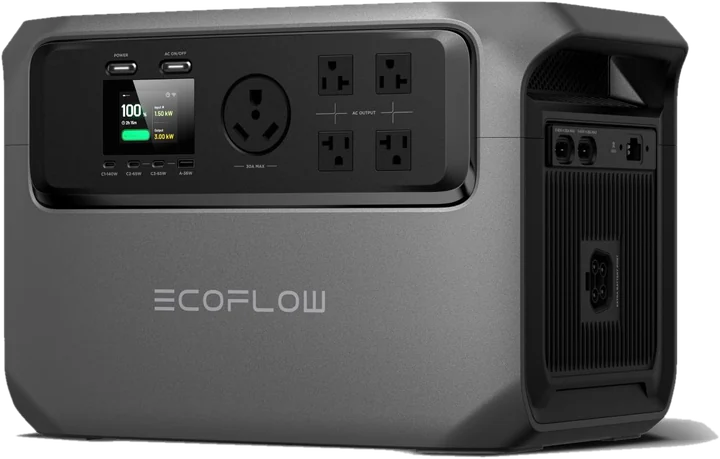
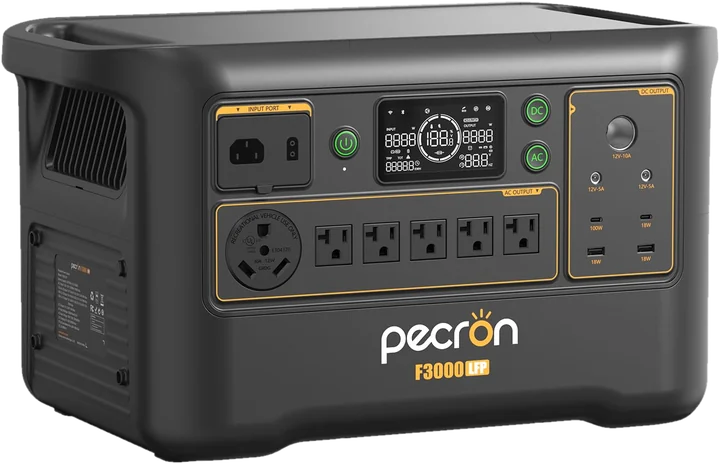
- PECRON F3000LFP: skip for this buyer. Idle draw of
37.81 W , and40.4 W after a year, burns close to a third of its battery every day. Its manual also voids the warranty if the unit sits uncharged or unused for more than six months, which is exactly how a storm battery lives. It suits a home topping it up from solar every day, the buyer in our PECRON F3000LFP review. For a fridge through an outage, the Elite 300 wastes less than half as much. - Anker SOLIX F3000: the battery to buy if you'll refill from a
120 V generator through outages that outlast any battery. It takes3,600 W through its RV-style charging cable; that buyer is covered in our generator vs battery guide and F3000 review. Without a generator, it gives less fridge per watt-hour than the Jackery in CNET's lab, idles at20 W to35 W , and weighs91.5 lb . - EcoFlow DELTA 3 Max:
27 W idle measured, no lab usable-energy figure, and an AC timeout the manual says a fridge can trigger. Nothing measured lifts it past the cheaper BLUETTI pick. - Anker SOLIX C1000
Gen 2 :870.08 Wh usable from1,024 Wh in CNET's test, and one owner's large fridge ran8.3 hours . A good CPAP and router box for a night or two, as our C1000Gen 2 review says; too small for a fridge through a day. - Jackery Explorer 1000 v2: no lab has measured its idle draw, usable energy, switchover or a fridge run, and Jackery's US page lists both
1,070 Wh and1,024 Wh for it. Too little evidence to award. - BLUETTI Apex 300: a
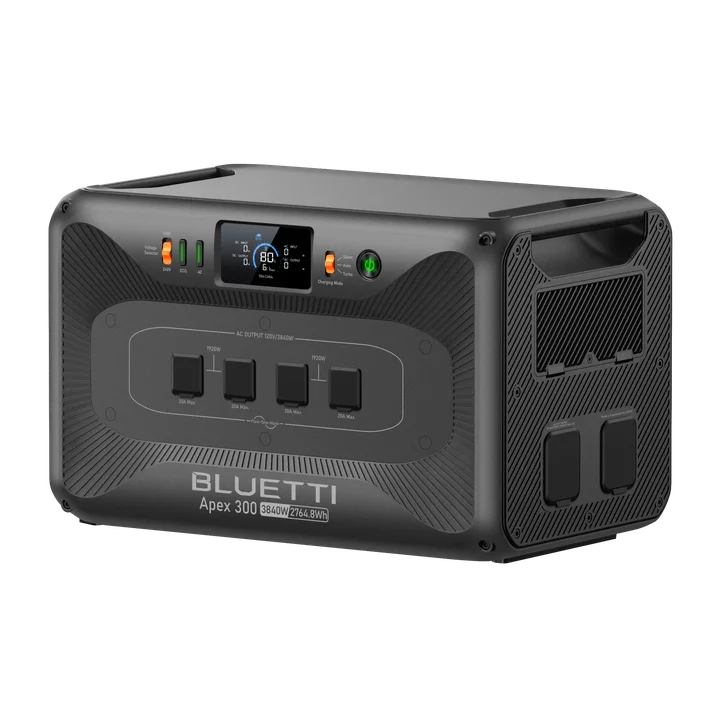
240 V machine for wired-in pumps and whole-house loads, covered in our Apex 300 review. For a fridge it is heavy at83.78 lb , has no USB ports, ships with ECO on, and CNET measured a 66.63% round trip. - Jackery Explorer
5000 Plus : the box we'd buy for a240 V well pump or central air, and for keeping a furnace lit through a panel interlock, as our Explorer5000 Plus review explains. For this page's fridge-and-router job on ordinary outlets, its58 W idle and134.5 lb make it the wrong tool. - Anker SOLIX
F3800 Plus : a firmware update halved its idle drain, but it still loses about a quarter of its battery a day. CNET's fridge run showed 46.63% of its energy lost along the way, and at136.7 lb it is no fridge-and-router box. Its 120/240 V output from one unit is meant for homes having an electrician wire a well pump or other240 V circuits in through a transfer switch or Anker's Home Power Panel. Even for those homes, ourF3800 Plus review says wait.
Sources
- Jackery HomePower
3600 Plus user manual(JHP-3600A) (opens in a new tab) - BLUETTI Elite 300 user manual,
US (opens in a new tab) - BLUETTI Elite
200 V2 user manual,US (opens in a new tab) Anker SOLIX C2000 Gen 2 manual (opens in a new tab)- EcoFlow DELTA 3 Classic user manual,
US (opens in a new tab) EcoFlow DELTA 3 Max user manual (opens in a new tab) BLUETTI Apex 300 user manual, US (opens in a new tab) PECRON F3000LFP user manual (opens in a new tab) - Jackery Explorer
5000 Plus user manual,US (opens in a new tab) - Jackery HomePower
3600 Plus , US productpage (opens in a new tab) - Jackery Explorer
5000 Plus , US product page andFAQ (opens in a new tab) - Jackery Explorer 1000 v2 basic information
FAQ (opens in a new tab) - Jackery Explorer 1000 v2, US product
page (opens in a new tab) - EcoFlow DELTA 3800 Gen4, US store page and
specs (opens in a new tab) - EcoFlow DELTA 3 Classic, US support
FAQ (opens in a new tab) - Anker SOLIX C2000
Gen 2 , US productpage (opens in a new tab) - Anker SOLIX C1000
Gen 2 , US productpage (opens in a new tab) - Anker SOLIX S5000, US product
page (opens in a new tab) - FCC filing 2AOKB-AS510 (Anker SOLIX
S5000) (opens in a new tab) CPSC recall listing (opens in a new tab) - CPSC recall database, EcoFlow
search (opens in a new tab) - CNET Labs: best portable power
stations (opens in a new tab) - The Solar Lab: Jackery HomePower
3600 Plus review (opens in a new tab) - HOBOTECH: Jackery HomePower 3600
Plus (opens in a new tab) - Adventure Gear TV: Jackery HomePower
3600 Plus (Jackery-sponsored) (opens in a new tab) - StorageReview: BLUETTI Elite 300
review (opens in a new tab) HOBOTECH: BLUETTI Elite 300 (opens in a new tab) The Solar Lab: BLUETTI Elite 300 (opens in a new tab) - Bren Unplugged: BLUETTI Elite 300 after six
months (opens in a new tab) - The Solar Lab: Anker SOLIX C2000 Gen
2 (opens in a new tab) - Adventure Gear TV: Anker SOLIX C2000 Gen
2 (opens in a new tab) - StorageReview: BLUETTI Elite
200 V2 review (opens in a new tab) - The Solar Lab: BLUETTI Elite
200 V2 (self-bought) (opens in a new tab) HOBOTECH: BLUETTI Elite 200 V2 (opens in a new tab)- ReeWray Outdoors: BLUETTI Elite 200
V2 (opens in a new tab) - The Solar Lab: EcoFlow DELTA 3
Classic (opens in a new tab) - The Solar Pit: EcoFlow DELTA 3
Classic (opens in a new tab) - John's Off-Road: EcoFlow DELTA 3
Classic (opens in a new tab) - ReefDudes: EcoFlow DELTA 3 Classic on a reef
tank (opens in a new tab) - HOBOTECH: EcoFlow DELTA 3800 Gen4 launch
test (opens in a new tab) - Outdoor Prepper: EcoFlow DELTA 3800 Gen4 fridge
run (opens in a new tab) - pv magazine USA: Anker SOLIX S5000 through a real
outage (opens in a new tab) - Bob Vila: Anker SOLIX S5000
review (opens in a new tab) - The Solar Lab: PECRON F3000LFP
review (opens in a new tab) - The Solar Lab: PECRON F3000LFP after one
year (opens in a new tab) - The Solar Lab: EcoFlow DELTA 3 Max
review (opens in a new tab) - The Solar Lab: Anker SOLIX F3000
review (opens in a new tab) HOBOTECH: Anker SOLIX F3000 (opens in a new tab) Jasonoid: Anker SOLIX F3000 (opens in a new tab) - The Solar Lab: Jackery Explorer 5000
Plus (opens in a new tab) - ReeWray Outdoors: Jackery Explorer 5000
Plus (opens in a new tab) - Silver Cymbal: Anker SOLIX F3800
Plus (opens in a new tab) - There's A Trick For That: BLUETTI Apex
300 (opens in a new tab) - StorageReview: BLUETTI Apex 300
review (opens in a new tab) - Minute Man Solar: Anker SOLIX C1000
Gen 2 launchreview (opens in a new tab) - Minute Man Solar: Anker SOLIX C1000
Gen 2 in regularuse (opens in a new tab)