Solar Generators for Van Life: Compact Power for Life on the Road
In a van, every cubic inch serves double duty. Your power system competes for space with your bed, kitchen, and storage. The right solar generator delivers enough capacity for daily living without consuming the footprint you need for actually living.
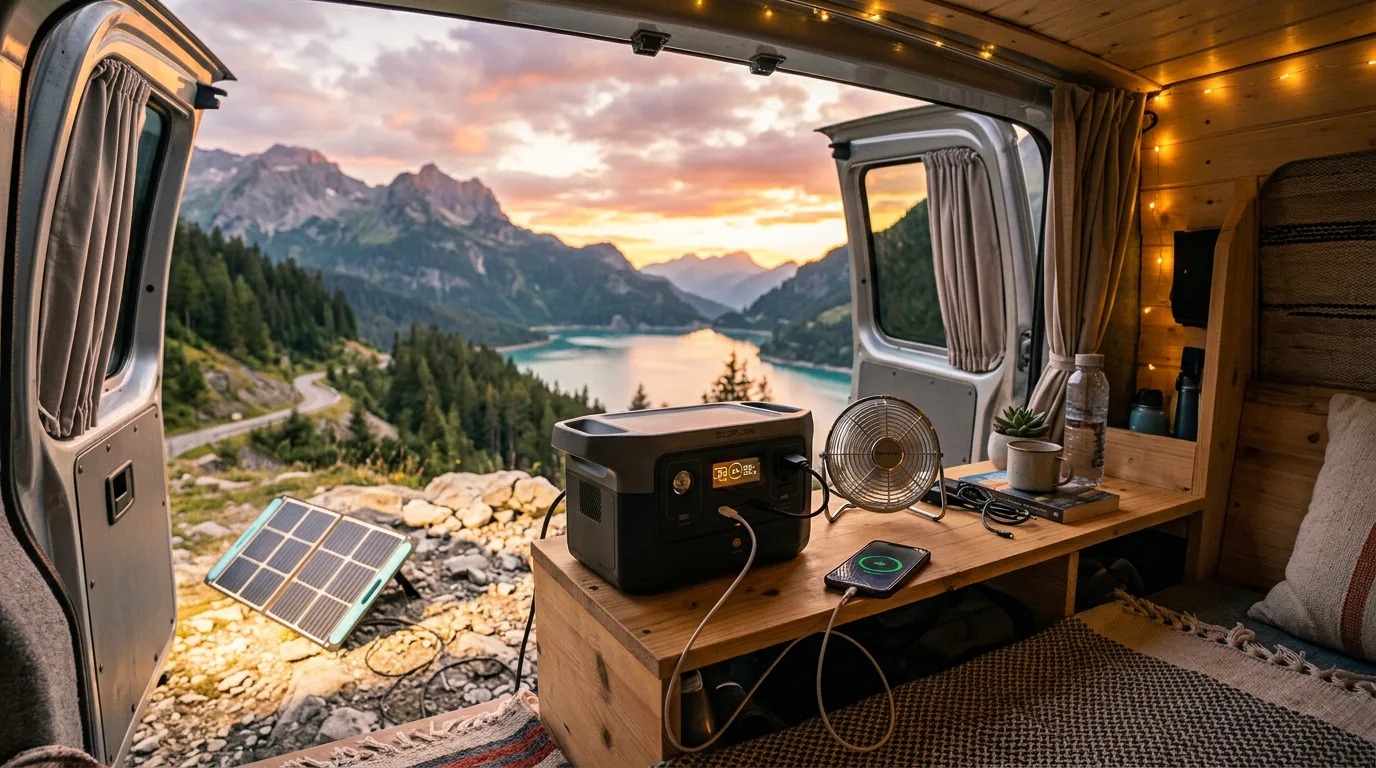
Van life power is a different problem than camping power or home backup. Camping trips last a weekend — you pre-charge and survive on stored capacity. Home backup waits on a shelf for emergencies. Van life power runs every single day, through every climate, on every road surface, charging from every available source simultaneously. Your power station vibrates on highways, bakes in summer parking lots, and freezes in January mountain passes. It needs to handle all of that while fitting into a space smaller than a kitchen cabinet.
We evaluated 35 portable power stations through the lens of van life specifically — factoring in physical dimensions, weight-to-capacity ratio, vibration tolerance (LiFePO4 versus NMC chemistry), charging versatility (simultaneous solar, DC, and AC input), and noise levels for sleeping within arm's reach of the unit. Here is what we found.
Van Power Challenges That Other Guides Miss
Most solar generator guides assume a static use case — the unit sits on a table at camp or on a garage shelf. Van life introduces physical stresses and space constraints that fundamentally change which features matter.
Vibration and Road Impact
A power station in a van absorbs every pothole, speed bump, and washboard road surface. NMC lithium-ion batteries are more susceptible to internal damage from sustained vibration than LiFePO4 cells, which use a more mechanically stable cathode structure. After 50,000+ miles of van life driving, this difference compounds. Multiple van life forums report NMC units developing reduced capacity after a year of daily road use, while LiFePO4 units maintain their rated specs.
Heat Buildup in a Parked Van
A dark-colored van parked in summer sun reaches 140-160 degrees Fahrenheit internally within 30 minutes. LiFePO4 batteries tolerate operating temperatures up to 140 degrees Fahrenheit before performance degrades. NMC batteries begin thermal protection cutoff at 113 degrees Fahrenheit — which means your NMC power station may shut itself off inside a locked van on a 95-degree day. This is not a theoretical concern — it is a daily reality for van lifers in the southern half of the United States from May through September.
Space Constraints
A standard cargo van conversion has roughly 60-80 square feet of usable floor space. Every item earns its place by serving multiple functions or fitting into dead space. Power stations that are tall and narrow fit better in van builds than units that are wide and shallow — they slide into vertical cabinets, under platforms, or behind seats. The footprint matters more than the volume.
Space and Weight Constraints: What Fits in a Van
The practical weight limit for a van life power station is about 30 lbs. Beyond that, repositioning it during builds, maintenance, or charging becomes a two-person job in a confined space. The sweet spot for most van lifers is a compact unit (5-15 lbs) supplemented by alternator charging, or a single mid-range unit (24-28 lbs) that handles everything.
Compact Stations (Under 10 lbs)
Units like the BLUETTI Elite 30 V2 (9.48 lbs, 288Wh) fit in a drawer, mount under a shelf, or slide into a seat-back pocket organizer. They handle daily phone charging, laptop work, and LED lighting for solo van lifers with modest power needs. Pair with a 200W rooftop panel and alternator charging for continuous operation.
Mid-Range Stations (24-28 lbs)
The EcoFlow DELTA 2 (27 lbs, 1,024Wh) and Anker SOLIX C1000 Gen 2 (24.9 lbs, 1,024Wh) deliver serious capacity in a footprint that fits most van kitchen counter spaces. These handle couples or remote workers who run a fridge, charge multiple laptops, and still have capacity for an evening movie projector. The extra weight is manageable when the unit sits in a permanent location.
Roof-Mount Solar for Vans
Rooftop solar is the lifeblood of van life power. Without it, you are tethered to campgrounds, parking lots with outlets, or driving constantly to charge from the alternator. With 200-400W of roof-mounted panels, you generate 800-2,000Wh on a sunny day — enough to cover or exceed daily consumption.
Rigid vs Flexible Panels
Rigid monocrystalline panels deliver 20-23% efficiency, mount on brackets that allow airflow underneath (reducing heat), and last 25+ years. They add 1-3 inches of height to your roof profile and require drilling mounting holes (sealed with Dicor or butyl tape). Most van lifers use 100W rigid panels — two fit on a standard cargo van roof alongside a vent fan and roof rack.
Flexible panels adhere directly to the roof surface with VHB tape, adding almost no height. They are lighter, cheaper, and easier to install. The downsides: 15-18% efficiency (10-15% less than rigid), shorter 10-15 year lifespan, and higher operating temperatures because there is no air gap for cooling. Flexible panels on a dark van roof in summer can lose 20-25% of their rated output to heat.
Panel Sizing for Van Life
A solo van lifer using 500-800Wh per day needs 200W of rooftop solar minimum. A couple running a fridge and laptops at 1,000-1,500Wh per day needs 300-400W. These numbers assume 4-5 hours of usable sun per day (the annual average for most of the continental US). In winter or cloudy climates, add 30-50% more panel capacity to compensate.
Connecting Panels to Your Power Station
Most portable power stations accept solar input through XT60, Anderson, or proprietary connectors. Rooftop panels typically terminate in MC4 connectors. An MC4-to-XT60 (or MC4-to-Anderson) adapter cable bridges the gap. Run the cable through a waterproof cable gland installed in the van roof — available at any marine or RV supply store. Once installed, your rooftop panels charge the station automatically whenever the sun is out.
Top Compact Picks for Van Life
Best Compact Van Life Station: BLUETTI Elite 30 V2
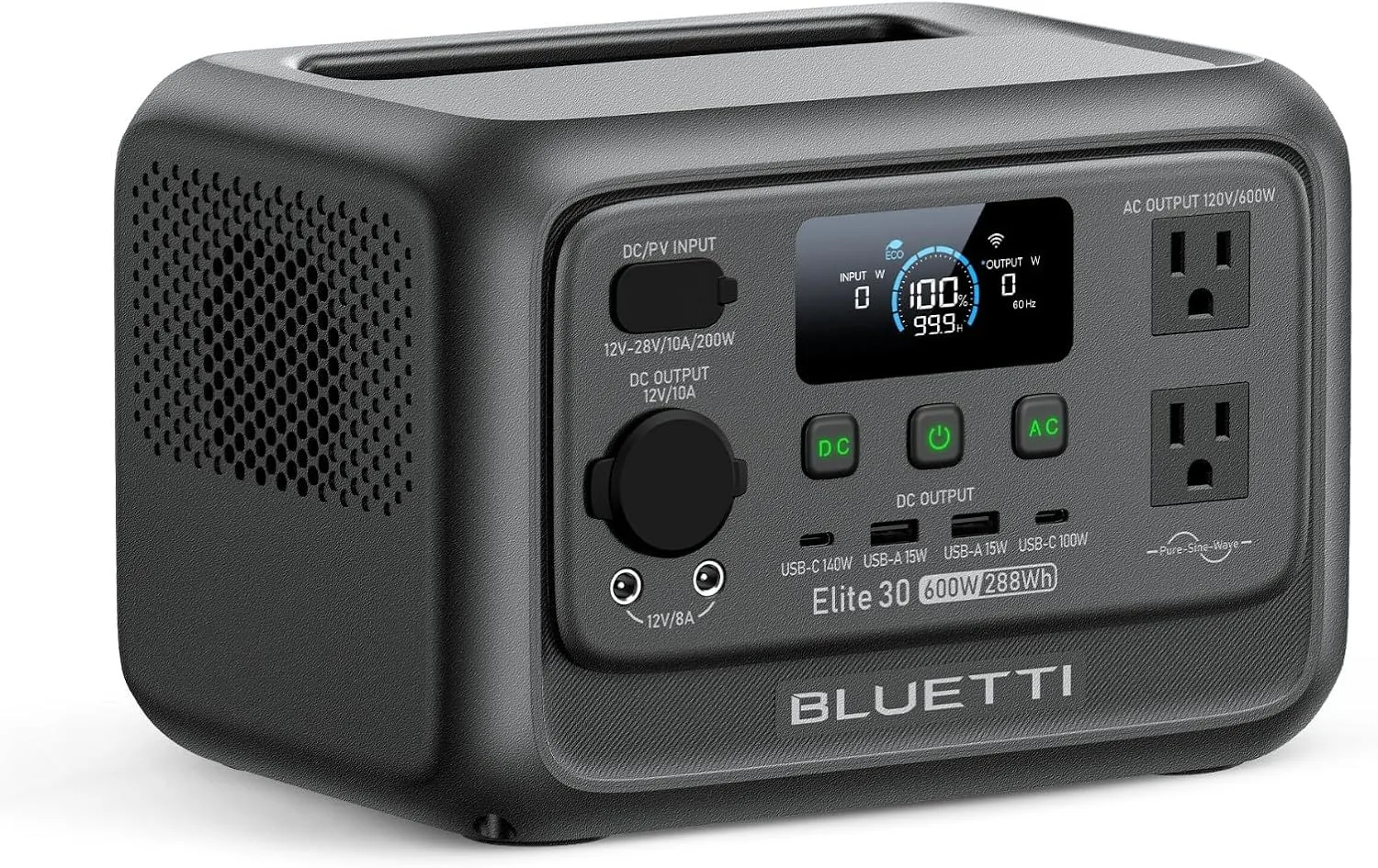
The Elite 30 V2 packs more capability into less space than any other compact unit. At 9.48 lbs and 288Wh, it fits in spaces most stations cannot. The 600W output with 1,500W Power Lifting handles blenders, small heaters, and hair dryers when you need them. The 10ms UPS switchover protects laptops during charging transitions. And the 45-minute turbo to 80% means a quick stop at a cafe charges it faster than you finish your coffee.
For solo van lifers and minimalist couples, this is the sweet spot of size, output, and features.
Best for: Tech-savvy campers, remote workers, and apartment dwellers who want the best compact LiFePO4 UPS with app control
Check Current Price Read full review →Best Mid-Capacity Van Station: VTOMAN FlashSpeed 600
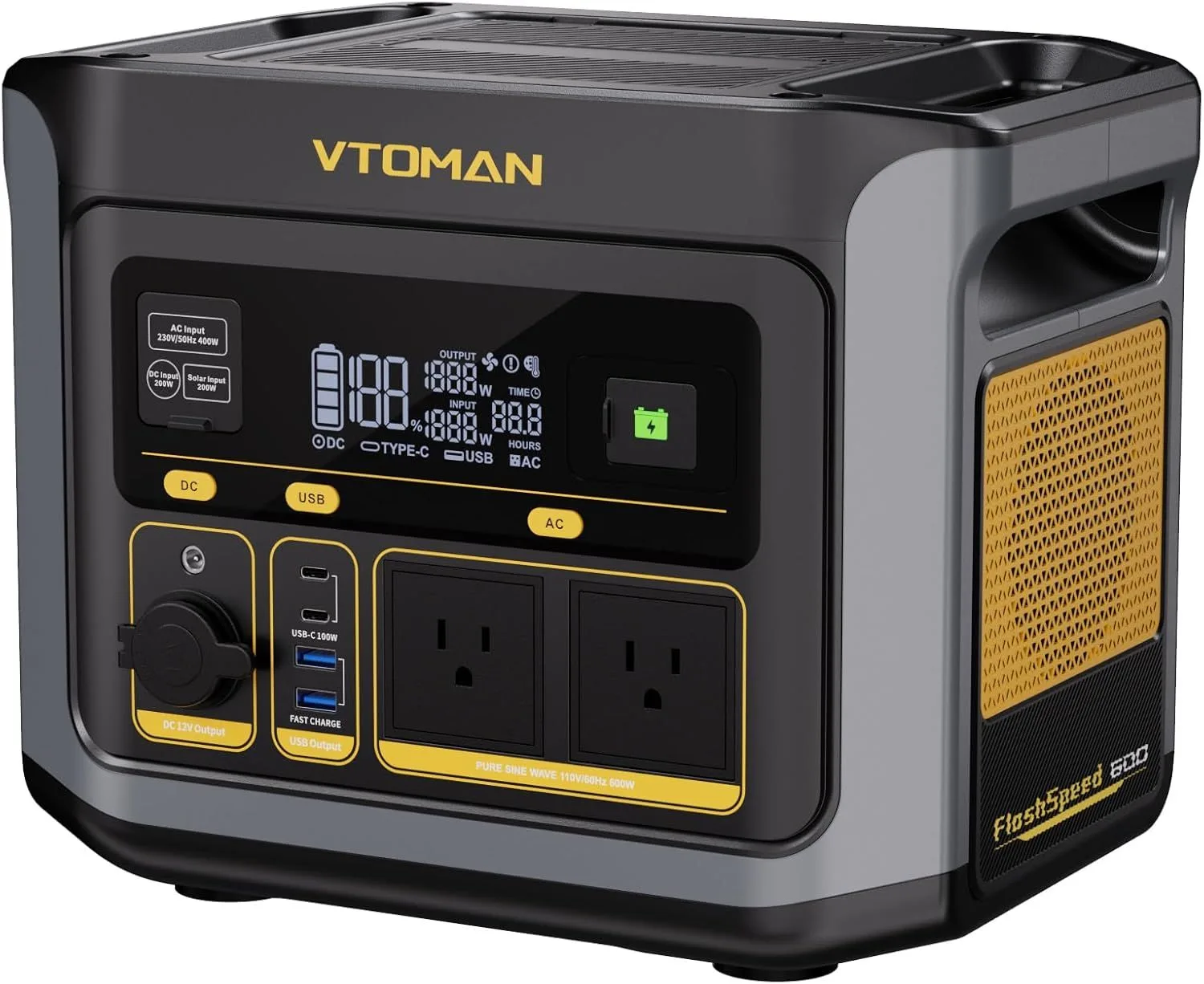
The FlashSpeed 600 bridges the gap between compact and mid-range — 499Wh in a 15.9 lb package with expandability to 2,047Wh. For van lifers who run a compressor fridge full-time, the 499Wh base capacity covers a full 24 hours of fridge operation plus daily phone and laptop charging. The 200W solar input accepts large rooftop panel arrays without bottlenecking, and the 70-minute AC charge means short stops with hookup access fully replenish the battery.
The weight puts it at the edge of comfortable one-handed repositioning, and the fan cycling noise is audible in a van's confined space.
Best for: Weekend campers and tailgaters who need more capacity than the 288Wh class with expandability for multi-day trips
Check Current Price Read full review →Best for Van Life Remote Workers: Anker SOLIX C1000 Gen 2
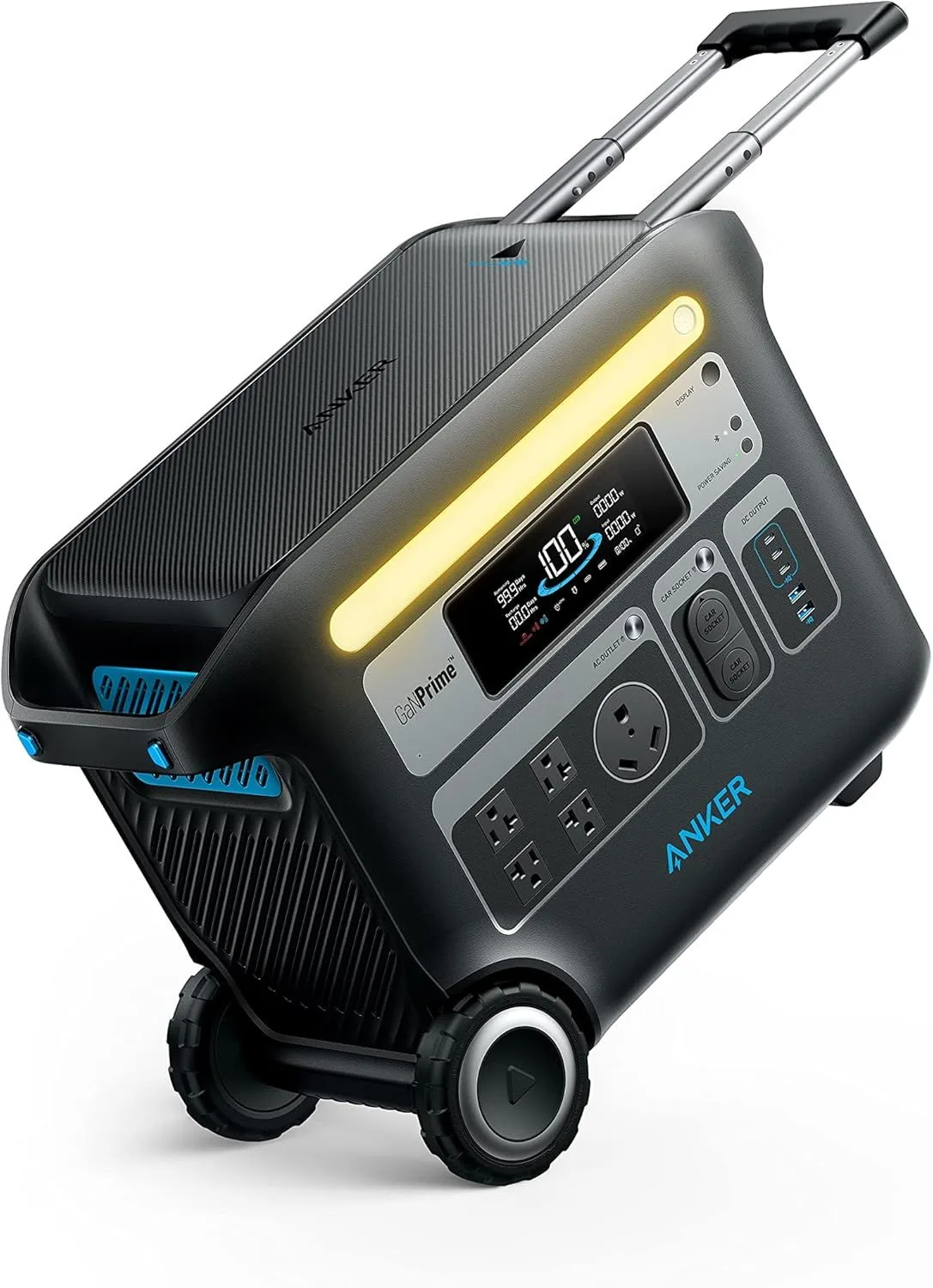
Remote workers need two things from their power station: enough capacity for a full workday and USB-C ports that fast-charge at maximum speed. The C1000 Gen 2 delivers both — 1,024Wh runs a laptop, monitor, and router for 8-10 hours, and dual 140W USB-C ports charge the latest MacBooks at full speed simultaneously. At 24.9 lbs, it is the lightest station in its output class.
The 100% charge retention after one month means weekend van lifers return to a fully charged station every time. The 49-minute full charge is helpful for the "charge at the coffee shop, work at the beach" lifestyle that defines digital nomad van life.
Best for: Tech professionals and travelers who need the fastest charging, lightest weight, and best USB-C performance in a premium power station
Check Current Price Read full review →Your Daily Power Budget: A Van Life Worksheet
Successful van life power management comes down to a daily balance sheet. Here is a realistic daily budget for a couple living in a van full-time:
| Load | Watts | Hours | Daily Wh |
|---|---|---|---|
| Compressor fridge (12V) | 40W avg cycling | 24 | 400 |
| Two laptops | 60W each | 4 | 480 |
| Phone charging (2x) | 20W | 3 | 60 |
| LED interior lights | 10W | 5 | 50 |
| Vent fan | 10W | 8 | 80 |
| Evening movie (tablet) | 15W | 2 | 30 |
| Total | 1,100Wh |
At 1,100Wh daily consumption, a 1,024Wh station needs daily solar or alternator recharging. With 200W of rooftop solar producing 800-1,000Wh on a sunny day plus 300-400Wh from a 3-hour drive, you generate 1,100-1,400Wh — enough to sustain this lifestyle indefinitely during sunny weather. Cloudy stretches require either reducing consumption or finding a hookup to fast-charge.
Common Van Life Power Questions
How many watt-hours do I need for full-time van life?
Most van lifers use 500-1,500Wh per day depending on whether they run a compressor fridge (adds 400-600Wh daily), charge laptops for remote work (adds 200-400Wh), and use a diesel heater controller or fan (adds 50-200Wh). A 1,000Wh station with 200W of rooftop solar handles most non-AC van life comfortably. Remote workers with multiple monitors need 1,500-2,000Wh.
Can I mount a solar panel on top of a van?
Yes, and most van lifers do. Rigid panels bolt directly to the roof rack using Z-brackets or through-bolted mounting feet with self-sealing hardware. Flexible panels adhere with VHB tape or special adhesive — they add minimal height but typically lose 10-15% efficiency versus rigid panels. A standard cargo van roof accommodates 200-400W of panels depending on layout and roof furniture.
What is the best battery chemistry for van life?
LiFePO4 is the clear winner for van life. It handles vibration from driving, tolerates heat buildup in a parked van far better than NMC chemistry, lasts 3,000-4,000 cycles instead of 500-1,000, and has a wider safe operating temperature range. The higher upfront cost is irrelevant when you are using the battery daily — LiFePO4 pays for itself within the first year of full-time use.
Should I install a permanent battery bank or use a portable power station?
Portable power stations are easier to install, require no wiring knowledge, and can be removed for apartment charging or stolen-van recovery. Permanent battery banks (with a DC-DC charger and inverter) are more space-efficient, charge from the alternator automatically, and deliver higher continuous output. Most first-time van lifers start with a portable station and upgrade to permanent wiring after learning their actual power needs.
Can I charge a solar generator while driving the van?
Yes, via the 12V cigarette lighter socket or a direct connection to the alternator via a DC-DC charger. Most portable stations accept 12V DC input at 80-150W. A 3-hour drive adds 240-450Wh — often enough to cover half your daily power budget. Units with simultaneous DC + solar charging can accept car and panel input at the same time for faster recovery.
How do I keep a solar generator secure in a van?
Strap it down with heavy-duty ratchet straps to the van floor or a shelf bracket. Many van lifers build a dedicated shelf or cubby that the unit slides into snugly, secured with a bungee cord or Velcro strap for daily use and a keyed strap for overnight security. Never leave the unit visible through windows when parked in urban areas — cover it or store it in a locked compartment.
Build Your Van Power System
The ideal van life power system starts simple and scales with experience. Begin with a compact or mid-range power station, add rooftop solar after your first month, and expand capacity only after you have real usage data. Many van lifers discover they need less power than they planned — and would rather spend the savings on fuel, campsites, or better insulation.
Explore our compact portable roundup for the lightest options, or our mid-range roundup for stations that handle full-time living. Our watt-hour guide walks through the math of sizing your system precisely.
Ready to Buy? Start Here
Based on this guide, our #1 recommendation:
EcoFlow DELTA 2 The most feature-rich, expandable mid-range station with fastest AC charging Read Full Review →