Solar Generators for Tailgating: Silent Power for Game Day
Tailgating is one of the best use cases for a solar generator — short duration (3-6 hours), predictable load (TV, blender, speakers, phone charging), zero tolerance for noise complaints, and an audience that appreciates anything that keeps the party going. Gas generators get banned from stadium parking lots. Solar generators get compliments.
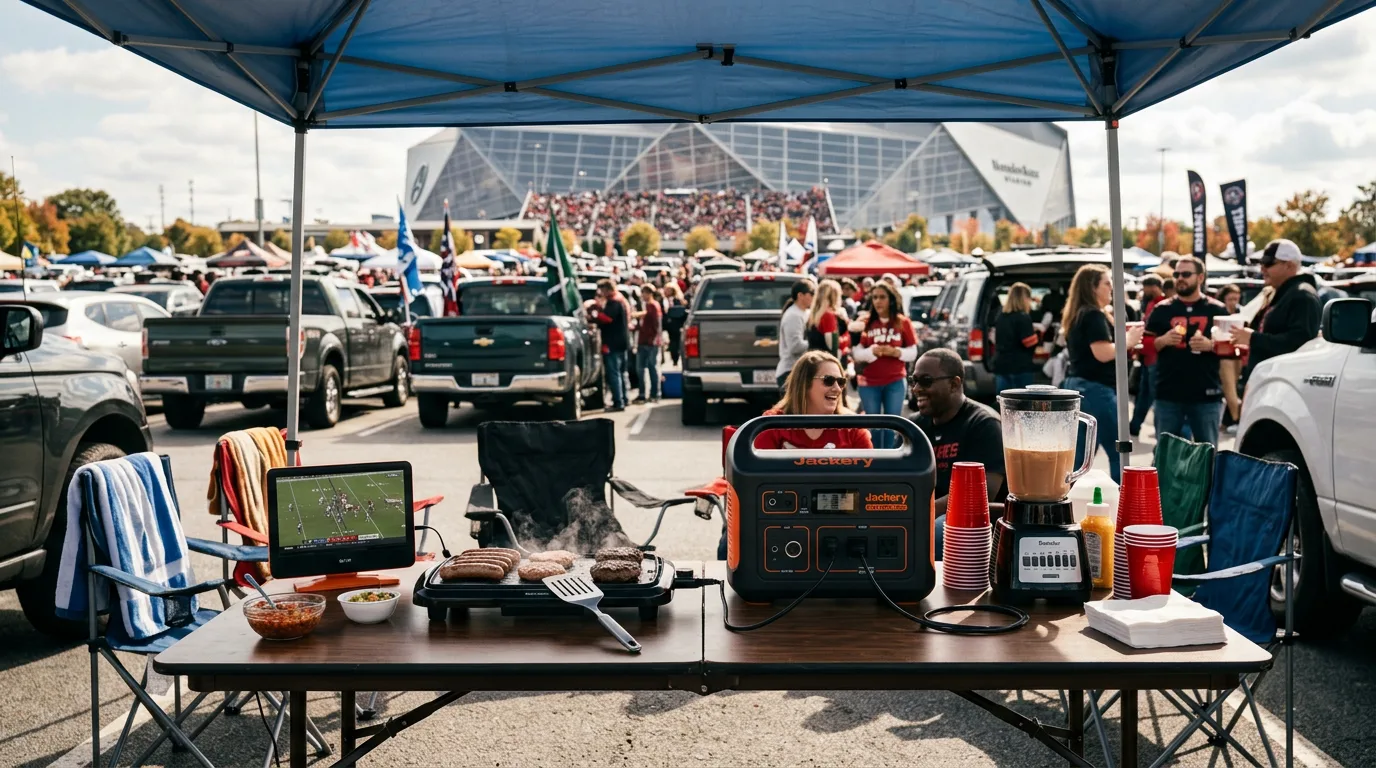
The tailgate power equation is simpler than most people think. A TV draws 50-80W. A blender runs for 30 seconds at a time. Phone charging pulls 10-20W per device. LED string lights draw 5-15W. Add it all together and you are looking at 200-400W of peak draw and 400-800Wh of total consumption over a full afternoon. That is well within the range of a mid-size portable generator — no gas, no noise, no exhaust.
The Tailgate Power Audit: What Your Setup Actually Uses
Before buying, add up your actual load. Every tailgate is different, but here are the common devices and their real-world power consumption:
The TV setup. A 42-inch LED TV draws 50-80W. A streaming stick adds 5W. A portable satellite or antenna box adds 10-20W. Total: 65-105W continuous. Over 4 hours of game time, that is 260-420Wh. A 600Wh generator handles a full game with capacity to spare.
The blender station. A countertop blender draws 300-700W for each 30-60 second blend cycle. That sounds like a lot, but the math works differently than continuous devices. Ten margarita batches at 45 seconds each = 7.5 minutes of total run time. At 500W, that is only 62Wh — less energy than running the TV for one hour. The catch is surge wattage: the motor spikes to 1,000-1,500W on startup. Your generator's surge rating must handle the spike, not just the continuous draw.
Phone and device charging. Each phone pulls 10-20W while charging. Five phones charging simultaneously: 50-100W. Over 4 hours with devices rotating through, expect to use 150-300Wh. A USB power strip or multi-port charger works better than occupying individual generator outlets.
Audio systems. A Bluetooth speaker runs on its own battery — zero generator draw beyond occasional USB top-up. A powered PA speaker drawing from an AC outlet uses 50-300W depending on volume and size. A typical tailgate PA at moderate volume: 100-150W. Over 4 hours: 400-600Wh. If you are running a PA system AND a TV, you need a 1,000Wh+ generator.
Lighting and extras. LED string lights: 5-15W. A portable fan: 20-50W. An electric cooler: 40-60W continuous. These low-draw accessories add up slowly — budget 100-200Wh for a full set of extras over 4 hours.
Our Top Tailgate Generator Picks
Tailgating values portability (carrying from the vehicle to the setup), output (running blenders and TVs), and capacity (lasting through the entire event). Here are the generators that balance all three for parking lot power.
Best for basic tailgating: The VTOMAN FlashSpeed 600 Portable Power Station delivers 600Wh of capacity with 600W output and 1,200W surge — enough to run a TV, charge phones, and handle most blenders. At under 20 lbs, one person carries it from the trunk to the setup. The 1,200W surge is the standout: it starts motor-driven devices that cheaper 300W units refuse.
Best mid-range for full setups: The EcoFlow DELTA 2 Portable Power Station with 1,024Wh capacity and 1,800W output handles TV, blender, speakers, and phone charging simultaneously without breaking a sweat. The fast AC charging fills it to 80% in under an hour — charge it the night before and top it off during the drive.
Best for premium tailgating: The Anker SOLIX C1000 Portable Power Station combines 1,056Wh capacity with 2,000W output and Anker's polished mobile app for real-time monitoring. Plug in everything — TV, PA speaker, blender, LED lights, phone charger station — and the Anker C1000 handles the full load without throttling.
Best for light setups: The Jackery Explorer 300 Portable Power Station weighs just 7.5 lbs and provides 293Wh — enough for phone charging, LED lights, and a Bluetooth speaker for a low-key pre-game. It cannot handle a blender or TV, but if your tailgate is about music and cold drinks from a cooler (not an electric one), this ultra-portable unit is all you need.
The Blender Problem: Surge Wattage at the Tailgate
More tailgate generator purchases go wrong because of blenders than any other device. The issue is not the continuous power draw — a blender at full speed uses 300-700W, which many generators can handle. The issue is the startup surge.
An electric motor draws 2-5x its rated wattage for a fraction of a second on startup. A 500W blender surges to 1,000-1,500W. A generator rated at 600W continuous but only 600W surge will trip its overload protection instantly. The motor never starts. The generator shuts down. Your frozen margarita mix stays frozen.
The fix is matching surge ratings. The VTOMAN FlashSpeed 600 offers 1,200W surge on 600W continuous — a 2x ratio that handles most standard blenders. The EcoFlow DELTA 2 offers 2,700W surge on 1,800W continuous — it handles everything short of a Vitamix. Check your blender's rated wattage, multiply by 2.5, and make sure your generator's surge rating exceeds that number.
Stadium Parking Lot Rules: Why Solar Wins
Many stadium and venue parking lots now restrict or ban gas generators. The reasons are legitimate: exhaust fumes in enclosed parking structures, noise complaints from neighboring tailgates, fire risk from fuel storage, and carbon monoxide danger in covered areas. Some venues require permits for gas generators, adding cost and hassle on game day.
Solar generators face none of these restrictions. Zero emissions, zero noise (beyond a quiet cooling fan), zero fire risk from fuel. No permits required. No complaints from neighbors. Some tailgaters report getting questions about their setup from curious passersby — but never complaints.
The only venue consideration for solar generators is theft — a $300-600 generator sitting unattended is tempting. Use a cable lock through the handle, keep it under a table, or assign someone to watch the setup during breaks. Many generators have flat bottoms that sit securely under a folding table.
Car Charging Strategy: Arrive Fully Powered
Most solar generators include a 12V car charging cable. Plug the generator into your vehicle's cigarette lighter for the drive to the stadium and arrive with a partial or full charge — even if you forgot to charge from the wall outlet the night before.
Car charging rates are typically 60-120W depending on the generator's 12V input spec. For a 600Wh generator, that means roughly 5-10 hours from empty to full. A 2-hour drive adds about 120-240Wh — enough for 2-3 hours of phone charging, LED lights, and a portable speaker.
For the drive home, plug the generator back in. If you still have charge left, the car alternator tops it off for next time. This drive-charge-use cycle means many tailgaters rarely need to charge from a wall outlet at all — the vehicle does the work during transit.
Setting Up the Tailgate Power Station
Position the generator on a flat, stable surface — the trunk of an SUV, a folding table, or the ground under a canopy. Keep it out of direct rain (most generators are not waterproof) and away from food spills. Run cables under table legs, not across walkways where they create trip hazards.
Use a multi-outlet power strip plugged into one AC outlet rather than running individual devices to separate generator outlets. This keeps the cable situation manageable and makes it easy to add or remove devices. Just make sure the power strip's rated capacity exceeds your total load.
For TV setups, bring a small folding table or mount as a dedicated screen station. The generator can sit under the table with a power strip running to the TV and streaming device. LED string lights can loop from the canopy poles — powered by a single extension from the power strip.
Tailgating Power Questions
Can a solar generator power a TV for tailgating?
A 42-inch LED TV draws 50-80W. A 600Wh generator runs it for 7-10 hours — well beyond any tailgate. Add a streaming device or cable box at 10-15W and you are still looking at 6-8 hours. The generator handles the TV effortlessly. The challenge is screen glare outdoors — bring a portable projector and a white sheet for better visibility.
How much power does a tailgate blender need?
A standard blender draws 300-700W, with startup surges up to 1,200W. Budget generators under 300W output cannot run most blenders. You need at least a 600W generator with 1,000W+ surge capability. The VTOMAN FlashSpeed 600 with its 1,200W surge handles most blenders. Each blend cycle lasts 30-60 seconds, so a full day of frozen drinks uses surprisingly little total energy — maybe 100-200Wh.
Will a solar generator run a portable speaker system?
Bluetooth speakers run on their own battery and need zero generator power beyond occasional USB charging. Larger PA systems drawing 100-500W from an AC outlet require a generator — but even a mid-size 600Wh unit runs a 200W PA system for 3 hours. For a full tailgate party, a 1,000Wh generator with 1,000W+ output powers both the speakers and everything else.
Can I charge a solar generator from my car while driving to the game?
Most solar generators include a 12V car charger input. Charging from a running vehicle is safe and common — your alternator handles the load easily. Charge rates from a 12V car port are typically 60-120W, meaning a 600Wh unit takes 5-10 hours to fill from empty via car charging. Start the drive with the generator plugged into the cigarette lighter and arrive with a partial or full charge.
What size generator do I need for a full tailgate setup?
A typical full tailgate — TV, blender, phone charging station, LED lights, small speaker, and a portable fan — draws about 200-400W at peak and uses 500-800Wh over a 4-6 hour tailgate. A 1,000Wh generator covers this comfortably with capacity to spare. If you skip the TV and blender, a 300-600Wh unit handles speakers, lights, and phone charging all day.
Are solar generators quiet enough for parking lot tailgating?
Solar generators produce zero noise during normal use — no engine, no exhaust, no vibration. The only sound is a faint cooling fan that kicks on under heavy load, typically quieter than a laptop fan. Compare this to gas generators at 60-80 decibels (louder than normal conversation). Many stadiums and venues ban gas generators in parking lots specifically because of noise and exhaust.
Power Up Your Next Tailgate
Browse our best mid-range power stations for the top tailgate-ready generators, or calculate your exact needs with our watt-hours guide. Running a smaller setup? Check our compact generator roundup for lightweight options.
Ready to Buy? Start Here
Based on this guide, our #1 recommendation:
VTOMAN FlashSpeed 600 More capacity than the 288Wh class with expandability for multi-day events Read Full Review →