Solar Generators for RV Living: Your Complete Power Independence Guide
Shore power hookups cost per night, require reservations at crowded campgrounds, and chain your RV to designated spots. A solar generator cuts that cord — giving you power anywhere you park, from national forest boondocking to a Walmart parking lot overnight.
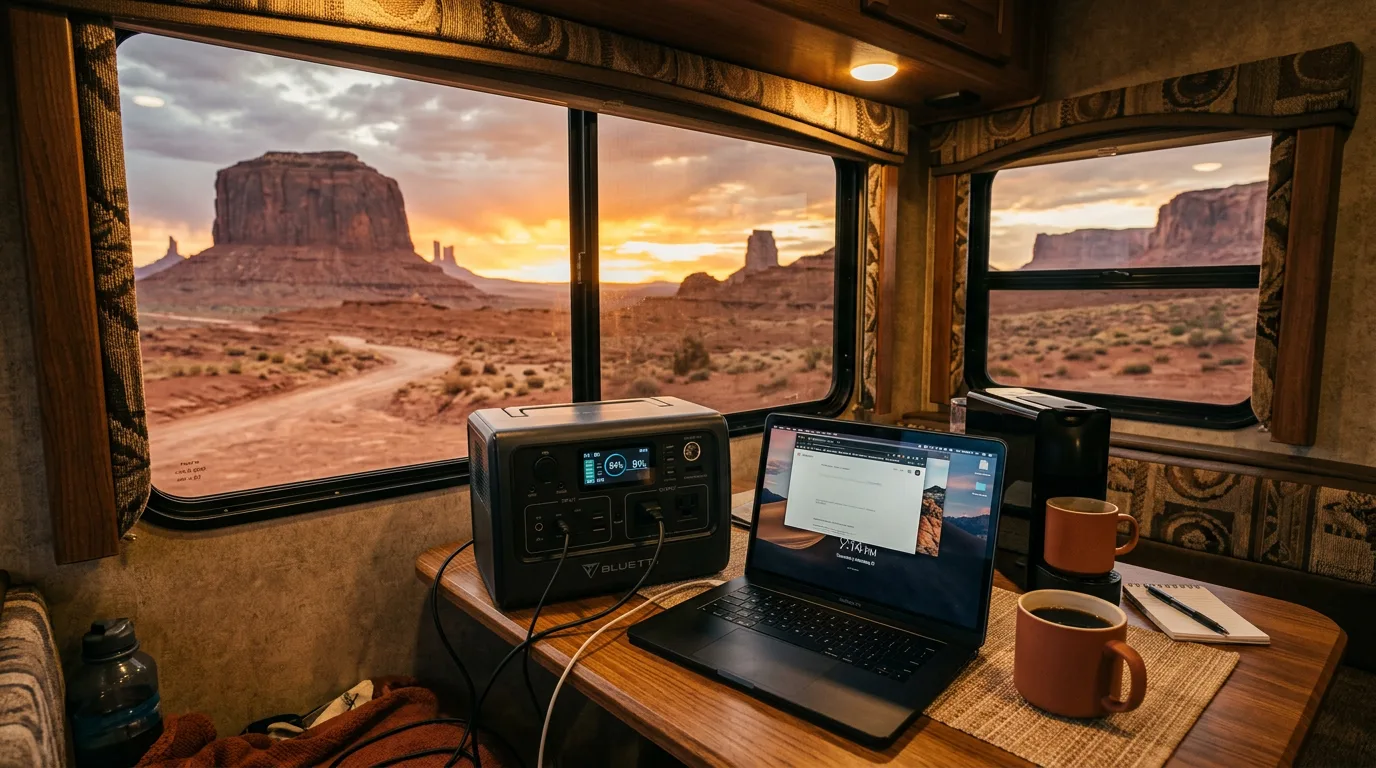
RV living puts unique demands on portable power that camping guides rarely address. Your refrigerator runs 24 hours. Your water pump needs AC power. Your rooftop air conditioner draws over a kilowatt. The distances between charging opportunities can stretch into days when you are boondocking in BLM land or national forest dispersed sites. A solar generator for RV use needs more capacity, higher continuous output, and faster recharging than a camping unit — and ideally, it integrates into your existing RV electrical system rather than sitting as a separate appliance.
After researching 35 portable power stations, we identified the units that specifically match RV power profiles — factoring in TT-30 compatibility, expansion options, solar input capacity, and the realities of full-time versus weekend RV use.
Understanding RV Power Needs
RV electrical systems run on two circuits: 12V DC (house battery) and 120V AC (shore power or generator). Your lights, water pump, vent fans, and USB outlets typically run on 12V. Your microwave, air conditioner, wall outlets, and converter/charger run on 120V. A solar generator supplements or replaces the 120V side — the same power shore hookups provide.
The 30-Amp vs 50-Amp Question
Most travel trailers and smaller motorhomes use 30-amp service, which delivers 3,600W at 120V. Larger motorhomes with dual air conditioners use 50-amp service, delivering up to 12,000W at 120V/240V. Portable solar generators can realistically replace 30-amp service for overnight or short boondocking stays. Replacing 50-amp service — especially with air conditioning running — requires either whole-home systems or acceptance that you will run a reduced load.
Typical Daily RV Power Consumption
| Appliance | Draw | Hours/Day | Daily Wh |
|---|---|---|---|
| Residential fridge | 150W (cycling, avg ~60W) | 24 | ~1,440 |
| 12V RV fridge | 40-80W (cycling, avg ~25W) | 24 | ~600 |
| LED interior lights | 10-30W | 5-6 | 60-180 |
| Water pump | 40-60W | 0.5-1 | 20-60 |
| Rooftop AC | 1,200-1,500W | 4-8 | 4,800-12,000 |
| Microwave | 1,000-1,200W | 0.25 | 250-300 |
| TV and streaming | 50-120W | 3-4 | 150-480 |
| Laptops/phones | 30-65W | 3-4 | 90-260 |
Without air conditioning, most RVers consume 800-2,000Wh per day depending on their fridge type and electronics usage. With air conditioning, daily consumption jumps to 5,000-14,000Wh — well beyond what a single portable generator handles without expansion batteries and substantial solar input.
Shore Power Alternatives: When Solar Makes Sense
Shore power is cheap and abundant at full-service campgrounds. The real value of a solar generator appears when you want to camp without it — and that is more common than you might expect.
Boondocking on Bureau of Land Management (BLM) land is free but offers zero hookups. National forest dispersed camping is free or low-cost but also hook-up-free. Harvest Hosts, Hipcamp, and similar programs offer unique overnight locations — wineries, farms, breweries — without electrical service. Even at campgrounds, non-electric sites often cost far less per night than full-hookup sites. Over a season of weekends, those savings add up to the cost of a mid-range power station.
Solar generators also serve as shore power backup. When storms knock out campground power, your solar generator keeps the fridge cold and the lights on. For full-time RVers, having backup power is not convenience — it is food safety and habitability.
Sizing a Solar Generator for Your RV
RV power sizing comes down to three questions: What are you running? How long between charging opportunities? Do you have rooftop solar?
Weekend Dry Camping (1-2 nights without hookups)
Run the fridge, charge devices, use lights, and skip the AC. A 1,000Wh station handles this comfortably, with margin for a microwave reheating or morning coffee maker. Pre-charge at home and top off during the drive. This is where mid-range stations shine.
Extended Boondocking (3-7 nights)
Solar recharging becomes non-optional. You need 200-400W of panel capacity to replenish daily consumption, and a generator with enough capacity to bridge cloudy days. A 2,000-3,000Wh system (base station plus expansion batteries) with 400W of rooftop solar handles most non-AC scenarios for a full week.
Full-Time Off-Grid RV Living
If you run the air conditioner, you need a whole-home class system — 4,000Wh minimum, 600W+ solar input, and likely expansion batteries. See our off-grid living guide for detailed planning on systems this large.
Top Solar Generator Picks for RV Use
Best All-Around RV Generator: EcoFlow DELTA 2
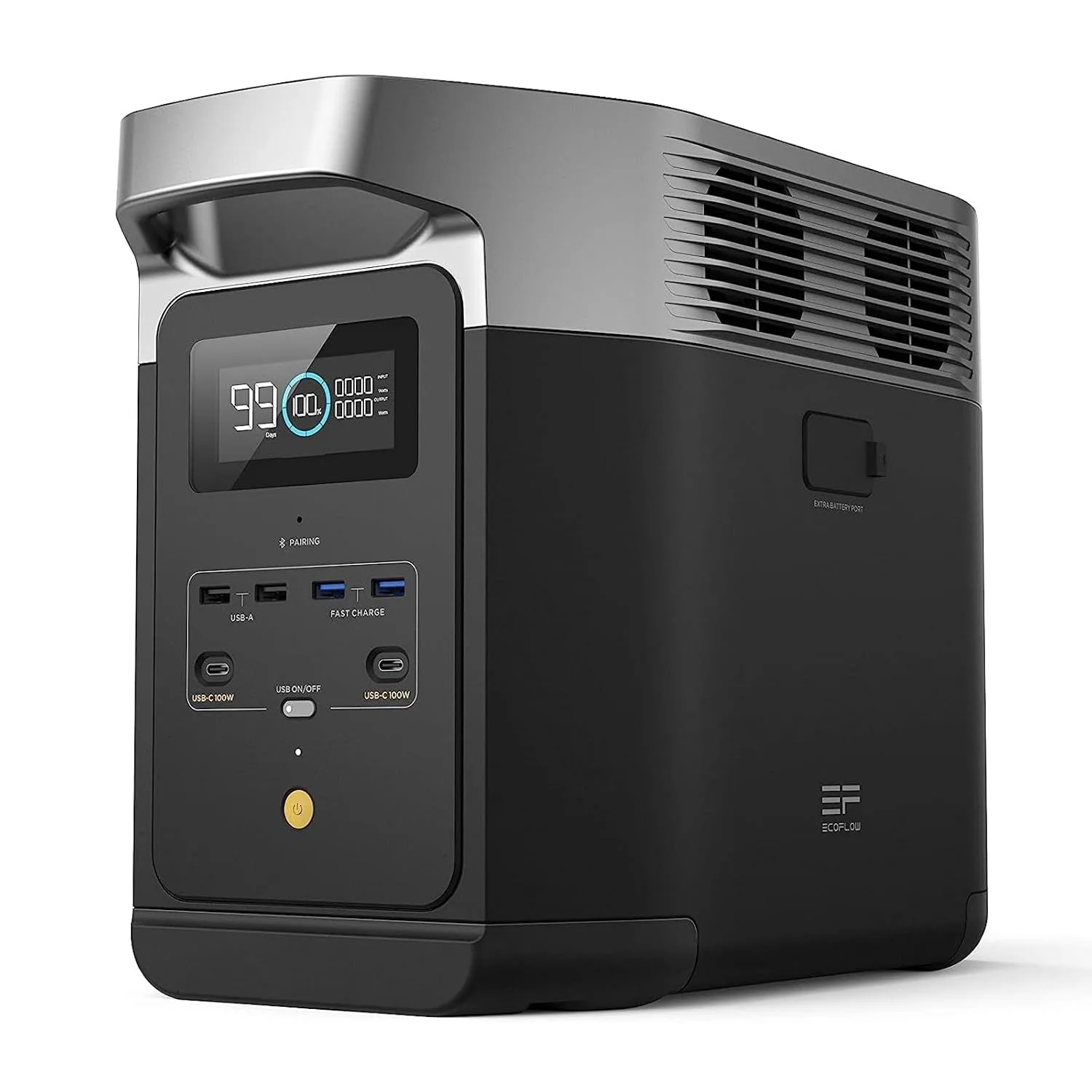
The EcoFlow DELTA 2 earns the all-around RV pick because of X-Boost technology — it extends effective output to 2,200W, which means your microwave, coffee maker, and hair dryer all work even though the base output is 1,800W. The app ecosystem lets you monitor charging and output from inside the RV. At 1,024Wh it handles overnight boondocking, and expandability to 3,072Wh stretches that to multi-day trips.
The 50-minute 0-80% charge means you can fully recharge at a gas station stop during travel days. The fan noise is the main complaint from RVers who sleep near the unit.
Best for: Tech-forward users who want the most feature-rich, expandable power station with the fastest AC charging
Check Current Price Read full review →Best Premium RV Station: Anker SOLIX C1000 Gen 2
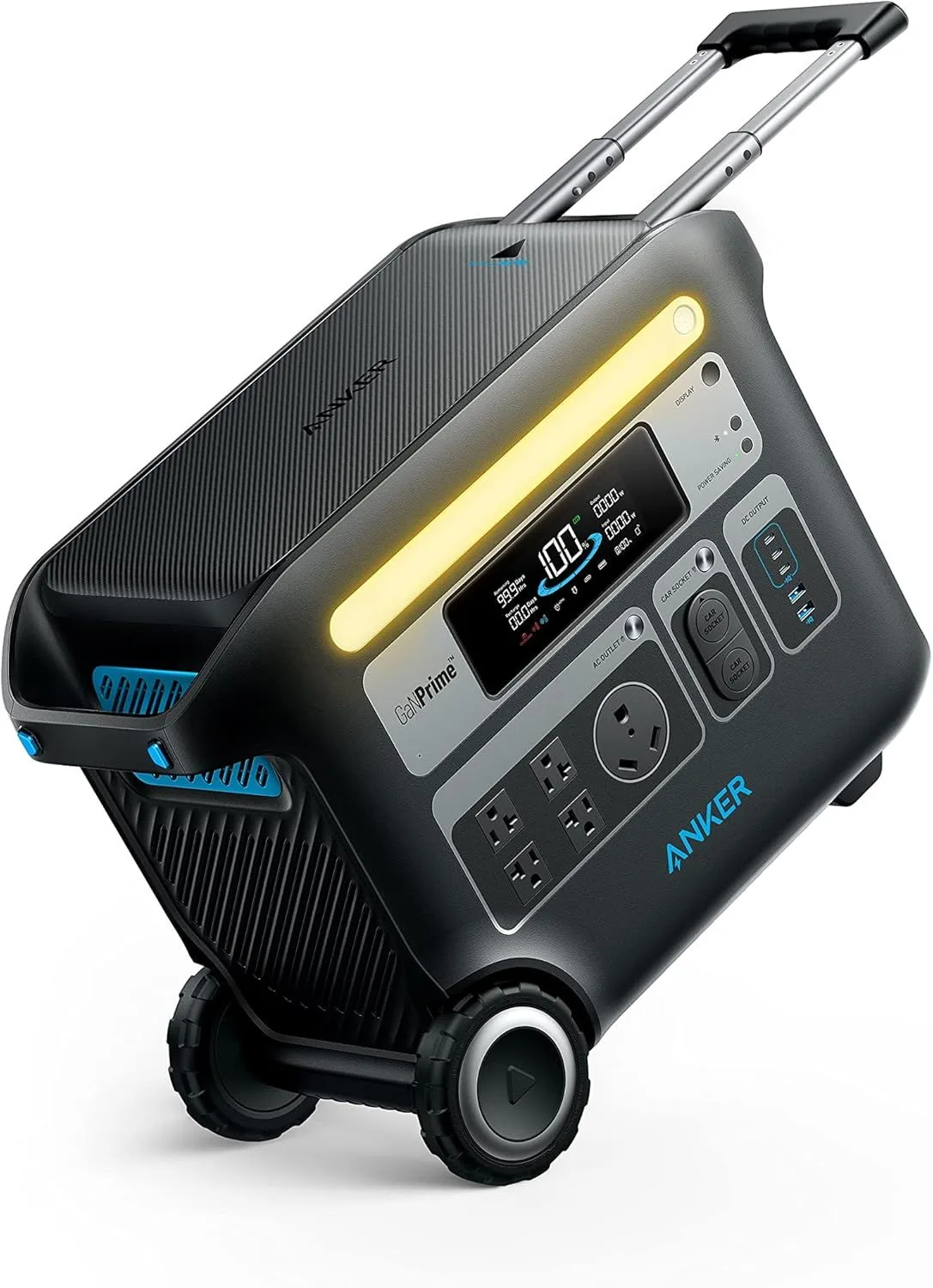
At 24.9 lbs, the Anker SOLIX C1000 Gen 2 is the lightest 2,000W station in any class — a real advantage when stowing and retrieving it from RV storage compartments. The Guinness-certified 49-minute full charge is the fastest we measured, and the 100% standby retention after 30 days means you can leave it in the RV between trips without worrying about charge loss.
The dual 140W USB-C ports fast-charge MacBooks and iPads at maximum speed — a standout feature for RVers who work remotely. The loss of expandability from the Gen 1 is the trade-off for the lighter weight.
Best for: Tech professionals and travelers who need the fastest charging, lightest weight, and best USB-C performance in a premium power station
Check Current Price Read full review →Best Value RV Kit: OUKITEL P1000 Plus
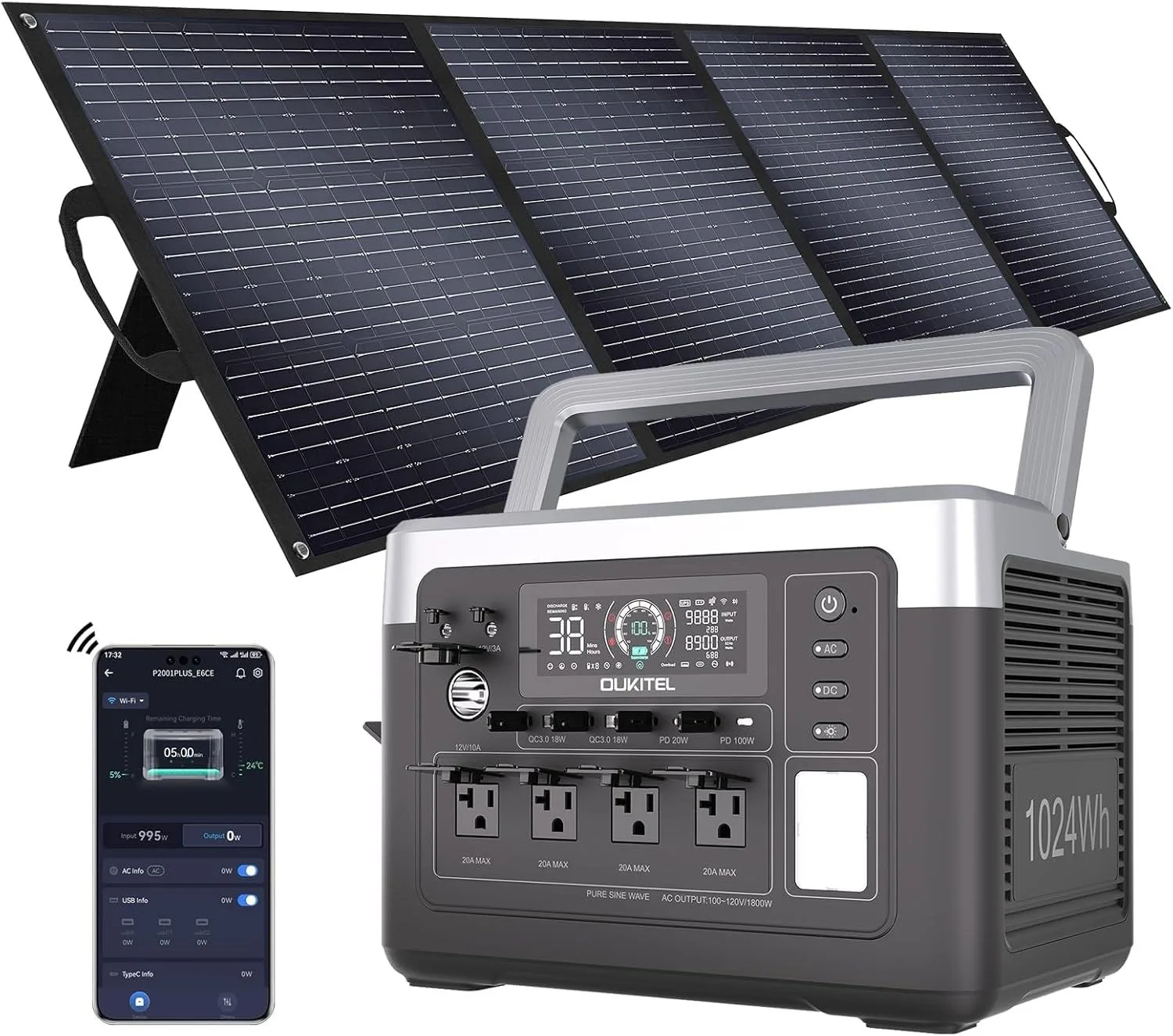
The OUKITEL P1000 Plus includes a 100W solar panel at its price point — rare for a mid-range station. The 29dB noise level makes it one of the quietest options for sleeping near, and the 1,800W output with 3,600W surge handles most RV appliances including startup surges from AC compressors. The 39-minute 0-80% charge is fast enough for a lunch stop recharge.
The lack of expandability limits its usefulness for multi-day boondocking without shore power access, but for weekend warriors who supplement with campground hookups, the complete kit saves the hassle of panel shopping.
Best for: Buyers who want a complete solar generator kit out of the box with fast charging and quiet operation
Check Current Price Read full review →Best Expandable RV System: OUPES Mega 1
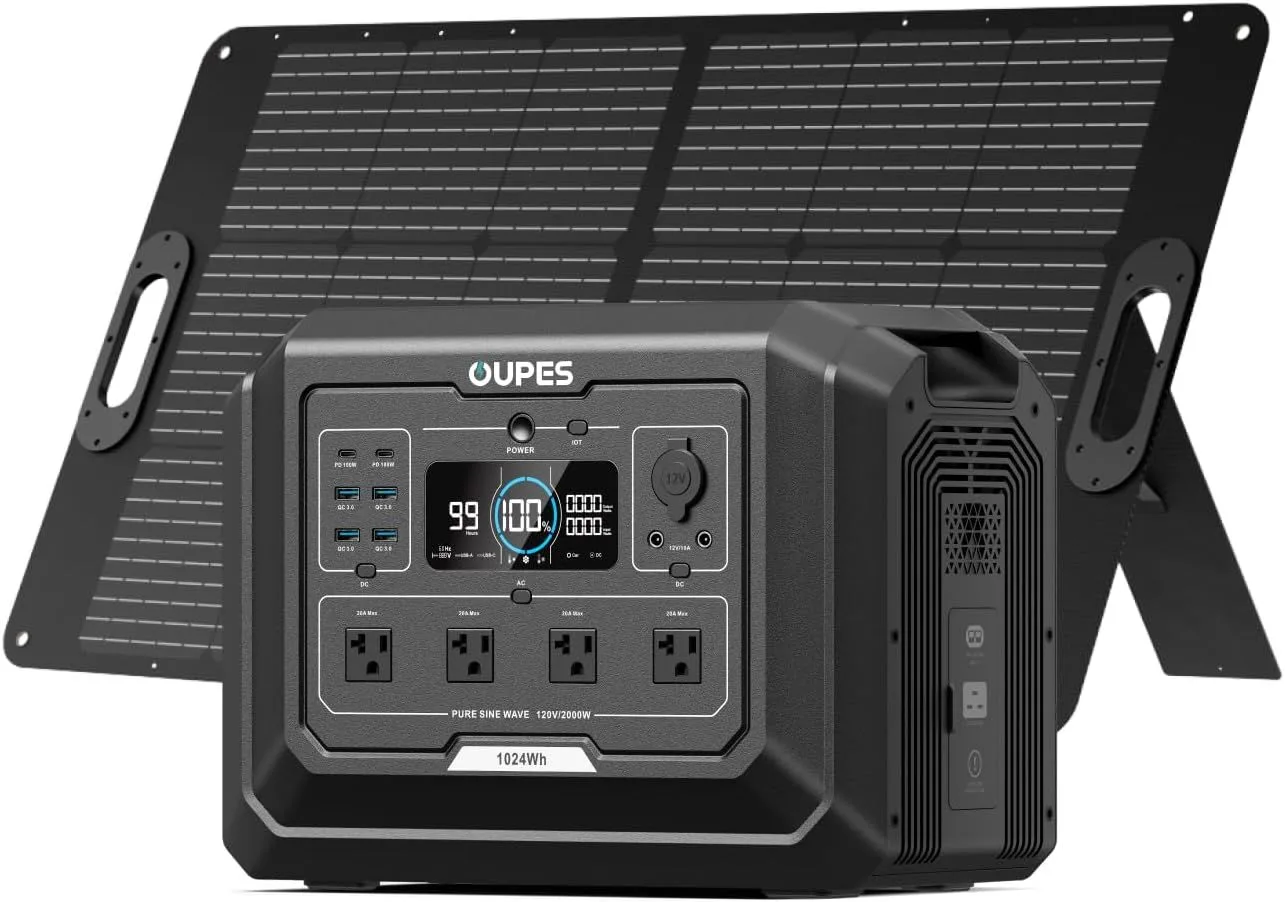
The OUPES Mega 1 delivers the highest continuous output in its class at 2,000W with a 4,500W surge — enough to start an RV air conditioner compressor without tripping the overload. The 800W solar input is the fastest in the mid-range class, and expandability to 5,120Wh transforms it from a weekend unit into a week-long boondocking system with the right panel array.
The fan noise during charging is the main downside. Position it in an outside storage compartment or ventilated basement area during charging to minimize cabin noise.
Best for: Off-grid enthusiasts who need the highest output wattage and maximum expandability in a sub-$500 solar generator bundle
Check Current Price Read full review →RV Installation and Setup Tips
Where you place a solar generator in an RV affects both performance and livability. The unit generates heat during charging and output, the fan creates noise, and the cables need routing to reach your panel input and devices.
Placement
The ideal location is a ventilated exterior storage compartment with cable pass-throughs to the cabin and roof. This keeps fan noise outside, allows heat to dissipate, and protects the unit from interior humidity during cooking and showering. If you do not have a suitable exterior compartment, a dinette seat storage area works — just ensure at least 4 inches of clearance on all sides for airflow.
Rooftop Solar Panel Connection
Permanent rooftop panels connect through the same cable entry point as your existing RV solar (if equipped). Most RVs have a pre-wired solar input on the roof that runs to the converter area. Portable solar generators typically use XT60, Anderson, or MC4 connectors. An adapter cable from your roof junction box to the generator's input port creates a clean, permanent connection without drilling new holes.
RV Solar Generator FAQ
Can a solar generator replace shore power in an RV?
For short stays (1-3 nights), a 1,000-2,000Wh solar generator paired with rooftop solar panels can replace shore power for most RVers. For full-time RV living with air conditioning, a single portable unit cannot match a 30-amp or 50-amp shore power hookup that delivers continuous 3,600W or 12,000W respectively. Solar generators work best as supplements or for dry camping.
How do I connect a solar generator to my RV?
The simplest method is plugging RV appliances directly into the generator AC outlets. For a more integrated setup, some units like the Anker F3000 include a TT-30R outlet that plugs directly into your RV power inlet with a standard TT-30 cord — powering your entire RV electrical system. This approach runs your existing outlets, lights, and air conditioning through the generator.
What size solar generator do I need for an RV?
A 1,000Wh unit handles overnight stays without shore power — fridge, lights, phone charging, and a few hours of TV. For multi-day boondocking without any hookups, 2,000-4,000Wh with 400W+ of rooftop solar is the minimum for comfortable living. If you run the air conditioner, budget for 3,000Wh+ with high continuous output (3,000W or more).
Will a solar generator run my RV air conditioner?
Most RV rooftop air conditioners draw 1,200-1,500W running and 2,500-3,500W starting. Mid-range stations with 1,800-2,000W output and high surge ratings can start and run most AC units. But a 1,000Wh battery lasts only 45-60 minutes at full AC draw. Realistic AC use from a portable generator requires 3,000Wh+ capacity or expansion batteries.
Can I charge a solar generator while driving the RV?
Yes. Most generators accept 12V DC input through the vehicle cigarette lighter or a direct connection to the RV battery bank. At highway speed with the alternator running, expect 80-150W of charging input. A 5-hour drive adds 400-750Wh — a solid boost for overnight power. Some units also accept simultaneous DC and solar charging for faster total input.
How long do rooftop solar panels take to charge a power station?
A typical 200W rooftop panel produces 150-180W in peak sun. Paired with a 1,000Wh power station, expect 6-7 hours for a full charge. With 400W of rooftop solar, that drops to 3-4 hours. Panel efficiency drops about 15% in summer heat on a dark RV roof, so morning and late afternoon hours often produce better output per watt than midday.
Is LiFePO4 or lithium-ion better for RV use?
LiFePO4 wins for RV use on every metric that matters: 3,000-4,000 cycle life versus 500-1,000 for NMC, better thermal stability in a hot RV roof environment, and superior charge retention during weeks between trips. The higher upfront cost pays for itself within 2-3 years of regular use. Every unit in our top RV picks uses LiFePO4 chemistry.
Find Your RV Power Solution
The right solar generator for your RV depends on how you camp. Weekend warriors with access to hookups need a 1,000Wh safety net. Regular boondockers need 2,000-3,000Wh with 200-400W of solar. Full-timers without air conditioning needs can build a complete system from an expandable mid-range base.
Explore our mid-range power station roundup for detailed side-by-side comparisons, or read our sizing guide to calculate your exact watt-hour requirements before choosing.
Ready to Buy? Start Here
Based on this guide, our #1 recommendation:
EcoFlow DELTA Pro 3 Maximum capacity and 240V output for serious RV and off-grid living Read Full Review →