Solar Generators for Home Backup: Sizing, Strategy, and Our Top Picks
The average American household experiences 7 hours of power outages per year. But averages hide the extremes — 2021 saw Texas without power for 4 days, 2024 saw Helene knock out power for 2 weeks across the Southeast. A solar generator does not replace the grid, but it keeps your essentials running when the grid disappears.
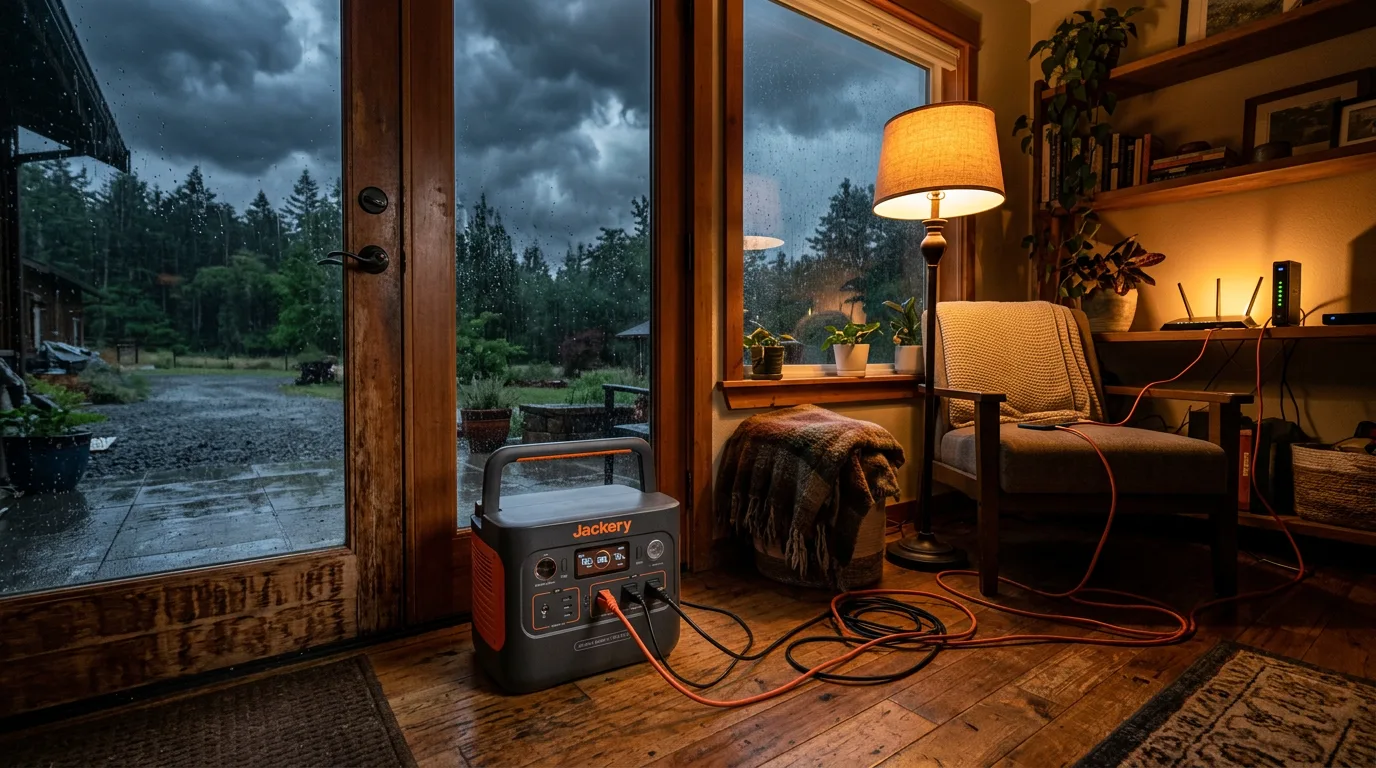
Portable solar generators occupy a specific niche in home backup: they cost less than a whole-home standby generator, require zero installation, run silently indoors, and recharge from solar panels when the grid stays down for days. Their limitation is capacity — a 3,000Wh battery cannot replace a natural gas line. But for the outage scenarios most households face (6-48 hours, essentials only), a portable solar generator is often the most practical solution.
This guide covers the fundamentals: why portable power stations work better than whole-home standby generators for most households, how to calculate your actual backup power needs, which appliances to prioritize, and which specific units from our 35-product catalog fit different backup scenarios.
Why Portable Over Whole-Home Standby?
Whole-home standby generators — the Generac, Kohler, and Briggs units permanently installed next to your house — deliver 10,000-22,000W from a natural gas or propane line. They start automatically within seconds of an outage and run everything in your house simultaneously, including air conditioning. They are the gold standard for uninterrupted power.
They also cost several thousand dollars installed, require annual maintenance contracts, run on fossil fuel, run loud (65-75 dB), and may need permits and inspections. For homeowners in hurricane zones or areas with frequent multi-day outages, they are worth every dollar. For everyone else, the math tilts toward portable solar generators.
The Case for Portable Backup
Portable solar generators cost a fraction of installed standby systems — even the premium whole-home class units. They require zero installation, no permits, no gas lines, and no maintenance contracts. You can use them for camping and outdoor events between outages, and you can take them with you when you move. Solar recharging works when gas stations are closed (which happens frequently during regional emergencies). And they operate silently, which matters when your neighbors are sleeping through the same outage.
The limitation is capacity and output. A portable generator forces you to prioritize — fridge OR air conditioner, not both simultaneously for extended periods. But for the 6-24 hour outages that represent 90% of residential power failures, running your essentials from a charged battery with solar panel backup is more practical than maintaining a permanent standby system year-round.
Sizing Your Home Backup System
The biggest mistake in home backup planning is sizing for comfort instead of necessity. Your air conditioner draws 1,500-3,000W continuously. Your refrigerator draws 100-200W cycling. Running the AC from a 3,000Wh battery gives you 1-2 hours. Running the fridge gives you 15-30 hours. That difference defines the practical boundary of portable backup.
Essential Loads (Must-Have During Any Outage)
| Appliance | Running Watts | Daily Draw (Wh) | Priority |
|---|---|---|---|
| Refrigerator | 100-200W (avg ~80W cycling) | ~1,900 | Critical |
| Medical devices (CPAP, O2) | 30-300W | 240-2,400 | Critical |
| LED lighting (3-4 rooms) | 20-40W | 100-240 | High |
| Wi-Fi router + modem | 15-25W | 360-600 | High |
| Phone chargers (2-4) | 20-40W | 60-120 | High |
| Sump pump | 500-1,500W | 1,000-3,000 | Situational |
| Furnace blower (winter) | 300-800W | 1,200-6,400 | Seasonal |
Nice-to-Have Loads (Comfort During Extended Outages)
Television and streaming (50-120W), electric fan (30-75W), coffee maker (600-1,200W for 10 minutes), laptop (45-65W), and portable space heater (750-1,500W). These are luxuries during the first 12 hours but become morale essentials during multi-day outages. Budget capacity for them only after essentials are covered.
Essential vs Nice-to-Have: Prioritization Strategy
When capacity is limited, prioritization is everything. Here is a practical three-tier approach that stretches limited battery life across the longest possible outage.
Tier 1 — Safety and Survival (0-6 hours)
Medical devices, lighting, phone charging, and communication. These require 150-500Wh per day depending on medical equipment. A 1,000Wh generator runs Tier 1 for 2-4 days without recharging.
Tier 2 — Food Preservation (6-24 hours)
Add the refrigerator. This is your biggest single load at 1,500-1,900Wh per day. With Tier 1 and Tier 2 combined, budget 2,000-2,500Wh per day. A 3,000Wh generator with solar panels handles this for multiple days.
Tier 3 — Comfort and Productivity (24+ hours)
Add fans, TV, laptops, and intermittent cooking. This brings the total to 3,000-4,000Wh per day. At this level, solar recharging becomes mandatory — you cannot sustain Tier 3 from battery alone for more than one day without a very large system.
Our Top Picks for Home Backup
Best Budget Home Backup: UPOPOWER S1200
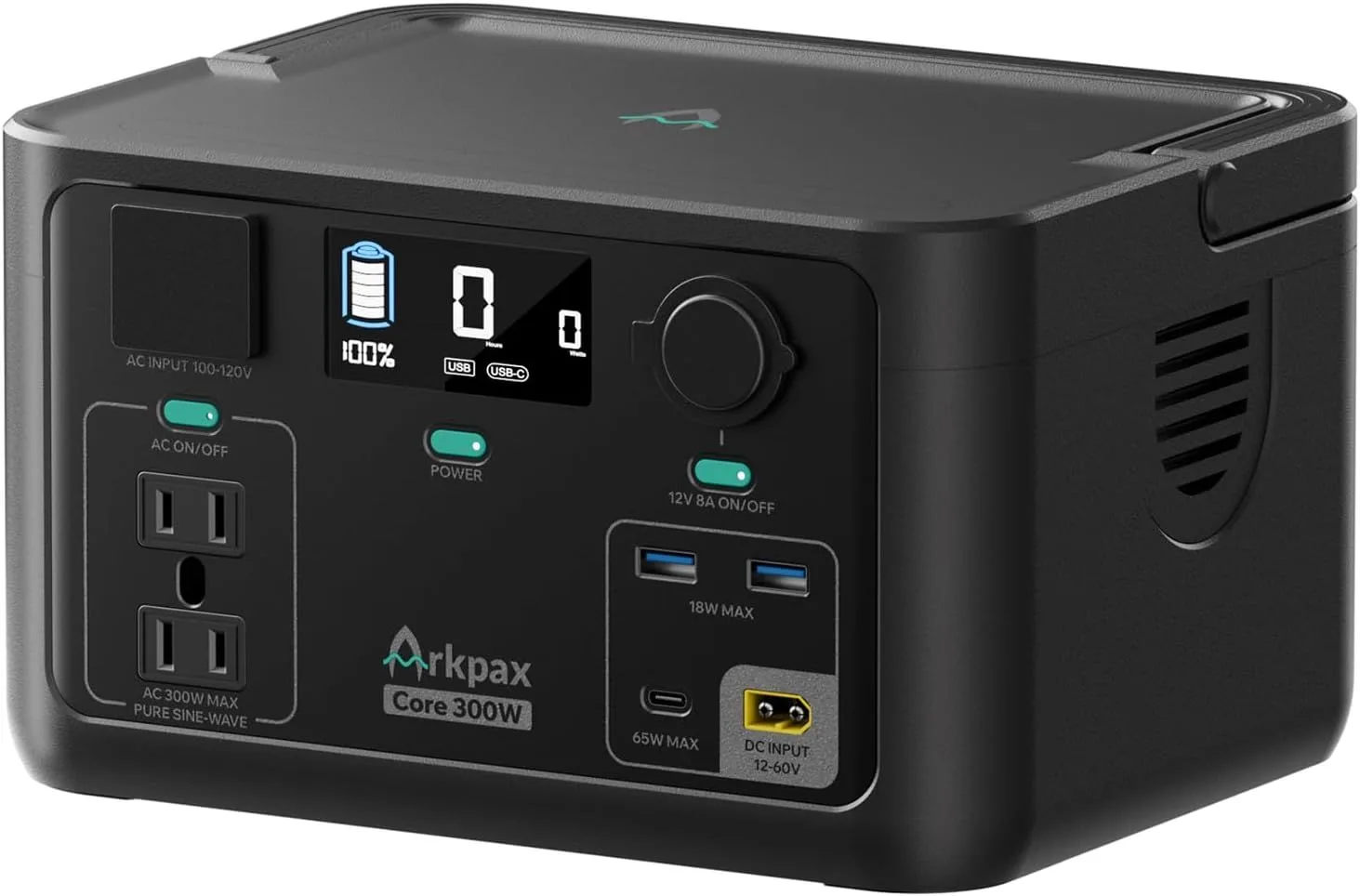
The UPOPOWER S1200 delivers 1,190Wh of LiFePO4 capacity with enterprise-grade UPS switchover (under 0.01 seconds) at the lowest price in the mid-range class. The sub-25dB operation makes it comfortable in a bedroom, and the 90%+ charge retention after 12 months of storage means it is always ready when an outage hits. The 15 ports including wireless charging cover every device in the house simultaneously.
The 1,200W continuous output is the limitation — it handles a fridge and lights comfortably but will not run a space heater or sump pump at the same time. For Tier 1 and Tier 2 loads, it is outstanding value.
Best for: Budget-conscious buyers who need reliable home backup with enterprise-grade UPS and silent operation
Check Current Price Read full review →Best Mid-Range Home Backup: EcoFlow DELTA 2
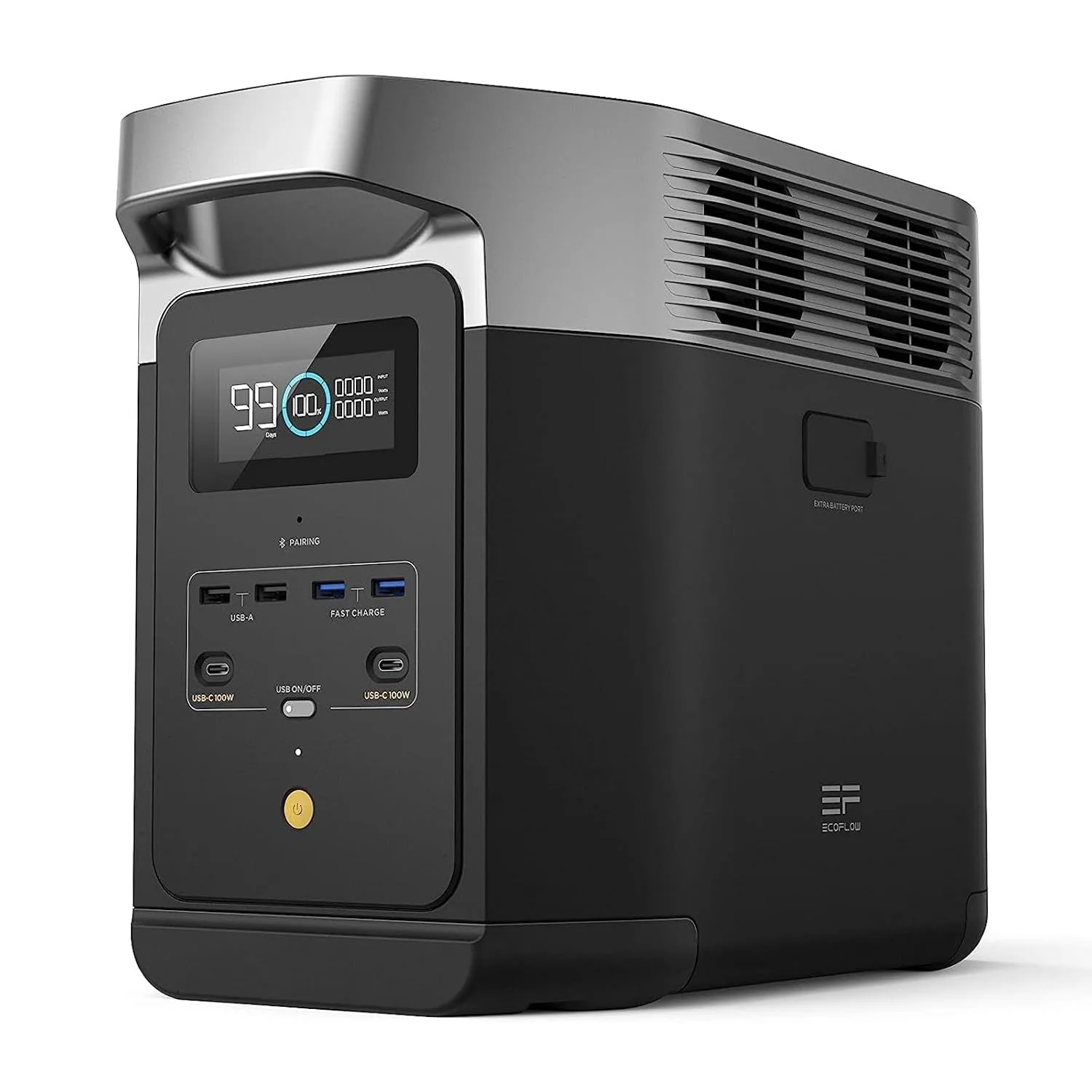
X-Boost extends the DELTA 2 to 2,200W effective output, handling microwaves and small heaters that trip other 1,800W stations. The expandability to 3,072Wh transforms it from an overnight backup into a multi-day essential-load powerhouse. The app lets you monitor remaining capacity and device draws from anywhere in the house — helpful for rationing power during extended outages.
Best for: Tech-forward users who want the most feature-rich, expandable power station with the fastest AC charging
Check Current Price Read full review →Best Value Whole-Home Backup: OUPES Guardian 6000
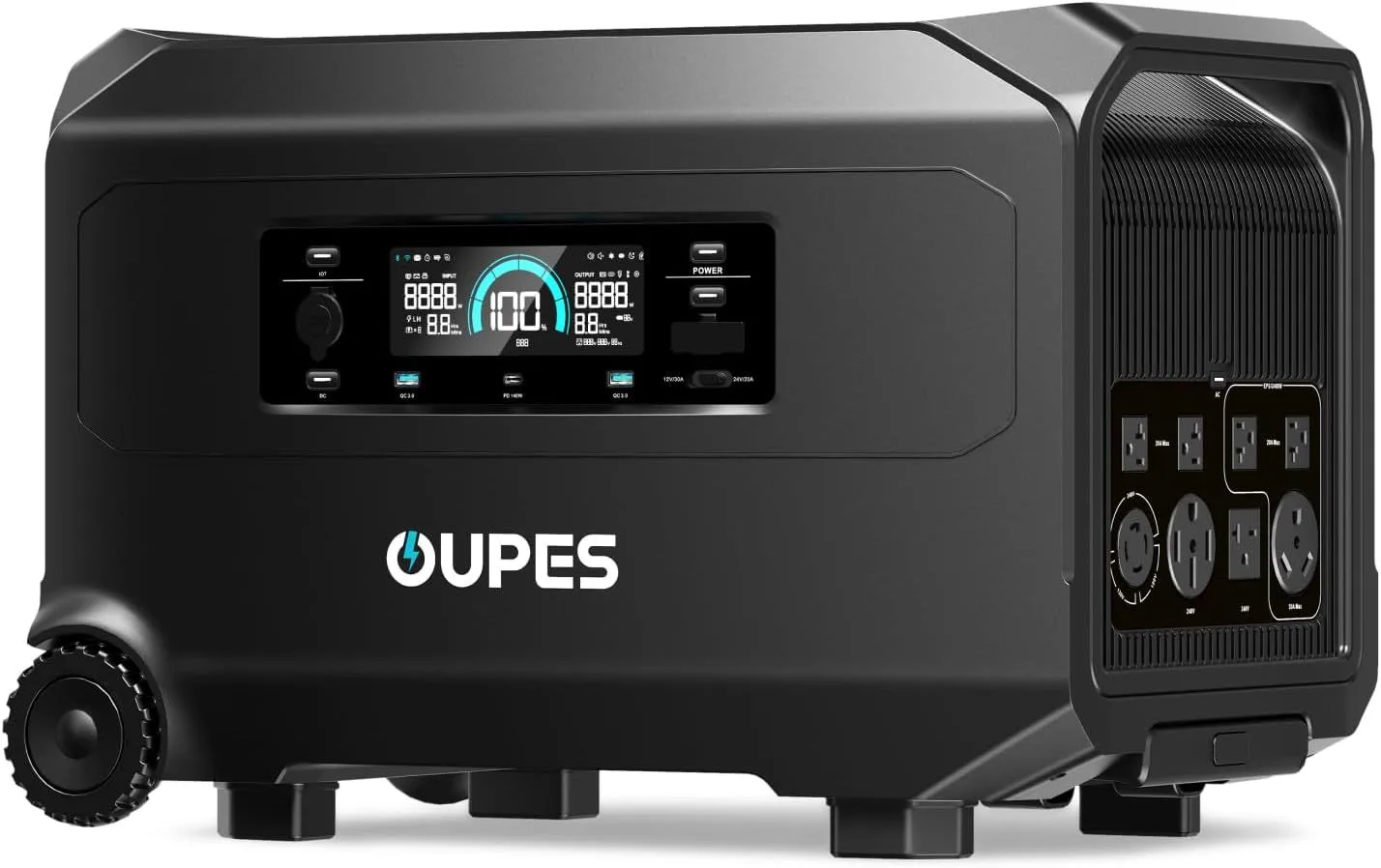
The OUPES Guardian 6000 delivers true 240V whole-home backup from a single unit — 4,608Wh capacity and 6,000W output at roughly half the price of competing whole-home systems. It can start and run most central air conditioners, dryers, and well pumps through its NEMA 14-50R outlet. Expandable to 41.4kWh for multi-day whole-home operation.
The inability to charge while outputting 240V split-phase power is a real limitation for extended outages. Solar panels recharge the unit during the day, then you run loads from the battery at night. Plan your usage cycles around this constraint.
Best for: Budget-conscious buyers who need true 240V whole-home backup from a single unit
Check Current Price Read full review →Best Premium Whole-Home Backup: EcoFlow DELTA Pro 3
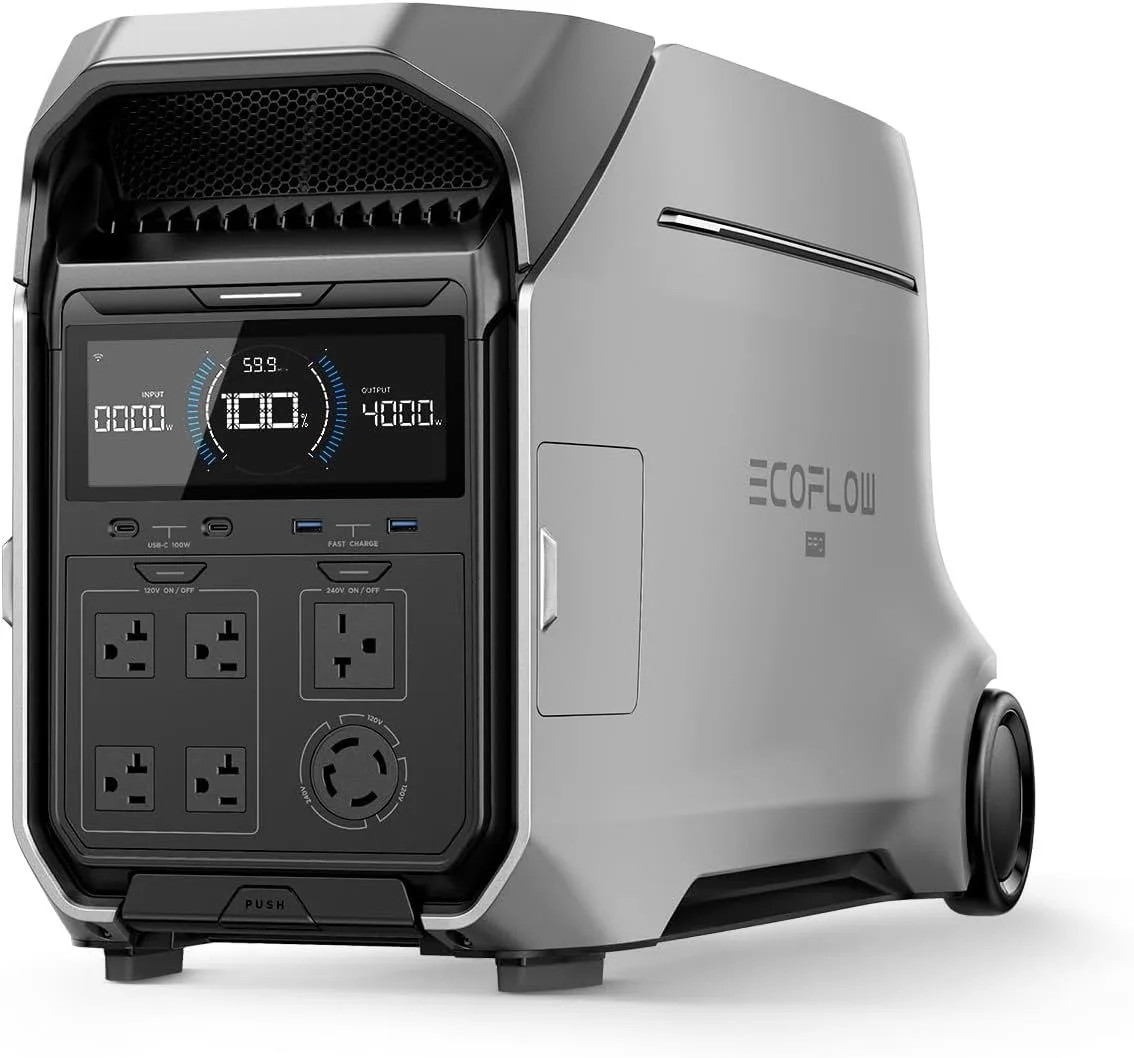
The DELTA Pro 3 charges faster than any competitor (0-80% in about 50 minutes), runs quieter at 30dB, and delivers 93% discharge efficiency — meaning you get more usable power from each charge cycle. The ecosystem integration with EcoFlow Smart Home Panel allows circuit-level power management, automatically shedding non-essential loads when capacity runs low.
At 113.5 lbs, this is a permanent installation, not something you carry to the garage. But for homeowners who want a premium backup system that integrates into their electrical panel, the DELTA Pro 3 is the most polished option available.
Best for: Tech-forward homeowners who want the fastest-charging, quietest, most ecosystem-integrated power station
Check Current Price Read full review →Transfer Switch Basics for Home Backup
A transfer switch connects your solar generator to your home's electrical panel, letting you use existing wall outlets and hardwired appliances during an outage. Without one, you run extension cords from the generator to individual appliances.
Manual Transfer Switches
A manual transfer switch costs a few hundred dollars installed by an electrician. You flip a breaker-style switch to move selected circuits from grid power to generator power. Most homeowners select 6-10 circuits: fridge, lights, garage door, sump pump, furnace blower, and a few outlet circuits. Installation typically takes 3-4 hours and may require a permit.
The Extension Cord Approach
For simpler setups, run heavy-gauge extension cords (12 AWG or 10 AWG) from the generator to your fridge, router, and other devices. This requires no installation and works with any generator. The downside is cord management — running 3-4 cords through doorways is inconvenient and a tripping hazard, especially at night.
Questions About Home Backup Solar Generators
How long will a solar generator power my house during an outage?
It depends on what you run. A 2,000Wh unit powering a fridge (average 100W cycling), LED lights (30W), phone chargers (20W), and a Wi-Fi router (15W) lasts about 12 hours. Cut the fridge and you stretch that to 24+ hours on lights, phones, and internet alone. A 4,000Wh unit doubles those numbers. Add solar panels and you can run essential loads indefinitely during daylight hours.
Can a portable solar generator replace a whole-home standby generator?
Not entirely. Whole-home standby generators deliver 10,000-22,000W continuously from a natural gas line — enough for air conditioning, water heaters, and every appliance simultaneously. Portable solar generators max out at 3,000-6,000W and have finite battery capacity. They excel at powering essentials (fridge, lights, medical devices, communications) for 12-48 hours, not running the entire house at full capacity.
Do I need a transfer switch for a solar generator?
Not for basic use — you can plug appliances directly into the generator outlets via extension cords. A transfer switch becomes valuable when you want to power your home circuit panel directly, which lets you use your existing wall outlets and hardwired appliances like the furnace blower. Manual transfer switches cost a few hundred dollars installed, and they eliminate the need to run extension cords through your house during outages.
How fast can I recharge a solar generator after the power comes back?
Most modern LiFePO4 generators reach 80% from a wall outlet in 45-90 minutes. The EcoFlow DELTA Pro 3 hits 80% in about 50 minutes. Anker SOLIX C1000 Gen 2 does a full 100% in 49 minutes. Solar recharging is slower — 3-6 hours with a 200-400W panel setup — but keeps working when the grid stays down.
What appliances should I prioritize during a power outage?
In order of priority: medical devices (CPAP, oxygen concentrator, medication refrigeration), then refrigerator/freezer (prevents food spoilage), then lighting and communication (LED lights, phone chargers, Wi-Fi router), then comfort items (fans, space heaters, TV). Most households can run the first three tiers from a 1,000-2,000Wh generator for 12-24 hours.
Will a solar generator keep my sump pump running?
Most residential sump pumps draw 500-1,500W while running and cycle on and off as water levels rise. A generator with 1,500W+ continuous output and high surge capacity can run a sump pump. The key concern is runtime — during heavy rain, a sump pump may run 10-15 minutes per hour, consuming 125-375Wh per hour. A 2,000Wh generator sustains this for 5-16 hours depending on cycling frequency.
Should I keep my solar generator charged all the time?
LiFePO4 batteries perform best stored at 50-80% charge and topped off before storm season. Keeping them at 100% continuously slightly accelerates degradation. Most manufacturers recommend charging to 100% when you expect to need it and storing at 60-80% otherwise. Units with UPS mode (like the UPOPOWER S1200) maintain charge automatically while passing through grid power.
Prepare Before the Next Outage
The worst time to shop for a backup generator is during a storm warning when prices spike and inventory disappears. The best time is now — when you can research calmly, choose the right size, and set up your system before you need it.
Start with our sizing guide to calculate your household's actual watt-hour needs. Then explore our whole-home backup roundup or mid-range roundup depending on your budget and backup scope.
Ready to Buy? Start Here
Based on this guide, our #1 recommendation:
Anker SOLIX F3800 Premium build quality with wheels for portable whole-home backup Read Full Review →