Solar Generators for Camping: Picking the Right Portable Power for Your Campsite
A dead phone at a remote campsite is annoying. A dead CPAP machine at 2 AM in bear country is dangerous. The right solar generator eliminates both problems — but the wrong one wastes money on capacity you carry and never use.
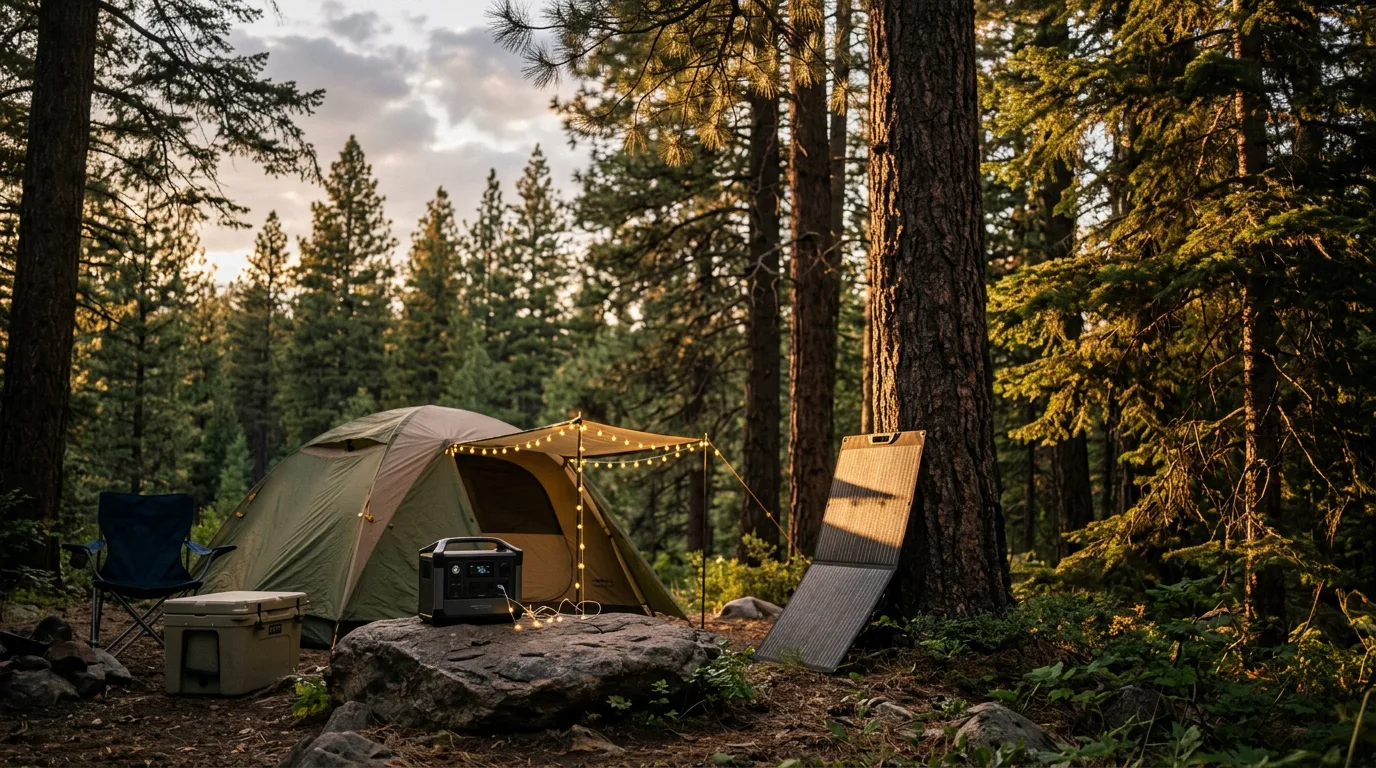
Camping power has changed. Five years ago, your options were a loud gas generator or a car battery with an inverter bolted on. Today, LiFePO4 portable power stations deliver clean, silent electricity from units smaller than a lunch cooler. The question is no longer whether to bring power camping — it is how much power and what kind of unit fits your camping style.
We researched 35 portable power stations across four capacity tiers to find the best options specifically for camping. This guide covers what to look for, how much capacity you actually need, and which units from our catalog match different camping scenarios — from ultralight backpacking support to full-service car camping with a fridge and string lights.
Why Bring a Solar Generator Camping?
The practical answer comes down to three things: convenience, safety, and access to campgrounds that ban gas generators. National parks, state forests, and most developed campgrounds prohibit gas generators during quiet hours (typically 10 PM to 6 AM), and many ban them entirely. A solar generator operates at 25-45 dB — quieter than a conversation — and produces zero exhaust.
Safety is the less obvious factor. If you rely on a CPAP machine, a charged power station is medical equipment. If you camp with children, keeping phones charged means GPS and emergency calls remain available. Even basic LED camp lighting powered by a reliable battery prevents the fumbling-in-the-dark injuries that send thousands of campers to urgent care each year.
The financial math also works. A mid-range solar generator with a panel costs a few hundred dollars upfront and has zero recurring fuel costs. A comparable gas generator burns through fuel every trip, needs oil changes, and creates storage headaches between seasons. After about 15-20 camping trips, the solar generator pays for itself in fuel savings alone — and you still have a backup power source at home between trips.
What to Look for in a Camping Solar Generator
Not every spec on a product page matters equally when you are hauling gear to a campsite. Here are the five factors that separate a great camping power station from one that stays in the garage after two trips.
Weight and Portability
If you cannot comfortably carry it from your car to the campsite in one hand, you will leave it behind. Compact units under 10 lbs handle weekend trips easily. Mid-range units at 25-28 lbs work for car camping where you park near your site. Anything over 30 lbs needs wheels or a dedicated spot in the vehicle — fine for RV camping, less practical for walk-in sites.
Battery Capacity (Watt-Hours)
Watt-hours determine how long your power lasts. A 300Wh unit charges a phone 25-30 times but runs a camping fridge for only 10-15 hours. A 1,000Wh unit handles a full weekend of mixed-device use — fridge, lights, phones, a laptop, and a CPAP machine — with capacity to spare. The mistake most campers make is buying too little capacity for their actual use and too much weight for their camping style.
Solar Charging Speed
Solar input wattage determines how fast you can recharge at camp. A 40W built-in or bundled panel is a supplement — good for topping off during the day but slow for a full recharge. A 100-200W panel paired with a mid-range station can fully recharge the battery in one sunny afternoon. Panels with MPPT charge controllers extract 20-30% more energy from partial shade and clouds compared to basic PWM controllers.
Output Ports and Wattage
USB-A charges phones. USB-C PD charges laptops and tablets at fast-charge speeds. AC outlets run small appliances — blenders, fans, CPAP machines, projectors. A unit with 300W continuous output handles almost every camping device. Units with 600W or more can run portable heaters, electric kettles, and hair dryers for brief periods.
Battery Chemistry
LiFePO4 (lithium iron phosphate) batteries last 3,000-4,000+ charge cycles and tolerate heat better than lithium-ion NMC batteries, which typically manage 500-1,000 cycles. For campers who use their power station 50+ times per year, LiFePO4 is the clear choice — the battery will last a decade of heavy use. For occasional weekend campers, NMC units cost less upfront and still deliver 2-3 years of reliable service.
Our Top Picks for Camping
From our catalog of 35 reviewed power stations, these four stand out for different camping styles. Each recommendation matches a specific use case rather than a generic "best overall" label.
Best Budget Camping Kit: Apowking 300W
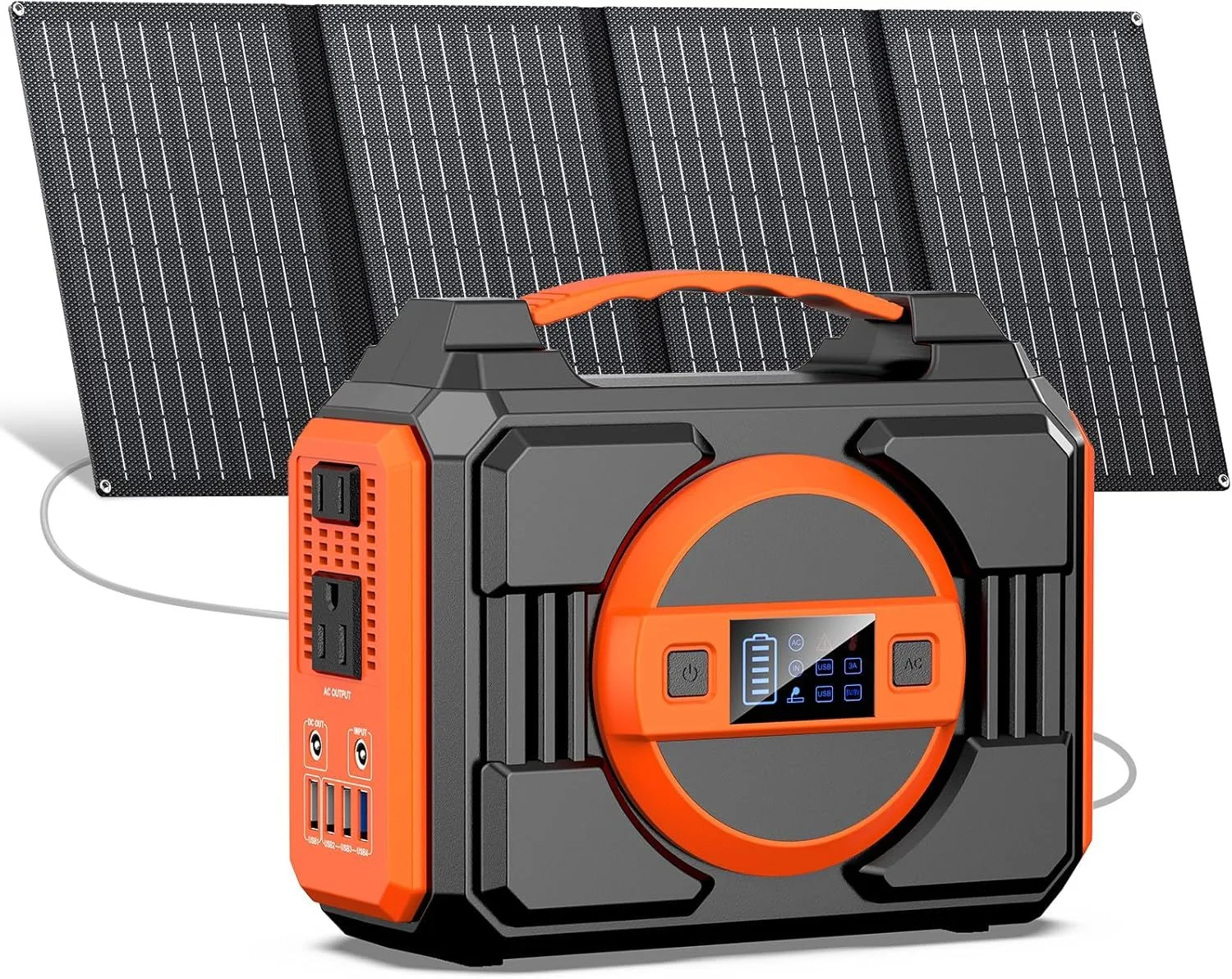
The Apowking 300W bundles a 280Wh LiFePO4 power station with a 40W solar panel for well under two hundred dollars. That makes it the cheapest complete solar kit with long-cycle battery chemistry in our entire catalog. The 300W output handles phones, lights, small fans, and USB devices comfortably. The 3,000-cycle LiFePO4 battery will last years of weekend use.
The downside is solar charging speed — the included 40W panel takes 7-8 hours for a full recharge. For weekend trips where you pre-charge at home and use solar as a daytime supplement, that is perfectly fine. For multi-day trips relying on solar as the primary charging method, consider pairing with a larger aftermarket panel.
Best for: Campers and emergency preppers who want LiFePO4 durability and a bundled solar panel at a budget price
Check Current Price Read full review →Best Compact Camping Powerhouse: BLUETTI Elite 30 V2
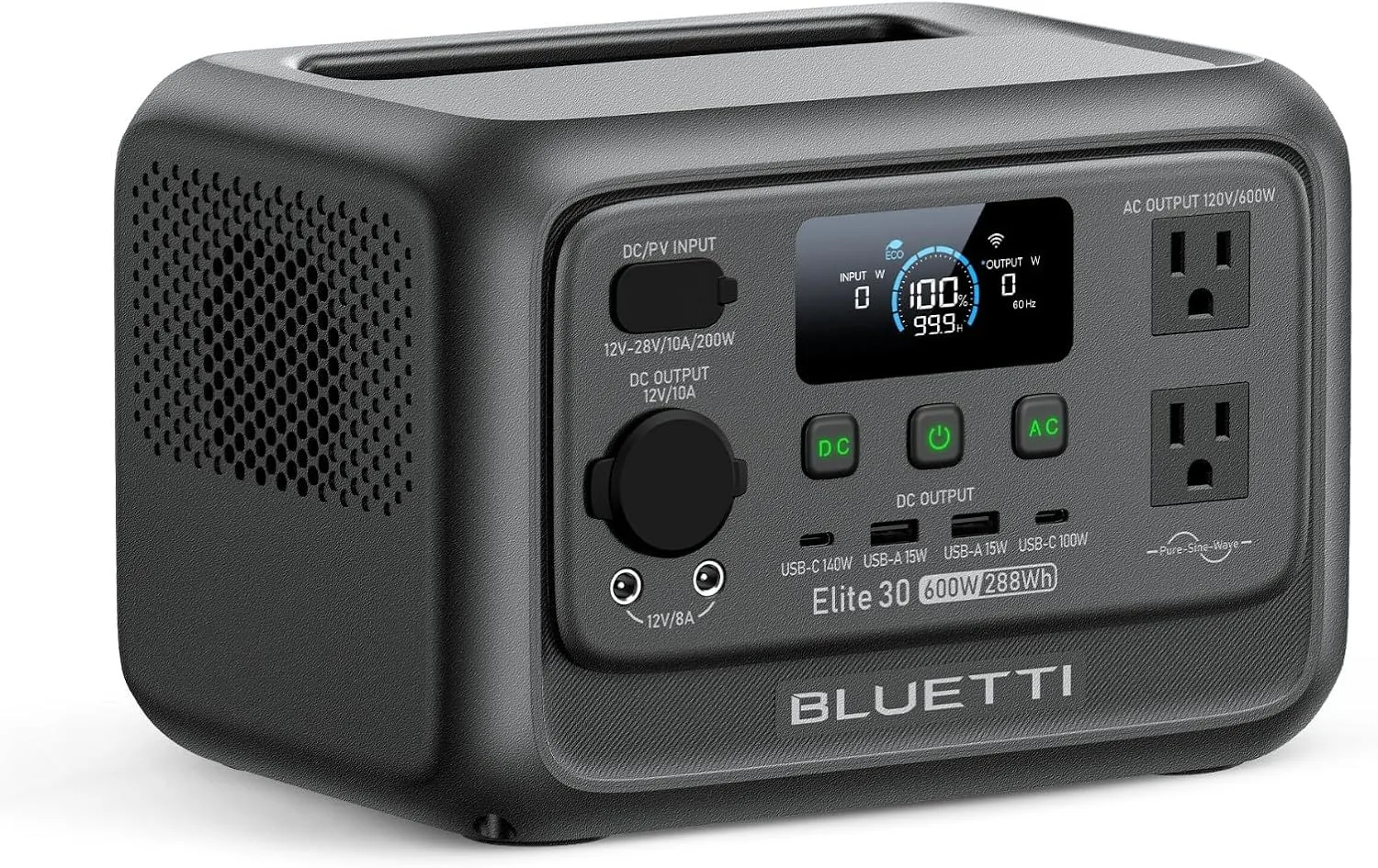
The BLUETTI Elite 30 V2 packs 288Wh into a sub-10 lb unit with 600W continuous output and 1,500W Power Lifting mode. That means it can briefly run a small electric kettle, a portable heater, or a high-wattage blender — loads that would trip the breaker on most compact units. The 45-minute turbo charge to 80% means you can refill between day hikes faster than making a pot of camp coffee.
For campers who want one unit that handles everything from CPAP duty at night to powering a portable projector for campfire movie night, the Elite 30 V2 is the most capable compact unit we tested. The 5-year warranty from BLUETTI adds long-term confidence.
Best for: Tech-savvy campers, remote workers, and apartment dwellers who want the best compact LiFePO4 UPS with app control
Check Current Price Read full review →Best for CPAP Users and Quiet Camps: Anker SOLIX C300
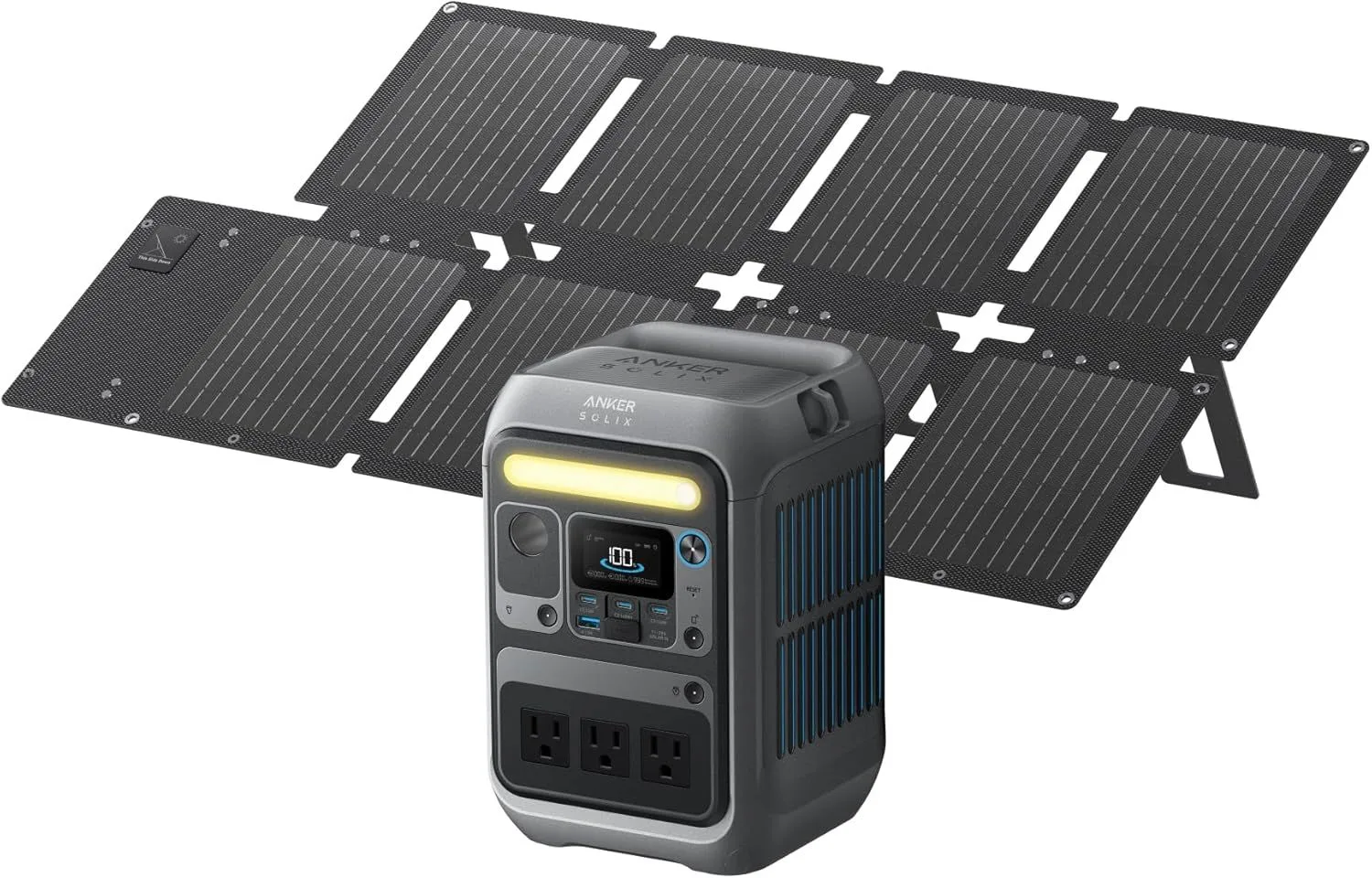
At 25 dB under load, the Anker SOLIX C300 is the quietest power station we reviewed. That matters in a tent at 3 AM when your CPAP machine is running. The 288Wh capacity lasts a full night of CPAP use (most CPAP machines draw 30-60W, giving you 5-9 hours per charge), and the 80% recharge in 50 minutes means you can fully refill from a car charger during a morning coffee run.
The included 60W panel and 5-year Anker warranty round out a package built for reliability-first campers. The 300W output cap means this is strictly a gadget-and-medical-device station — not one for appliances.
Best for: CPAP users, road trippers, and remote workers who value ultra-fast AC recharging, whisper-quiet operation, and a trusted brand
Check Current Price Read full review →Best for Extended Car Camping: VTOMAN FlashSpeed 600
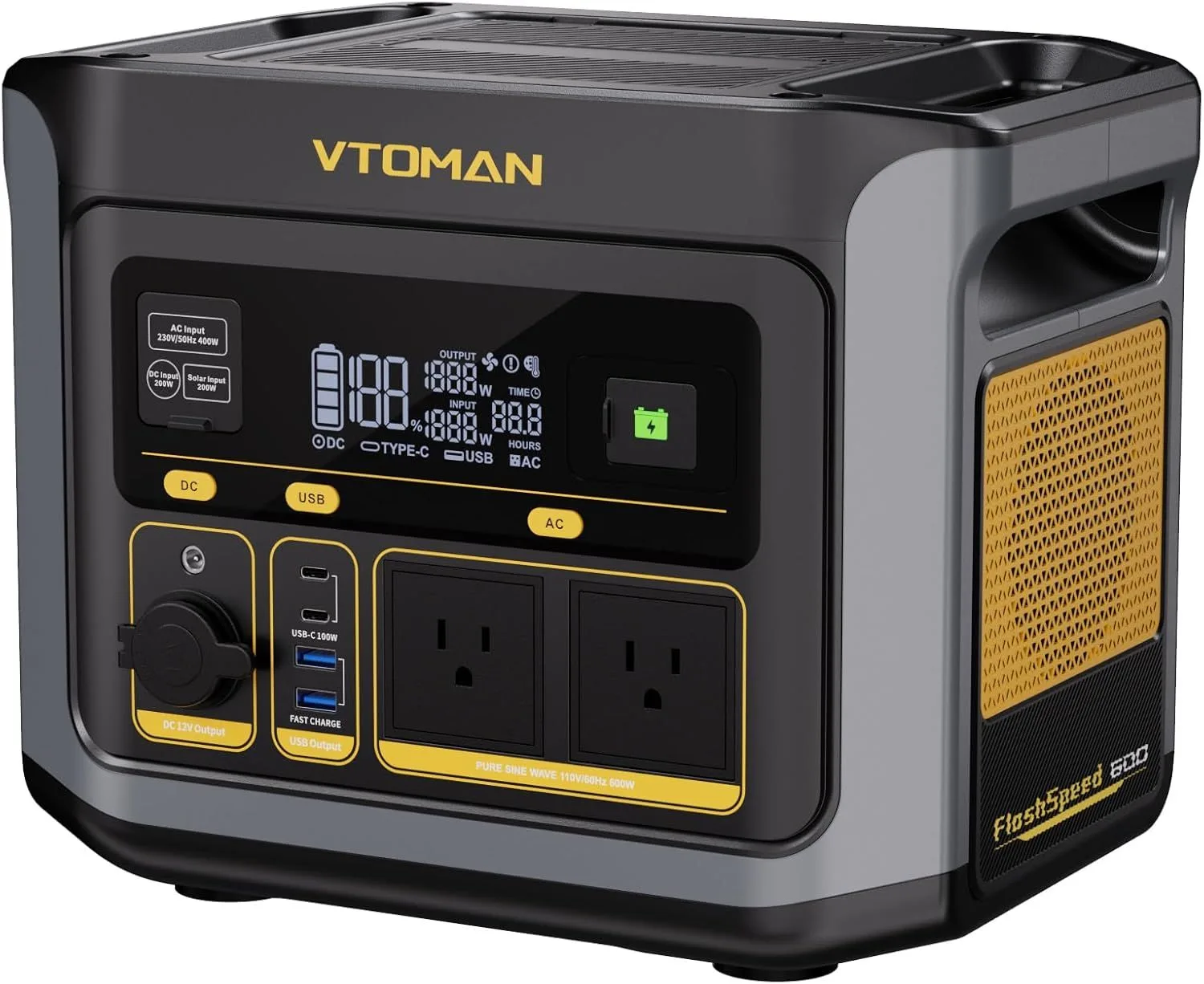
When you need a full weekend of power without solar charging anxiety, the VTOMAN FlashSpeed 600 delivers 499Wh — nearly double the capacity of other compact units. That is enough to run a camping fridge for 24+ hours, charge six phones, power a laptop, and still keep the LED lanterns going through a second night. The 200W solar input and expandability to 2,047Wh make it a serious option for week-long camping trips when paired with a high-wattage panel.
The 15.9 lb weight puts it at the heavier end of the compact class. This is a car camping unit, not a backpacking accessory. But if you have vehicle access to your campsite, the capacity-to-price ratio is hard to match.
Best for: Weekend campers and tailgaters who need more capacity than the 288Wh class with expandability for multi-day trips
Check Current Price Read full review →Car Camping vs Backcountry: Different Power Needs
Car camping and backcountry camping have fundamentally different relationships with power. Understanding which applies to your typical trip prevents you from buying a unit that is either too heavy to carry or too small to be useful.
Car Camping Power Profiles
When you park within 50 feet of your campsite, weight barely matters. A 25-30 lb mid-range power station fits easily in a trunk alongside your cooler and tent. The typical car camping setup runs a 12V fridge (30-50W cycling), LED string lights (5-15W), phone charging for a family (20-40W for 2-4 devices), and possibly a projector or speaker system (30-80W). That adds up to 400-800Wh over a two-night weekend, depending on fridge runtime.
For car campers, a unit in the 500-1,200Wh range with a 100W+ solar panel provides comfortable margin. You can pre-charge at home, supplement with solar during the day, and never worry about rationing power for essentials.
Walk-In and Backcountry Power Profiles
When you carry everything on your back or drag it in a cart for half a mile, every ounce counts. Compact units under 7 lbs — like the Jackery Explorer 300 at 7.1 lbs or the Zerokor 300W at 5 lbs — make sense for walk-in sites. Your power budget is tighter: phone charging, a headlamp recharge, and maybe a small Bluetooth speaker. Expect 150-300Wh to last a full weekend with careful use.
For backcountry trips beyond vehicle access, consider whether a power station is worth the weight at all. A 20,000mAh power bank at 12 oz handles phone and headlamp charging for 3-4 days. Solar generators start making sense when you need AC output (CPAP machines) or longer-duration power (multi-day base camp setups).
Solar Charging at Camp: Practical Expectations
Solar panel specs are measured under Standard Test Conditions — 1,000 W/m2 irradiance at 25 degrees Celsius with the panel pointed directly at the sun. Real campsite conditions are different. Trees cast moving shadows. Clouds come and go. The panel leans against a picnic table at a non-optimal angle. Your real-world output is typically 60-80% of the panel's rated wattage during peak sun hours.
Maximizing Solar Output at Camp
Position your panel in the open, away from tree shade, and angle it toward the sun. At temperate latitudes in summer, tilting the panel at about 30-40 degrees facing south captures the most energy between 10 AM and 3 PM. Reposition the panel once at midday if you are around camp — tracking the sun manually adds 15-20% output over a fixed setup.
Panels get hot in direct sun, and heat reduces output by 10-15% on a 90-degree-Fahrenheit day. Elevating the panel slightly off the ground with sticks or a camp chair allows airflow underneath and keeps the panel cooler. This small adjustment recovers most of the heat-related losses.
Cloudy Day Charging
Overcast skies reduce solar output to 25-40% of peak. Light clouds let through more than you might expect, but heavy overcast drops panel output to barely useful levels. On a cloudy day, a 100W panel might deliver 25-40W of actual charging power. Plan your power budget around worst-case weather and treat sunny days as a bonus — not the other way around.
Charging While Driving
Most mid-range power stations accept 12V car charging via the cigarette lighter socket. On a 3-hour drive to your campsite, a typical car charger delivers 80-120W, adding 240-360Wh to your battery. That is often enough to top off a partially depleted unit before you arrive. For longer road trips, car charging can completely replace solar as your primary recharging method.
Camping Power Budget Worksheet
Before buying, map your actual power needs. Here are common camping device draws based on our testing and manufacturer specs:
| Device | Typical Wattage | Hours/Day | Daily Wh |
|---|---|---|---|
| Smartphone charging | 10-20W | 2-3 | 30-60 |
| Laptop charging | 45-65W | 2-3 | 90-195 |
| 12V camping fridge | 30-50W (cycling) | 24 (avg 15W) | 360 |
| LED lantern / string lights | 5-15W | 4-6 | 30-90 |
| CPAP machine | 30-60W | 8 | 240-480 |
| Portable fan | 5-25W | 6-8 | 30-200 |
| Bluetooth speaker | 5-10W | 4-6 | 20-60 |
| Portable projector | 30-80W | 2 | 60-160 |
Add up your expected daily draws, multiply by the number of days, and add a 20% buffer for inverter losses and unexpected use. That total is your minimum capacity target. A weekend car camping trip with a fridge, lights, phones, and a laptop typically lands between 600 and 1,000Wh — squarely in mid-range power station territory.
Packing and Transport Tips
Solar generators are sealed electronics with lithium batteries inside. They need protection from rain, extreme heat, and physical impact during transport.
In your vehicle, wedge the power station between soft gear (sleeping bags, clothes duffels) to prevent it from sliding on turns. Never store it in the trunk with heavy items on top — sustained pressure on the casing can damage internal components. If you are transporting a solar panel, slide it between folded camp chairs or sleeping pads to prevent bending or screen scratches.
At the campsite, keep the power station off the ground during rain. A plastic storage bin inverted as a stand works well, or tuck it under a table or tarp overhang. LiFePO4 units tolerate cold better than NMC, but overnight temperatures below 32 degrees Fahrenheit slow charging — bring the unit inside your tent vestibule on cold nights to maintain charge speed the next morning.
Frequently Asked Questions About Camping Solar Generators
How many watt-hours do I need for a weekend camping trip?
A typical weekend camping trip with phone charging, a small LED lantern, and occasional laptop use requires about 200-400Wh. If you add a portable fridge, CPAP machine, or multiple device chargers, budget for 500-1,200Wh. Calculate your actual load by listing each device wattage and multiplying by expected hours of use.
Can I charge a solar generator inside my tent?
You can run a solar generator inside your tent, but charge it outside. Charging generates heat, and LiFePO4 batteries perform best with airflow. Place the unit near the tent entrance where it stays dry and ventilated. Never cover the fan vents while charging.
How long does solar charging take at a campsite?
With a 100W panel in direct sun, expect 4-6 hours to charge a 500Wh unit. Cloud cover, shade from trees, and panel angle all reduce output. Morning and late afternoon sun produces roughly 40-60% of peak output. A 200W panel cuts charge time nearly in half under the same conditions.
Is a solar generator better than a gas generator for camping?
Solar generators are silent, produce zero exhaust, and require no fuel — a clear win for campgrounds with noise restrictions and bear country where fuel odors attract wildlife. Gas generators deliver more sustained power for high-draw appliances, but most campers need 300-1,000W, which modern solar generators handle comfortably.
What size solar panel should I bring camping?
For compact power stations under 300Wh, a 40-60W panel handles daily top-ups. For mid-range units in the 500-1,200Wh range, a 100-200W panel provides practical full-day charging. Match your panel wattage to your daily power consumption — if you use 200Wh per day, a 100W panel in 5 hours of sun replaces that.
Can a solar generator run a camping fridge?
Yes. Most 12V camping fridges draw 30-50W while running and cycle on and off, averaging about 15-25Wh per hour in moderate temperatures. A 500Wh power station keeps a camping fridge cold for 20-30 hours. Pair it with a 100W solar panel, and you can run the fridge indefinitely during sunny days.
Start Planning Your Powered Camping Trip
The best camping solar generator is the one that matches your actual trip profile — not the one with the most impressive specs on paper. Weekend car campers with a fridge and lights need 500-1,000Wh. Walk-in campers who charge phones and headlamps get by with 200-300Wh. CPAP users need reliable capacity and silent operation above all else.
Start with our buying guide to nail down your watt-hour requirements, then check our best compact portable generators roundup for side-by-side specs. Every product in this guide links to a full review with honest pros, cons, and real-world performance data.
Ready to Buy? Start Here
Based on this guide, our #1 recommendation:
BLUETTI Elite 30 V2 The best compact LiFePO4 UPS with app control for tech-savvy campers Read Full Review →