Powkey 200W Portable Solar Generator with 40W Panel Review 2026
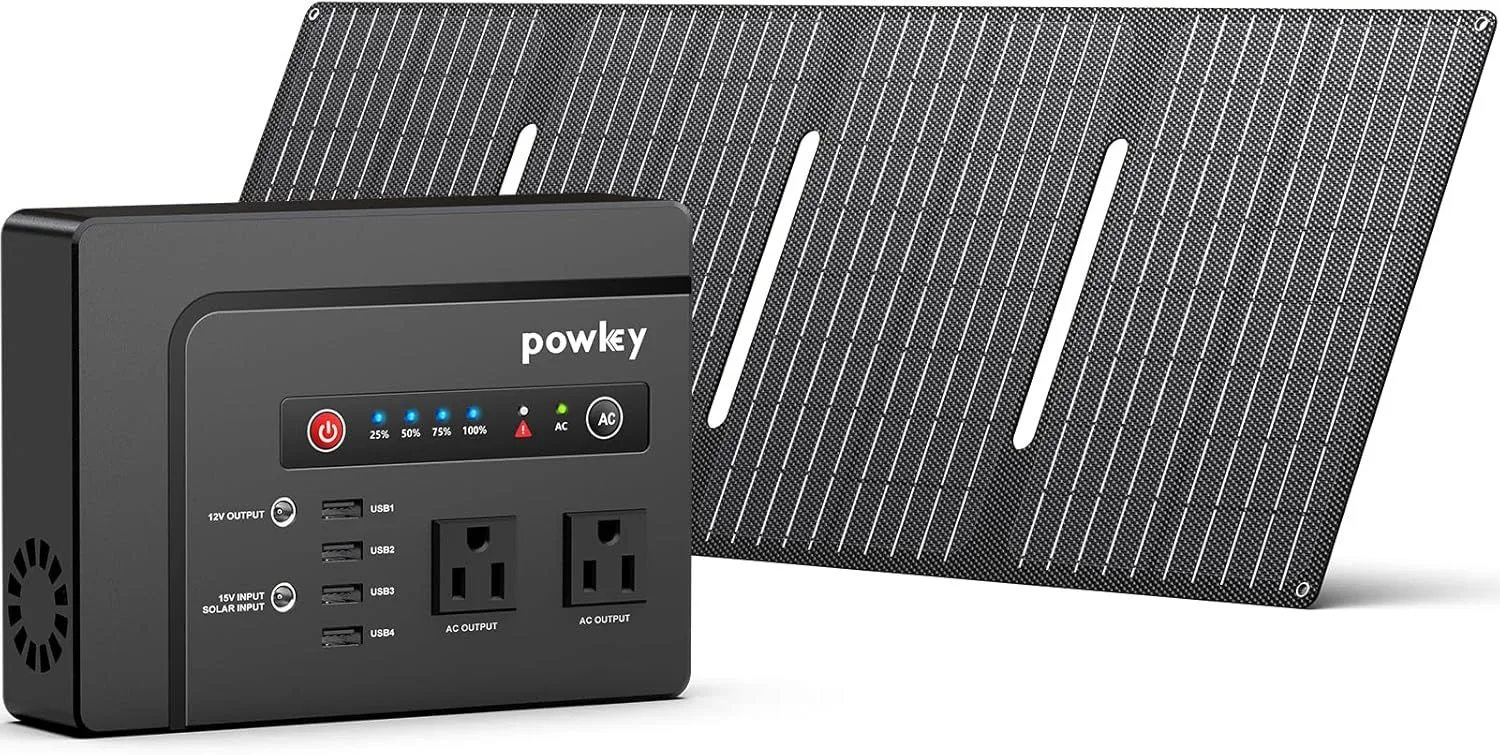
The Powkey 200W is the cheapest way to get a working solar generator kit — 200W pure sine wave output, a 40W panel, and seven ports for under $100. The 146Wh capacity is thin for anything beyond phone charging, but at 3.3 lbs and airline-legal, it fills a specific niche well.
Our evaluation covers 2836+ Amazon ratings (as of 2026-01-26), 3 expert reviews, and comparison with 5 products in the Compact Portable Generators category. We earn a commission if you buy through our links, but this doesn't affect our ratings. Read our full methodology →
This review is based on analysis of 2836+ Amazon ratings, expert reviews, and comparison with products in the Compact Portable Generators category. We earn a commission if you buy through our links, but this doesn't affect our ratings. Read our full methodology →
The Cheapest Way Into Solar Power — With Catches
The Powkey 200W is the entry-level floor of solar power stations. A complete kit — station plus 40W panel — for under a hundred dollars. At that price, it undercuts every other solar generator package we have reviewed. And it works. Two AC outlets push 200W of pure sine wave output, seven ports cover USB-A and 12V DC needs, and the included 40W panel starts producing power as soon as you unfold it in the sun.
At 3.3 pounds, the Powkey is lighter than a half-gallon of milk. You can carry it one-handed without fatigue. The form factor is closer to a thick paperback book than to the boxy power stations from Jackery and BLUETTI. And at 146Wh, it squeaks under the FAA's 160Wh carry-on limit — making it one of the few solar generators you can take on a plane.
The catches: 146Wh is thin. A MacBook Air draws roughly 30W during normal use, which means the Powkey gives you about 4 hours of laptop time — less than a single workday. There is no USB-C PD port, so modern laptops that charge via USB-C cannot use the Powkey directly. And the lithium-ion battery has a 1,000-cycle lifespan, roughly one-third what LiFePO4 competitors deliver.
Is the Powkey 200W airline safe?
Yes. At 146Wh, the Powkey 200W falls under the FAA 160Wh limit for carry-on lithium batteries and holds UN38.3 transportation certification. You can bring it on commercial flights in your carry-on bag. It cannot go in checked luggage. Always confirm with your specific airline before traveling, as individual carrier policies occasionally differ from FAA guidelines.
What 146Wh Actually Gets You
Battery capacity numbers mean nothing without context. Here is what 146Wh looks like in real use:
Phone charging: A typical smartphone battery holds 13-17Wh. Accounting for USB conversion losses (roughly 15%), the Powkey charges a phone 8-10 times from its USB-A ports. For a weekend camping trip with two people, that is more than enough to keep both phones topped off.
Laptop charging: Most ultrabook chargers draw 45-65W from the AC outlet. The Powkey's 200W output handles that easily — but the 146Wh tank runs dry in 2-3 hours of continuous laptop use. Enough for a morning of remote work. Not enough for a full workday.
LED lighting: A 10W LED camp light runs for roughly 12-14 hours from the Powkey. A string of 5W fairy lights lasts even longer. For evening ambiance at a campsite, the battery provides two to three nights of light without needing a solar recharge.
CPAP machines: Most portable CPAP units draw 30-60W. The Powkey runs a 40W CPAP for roughly 3 hours through the AC outlet — not enough for a full night. Using a DC adapter (if your CPAP supports one) bypasses the inverter and extends runtime to 3.5-4 hours. Still not a full night. For CPAP use, the 268-288Wh units from EBL, BLUETTI, or Anker are the minimum viable options.
Inverter efficiency matters: The AC outlets run through a DC-to-AC inverter that consumes 10-15% of energy even before your device draws power. If your device accepts USB or DC input, always use those ports instead of AC — you will get 10-15% more runtime from the same battery.
The 40W Solar Panel: Expectations vs. Reality
Powkey bundles a folding 40W monocrystalline solar panel with the station. The panel connects via a standard barrel connector and unfolds to roughly the size of a small laptop screen. Build quality is adequate — stitched nylon casing, integrated kickstand, and a pocket for cables. It will not win durability awards, but it holds up to casual camping use.
In direct midday sun at an optimal 30-degree angle, the panel pushes 28-35W of real output. The gap between rated and actual output is standard across all solar panels — cable losses, cell temperature, and imperfect angles eat into the nameplate wattage. On partly cloudy days, expect 12-20W. Under heavy overcast, output drops below 10W.
A full solar charge from empty takes 5-6 hours of good sun. That is an entire day of sunlight for one full battery cycle. For a weekend trip where you drain 40-60Wh overnight, the panel can recover that during a sunny morning — keeping the station topped off without needing a wall outlet. But counting on the panel as your only charging method for a multi-day trip requires consistently good weather, which is never guaranteed.
Does the 40W solar panel fully charge the Powkey 200W?
The 40W panel can fully charge the 146Wh battery, but expect 5-6 hours of direct sun. Real-world panel output typically hits 28-35W due to angle, temperature, and cable losses. On partly cloudy days, charging extends to 8-10 hours. The panel is best used to top off the battery during the day rather than relying on it for a full charge cycle.
What the Powkey Delivers
- Ultralight at 3.3 lbs with a solid build and comfortable carry handle — genuinely pocket-sized power
- Pure sine wave 200W output across two AC outlets handles small electronics cleanly
- 40W solar panel included in the box for under $100 — the best value entry-level solar kit
- Airline-friendly at 146Wh (under 160Wh FAA limit) with UN38.3 transportation certification
What It Lacks
- Only 146Wh capacity — charges a phone about 24 times but a laptop only 2-3 times
- No USB-C PD port limits modern laptop charging (competitors like Jackery Explorer 240v2 include it)
- AC charging takes 5-6 hours from empty — no fast-charge capability
- Lithium-ion battery has only 1,000+ cycle life vs. LiFePO4 competitors at 3,000+
Can the Powkey 200W charge a laptop?
Yes, through the AC outlet. Most laptop chargers draw 45-65W, so the Powkey 200W can handle them — but the 146Wh battery only provides 2-3 full laptop charges depending on your laptop size. The absence of USB-C PD means you cannot use modern USB-C laptop chargers directly. You must use your laptop AC adapter plugged into the Powkey AC outlet, which wastes energy on DC-to-AC-to-DC conversion losses.
Weekend Camping: The Core Use Case
The Powkey 200W is built for two-day car camping trips. Not five-day backcountry expeditions. Not full-time van life. Not home backup during a hurricane. Two days. Phones, lights, maybe a small Bluetooth speaker. That is the sweet spot, and within that scope, the Powkey delivers without drama.
A typical two-night car camping trip draws 50-80Wh total: two smartphones charged each night (20Wh per night), a USB lantern running for 4 hours each evening (8-10Wh per night), and a Bluetooth speaker for a few hours (5Wh per day). The Powkey's 146Wh battery covers this with headroom to spare. The solar panel recovery during the day typically adds 60-90Wh in good conditions — enough to make the battery last through a third night if needed.
Push beyond that envelope and the battery's limitations surface quickly. A portable projector drawing 80W empties the tank in less than two hours. A mini electric cooler drawing 50W continuous depletes it in under three. The Powkey is a gadget charger, not a campsite power hub, and expecting more leads to disappointment.
Build and Port Layout
The unit feels solid despite its light weight. The ABS plastic housing has a slight flex under pressure but no creaking or rattling. The carry handle folds flat for storage. Ports are arranged on the front panel: two AC outlets behind rubber dust covers, four USB-A ports (none with Quick Charge), one 12V DC output, and the input ports on the side. The LCD display shows battery percentage, input/output wattage, and charging status — basic but readable.
The missing USB-C port is the Powkey's most noticeable gap. In 2026, USB-C PD is the standard charging protocol for laptops, tablets, and flagship phones. Without it, you are restricted to USB-A charging speeds (roughly 5-10W per port) or running your device's own AC adapter through the 200W outlet — which wastes energy on DC-to-AC-to-DC conversion.
AC Charging Speed: 5-6 Hours From Empty
The Powkey charges from a wall outlet in approximately 5-6 hours. That is a full afternoon or a full night of charging. For planned trips, this is manageable — plug it in when you get home from work Friday, and it is ready Saturday morning. For spontaneous departures, it is a bottleneck. You cannot top off the Powkey during a quick lunch stop or between errands. The DaranEner NEO fills its 192Wh battery in 2 hours. Even the slightly larger Apowking 300W (280Wh) finishes in 4-5 hours. The Powkey's slow charge reflects its lower-cost internal charger — a cost-cutting measure that keeps the kit price down but limits flexibility.
Car charging through the 12V accessory outlet is even slower — roughly 8-10 hours depending on your vehicle's output. For road trips, this means the Powkey recharges over a full day of driving. If you stop for the night with a dead battery and need it charged by morning, you must find a wall outlet. The car adapter is a last resort, not a primary charging method.
The Battery Chemistry Question
Powkey uses lithium-ion (NMC) cells rather than the LiFePO4 chemistry found in competitors like the DaranEner NEO and Apowking 300W. The practical difference: roughly 1,000 charge cycles to 80% capacity versus 3,000+ for LiFePO4 units. If you charge and discharge the Powkey once per week, the battery degrades noticeably after about two years. A LiFePO4 unit under the same conditions lasts six years or more.
For a mid-range device, the shorter battery lifespan may not matter. If you camp a dozen weekends per year, the Powkey lasts roughly seven years before hitting 80% capacity. Occasional users may never notice the degradation. But buyers who plan to use their power station daily — for van life, remote work, or regular home backup — should spend the extra twenty to thirty dollars for a LiFePO4 unit. The per-cycle cost difference is dramatic over the battery's full life.
Who the Powkey 200W Beats — And Who Beats It
The Powkey's direct competitor is the Apowking 200W — same price tier, same 200W output, same bundled panel concept. The Apowking adds USB-C and 20 extra watt-hours. The Powkey counters with lighter weight (3.3 lbs vs 4.85 lbs) and a lower entry price. Neither is clearly superior — it depends on whether you value portability or USB-C more.
Moving up in price, the DaranEner NEO at $100–$250 represents a clear upgrade: LiFePO4 chemistry, 192Wh capacity, 300W output, and 3,500+ cycle life. No solar panel is included at that price, but the battery longevity alone may justify the premium for regular users.
For buyers who want the absolute cheapest working solar generator kit and plan to use it a few times per year, the Powkey delivers. For anyone planning weekly use, the math favors spending more on LiFePO4 chemistry and USB-C connectivity. See our Powkey 200W vs Apowking 200W comparison for a full side-by-side breakdown.
Powkey 200W vs Apowking 200W — which is the better budget pick?
The Apowking 200W edges ahead on paper: 166Wh vs 146Wh, USB-C included, and a slightly higher price. The Powkey counters with lighter weight (3.3 lbs vs 4.85 lbs) and a lower entry price. If USB-C matters for your devices, the Apowking wins. If you want the lightest, cheapest solar kit possible, the Powkey takes it. Both use lithium-ion batteries with similar cycle life.
Should You Buy the Powkey 200W?
The Powkey 200W is the floor — the absolute minimum investment to get a working solar generator kit with AC output. It works. The 200W pure sine wave inverter is clean. The included panel charges the battery. Seven ports handle most camping gadgets. And at 3.3 pounds, carrying it is effortless.
The limitations are the price you pay for the price you pay. At 146Wh, capacity is thin. Without USB-C, modern device charging is slower than it should be. The lithium-ion battery will degrade visibly after two years of weekly use. And 5-6 hours of AC charging means you cannot top it off during a quick stop.
For occasional weekend campers, festival-goers, and car emergency kit builders who want the cheapest path to portable AC power, the Powkey delivers value. For anyone who plans to use a portable power station as a regular part of their outdoor routine, the step up to LiFePO4 chemistry and USB-C — at a modest price increase — pays for itself within the first year.
One scenario where the Powkey makes undeniable sense: as a second unit. If you already own a larger station — a 500Wh or 1,000Wh unit for base camp — the Powkey serves as a lightweight satellite. Charge it from your main station or the solar panel, then carry the 3.3 lb Powkey on day hikes, kayak trips, or fishing excursions where you need just enough power for a phone and a speaker. The price is low enough to justify a dedicated-purpose purchase, and the weight makes it a non-issue in a daypack.
Another overlooked use case: international travel. The Powkey's 146Wh battery clears the FAA limit without requiring airline approval, and its light weight leaves room in your luggage. For photographers who shoot in remote locations and need to charge camera batteries and a laptop in their hotel room, the Powkey provides two AC outlets and four USB ports in a package smaller than most camera lenses. The 40W panel fits flat inside a suitcase and gives you a fallback charging option in areas with unreliable grid power.
The Powkey 200W is the cheapest way to get a working solar generator kit — 200W pure sine wave output, a 40W panel, and seven ports for under $100. The 146Wh capacity is thin for anything beyond phone charging, but at 3.3 lbs and airline-legal, it fills a specific niche well.
Best for: Budget-conscious buyers who need basic phone/laptop charging for short camping trips or minor emergencies
Powkey 200W — Common Questions
How long does the Powkey 200W last for phone charging?
The 146Wh battery charges a typical 3,500mAh smartphone roughly 10-12 times via USB-A, accounting for conversion losses. Using the AC outlet instead adds inverter losses, reducing that count to roughly 8-9 full charges. For a weekend camping trip with two people, expect to keep both phones topped off for two days with capacity to spare.