Emergency Weather Radio Solar Generator Review 2026
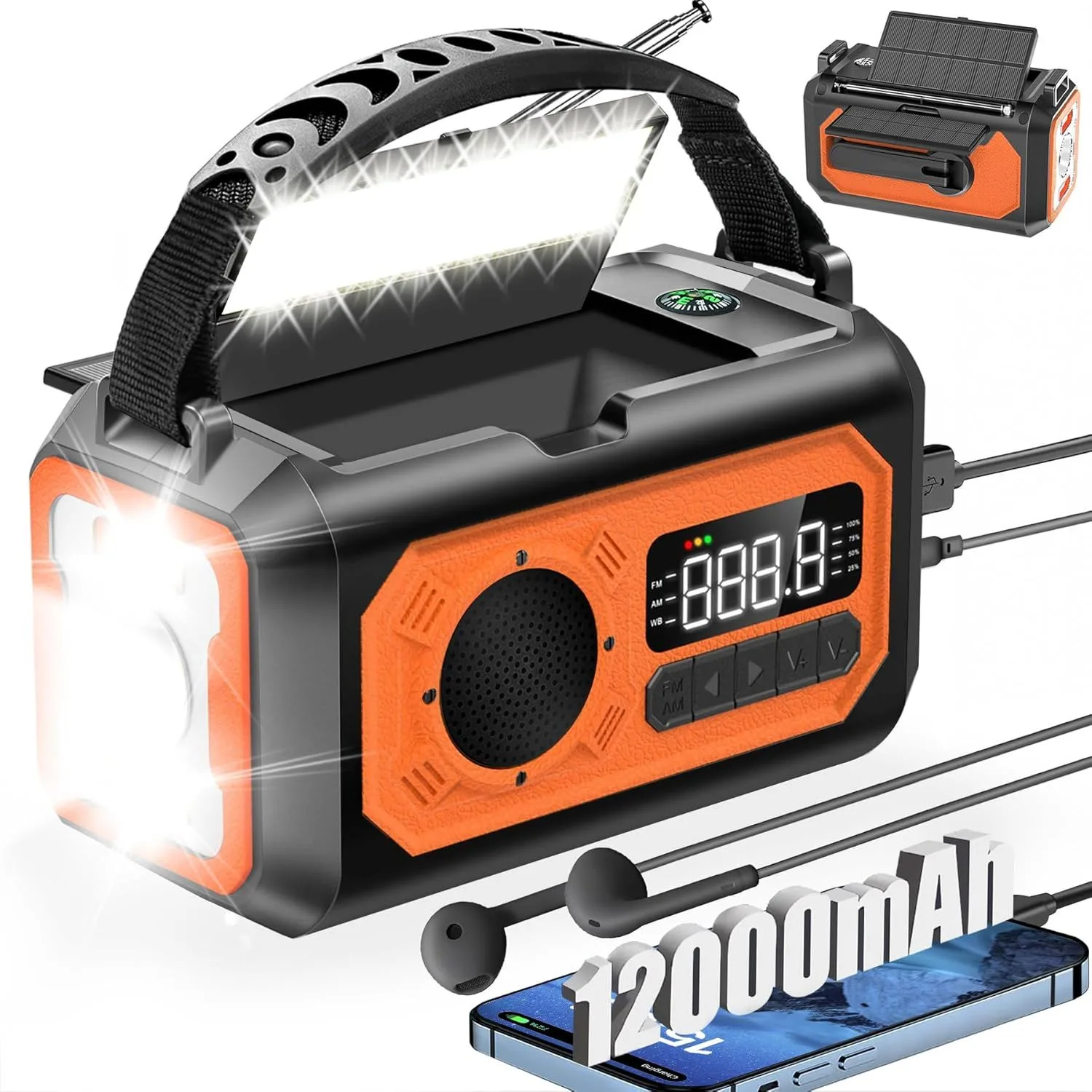
This is not a solar generator in the traditional sense — it is an emergency radio with a built-in power bank. For under $30, it delivers weather alerts, phone charging, and basic lighting in a package that fits anywhere. Just do not expect it to power anything beyond small USB devices.
Our assessment covers 245+ Amazon ratings (as of 2026-01-25), manufacturer specifications, and comparison with 5 products in the Compact Portable Generators category. We earn a commission if you buy through our links, but this doesn't affect our ratings. Read our full methodology →
This review is based on analysis of 245+ Amazon ratings, expert reviews, and comparison with products in the Compact Portable Generators category. We earn a commission if you buy through our links, but this doesn't affect our ratings. Read our full methodology →
Not a Solar Generator — And That Is the Point
The listing says "solar generator." The product is a radio. A survival radio with a built-in power bank, dual solar panels the size of playing cards, a hand crank, a flashlight, an SOS alarm, and a compass. At 44.4Wh, it holds less energy than a single external phone battery pack from Anker. There is no AC outlet. There is no DC port. You cannot plug in a laptop, a fan, or a CPAP machine.
And none of that matters if what you actually need is an emergency communication and phone-charging device that fits in a glove compartment.
The UYEIKMLOP Emergency Weather Radio occupies a category that does not fit neatly into the portable power station market. It competes less with the Powkey 200W or Apowking 300W and more with dedicated weather radios from Midland and Sangean — except those radios cannot charge your phone. This device bridges the gap between communication tool and minimal power source, and for emergency kits, car bags, and disaster preparedness shelves, that bridge is the entire value proposition.
What It Is — And What It Replaces
Think of this product as replacing three separate items in your emergency kit: a flashlight, a weather radio, and a USB power bank. Individually, those three items cost more, take up more space, and require separate battery management. The UYEIKMLOP consolidates them into a single device weighing under a pound. The compass and SOS alarm are bonuses — not critical features, but useful additions that cost nothing extra.
What it does not replace: a portable power station. If you need to charge a laptop, run a small fan, power LED string lights at a campsite, or keep a CPAP machine running overnight, you need a unit with at least 100Wh of capacity and AC output. The gap between 44.4Wh (this radio) and 146Wh (the Powkey 200W) is not just a spec difference — it is a category difference. One keeps your phone alive. The other powers your campsite.
Is this a real solar generator or just a radio with a power bank?
It is a radio with a built-in power bank. At 44.4Wh, it has less than one-third the capacity of the smallest true portable power stations like the Powkey 200W (146Wh). There is no AC outlet, no DC output, and no ability to power appliances. Its purpose is phone charging, flashlight use, and NOAA weather reception during emergencies — not running devices that draw more than a few watts.
Three Charging Methods: How They Actually Perform
The UYEIKMLOP offers three ways to replenish its internal battery: USB-C input from a wall charger or car port, dual built-in solar panels, and a manual hand crank. Each method serves a different emergency scenario, and understanding their real-world performance changes how you plan around this device.
USB-C Charging (The Fast Way)
When grid power is available, USB-C is the only practical charging method. Plug it into a standard 5V/2A adapter and the 44.4Wh battery fills in roughly 4-5 hours from empty. This is the method you use to keep the radio topped off before hurricane season, before a camping trip, or on a weekly maintenance schedule. The battery holds its charge well over weeks of shelf storage — a trait common to lithium-ion cells in low-drain applications. For a deeper look at battery chemistry differences, see our LiFePO4 vs lithium-ion guide.
Solar Panels (The Slow Supplement)
The dual built-in solar panels are small — each roughly the size of a credit card. In direct midday sun with optimal angle, they produce a trickle charge that can add some runtime over a full day of exposure. But "some" here means extending your phone-charging capacity by perhaps 10-15% per day, not fully recharging the unit. Under overcast skies, output drops to nearly nothing.
Where solar proves its worth: multi-day scenarios where grid power is unavailable. After a hurricane or ice storm, leaving this radio in a sunny window for three to four days can recover a good portion of the battery — enough for several phone charges and hours of radio reception. The solar panels do not replace USB charging. They extend your runway when USB charging is unavailable.
Hand Crank (The Last Resort)
The hand crank generates roughly 1-2 watts at a steady cranking pace. One minute of effort produces enough power for 3-5 minutes of LED flashlight use or a very brief phone call. Reaching a full phone charge from hand crank alone requires hours of continuous cranking — a physical effort most people would find exhausting after 15 minutes.
The hand crank exists for one scenario: everything else has failed. Your USB sources are dead, the sun is not out (or it is nighttime), and you need to make a single emergency call. In that specific moment, the hand crank is the difference between reaching someone and silence. It is insurance, not a charging strategy.
How long does hand cranking take to produce usable power?
Hand cranking at a steady pace generates roughly 1-2 watts. One minute of cranking produces enough power for about 3-5 minutes of LED flashlight use or a brief phone call. Reaching a full phone charge from hand crank alone takes several hours of continuous effort. The hand crank is best understood as a last-resort backup for critical moments — not a primary charging method.
What We Liked
- Three charging methods — dual solar panels, hand crank, and USB — so it works when the grid is down
- AM/FM/NOAA weather band reception with automatic frequency search for real-time emergency alerts
- Built-in flashlight, reading lamp, SOS alarm, and compass pack survival essentials into one device
- At 44.4Wh and under a pound, it fits in any emergency bag or glove compartment
What We Didn't
- Only 44.4Wh capacity — enough for phone charging but not for powering any appliances
- Solar charging is extremely slow and supplements hand crank more than replaces it
- No AC outlet — USB charging only, limiting what devices you can power
- Generic brand with limited customer support infrastructure and no long-term reliability data
Can this emergency radio fully charge a smartphone?
Yes, but slowly. The 12,000mAh (44.4Wh) internal battery holds enough energy for roughly one full smartphone charge, sometimes two for smaller phones. Expect 2-3 hours per full phone charge via USB. Hand cranking alone is not fast enough for a full charge — about 30 minutes of steady cranking produces enough juice for a short emergency call, not a full recharge.
Emergency Scenarios: Where This Device Earns Its Keep
The best way to evaluate this product is not through traditional power station metrics — watts, watt-hours, charge curves. It is through the scenarios where someone reaches for it. Each scenario reveals a different facet of the device's value.
Scenario 1: Hurricane Power Outage (3-7 Days)
The grid goes down after a Category 2 hurricane. Cell towers are overloaded but partially functional. You need weather updates, a way to keep your phone alive for emergency calls and FEMA alerts, and a light source after dark. The UYEIKMLOP delivers all three from a single device that was sitting in a kitchen drawer.
Over a three-day outage, a reasonable usage pattern looks like this: 30 minutes of NOAA weather radio twice per day (low power draw), flashlight use for 1-2 hours each evening, and one partial phone charge per day. Total daily draw: roughly 8-12Wh. The 44.4Wh battery covers day one and most of day two without any recharging. Place the radio in a sunny window during daylight hours and the solar trickle extends that to three or four days before USB or crank charging becomes necessary.
For a week-long outage, the math gets tighter. Rationing radio time and flashlight use to extend battery life becomes important. But this is a scenario where having any communication and light is vastly better than having none — and this radio delivers both for longer than most people expect from a sub-one-pound device.
Scenario 2: Car Emergency Kit (Year-Round Standby)
The glove compartment or center console is where this radio arguably provides the most value per dollar. A breakdown on a rural highway at night calls for a flashlight, a way to call for help, and the ability to listen for weather warnings. The UYEIKMLOP weighs less than a water bottle and sits dormant for months until needed. The lithium-ion battery holds its charge well in standby, losing only 5-10% per month under moderate temperatures.
Heat is the concern. Parked cars in summer reach 150-170 degrees Fahrenheit inside. Lithium-ion batteries degrade faster at high temperatures, and repeated exposure to extreme heat shortens their lifespan. Storing the radio in an insulated bag or under a seat rather than on the dashboard helps, but expect reduced battery health after a year or two of year-round car storage in hot climates.
Temperature warning: Lithium-ion batteries are rated for storage between 32-113 degrees Fahrenheit. A parked car in Phoenix can exceed 170 degrees on the dashboard. If you keep this radio in a car year-round, store it under a seat or in an insulated pouch — not in direct sun. Replace the unit every 2-3 years if stored in hot climates.
Scenario 3: Camping and Hiking Backup
For backpackers who already carry a dedicated headlamp and a phone battery pack, this radio adds weather awareness and redundant phone charging at a minimal weight penalty. If you need more power for camping trips, a true portable power station is the better fit. The SOS alarm and compass are useful additions for solo hikers. But it is redundant if you already carry a 10,000mAh power bank and a Garmin InReach or similar satellite communicator.
Where it makes sense: car camping and cabin stays where weight does not matter and you want weather radio without carrying a separate device. For thru-hiking or ultralight backpacking, the weight is fine but the overlap with dedicated gear makes it hard to justify.
NOAA Weather Radio: How It Compares to Dedicated Models
The radio portion receives AM, FM, and all seven NOAA Weather Radio frequencies. Tuning is manual with an automatic frequency search — functional but not instant. Reception quality depends on your proximity to broadcast towers and the built-in antenna length. In suburban and urban areas, reception is solid. In remote mountainous terrain, expect weaker signals and occasional static.
Compared to dedicated weather radios like the Midland WR120 or Sangean CL-100, the UYEIKMLOP lacks two key features: Specific Area Message Encoding (SAME) and Public Alert certification. SAME allows a radio to filter alerts by your specific county code, so you only hear warnings relevant to your location. Without SAME, you hear every alert for the entire broadcast region — useful, but noisier. Public Alert certification guarantees the radio meets a minimum performance standard for emergency alerting.
For most household emergency kits, the UYEIKMLOP provides adequate weather awareness. You will hear tornado warnings, hurricane updates, and severe thunderstorm alerts. You just will not get the county-specific filtering that dedicated weather radios offer. If precise, automated alerting is critical to you — and you live in a tornado-prone area — a dedicated SAME-capable radio is the better choice for weather monitoring specifically. This device wins when you need weather radio plus phone charging plus light in one package.
Can this replace a dedicated emergency weather radio?
For basic AM/FM/NOAA reception, yes. The UYEIKMLOP receives all standard broadcast bands and includes weather frequencies. But it lacks features found in purpose-built weather radios: no SAME alert codes, no Public Alert certification, and no programmable county-specific warnings. If accurate, automated severe weather alerts are your priority, a dedicated Midland WR120 or similar radio is a better investment. This device excels when you need weather radio plus phone charging plus flashlight in one package.
The Brand Question: UYEIKMLOP and Generic Emergency Gear
UYEIKMLOP is not a brand most buyers recognize. It does not have the support infrastructure of Anker, the retail presence of Jackery, or the warranty track record of BLUETTI. The name itself is difficult to search for, spell, or pronounce — which makes finding replacement parts, filing warranty claims, or reaching customer support more difficult than it should be.
This matters less for a sub-thirty-dollar emergency device than it would for a five-hundred-dollar power station. At this price point, the unit is effectively disposable — if it fails after two years, the replacement cost is trivial. But buyers who want guaranteed multi-year reliability from their emergency gear should factor brand support into their decision. A Midland ER310 emergency radio costs more, offers similar features (minus the USB power bank capacity), and comes from a company with decades of emergency radio expertise and accessible customer service.
The Amazon review data tells a mixed story. Of the 245+ ratings, the 4.1-star average reflects solid satisfaction from buyers who understood what they were purchasing. The most common complaint: buyers who expected a "solar generator" capable of powering appliances. The most common praise: multi-function value for emergency preparedness. The product delivers exactly what it promises — the gap is between the listing title and buyer expectations.
Who Should Buy This — And Who Should Not
The UYEIKMLOP Emergency Weather Radio is the right purchase if you need a compact, multi-function emergency device for your car, home kit, or camping bag — and you understand that "solar generator" means "radio with a power bank and tiny solar panels." For under thirty dollars, it consolidates flashlight, weather radio, phone charger, SOS alarm, and compass into a package lighter than most water bottles.
It is the wrong purchase if you need to charge a laptop, run a fan, power a CPAP machine, or do anything that requires more than 5 watts of USB output. For those needs, the step up to a real portable power station starts with the Powkey 200W at $50–$100, which delivers 146Wh and AC output — a completely different class of device.
The most honest way to evaluate this product: it costs less than a restaurant dinner for two, weighs less than a can of soup, and provides communication, light, and phone charging when everything else has failed. For emergency preparedness, that value calculation is hard to beat. Just do not expect it to be something it is not.
This is not a solar generator in the traditional sense — it is an emergency radio with a built-in power bank. For under $30, it delivers weather alerts, phone charging, and basic lighting in a package that fits anywhere. Just do not expect it to power anything beyond small USB devices.
Best for: Emergency preparedness kits where weather alerts and phone charging matter more than powering appliances
How effective are the built-in solar panels?
The dual built-in solar panels produce a trickle charge in direct midday sun — enough to extend battery life over several days of outdoor exposure but nowhere near enough to fully recharge the unit in a single day. Think of solar as a supplement to USB and hand crank charging, not a replacement. In overcast conditions, solar output drops to nearly zero.
Questions Buyers Ask About the UYEIKMLOP Radio
Does this radio receive NOAA weather alerts automatically?
The radio tunes into all standard NOAA weather band frequencies with automatic frequency search, so you can hear your local weather station during severe weather events. It does not support Specific Area Message Encoding (SAME) for automatic alert triggering — you need the radio turned on and tuned to a NOAA band to hear alerts. Dedicated weather radios from Midland or Sangean offer SAME auto-alert at a higher price.