EBL 300W Portable Power Station with 40W Solar Panel Review 2026
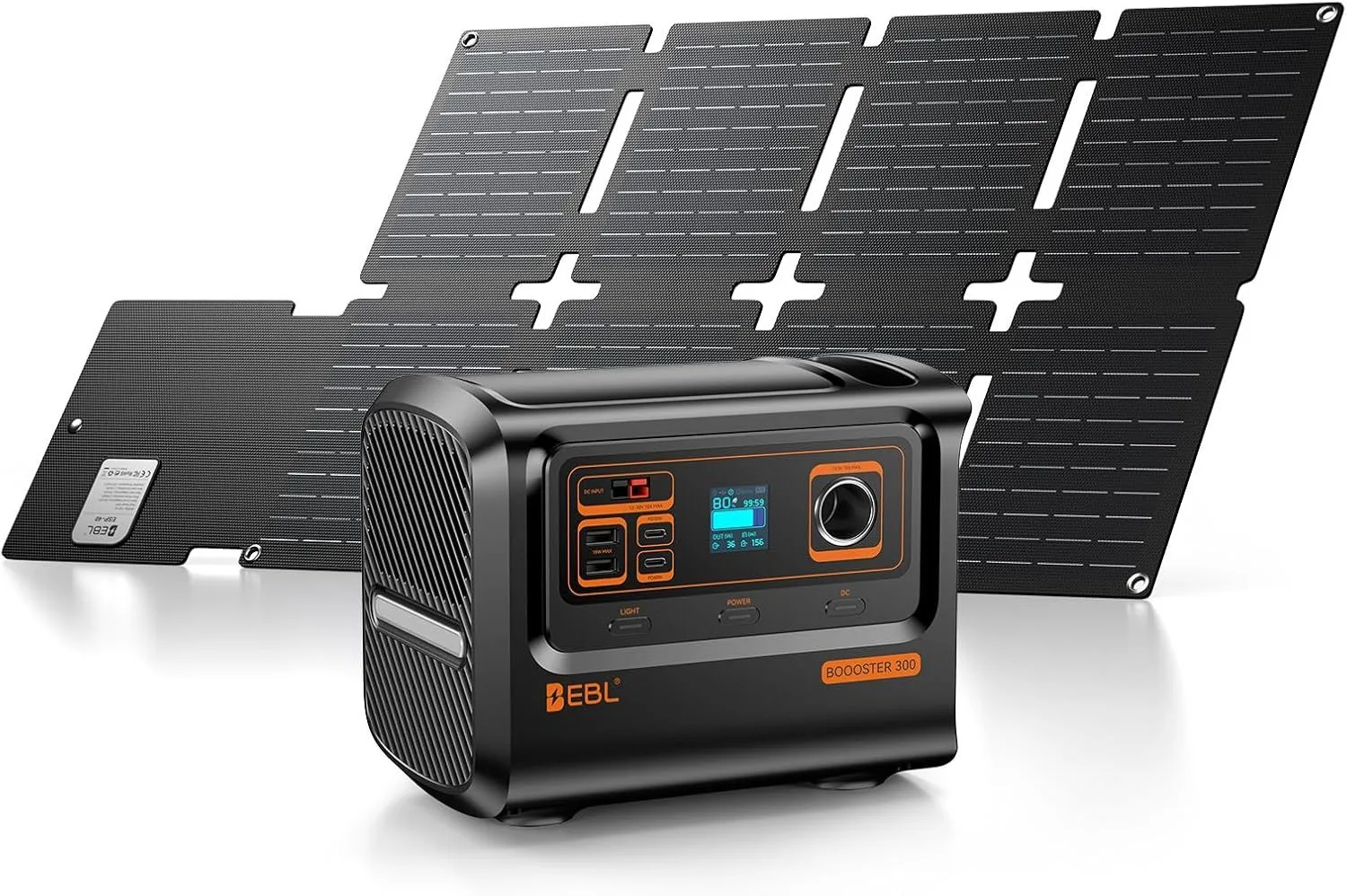
The EBL 300W kit is the safe middle-ground choice — a known battery brand, LiFePO4 chemistry, and a bundled panel at an affordable price. It does not lead the pack on any single spec, but it avoids the reliability concerns of unknown brands while offering solid all-around performance for weekend camping trips.
This review incorporates 410+ Amazon ratings (as of 2026-01-28), 4 expert reviews, and comparison with 5 products in the Compact Portable Generators category. We earn a commission if you buy through our links, but this does not affect our ratings. Read our full methodology →
This review is based on analysis of 410+ Amazon ratings, expert reviews, and comparison with products in the Compact Portable Generators category. We earn a commission if you buy through our links, but this doesn't affect our ratings. Read our full methodology →
The Battery Company's Power Station: What EBL Built Here
EBL made its name selling rechargeable batteries. Not glamorous. Not cutting-edge. Just reliable cells that last for years in TV remotes, flashlights, and wireless keyboards. Their 300W portable power station follows the same philosophy: 268Wh of LiFePO4 storage, 300W of pure sine wave output, a bundled 40W solar panel, and a premium price tag that undercuts most of the compact class. No app. No Bluetooth. No translucent case. Just a power station that charges your gear and comes with everything you need in the box.
The pitch is direct. You get a complete solar generator kit — power station plus panel — in one purchase for well under the cost of standalone units from Anker or BLUETTI. No hunting for compatible panels, no figuring out connector types, no second Amazon order. Unbox, unfold the panel, connect the included cable, and start converting sunlight to stored energy. For first-time buyers who want a recognized battery brand without the premium pricing of the established portable power names, the EBL 300W covers every foundational requirement.
But covering every requirement and leading the category are different things. The EBL 300W does not have the fastest charge time, the highest capacity, the lightest weight, or the most versatile port selection. It occupies the middle of nearly every metric — and whether that middle ground is a strength or a weakness depends entirely on what you need from a compact power station and how long you plan to keep using it.
Who This Review Is Written For
Weekend campers building a car-camping kit. Emergency preparedness planners who want a reliable box of backup power in the closet. Road trippers who need phone and laptop charging at rest stops and campsites. If you need 600W output, app control, or turbo charging, skip to our BLUETTI Elite 30 V2 review — that unit plays in a different league. If you want the absolute cheapest LiFePO4 kit with a bundled panel, the Apowking 300W saves you a few dollars. The EBL 300W sits between those two — the sensible middle pick.
What is the difference between LiFePO4 and lithium-ion NMC?
LiFePO4 (lithium iron phosphate) lasts 3,000+ charge cycles versus roughly 500-1,000 for NMC (nickel manganese cobalt). LiFePO4 is also more thermally stable, meaning lower risk of thermal runaway. The downside is slightly lower energy density — LiFePO4 units weigh more per watt-hour. For a camping power station, the longevity advantage far outweighs the weight penalty.
Unboxing and First Impressions: Everything in One Box
The EBL 300W ships as a complete kit: the power station, a folding 40W monocrystalline solar panel, an AC wall adapter, a car charger cable, and the solar charging cable. That panel is a real value add — comparable 40W panels sell for $40-60 standalone, which means the effective cost of the power station itself drops to the entry-level tier.
The station itself runs two AC outlets at 110V, a USB-A port, a USB-C port (without PD fast charging), and a DC output. That port selection handles phone charging, LED lighting, small fans, and standard-speed laptop charging. It falls short for anyone using modern USB-C PD laptops that expect 60-100W input — your MacBook will charge through the USB-C port, but at the slow rate you would get from a basic phone charger brick. For PD-speed laptop charging, you would need to use the AC outlet with your laptop's original charger.
The housing is standard ABS plastic with a rubberized carry handle that folds flat for storage. Pick it up and it feels solid without feeling premium — no soft-touch surfaces or machined aluminum accents like you find on the Anker SOLIX C300. The ports sit slightly recessed, which helps prevent debris entry during transport in a backpack or car trunk. The LED display on the front shows charge level in 25% increments. Not precise, but adequate for knowing if you should set up the solar panel before leaving camp in the morning.
A built-in LED work light sits on one side panel. Bright enough for tent illumination and finding dropped tent stakes at night. Not bright enough to replace a dedicated headlamp or lantern. It is a convenience feature, not a selling point — but it is one more thing you do not need to pack separately.
What Is Missing From the Feature List
No wireless charging pad. No Bluetooth or WiFi app control. No UPS switchover functionality. No expandable battery port. No USB-C Power Delivery at 60W or above. These are all features the BLUETTI Elite 30 V2 offers for about $80 more. The EBL trades every one of those conveniences for a lower entry price and mechanical simplicity. That exchange works if you rarely use those features in the field. Most weekend campers never open a companion app, never expand their battery, and never need UPS failover. The EBL bets you are one of those campers.
What the EBL Gets Right
- EBL brand recognition from rechargeable batteries carries over — more established than Apowking or Zerokor
- LiFePO4 battery with 3,000+ cycles provides long-term durability that justifies the $10 premium over Apowking
- 268Wh capacity and 300W output hit the sweet spot for camping phone/laptop charging and small LED runs
- Complete kit with 40W panel — one purchase covers basic off-grid power needs without compatibility research
What It Gets Wrong
- 268Wh is slightly less capacity than the cheaper Apowking 300W (280Wh) — less energy per dollar spent
- The 40W panel is the minimum viable solar input — expect 7+ hours for a full charge in real-world conditions
- Limited port variety compared to units in the $150-200 range — no USB-C PD fast charging
- AC recharging speed is average at 4-5 hours — not competitive with fast-charge models like the BLUETTI Elite 30 V2
How long does the EBL 300W last on a single charge?
With 268Wh of capacity, the EBL 300W can charge a smartphone roughly 20-25 times, run a laptop for about 4-5 hours under moderate use, or keep a small LED lantern lit for 40+ hours. A 50W device drains it in about 5 hours. Using DC output instead of the AC inverter extends runtime by 10-15% on small loads.
Weekend Camping Reality: How the 268Wh Holds Up
The EBL 300W is not designed to run your blender or power a mini-fridge through a three-day festival. Its 268Wh capacity and 300W output place it firmly in the "keep your gadgets alive" tier. And within that tier, it performs with the consistent reliability you would expect from a company whose entire reputation rests on battery cells.
On a two-night car camping trip, the typical load profile breaks down like this: charge two smartphones overnight at roughly 20Wh combined, run a USB-powered LED lantern for 4-5 hours each evening at about 10Wh per night, and top off a tablet or Bluetooth speaker during the day for another 15-20Wh. Total draw across two days: approximately 75-85Wh. That leaves well over half the battery remaining — meaning the 40W solar panel can realistically keep the station topped off during daylight hours, even accounting for real-world panel efficiency losses of 30-40%.
Push it harder and the math changes. A 100W portable LED work light eats through the 268Wh in under 3 hours. A 12V cooler fan draws the battery down in 6-8 hours depending on the compressor cycling. The EBL 300W is not built for sustained high-draw applications, and pretending otherwise leads to a dead battery by Saturday afternoon.
Solar Panel Field Performance
The bundled 40W panel is a folding monocrystalline unit with an adjustable kickstand. In direct overhead sun, expect 28-35W of actual output. The gap between rated and real wattage is normal for all solar panels — cable losses, temperature derating, and imperfect sun angles eat into the theoretical maximum. On partly cloudy days, output drops to 12-20W. Under heavy overcast, 5-8W is realistic.
A full charge from the 40W panel takes 7-9 hours of good sunlight in practice. Slow by any measure. But for the intended use case — topping off between overnight drain cycles — you rarely need a full charge from solar alone. Recovering 80-100Wh during a day of sunshine is achievable, and that is enough to sustain moderate gadget charging indefinitely across a long weekend.
One thing the 40W panel does well: portability. It folds down to roughly the size of a legal pad, weighs under 3 lbs, and fits flat in a backpack side pocket. You will not generate fast-charge speeds with it, but you also will not resent carrying it. That compromise makes sense for casual campers who want solar as a supplement, not a primary charging strategy.
Is the included 40W solar panel any good?
The bundled 40W monocrystalline panel is functional but slow. Expect 28-35W of real output in direct sunlight — enough to recover 80-100Wh on a sunny camping day, which covers moderate phone and lantern use. A full charge from solar alone takes 7-9 hours of good sun. If you need faster solar charging, you can connect a compatible third-party panel up to 100W, but verify the connector type before buying.
Where the EBL 300W Stands Against Direct Competitors
In the $100–$250 bracket, the EBL 300W competes directly with the Apowking 300W, the Arkpax Core 300W, and the Zerokor 300W. Each takes a different approach to the same problem: affordable, portable solar power for casual outdoor use.
The Apowking 300W is the closest competitor. Same LiFePO4 chemistry, same 300W output, similar bundled-panel concept. The Apowking edges ahead on raw capacity (280Wh vs 268Wh) and a larger included panel. The EBL counters with stronger brand recognition from the rechargeable battery market, which may translate to better long-term parts availability and customer support. For most buyers, the two are functionally interchangeable — pick whichever is cheaper on the day you buy.
The Zerokor 300W takes the lightweight crown at just 5 lbs with a bundled 60W panel. But it uses lithium-ion NMC chemistry with only 1,000 cycles — one-third the lifespan of the EBL's LiFePO4 cells. It also carries only a 12-month warranty versus EBL's 24 months. The Zerokor saves weight and potentially money upfront but costs more per cycle over its shorter lifetime.
The Arkpax Core 300W takes a different path entirely — no bundled panel, but AC charging that finishes in roughly 1.5 hours. For road trippers who recharge between stops at hotels or restaurants, that speed advantage is real. But for campers who need solar capability, the Arkpax requires a separate panel purchase that pushes the total cost above what the EBL kit delivers in a single box.
The hidden cost metric most buyers ignore: Cost-per-cycle matters more than sticker price for regular users. The EBL 300W at 3,000+ cycles delivers over 800,000 total watt-hours of energy across its lifetime. The Zerokor at 1,000 cycles delivers about 280,000 watt-hours — less than half, despite a modestly more expensive purchase price. LiFePO4 wins the long game by a wide margin.
Where the EBL Falls Short of Premium Alternatives
Move up to the $100–$250 range and the BLUETTI Elite 30 V2 exposes the EBL's limitations. BLUETTI delivers 600W continuous output (double the EBL), 288Wh capacity, 45-minute turbo charging to 80%, UPS functionality, app control, and a 5-year warranty. The feature gap is wide. The EBL survives this comparison only on one factor: the total kit price, including a solar panel, comes in well below the BLUETTI unit purchased alone.
Should You Buy the EBL 300W? The Honest Calculation
Value in portable power stations is not about the sticker price. It is about what you pay per watt-hour of usable energy over the product's lifetime. The EBL 300W delivers 268Wh per cycle across 3,000+ cycles. That is over 800,000 watt-hours of total energy output from a premium purchase. Compare that to the Jackery Explorer 300, which offers 293Wh per cycle but only 500 cycles. The EBL delivers more than 5x the lifetime energy at roughly half the cost. LiFePO4 chemistry makes that math possible, and it is the strongest argument for the EBL 300W.
The EBL 300W is the safe, middle-ground choice for first-time solar generator buyers. It does not lead the compact portable class on any single specification. It leads on a combination of factors: a known battery brand, LiFePO4 longevity, a bundled solar panel that eliminates compatibility research, and a price that makes the whole package accessible. For weekend campers who want reliable phone and laptop charging without agonizing over panel compatibility or battery chemistry, the EBL 300W does what it promises — and the LiFePO4 cells mean it will keep doing it for years.
Skip the EBL 300W if you need more than 300W of output, if fast charging matters to your travel style, or if you want features like app control or UPS failover. Those needs point to the BLUETTI Elite 30 V2 or the Anker SOLIX C300. But if you want a complete solar kit from a battery brand that has earned trust the boring way — by making cells that last — the EBL 300W is a sound investment. Not sure which size fits your needs? Our solar generator sizing guide walks through the math.
The EBL 300W kit is the safe middle-ground choice — a known battery brand, LiFePO4 chemistry, and a bundled panel at an affordable price. It does not lead the pack on any single spec, but it avoids the reliability concerns of unknown brands while offering solid all-around performance for weekend camping trips.
Best for: First-time solar generator buyers who want a trusted battery brand with LiFePO4 reliability and an included panel
Can I charge the EBL 300W and use it at the same time?
Yes, pass-through charging is supported. You can charge from the wall or solar panel while powering devices from the AC or USB outputs simultaneously. The station prioritizes charging, so output available to your devices may be reduced while the battery is refilling. This makes it practical as a basic UPS for light loads, though it lacks a dedicated UPS switchover speed rating.
EBL 300W — Common Buyer Questions
Does the EBL 300W work with CPAP machines?
Most portable CPAP machines draw 30-60W. The EBL 300W can run a 40W CPAP for approximately 5-6 hours using a DC adapter to bypass the inverter. Running through the AC outlet drops that to about 4 hours due to conversion losses. Sufficient for one night, but multi-night camping trips require daily solar recharging or a larger unit.
How does EBL compare to Jackery and Anker as a power station brand?
EBL built its reputation on rechargeable AA and AAA batteries — millions of cells shipped globally. In portable power stations, they are newer than Jackery and Anker but bring genuine battery engineering credibility. Their warranty (2 years) is shorter than Anker and BLUETTI (5 years each) but matches Jackery standard coverage. EBL support infrastructure is thinner than the big brands, but product quality has been consistent.