BLAVOR 1600W Portable Power Station Review 2026
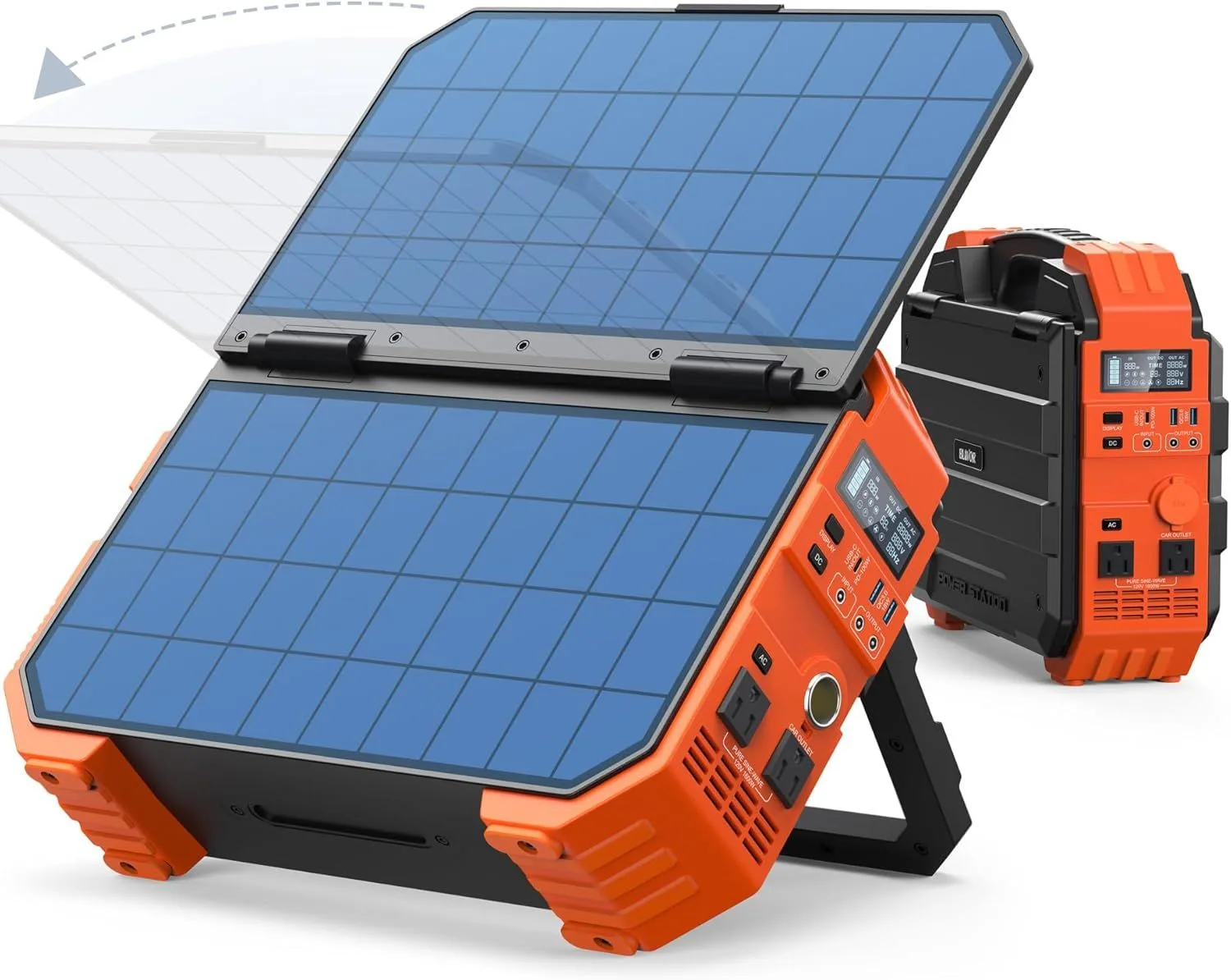
The BLAVOR 1600W is genuinely innovative — the built-in foldable solar panel is unique and earned an iF Design Award. For pure emergency preparedness, having solar permanently attached has real value. But the math is hard to justify when competitors deliver more output, faster charging, more ports, AND a separate panel for significantly less money. A creative concept hampered by slow charging and pricing that does not reflect its performance.
For this evaluation, we studied 200+ Amazon ratings (as of 2026-02-06), 4 expert assessments, and a head-to-head comparison with 5 competing mid-range power stations. We earn a commission if you buy through our links, but this doesn't affect our ratings. Read our full methodology →
This review is based on analysis of 200+ Amazon ratings, expert reviews, and comparison with products in the Mid-Range Power Stations category. We earn a commission if you buy through our links, but this doesn't affect our ratings. Read our full methodology →
A Brilliant Idea With Difficult Math
The BLAVOR 1600W answers a question every emergency preparedness buyer has asked: what if the solar panel was just part of the power station? No separate bag to pack. No cable to lose. No forgetting the panel when it matters most. BLAVOR folds a 40W solar panel directly into the lid of a 1,024Wh LiFePO4 station, and the iF Design Award it earned for this concept was well deserved.
The problem is everything after the concept. At mid-range for its category, the BLAVOR costs more than the EcoFlow DELTA 2, more than the OUKITEL P1000 Plus with its included 100W panel, and more than the OUPES Mega 1 with its included 100W panel. All three competitors deliver more output wattage, faster charging, and more ports. The built-in 40W panel, while innovative, produces enough solar power to charge the battery in roughly 30-40 hours under real conditions. That is not solar charging — that is solar trickle charging.
So the question becomes: does the always-attached convenience of a built-in panel justify paying more for a station that does less on nearly every measurable spec? For a specific buyer — the emergency preparedness purist who will never, under any circumstances, remember to grab a separate panel — maybe. For everyone else, the math is hard to justify.
The Built-In Panel: Innovation or Gimmick?
Start with what the 40W panel actually delivers. Under perfect conditions — direct noon sunlight, optimal angle, clear sky, clean panel surface — expect 30-35W of real-world output. That is approximately 3% of the 1,024Wh battery per hour. In 8 hours of strong sunlight, the built-in panel replenishes roughly 240-280Wh, or about a quarter of the total capacity.
Compare that to the 100W foldable panel included with the OUKITEL P1000 Plus (80-90W real output) or the OUPES Mega 1 (80-90W real output). Those standalone panels charge 2.5x faster than the BLAVOR's integrated panel. And the OUKITEL's 500W solar input means you can add a larger panel for 5-6x faster solar charging. The BLAVOR's total solar input caps at 280W (40W built-in plus 240W external), which is the lowest ceiling in the mid-range class.
FAQ: Can the built-in panel keep up with daily use?
Not for sustained use. If you drain 500Wh overnight running a CPAP and lights, the built-in 40W panel needs roughly 15-18 hours of sunlight to replenish that. You will fall behind each day, progressively draining the battery. For daily solar sustainability, you need to add external panels — at which point the built-in panel becomes a supplement, not your primary solar source.
1,600W Output: Enough for Most, But Not All
The 1,600W continuous rating with 3,200W surge handles most household appliances during outages. Refrigerators, microwaves (most run at 1,000-1,200W), coffee makers, phone and laptop charging, LED lighting — all within range. The 3,200W surge starts compressor motors and power tools without tripping the inverter.
Where 1,600W falls short: space heaters (typically 1,500W, leaving no headroom for anything else), hair dryers (1,200-1,875W for high settings), and electric kettles (1,500W). Our sizing guide helps you calculate whether 1,600W covers your specific loads. You can run these individually but cannot combine them with other loads. The OUPES Mega 1 at 2,000W and the Anker C1000 Gen 2 at 2,000W both provide more continuous headroom for simultaneous multi-appliance use.
What the Blavor Does Well
- ✓ Built-in 40W foldable solar panel is a unique design innovation — no other power station integrates a panel, eliminating the "I forgot the panel" problem
- ✓ 1,600W output with 3,200W surge handles most household appliances — confirmed keeping refrigerators running during outages
- ✓ 100W USB-C two-way fast charging port can both charge devices and accept input, adding cable management flexibility
- ✓ All-in-one emergency solution with 10 adapter heads included — the most self-contained power kit in the lineup
Where the Blavor Disappoints
- ✗ Overpriced at its MSRP vs. competitors — costs more than EcoFlow DELTA 2, OUKITEL with 100W panel, and OUPES Mega 1 with 100W panel, all of which deliver more watts and faster charging
- ✗ Slow charging compared to every competitor — fastest option takes ~3.5 hours vs. 50-60 minutes for EcoFlow, OUKITEL, and Anker
- ✗ Built-in 40W panel provides minimal real-world charging — under real conditions, charging 1,024Wh from solar alone would take 30-40 hours
- ✗ Limited port count with only 8 outputs — competitors offer 11-15 ports for running multiple devices simultaneously
Charging Speed: The Achilles Heel
If the built-in solar panel is the BLAVOR's defining innovation, the charging speed is its defining weakness. The fastest AC charging method — combining DC input and USB-C input simultaneously — takes approximately 3.5 hours to reach full charge. That is not a typo. Three and a half hours.
For context: the OUKITEL P1000 Plus charges to 80% in 39 minutes. The EcoFlow DELTA 2 hits 80% in 50 minutes. The Anker C1000 Gen 2 reaches full charge in 49 minutes (Guinness World Record). The OUPES Mega 1 fills up in about 60 minutes. The BLAVOR takes longer than all four combined charging times.
Why is it so slow? The BLAVOR does not support high-wattage AC input. Where competitors pull 1,200-1,600W from a wall outlet, the BLAVOR's DC + USB-C combined input tops out around 290W. This appears to be a thermal management choice — the integrated solar panel occupies space that could otherwise house cooling components for a high-power charging circuit. Innovation in one area created a bottleneck in another.
The All-in-One Emergency Kit Angle
Where the BLAVOR stands out is as a complete emergency package. The 10 included adapter heads — various DC tips, USB adapters, and connector types — mean you can charge almost any device without hunting for the right cable. The built-in solar panel means solar charging is always available. The 100W USB-C bidirectional port adds flexibility. And the 1,024Wh LiFePO4 battery provides 3,500+ cycles of reliable storage.
For a buyer assembling an earthquake kit, a hurricane preparedness closet, or a van emergency stash, the all-in-one nature of the BLAVOR reduces the number of separate items to remember. Panel: attached. Cables: included. Station: ready. That has genuine value in stress scenarios where fumbling through bags of accessories is the last thing you want to do.
Runtime Reality: 1,024Wh Across Common Scenarios
The 1,024Wh LiFePO4 battery uses the same chemistry as the OUKITEL P1000 Plus and EcoFlow DELTA 2. LiFePO4 tolerates 3,500+ cycles before capacity drops to 80%, which translates to roughly 10 years of daily cycling. The battery chemistry also handles temperature extremes better than NMC lithium-ion — operating reliably from 32°F to 113°F, which matters if the BLAVOR lives in an unheated garage or a sweltering storage unit between emergencies.
Actual runtime depends entirely on the load profile. A modern Energy Star refrigerator cycles its compressor on and off, averaging 80-120W over time. The BLAVOR sustains that load for 7-10 hours — enough to keep food cold overnight during a power outage but not enough for a full 24-hour grid failure. A pair of LED work lights drawing 30W total runs for over 30 hours. A laptop pulling 45-65W through the USB-C port stretches to 13-18 hours of continuous use.
The scenario that exposes the capacity limit is simultaneous multi-device use. Running a refrigerator (100W average), charging two phones (20W), and powering LED lights (15W) totals roughly 135W. At that draw, the 1,024Wh battery lasts about 6.5 hours after accounting for inverter losses in the 85-90% efficiency range. For a full day of emergency power, you need to be selective about what runs simultaneously — or you need a larger unit.
Design and Build: The iF Award Was Earned
The physical design is well-executed. The folding solar panel integrates flush with the top of the station when closed, adding minimal bulk. The hinge mechanism feels sturdy. The panel deploys in seconds — flip, unfold, position toward the sun. No cables to connect. No accessories to unpack. From stored to solar-charging in under 10 seconds.
At roughly 28 lbs, the BLAVOR matches the weight of the OUPES Mega 1 and EcoFlow DELTA 2. The OUKITEL P1000 Plus is lighter at 26.5 lbs and the Anker C1000 Gen 2 is the lightest at 24.9 lbs. The BLAVOR does not feel heavy for what it is, but the integrated panel does add some dimensional bulk — the unit is taller when the panel is folded closed.
Build quality feels solid. The enclosure resists flexing, the panel cover protects the solar cells when folded, and the port area is organized logically. BLAVOR has clearly invested design effort into the physical product. The shortcomings are in the electronics — charging speed, port count, and solar input ceiling — not in the physical construction.
FAQ: How durable is the built-in solar panel?
The panel is rated for the same ETFE-coated durability as standalone foldable panels. It resists light rain and dust. The hinge is the potential weak point over years of use — folding and unfolding the panel repeatedly could eventually fatigue the mechanism. BLAVOR offers only a 1-year warranty, which is the shortest in the mid-range class (competitors offer 2-5 years). If the hinge fails after 18 months, you are on your own.
The Innovation Premium: Worth Paying?
The BLAVOR 1600W is genuinely innovative — the built-in foldable solar panel is unique and earned an iF Design Award. For pure emergency preparedness, having solar permanently attached has real value. But the math is hard to justify when competitors deliver more output, faster charging, more ports, AND a separate panel for significantly less money. A creative concept hampered by slow charging and pricing that does not reflect its performance.
Buy It If:
- • You will never remember to pack a separate solar panel — the built-in panel eliminates that failure point
- • Emergency preparedness is your primary use case and all-in-one simplicity matters most
- • You value the iF Design Award-winning form factor and do not mind paying a premium for it
- • Charging speed is not a priority — you plan to keep it charged proactively
Skip It If:
- • You compare specs per dollar — competitors deliver more for less
- • Fast AC charging matters — 3.5 hours vs. 49-60 minutes is a dealbreaker
- • You need more than 8 output ports for simultaneous device charging
- • Expandability matters — the 1,024Wh capacity is fixed permanently
Against the Mid-Range Field
The BLAVOR 1600W occupies a unique position in our mid-range comparisons: highest innovation score, lowest value-per-spec score. It is the only power station with a built-in solar panel, and that matters for a specific use case. But on every measurable performance metric — output wattage, charging speed, port count, solar input capacity, expandability, and warranty length — it trails the competition.
The 1-year warranty is the most concerning gap. LiFePO4 batteries last 3,500+ cycles, so the chemistry will outlast the coverage by years. If the hinge mechanism, the charging circuit, or the inverter develops an issue at month 14, you have no recourse. The OUPES Mega 1 offers 5 years. The Anker C1000 Gen 2 offers 5 years. Even the OUKITEL P1000 Plus provides up to 5 years through its official storefront. A 1-year warranty on a premium-priced product forces buyers to absorb more risk than competitors require.
The OUKITEL P1000 Plus delivers a complete bundle for less money with faster charging and quieter operation. The OUPES Mega 1 matches the price and adds 400W more output, 800W solar input, and expandability to 5,120Wh. The Anker SOLIX C1000 Gen 2 charges in 49 minutes and weighs 3 lbs less.
The BLAVOR's case rests entirely on the always-attached solar panel and all-in-one emergency kit design. If that resonates with your specific needs — and for some buyers, it will — the premium is justified. If it does not, every competitor in this price range offers more station for the money.
What Buyers Ask About the BLAVOR 1600W
How much solar charging does the built-in 40W panel actually provide?
Under ideal direct sunlight, the integrated 40W panel produces roughly 30-35W of real output. That charges the 1,024Wh battery at approximately 3% per hour. A full solar charge from the built-in panel alone would take 30-40 hours in realistic conditions. It is a trickle charger for maintaining or slowly replenishing — not a primary charging method.
Is the BLAVOR 1600W good for emergency preparedness?
The always-attached solar panel is a real asset for emergencies — you never have to remember to grab a separate panel. The 10 included adapter heads add flexibility. The drawback: if you need to recharge quickly during a multi-day outage, the 3.5-hour AC charge time and limited 280W solar input (built-in + external) are much slower than competitors that charge in under an hour.
Can the BLAVOR 1600W run a refrigerator?
Yes. The 1,600W continuous output and 3,200W surge handle standard refrigerator compressor startup. Runtime depends on the fridge — a modern efficient model drawing 100-150W running gets roughly 6-8 hours from a full battery. The 1,024Wh capacity is the limiting factor, not the output wattage.
Why is the BLAVOR 1600W more expensive than competitors with better specs?
The premium is largely for the integrated 40W solar panel and the iF Design Award-winning all-in-one form factor. Whether that innovation justifies the cost depends on how you value always-ready solar. Competitors deliver more output, faster charging, and more ports for less — but they require buying and carrying a separate panel.
Does the BLAVOR 1600W support expansion batteries?
No. The 1,024Wh capacity is fixed. There is no expansion battery option. This is a major limitation compared to the OUPES Mega 1 (expandable to 5,120Wh) and the EcoFlow DELTA 2 (expandable to 3,072Wh). If your power needs may grow, the BLAVOR is not the right foundation to build on.
How loud is the BLAVOR 1600W during operation?
BLAVOR does not publish a specific decibel rating, which is itself a data point — quieter units like the OUKITEL P1000 Plus (29dB) and Anker SOLIX C300 (25dB) advertise their numbers prominently. User feedback reports moderate fan noise during AC charging and under loads above 500W. The fan is not constant — it cycles based on thermal need. At light loads like phone charging and LED lighting, the unit runs near-silent. Under sustained 1,000W+ draws, the fan stays on and is clearly audible across a quiet room.