Apowking 300W Portable Solar Generator with 40W Panel Review 2026
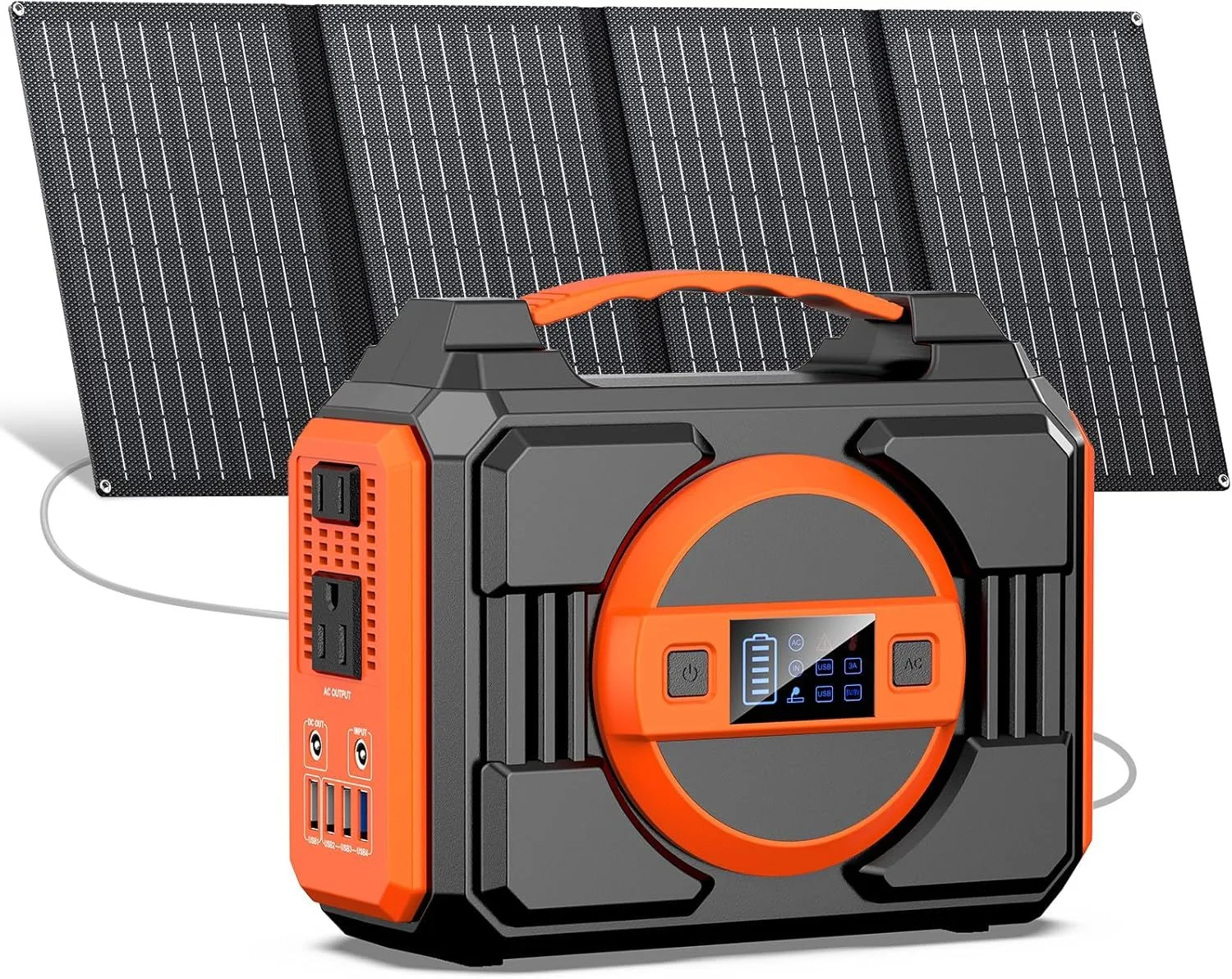
The Apowking 300W is the sleeper in the budget solar kit category — LiFePO4 chemistry and 280Wh capacity with an included panel at a budget-friendly price. The 3,000-cycle battery will outlast competing lithium-ion kits several times over, making the cost-per-cycle math strongly favor this unit for regular users.
Our research spans 620+ Amazon ratings (as of 2026-01-27), 4 expert reviews, and comparison with 13 products in the compact portable category. We earn a commission if you buy through our links, but this does not affect our ratings. Read our full methodology →
This review is based on analysis of 620+ Amazon ratings, expert reviews, and comparison with products in the Compact Portable Generators category. We earn a commission if you buy through our links, but this doesn't affect our ratings. Read our full methodology →
Ten Dollars That Change Everything
The Apowking 200W sells for below average for its category pricing. The Apowking 300W costs similarly priced. For that small difference, you get a completely different product underneath the similar-looking shell: LiFePO4 instead of lithium-ion, 280Wh instead of 166Wh, 300W output instead of 200W, and 3,000+ cycle life instead of 1,000+. Every core spec improves.
This is not a minor refresh. It is a generational leap in battery chemistry, capacity, and output power disguised as a routine lineup upgrade. The fact that Apowking keeps the price gap so small makes the 200W model almost impossible to recommend — and positions the 300W as one of the strongest value propositions in the budget solar generator market.
Physically, the 300W is noticeably larger and heavier than its sibling. At roughly 7 pounds, it has crossed from "throw it in a daypack" territory into "dedicate a bag compartment" territory. The extra weight comes from the LiFePO4 cells, which are denser than lithium-ion at this capacity. You feel the difference when you pick it up — this is a solid, substantial piece of equipment. The rubberized housing resists scratches and the integrated handle sits comfortably in hand for short carries.
What makes LiFePO4 better than lithium-ion for portable power stations?
LiFePO4 (lithium iron phosphate) batteries last 3,000-3,500+ charge cycles compared to 1,000 cycles for standard lithium-ion NMC cells. They are also more thermally stable — less prone to overheating or thermal runaway. The downside is lower energy density, which means slightly heavier batteries for the same capacity. For a portable power station you plan to use regularly over several years, LiFePO4 saves money through sheer longevity: the Apowking 300W costs roughly 4 cents per cycle versus 12 cents per cycle for the lithium-ion Apowking 200W.
280Wh Opens a Different Category of Use
Going from 166Wh (Apowking 200W) to 280Wh is not a 69% increase. It is a change in what the product can do. The smaller battery keeps phones charged. The larger one powers actual devices for meaningful durations:
- Laptop workstation: 4-5 full charges of a 55Wh ultrabook — enough for 2-3 full workdays off-grid if you manage screen brightness
- Mini fridge: 4-6 hours of runtime at 50-80W compressor draw — long enough for a tailgate or afternoon fishing trip
- CPAP machine: 6-7 hours at 40W without humidifier — a full night's sleep for most users
- LED lighting: 25+ hours at 10W — nearly three nights of campsite illumination
- Phone charging: 45+ smartphone charges — a full week for two people without rationing
- Drone batteries: 5-6 charges of a DJI Mini series battery — a serious weekend of aerial photography
The 300W continuous output (600W surge) means the station can handle devices the 200W model simply cannot — small blenders, portable heaters on low settings, and most power tools under 300W. The 600W surge handles the initial startup spike from compressor-based appliances like mini fridges. None of this was possible at 200W.
Can the Apowking 300W run a small mini fridge?
A typical mini fridge draws 50-80W when the compressor is running and 0-5W when idle, with startup surges around 200-300W. The Apowking 300W can handle the running wattage and most startup surges with its 600W surge capacity. At 280Wh, you would get roughly 4-6 hours of continuous runtime depending on the fridge model, ambient temperature, and how often the compressor kicks on. Good for keeping food cold during a tailgate or short power outage — not for overnight use.
What Works Well
- ✓ LiFePO4 battery with 3,000+ cycles — dramatically longer lifespan than the lithium-ion Apowking 200W at only $10 more
- ✓ 280Wh capacity nearly doubles the 200W model while adding 300W output for small appliances
- ✓ Bundled 40W solar panel included — a rare feature for a LiFePO4 station under $130
- ✓ Built-in LED light, BMS protection, and pass-through charging add camping and emergency versatility
What Doesn't
- ✗ The included 40W panel is underpowered for the 280Wh battery — expect 7-8 hours for a full solar recharge
- ✗ Heavier than the 200W model at roughly 7 lbs — not as pocketable for ultralight setups
- ✗ No USB-C PD port limits fast-charging capability for modern laptops and tablets
- ✗ Lesser-known brand with limited service center coverage compared to Jackery or Anker
3,000 Cycles — The Math That Sells This Station
The LiFePO4 battery rated at 3,000+ cycles to 80% capacity is the foundation of this product's value argument. Here is why that number matters more than anything else on the spec sheet.
The Apowking 200W (lithium-ion, 1,000 cycles) will degrade to 80% capacity — roughly 133Wh usable — after 1,000 full charge-discharge cycles. The Apowking 300W will still have 224Wh usable after 3,000 cycles. By the time the 200W model is functionally dead, the 300W model is still delivering more capacity than the 200W ever had new.
Cost per cycle tells the real story:
- Apowking 200W: below average for its category pricing / 1,000 cycles = roughly 12 cents per cycle
- Apowking 300W: mid-range for its category pricing / 3,000 cycles = roughly 4 cents per cycle
- DaranEner NEO: below average for its category pricing / 3,500 cycles = roughly 3 cents per cycle
The Apowking 300W is three times more cost-efficient than its own 200W sibling on a per-cycle basis. For a buyer who uses the station three times a week — commuting, camping on weekends, backup power during storms — the LiFePO4 battery will pay for itself many times over compared to replacing a lithium-ion unit every two years.
Solar Recharging — The Kit's Weak Link
The included 40W solar panel is simultaneously the Apowking 300W's best marketing feature and its biggest functional compromise. Including a panel in the box removes the compatibility guesswork for first-time buyers. But 40W is woefully underpowered for a 280Wh battery.
The math is simple: 280Wh / 40W = 7 hours in perfect laboratory conditions. Real-world conditions add 30-50% to that number. Under typical sun — a mix of clear sky and intermittent clouds across a full day — you are looking at 9-12 hours to fully charge from empty. That is sunrise to sunset. One full day of solar for one full charge.
Compare this to the DaranEner NEO, which accepts up to 60W of solar input and has only 192Wh to fill. The NEO can reach full from solar in 4-5 hours of good sun. The Apowking 300W's larger battery and identical 40W input creates a slower ratio.
For practical use, treat the included panel as a range extender. Charge the station from a wall outlet or car adapter the night before. Set up the panel during the day to top off what you use. If you find yourself relying on solar as your primary charging method, invest in a separate 100W panel — the Apowking accepts standard DC5521 input, so any compatible panel works. A 100W panel cuts the full-charge time roughly in half and makes multi-day off-grid camping realistic.
Is 40W of solar enough for a 280Wh battery?
Technically, the 40W panel can charge the 280Wh battery, but it takes a long time. Under perfect sun, the math says 7 hours (280Wh / 40W). In reality, with clouds, angle losses, and early/late sun, expect a full day — 8-10 hours — to go from empty to full via solar alone. The panel is better used as a supplemental charger: plug the station into the wall overnight, then use solar during the day to extend your runtime. For faster solar charging, consider upgrading to a 100W panel ($80-120 separately).
How It Stacks Up Against the Nearest Rivals
The budget LiFePO4 with included panel category is small but growing. Here is where the Apowking 300W sits relative to its closest competitors:
Against the Apowking 200W: Every important spec improves for similarly priced more cost. LiFePO4 vs lithium-ion alone makes the 300W the better buy for anyone who uses their station more than a few times a year. The 200W only wins on weight (4.85 lbs vs 7 lbs).
Against the DaranEner NEO: The Apowking has 88Wh more capacity and includes a panel. The NEO charges from AC in 2 hours versus 4-5, weighs less, and has 500 more rated cycles (3,500 vs 3,000). The NEO costs modestly more expensive the Apowking but you need to buy a solar panel separately. If total cost with a panel matters, the Apowking wins. If fast charging and portability matter more, the NEO wins.
Against the EBL 300W: Nearly identical specs — both are LiFePO4 with 300W output and included 40W panels. The Apowking has slightly more capacity (280Wh vs 268Wh) at a similarly priced price. The EBL has a more recognized brand name from their rechargeable battery business. It is a close call that comes down to brand trust versus 12 extra watt-hours.
Against the Zerokor 300W: The Zerokor bundles a larger 60W solar panel and weighs only 5 lbs — but it uses lithium-ion NMC chemistry with 1,000 cycles and carries a 12-month warranty. The Apowking's LiFePO4 battery lasts three times longer and holds up better to deep discharges. The Zerokor wins if you need the lightest possible kit and plan to use it infrequently. The Apowking wins if you plan to use your station regularly over multiple years. The battery chemistry difference is the deciding factor, and it overwhelmingly favors the Apowking for any use pattern beyond occasional weekend trips.
The budget LiFePO4-with-panel segment is still small — only three or four products compete directly at this price and feature set. That works in the Apowking 300W's favor. There is no dominant category leader yet, which means buyers are comparing near-identical specs across relatively unknown brands. In that comparison, the Apowking's 280Wh battery gives it the largest capacity in the group, and the 40W panel removes the friction of a separate purchase for first-time solar users.
How does the Apowking 300W compare to the DaranEner NEO?
Both use LiFePO4 batteries and deliver 300W output. The Apowking has more capacity (280Wh vs 192Wh) and includes a 40W solar panel. The DaranEner NEO charges faster from AC (2 hours vs 4-5 hours), has a slightly longer rated cycle life (3,500+ vs 3,000+), and is lighter at 5.3 lbs vs roughly 7 lbs. The DaranEner costs modestly more expensive the Apowking but requires a separate solar panel purchase. For buyers who want everything in one box, the Apowking wins. For those who prioritize fast charging and lighter weight, the DaranEner is the better foundation.
The Brand Risk — And Why It Might Not Matter
Apowking is not a household name. They do not have Anker's track record, Jackery's market presence, or EcoFlow's technology pedigree. Buying an Apowking requires accepting some brand risk: thinner customer support, fewer service centers, less certainty about long-term warranty fulfillment.
But here is the counterargument: the LiFePO4 chemistry itself provides a built-in safety net. LiFePO4 cells are inherently more stable than lithium-ion — they tolerate overcharging, deep discharge, and high temperatures better. The battery management system (BMS) in the Apowking 300W handles over-charge, over-discharge, short circuit, and over-temperature protection. The chemistry reduces the importance of brand prestige because the cells are less likely to cause problems in the first place.
Anker and Jackery charge two to three times more for similar LiFePO4 specs. Some of that premium buys better build quality and customer service. But a lot of it is brand tax. If you are comfortable with a 2-year warranty from a smaller brand and value raw specs per dollar, the Apowking 300W delivers more performance per cent than anything in the sub-$100–$250 range.
Does the Apowking 300W have USB-C Power Delivery?
The Apowking 300W has a USB-C port, but it is not a full USB-C PD (Power Delivery) port with high-wattage output. It supports standard USB-C charging for phones, tablets, earbuds, and lower-power USB-C devices. For laptops that require 45W-65W USB-C PD charging, you will need to use the AC outlet with the laptop's original charger. This is a common limitation in this price bracket — USB-C PD circuitry adds cost that would push the unit above its budget positioning.
Where It Fits in Your Routine
The Apowking 300W slots into a few specific workflows better than any other budget station we have tested. Understanding which ones helps determine if this is the right pick or an overreach.
Weekend car camping: Load the station into the car Friday evening after charging it from the wall overnight (4-5 hours). Arrive at the campsite, set up the 40W panel on your car roof or a sunny patch. Run LED string lights, charge two phones, power a Bluetooth speaker, and keep a portable fan going during hot afternoons. The 280Wh battery handles two full nights of this load profile — roughly 60-80Wh per night — while the solar panel recovers 80-120Wh during daytime. By Sunday morning, you still have battery to spare.
Tailgate power station: A 4-6 hour tailgate with a mini fridge, phone charging for the group, a portable blender for frozen drinks, and a speaker system. The 300W output handles the fridge compressor startup (up to 600W surge). The 280Wh battery keeps the fridge cold for the duration. The blender draws 250W for 30-second bursts — a negligible drain. This is the use case where the jump from 200W to 300W output matters most. None of the 200W units can run a mini fridge.
Emergency home backup: During a power outage, the Apowking 300W keeps phones charged, runs a battery-powered radio, powers LED lights, and charges medical devices like glucose monitors or hearing aids. The LiFePO4 battery holds charge for months in storage with minimal self-discharge (2-3% per month), so it is ready when you need it without regular top-offs. For a household backup, 280Wh covers 12-18 hours of intermittent light-duty use.
Should You Step Up from 200W?
Apowking 300W
Best for: Campers and emergency preppers who want LiFePO4 durability and a bundled solar panel at a budget price
The Apowking 300W is the sleeper in the budget solar kit category — LiFePO4 chemistry and 280Wh capacity with an included panel at a budget-friendly price. The 3,000-cycle battery will outlast competing lithium-ion kits several times over, making the cost-per-cycle math strongly favor this unit for regular users.
Absolutely. The Apowking 300W is the product the Apowking 200W should have been. LiFePO4 chemistry eliminates the biggest weakness of the budget solar kits. The 280Wh capacity crosses the threshold from "phone charger" to "useful power station." And the 300W output opens the door to small appliances that 200W units cannot touch. All of this for a price difference you would barely notice on a credit card statement.
The 40W solar panel remains a limitation — it is a supplement, not a solution for off-grid charging of a 280Wh battery. But as a complete kit that requires zero research, zero compatibility checking, and zero accessory purchases to start using solar power, the Apowking 300W hits a rare combination of price, performance, and longevity that makes it easy to recommend for first-time buyers and budget-conscious campers.
If weight is not a concern and your budget allows, this is the station to buy over every other sub-$100–$250 option we have reviewed. For a broader look at all the options in this class, see our best compact portable solar generators roundup.