Anker SOLIX C1000 Gen 2 Portable Power Station Review 2026
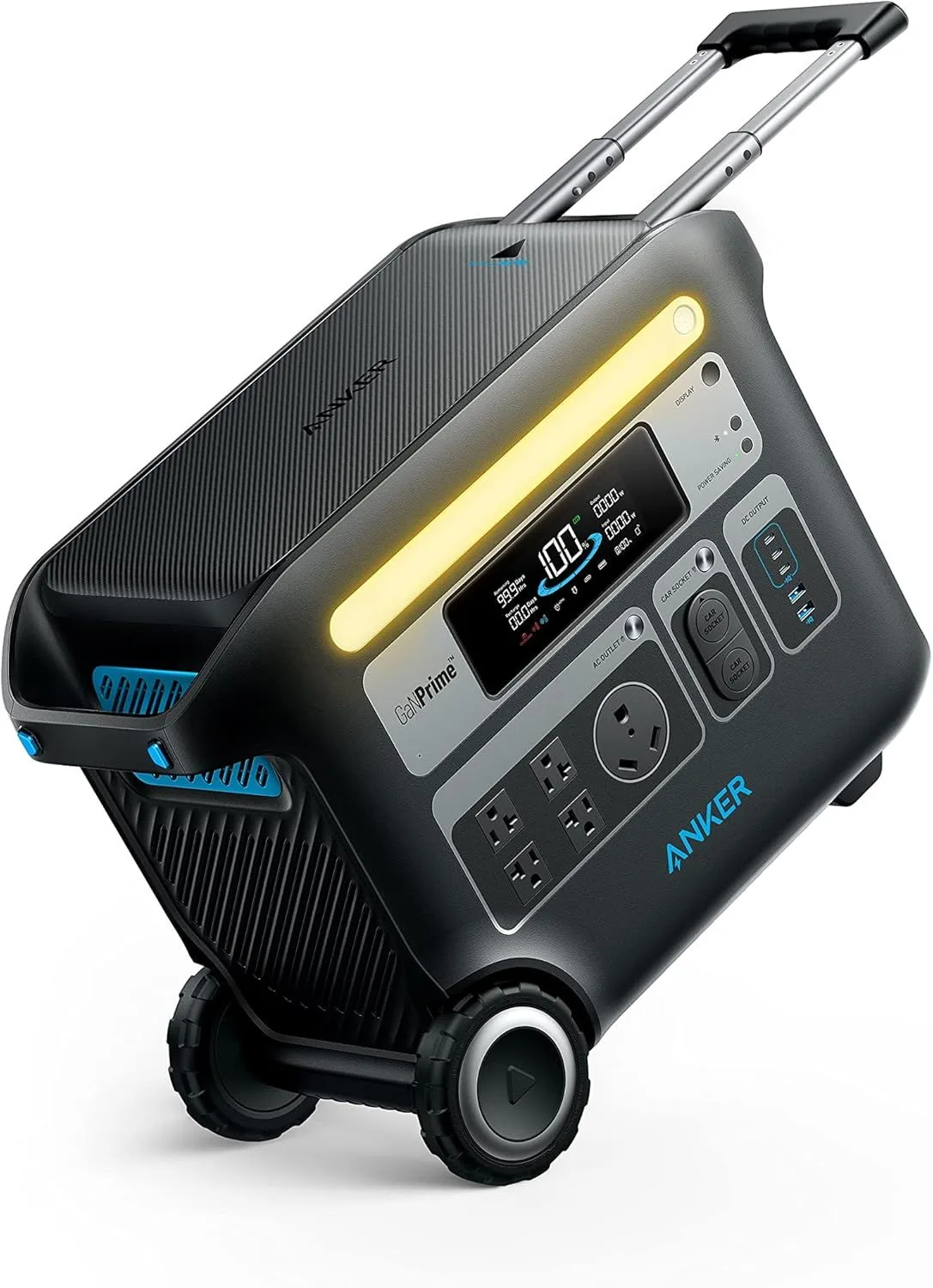
The Anker SOLIX C1000 Gen 2 is the most refined power station in the mid-range lineup — Guinness-certified fastest charging, lightest weight at 2,000W output, dual 140W USB-C, and unmatched standby retention. Anker customer support adds real value. But the loss of expandability, fan noise, and premium pricing create tension. At its MSRP, the competition is strong; at sale prices in the $400-500 range, it becomes an outstanding buy.
This review synthesizes analysis of 300+ Amazon ratings (as of 2026-02-06), deep-dive evaluations from MacRumors, NotebookCheck, and The Gadgeteer, plus comparison against 5 competing mid-range stations. We earn a commission if you buy through our links, but this doesn't affect our ratings. Read our full methodology →
This review is based on analysis of 300+ Amazon ratings, expert reviews, and comparison with products in the Mid-Range Power Stations category. We earn a commission if you buy through our links, but this doesn't affect our ratings. Read our full methodology →
The Standard Every Competitor Is Measured Against
Anker does not compete on price. It never has. The SOLIX C1000 Gen 2 costs mid-range for its category and ships without a solar panel — while competitors at the same price or lower include one. What Anker sells instead is refinement. The fastest certified charging in the industry. The lightest unit at its output class. The best USB-C ports. The most reliable standby retention. And customer support that actually picks up the phone.
The Gen 2 is a ground-up redesign of the original C1000. Anker shaved weight (down to 24.9 lbs from ~27 lbs), broke a Guinness World Record for charging speed (49 minutes to full), and doubled down on USB-C performance with dual 140W PD ports that fast-charge everything from MacBook Pros to iPads at their maximum speed. In exchange, they dropped expandability — the Gen 1's B1000 expansion battery is not compatible. If your power needs grow, you cannot add capacity. You buy a bigger station.
That choice — refinement over expandability — is the C1000 Gen 2 in a sentence. It does not try to be everything. It tries to be the best at what it does: charge fast, travel light, power USB-C devices at maximum speed, and sit on a shelf for months without losing a single percent of charge. For tech professionals and frequent travelers, those are the specs that matter most.
49 Minutes: The Guinness-Certified Charge
The headline number is not marketing exaggeration — it is independently certified by Guinness World Records. The HyperFlash charging system pulls up to 1,600W from a standard wall outlet (using the included cable — no special adapter required) and reaches 100% in 49 minutes. Not 80%. Full.
For practical context: you can charge the C1000 Gen 2 during a single episode of a TV show. If a power outage warning hits, you plug it in, take a shower, and it is full before you have dried off. The OUKITEL P1000 Plus takes 55 minutes for a full charge. The EcoFlow DELTA 2 takes 80 minutes. The OUPES Mega 1 takes about 60 minutes. The BLAVOR 1600W takes 3.5 hours. The Anker is not just faster — it is a generational leap in charging speed.
FAQ: Does fast charging damage the battery?
Anker's LiFePO4 cells are rated for 4,000+ cycles to 80% capacity. HyperFlash uses advanced thermal management to maintain safe cell temperatures during high-speed charging. The 4,000 cycle rating accounts for fast-charge cycles, not just slow ones. At one full HyperFlash cycle per day, the battery would last approximately 11 years before degrading to 80% capacity.
24.9 Pounds: Best Power-to-Weight Ratio in Class
Weight matters more than most spec sheets suggest. A power station that weighs 24.9 lbs gets lifted into a car trunk by one person. A 28 lb station does too — but with a grunt. A 32 lb station needs two hands and a clear path. Over years of use, the 3-7 lb difference between the C1000 Gen 2 and its competitors is felt on every camping trip, tailgate, and outage evacuation.
The weight savings come from the Gen 2 redesign. Anker used a denser battery pack arrangement and lighter chassis materials. The footprint is also among the smallest: 15.12 x 8.19 x 9.61 inches. The OUKITEL P1000 Plus is more compact (13.6 x 8.9 x 9.4 in) but trades that for 1.6 lbs more weight. The EcoFlow DELTA 2 is both wider and heavier (19.5 x 9.5 x 12 in, 27 lbs).
For van lifers and frequent travelers, every pound and every inch counts. The C1000 Gen 2 is the station that fits in the footwell, under the seat, or in the overhead compartment of an RV without rearranging everything else. That may not sound important in a spec comparison — but in practice, a lighter station gets used more often because taking it along is less of a hassle.
Where the C1000 Gen 2 Shines
- ✓ Guinness-certified 49-minute full charge via HyperFlash at 1,600W input — the fastest full charge in the entire portable power station market
- ✓ Lightest and most compact in its output class at 24.9 lbs delivering 2,000W — best power-to-weight ratio in the mid-range lineup
- ✓ Two 140W USB-C ports are the highest USB-C output in class — fast-charges the latest MacBooks and iPads at maximum speed simultaneously
- ✓ Industry-best standby charge retention at 100% after one month — MacRumors left it charged and powered off for a month with zero loss
Where It Falls Short
- ✗ Not expandable — Gen 2 sacrificed the Gen 1 B1000 expansion battery support to achieve its smaller, lighter design
- ✗ Loud fan under charging and high-draw loads — NotebookCheck, MacRumors, and The Gadgeteer all flagged noticeable fan noise
- ✗ No built-in LED light (removed from Gen 1) — a minor but notable omission for emergency preparedness use
- ✗ MSRP positions it above budget competitors delivering similar specs — the OUPES Mega 1 bundle delivers comparable power for less
USB-C Supremacy: 140W Dual Ports
Most mid-range power stations include USB-C as an afterthought — one 100W PD port alongside a handful of USB-A and AC outlets. The C1000 Gen 2 treats USB-C as a primary feature. Two 140W USB-C PD ports are the highest USB-C output in the mid-range class by a 40W margin. For context: a MacBook Pro 16-inch requires 140W for full-speed charging. The C1000 Gen 2 can fast-charge two of them simultaneously.
This spec matters disproportionately for tech professionals. Photographers and videographers running MacBooks, iPads, and camera batteries need high-wattage USB-C. Digital nomads working from campgrounds need consistent fast-charging. Drone pilots cycling through batteries want the fastest possible turnaround. In all these scenarios, the C1000 Gen 2's USB-C ports provide a measurable workflow advantage that no competitor matches.
The AC output matches the mid-range standard: 2,000W continuous with SurgePad boosting to 3,000W. That handles household appliances, power tools, and kitchen equipment without issue. But the five AC outlets (down from six on some competitors) may feel limiting for home backup scenarios where every outlet counts.
The Expandability Sacrifice
The original C1000 supported Anker's B1000 expansion battery, adding another 1,024Wh. Our C1000 vs C1000 Gen 2 comparison covers every trade-off in detail. The Gen 2 drops this capability entirely. The expansion port is gone. If you need more than 1,024Wh, you need a different station.
This is the Gen 2's most polarizing design choice. For buyers who value future-proofing and capacity growth, it is a non-starter. The OUPES Mega 1 expands to 5,120Wh. The EcoFlow DELTA 2 expands to 3,072Wh. Both offer a path to more capacity without replacing the entire station. The C1000 Gen 2 is what it is on day one, and that is what it will be on day one thousand.
Anker's rationale is implicit in the design: the lighter weight and smaller footprint that make the Gen 2 the best portable station in class required removing the expansion battery hardware. You cannot have the lightest station and the most expandable station in the same box. Anker chose portability. For travelers and day-trippers, that is the right call. For home backup planners who might need 3,000+ Wh during a prolonged outage, it is a limitation that cannot be worked around.
Fan Noise: The One Asterisk on Refinement
Multiple expert reviewers — NotebookCheck, MacRumors, and The Gadgeteer — flagged noticeable fan noise under charging and high-draw loads. HyperFlash charging in particular drives aggressive fan cooling to manage the thermal load of 1,600W input. Under moderate output loads (200-500W), the fan runs at a lower but still audible speed.
The noise is not catastrophic — it is not louder than the EcoFlow DELTA 2, which is the reigning noise champion. But for a station that nails every other refinement metric, the fan noise is an unexpected asterisk. The OUKITEL P1000 Plus at 29dB is noticeably quieter during both charging and operation. If bedside or in-tent use is your primary scenario, the Anker's fan will be a factor.
Anker appears to have prioritized thermal safety and charging speed over acoustic performance. The fast HyperFlash charge generates substantial heat, and aggressive cooling prevents cell degradation. The fan is doing important work — it just does it loudly.
100% Standby Retention After One Month
MacRumors conducted a standby test: fully charged the C1000 Gen 2, powered it off, and left it untouched for 30 days. Result: 100% charge retention. Zero loss. This is the best standby performance documented for any portable power station and it has real implications for emergency preparedness.
Most power stations lose 2-5% per month in standby. Over six months, that is 12-30% of capacity gone before you even turn it on. The C1000 Gen 2 eliminates this concern entirely. Charge it in spring, pull it out during a fall storm, and it is still full. For a station marketed partly as emergency backup, this is arguably its most valuable spec — more useful than charging speed when months pass between use.
Solar Charging: Capable but Panel-Less
The C1000 Gen 2 accepts up to 300W of solar input, which places it mid-pack for the mid-range class. The OUPES Mega 1 leads with 800W solar input. The EcoFlow DELTA 2 accepts 500W. The OUKITEL P1000 Plus takes 420W. At 300W, the Anker needs approximately 3.5-4 hours of direct sunlight to reach a full charge from empty — acceptable for a day-trip top-up, but limiting for multi-day off-grid stays where solar is your only recharging source.
The more pressing issue is what is not in the box. The C1000 Gen 2 does not include a solar panel. Every panel-inclusive competitor in the mid-range class — the OUKITEL P1000 Plus, the OUPES Mega 1, and the BLAVOR 1600W — ships with a panel ready to deploy. Anker sells compatible panels separately, and they are not cheap. For buyers who plan to pair this station with solar from day one, factor in that additional purchase when comparing total system cost against bundled competitors.
Is the Premium Justified?
Watch: Watch Anker SOLIX C1000 Gen 2 Review

The Anker SOLIX C1000 Gen 2 is the most refined power station in the mid-range lineup — Guinness-certified fastest charging, lightest weight at 2,000W output, dual 140W USB-C, and unmatched standby retention. Anker customer support adds real value. But the loss of expandability, fan noise, and premium pricing create tension. At its MSRP, the competition is strong; at sale prices in the $400-500 range, it becomes an outstanding buy.
Buy It If:
- • Charging speed is non-negotiable — 49 minutes to full is unmatched
- • You need best-in-class USB-C performance for laptops and tech gear
- • Weight matters — 24.9 lbs is the lightest at 2,000W output
- • Emergency readiness with perfect standby retention is a priority
Skip It If:
- • You want expandable capacity for growing power needs
- • A bundled solar panel is important — the Anker ships without one
- • You need maximum continuous output and surge (the OUPES Mega 1 surpasses it)
- • You need ultra-quiet operation for bedside or in-tent use
The Benchmark, Not the Value Play
The Anker SOLIX C1000 Gen 2 is the station other manufacturers benchmark against. Fastest charging. Lightest weight. Best USB-C. Best standby retention. Best customer support. It wins more individual spec categories than any competitor in the mid-range class. And that accumulation of first-place finishes matters: buyers who want the single best-performing mid-range unit — rather than the best deal — land here every time.
But it is not the best value. The OUKITEL P1000 Plus includes a solar panel, charges nearly as fast, and costs less. The OUPES Mega 1 delivers more output power, 800W solar input, expandability to 5,120Wh, and a bundled panel — all for less money. The EcoFlow DELTA 2 offers the best app ecosystem and expandability at a lower MSRP — see our C1000 Gen 2 vs EcoFlow DELTA 2 head-to-head for the full breakdown.
The C1000 Gen 2 wins on refinement: the details that separate a good station from a great one. At sale prices (which Anker frequently offers), the value equation shifts substantially. At full MSRP, you are paying the Anker premium. That premium buys real advantages if your use case values speed, weight, and USB-C over expandability and total bundle value.
Anker SOLIX C1000 Gen 2 FAQ
Is the Anker SOLIX C1000 Gen 2 really the fastest-charging power station?
Yes — Guinness World Records officially certified the 49-minute full charge time via HyperFlash technology at 1,600W input. No other consumer portable power station has achieved this certification. The OUKITEL P1000 Plus reaches 80% in 39 minutes but takes 55 minutes for a full charge. The C1000 Gen 2 hits 100% in 49 minutes flat.
Why did Anker remove expandability in the Gen 2?
The Gen 1 C1000 supported a B1000 expansion battery. The Gen 2 sacrificed that feature to achieve its lighter weight (24.9 lbs vs. the Gen 1 at ~27 lbs) and more compact form factor. Anker prioritized portability over expandability in this generation. If you need expandable capacity, look at the OUPES Mega 1 (up to 5,120Wh) or the EcoFlow DELTA 2 (up to 3,072Wh).
Can the Anker C1000 Gen 2 charge a MacBook Pro at full speed?
Yes. The dual 140W USB-C PD ports are the highest USB-C output in the mid-range class. A MacBook Pro 16-inch (requiring 140W) charges at its maximum speed. You can fast-charge two MacBooks simultaneously — something no other station in this class can match. The USB-C performance is the Gen 2 strongest differentiator for tech professionals.
How does standby charge retention work on the C1000 Gen 2?
MacRumors left the C1000 Gen 2 fully charged and powered off for one month. It retained 100% of its charge — zero loss. This is industry-best standby performance. Most competing stations lose 2-5% per month. For emergency preparedness, this means you can charge it once and trust it will be full when you need it months later.
Is the Anker SOLIX C1000 Gen 2 worth the premium over the OUKITEL P1000 Plus?
At MSRP, the Anker costs more but does not include a solar panel. At sale prices in the $400-500 range, the value proposition improves dramatically. You are paying for: Guinness-certified charging speed, the lightest weight in class (24.9 lbs), dual 140W USB-C, 100% standby retention, and Anker customer support. Whether those matter more than a bundled solar panel depends on your priorities.