Powkey 200W vs Apowking 200W: Which Budget Solar Kit Actually Delivers More for Your Money?
Our Verdict
The Apowking 200W wins this matchup. For a modest price premium, it delivers 20Wh more capacity, adds the USB-C port the Powkey completely lacks, and includes a built-in LED flashlight. Both kits share the same 200W output and 40W solar panel — but the Apowking covers more ground with modern device compatibility and emergency features. The Powkey 200W fights back on weight (3.3 lbs vs 4.85 lbs) and airline friendliness (146Wh clears the 160Wh FAA threshold), making it the lighter, more travel-ready option.
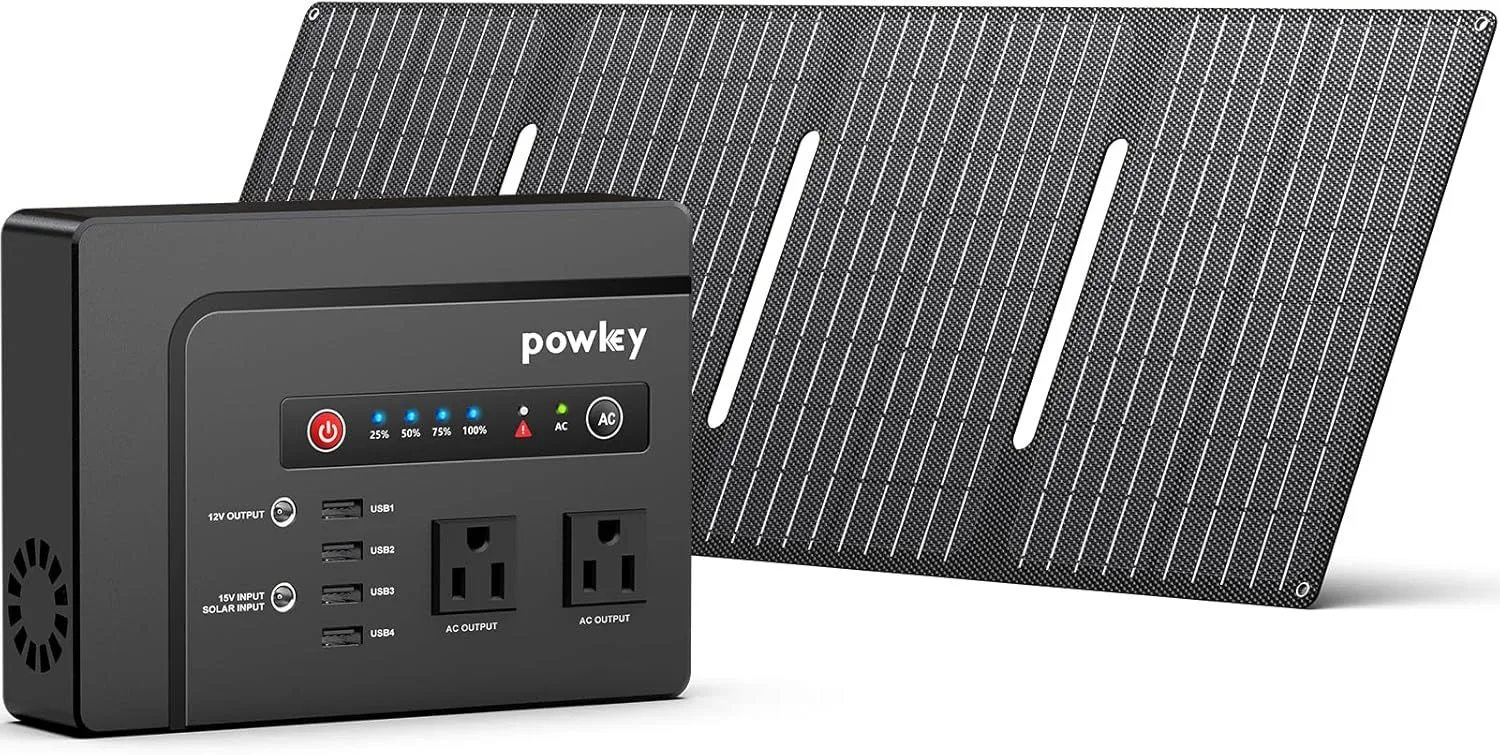
Powkey 200W
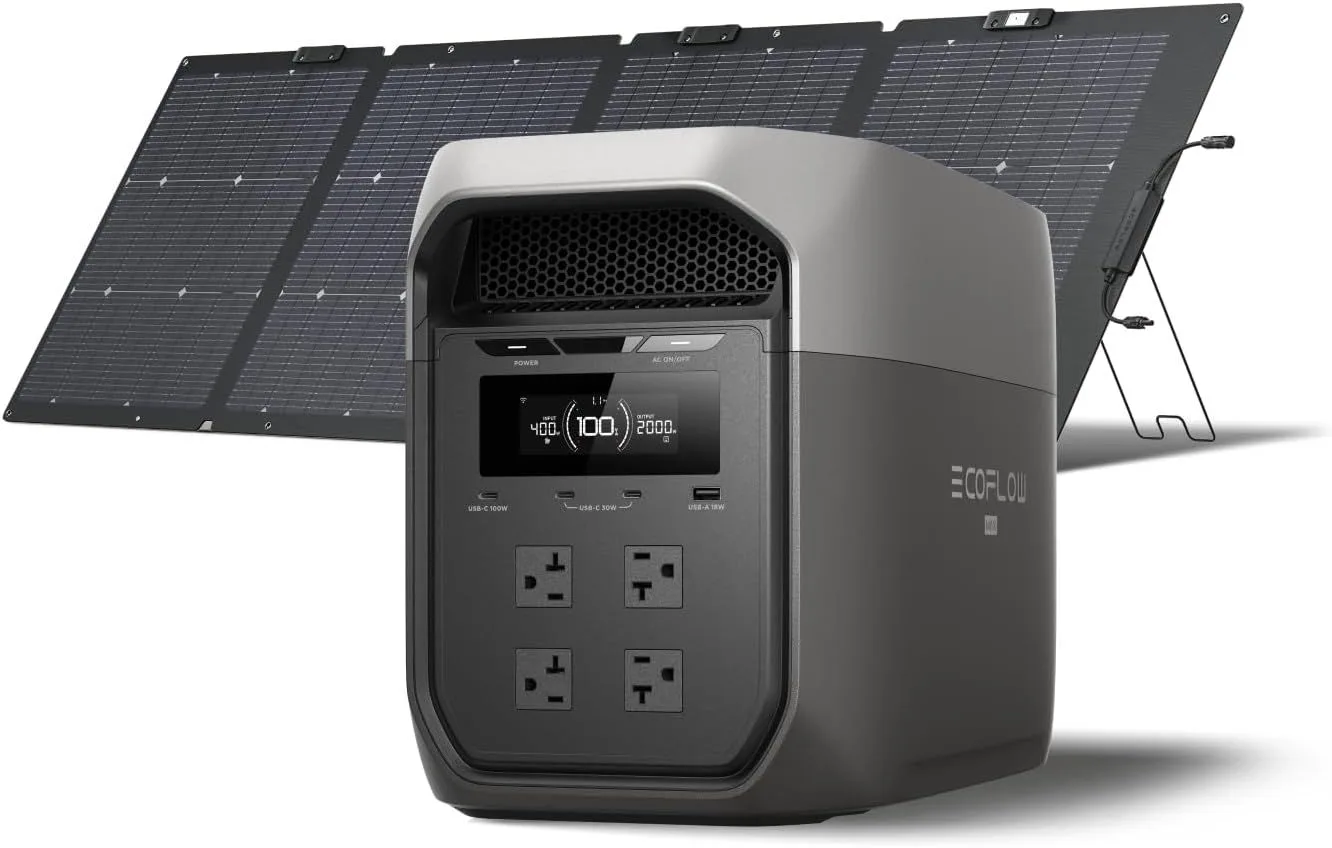
Apowking 200W
Two Clones Walk into a Price War
The Powkey 200W and Apowking 200W are so similar they could share a factory floor — and they might. Both are $50–$100-to-$100–$250 lithium-ion power stations rated at 200W continuous with 400W surge. Both include a 40W monocrystalline solar panel in the box. Both target the same buyer: someone who needs basic phone and laptop charging for short camping trips or backup power during minor outages and does not want to spend much money getting there.
The differences are in the details. The Powkey costs less and weighs 1.5 lbs less. The Apowking packs 20Wh more capacity, adds a USB-C port the Powkey omits entirely, and throws in a built-in LED flashlight. Neither unit will impress you with charging speed, battery longevity, or brand recognition — these are entry-level kits competing on value math, not performance bragging rights.
We analyzed both products across 2836+ Powkey Amazon ratings and 890+ Apowking Amazon ratings, cross-referenced with real-world user feedback and competitor comparisons. Here is what separates these budget twins.
Specifications Side by Side
| Feature | Powkey 200W Portable Solar Generator with 40W Panel | Apowking 200W Portable Power Station with 40W Solar Panel |
|---|---|---|
| Price Range | $50–$100 | $100–$250 |
| Battery Capacity | 146Wh | 166Wh |
| Battery Type | Lithium-Ion | Lithium-Ion |
| Output Power | 200W | 200W |
| Surge Power | 400W | 400W |
| Weight | 3.3 lbs | 4.85 lbs |
| Solar Input | 40W (included panel) | 40W (included panel) |
| Check Price | Check Price |
Battery Capacity and Longevity
Both use standard lithium-ion NMC batteries rated for roughly 1,000 cycles to 80% capacity — a lifespan that falls well short of the 3,000-3,500 cycles offered by LiFePO4 competitors at similar or slightly higher prices. Neither chemistry is special here; the question is simply how much energy you get per charge.
The Apowking 200W packs 166Wh versus the Powkey's 146Wh. That 20Wh gap sounds marginal on paper, but it translates to roughly one extra full phone charge per cycle or an additional 30-45 minutes of laptop runtime. Over hundreds of uses, those extra watt-hours add up — especially if you routinely drain the battery completely on camping trips.
The Powkey's 146Wh does sit comfortably under the FAA's 160Wh lithium battery threshold for airline carry-on (with airline approval), while the Apowking at 166Wh exceeds it. For frequent flyers, this is the Powkey's strongest selling point — not raw capacity, but regulatory compliance.
Port Selection and USB-C Compatibility
This is the clearest differentiator in the entire matchup. The Apowking 200W includes a USB-C port alongside its two AC outlets, two USB-A ports, and a DC output — 8 ports total. The Powkey 200W offers 7 ports but skips USB-C entirely, relying on four USB-A ports, two AC outlets, and a single DC output.
The missing USB-C is a meaningful gap for 2026 buyers. Nearly every modern smartphone, tablet, and laptop uses USB-C for charging. Without it, the Powkey forces you to either use a USB-A-to-C cable (slower charging, typically capped at 5W-10W) or route power through the less efficient AC outlet with a separate USB-C charger. The Apowking's native USB-C port eliminates that friction.
Both units offer two 110V AC outlets with pure sine wave output, which is important for sensitive electronics like CPAP machines and laptop chargers. Neither includes USB-C Power Delivery at the higher wattages (65W-140W) found on premium units, so fast-charging from USB-C is not part of the equation here. The Apowking simply has the port. The Powkey does not.
Size, Weight, and Carry Convenience
The Powkey 200W is tiny. At 3.3 lbs and measuring just 7.87 x 1.81 x 5.71 inches, it fits into a daypack, a glove compartment, or a large jacket pocket. This is not exaggeration — multiple Amazon reviewers describe it as "barely bigger than a thick paperback book." For a device with two AC outlets and a solar panel in the box, the form factor is startling.
The Apowking 200W weighs 4.85 lbs — roughly 47% heavier. That is still lightweight by any power station standard, and most people will not notice 1.5 lbs in a backpack. But for hikers counting ounces, ultralight travelers, or anyone who values slipping a power station into a laptop bag alongside their computer, the Powkey's weight advantage is real and hard to replicate.
The Powkey's slimmer dimensions also matter. Its flat, book-like profile slides into spaces the slightly boxier Apowking cannot. If you are packing a vehicle for a multi-day camping trip with limited space, or carrying a daily bag with multiple devices, the physical footprint difference is noticeable even though both units are small.
Durability under travel stress is a concern for both units. Neither carries an IP rating for dust or water resistance, and both have exposed ports with no rubber covers. A spilled water bottle inside a backpack could short either station. If you plan to carry one alongside liquids or use it in rain-adjacent conditions, a dry bag or waterproof pouch is a smart addition — especially for the Powkey, which sits loose in a bag more often due to its smaller size and lack of a fixed position.
Solar Charging and AC Recharge Speed
Both units ship with a 40W monocrystalline solar panel, and both accept that 40W input as their maximum solar charge rate. Neither supports upgrading to higher-wattage panels — the charging architecture caps at 40W regardless of what you connect. Real-world solar charge times run 5-6 hours in direct sun for the Powkey (146Wh) and slightly longer for the Apowking (166Wh) due to its larger battery.
AC wall charging is equally slow on both. The Powkey takes 5-6 hours from empty. The Apowking takes 5-6 hours from empty. No fast-charge modes. No turbo settings. You plug them in overnight, and they are ready by morning. Compared to the Anker SOLIX C300's 50-minute charge to 80% or the BLUETTI Elite 30 V2's 45-minute turbo mode, these budget units are in a different universe on recharge speed.
The included 40W panels are functional for topping off phones and maintaining partial charge over a multi-day trip, but expecting to fully recharge either station from solar in a single afternoon requires ideal conditions — clear skies, direct angle, peak hours. Plan for supplemental AC charging whenever possible.
One detail that rarely appears in spec sheets: charging behavior at low light. Both units use basic PWM charge controllers, which means their solar input drops steeply when cloud cover reduces panel output. On a partly cloudy day, expect 50-60% of the rated solar charge speed — and during heavy overcast, the trickle may be too low to overcome the unit's own idle draw. A mid-range station with an MPPT controller (like the Anker SOLIX C300 or BLUETTI Elite 30 V2) would extract 15-25% more energy from the same 40W panel under identical marginal conditions. For budget units at this price, PWM is the norm — just calibrate your expectations for cloudy-day charging accordingly.
Emergency Readiness and Extras
The Apowking 200W includes a built-in LED flashlight with an SOS signaling mode — a small addition that adds genuine value for camping and emergency preparedness. The Powkey 200W has no built-in light of any kind. When the power goes out at night, the Apowking doubles as a flashlight without needing a separate device or draining a phone battery.
Both include battery management systems (BMS) with overcharge, over-discharge, overcurrent, and short-circuit protection. Both pass basic safety certifications. Neither has UPS (uninterruptible power supply) functionality, WiFi or Bluetooth app connectivity, or any smart features. These are analog power stations — flip a switch, plug in a device, done. The lack of automatic switchover means neither can protect sensitive equipment like a NAS drive or desktop computer from sudden power loss — if the grid drops, you must manually turn the station on and plug in your devices. For uninterruptible backup, step up to a unit with UPS mode like the Anker SOLIX C300 (20ms switchover) or the BLUETTI AC180 (under 20ms).
Build quality reviews are mixed for both brands. The Powkey earns a 3.9 Amazon rating across 2836+ reviews, while the Apowking scores 4.3 across 890+ reviews. Common Powkey complaints mention inconsistent USB output and occasional quality control issues. The Apowking reviews are generally more positive, though both brands lack the established customer support infrastructure of Anker, Jackery, or BLUETTI.
Both units carry a 1-year warranty — the shortest in the compact portable category. For comparison, Anker and BLUETTI offer 5 years on their compact stations. If long-term warranty coverage matters to you, these budget kits ask you to accept more risk.
Which Kit Gets You More Per Dollar?
The Powkey 200W is the cheapest complete solar generator kit on the market — a 200W power station and a 40W solar panel for $50–$100. At this price, you are getting pure sine wave AC output, seven ports, and a working solar panel for less than most people spend on a nice dinner. The raw cost-per-watt-hour math slightly favors the Powkey because its lower price more than offsets the smaller battery.
The Apowking 200W is modestly more expensive and stretches your budget to get more features — 20Wh extra capacity, a USB-C port, and a flashlight. Whether that premium is worth it depends on whether you actually use USB-C devices. If your phone, tablet, or laptop charges via USB-C, the Apowking pays for the difference in daily convenience. If you are charging mostly USB-A devices and small AC appliances, the Powkey's lower entry point is harder to argue against.
Neither unit represents strong long-term value compared to LiFePO4 alternatives. The Apowking 300W offers LiFePO4 chemistry with 3,000+ cycles, 280Wh capacity, and an included 40W panel for only slightly more — our solar generator buying guide explains how to weigh upfront cost against cycle life — making the cost-per-cycle math dramatically better. And the DaranEner NEO delivers 3,500+ cycles at a comparable price to the Apowking 200W, though without a panel. If you plan to use your power station regularly for years, the small upfront savings from these NMC units may cost more over time than stepping up to LiFePO4.
The Decision Framework
Get the Powkey 200W if you...
- ✓ Need the absolute lightest complete solar kit (3.3 lbs total station weight)
- ✓ Want to fly with your power station — 146Wh sits under the 160Wh FAA threshold
- ✓ Primarily charge USB-A devices and do not need USB-C
- ✓ Are testing whether solar power works for your use case before investing more
- ✓ Want the lowest possible entry price for a working solar generator
Get the Apowking 200W if you...
- ✓ Own USB-C devices — phones, tablets, or laptops that charge via USB-C
- ✓ Want the extra 20Wh capacity for slightly longer runtime per charge
- ✓ Value the built-in LED flashlight for camping and emergency situations
- ✓ Prefer the higher Amazon rating (4.3 vs 3.9) and more consistent user reviews
- ✓ Do not need to fly with your power station (166Wh exceeds the FAA limit)
The honest recommendation for most buyers: get the Apowking 200W. USB-C is not optional in 2026 — it is the charging standard for virtually every new phone, tablet, and laptop. The modest price premium pays for a feature that will matter every time you charge a device. The extra capacity and flashlight are bonuses on top.
The exception is clear: frequent travelers and ultralight packers who need the smallest, lightest, most airline-compatible solar kit should pick the Powkey 200W. At 3.3 lbs and 146Wh, nothing else in the complete-kit category comes close on portability.
A third scenario worth considering: the gift buyer. If you are purchasing a solar kit for someone who is not tech-savvy — a parent, grandparent, or friend who just wants emergency power without reading manuals — the Apowking's USB-C port, flashlight, and higher Amazon rating (4.3 vs 3.9) make it the safer choice. The USB-C port means their modern phone charges with whatever cable came in the box. The flashlight means they do not need to find a separate light source during an outage. And the higher user satisfaction rating suggests fewer frustrations out of the box. For gift purchases where you will not be around to troubleshoot, those small details matter more than saving a few dollars on the Powkey.
When to Skip Both and Spend More
Both the Powkey 200W and Apowking 200W share the same fundamental limitation: lithium-ion NMC batteries with limited cycle life and 200W output ceilings. If any of the following apply to you, skip these budget kits and look at the compact portable category:
- You need the station daily or near-daily: The 1,000-cycle NMC battery degrades within 2-3 years of heavy use. The Apowking 300W at slightly more offers LiFePO4 with 3,000+ cycles — 3x the lifespan.
- You need to power appliances above 200W: Mini-fridges, blenders, small heaters, and most kitchen appliances exceed 200W. Step up to a 300W unit minimum, or a 600W unit like the BLUETTI Elite 30 V2 for real appliance flexibility.
- You want faster charging: 5-6 hour wall charging is the slowest class in portable power. The Anker SOLIX C300 hits 80% in 50 minutes, and the BLUETTI Elite 30 V2 hits 80% in 45 minutes — 6-7x faster than either budget kit.
- You want app control or smart features: Neither budget unit offers WiFi, Bluetooth, or any digital connectivity. For remote monitoring and smart charging schedules, the BLUETTI Elite 30 V2 and EcoFlow DELTA 2 are the entry points.
Common Questions About These Budget Kits
Is the Apowking 200W worth the extra cost over the Powkey 200W?
The Apowking 200W costs modestly more but delivers 20Wh of additional battery capacity (166Wh vs 146Wh), adds a USB-C port the Powkey completely lacks, and includes an LED flashlight with SOS mode. For the price difference, you get real upgrades for modern device charging and emergency use. The USB-C port alone justifies the gap for anyone charging a newer phone or tablet.
Can either the Powkey 200W or Apowking 200W run a laptop?
Both can charge a standard laptop 2-3 times through their AC outlets using the laptop's own charger. The Apowking has an edge with its USB-C port, which can directly charge USB-C laptops like MacBook Airs at moderate speed. The Powkey lacks USB-C entirely, so you are limited to the AC outlet method, which is less efficient due to DC-to-AC-to-DC conversion losses.
How long does it take to solar charge these power stations?
Both include identical 40W solar panels and take roughly 5-6 hours for a full solar charge under ideal conditions. Real-world conditions — cloud cover, panel angle, ambient temperature — typically extend that to 6-8 hours. Neither unit supports higher-wattage panels, so upgrading to faster solar input is not an option with these models.
Are the Powkey and Apowking 200W safe for airline carry-on?
The Powkey 200W at 146Wh is under the 160Wh FAA limit for lithium batteries that require airline approval, so it may be permitted depending on the carrier. The Apowking 200W at 166Wh exceeds the 160Wh limit and is generally not allowed in carry-on or checked luggage on commercial flights. If airline travel is a priority, the Powkey has a clear advantage.
Will these power stations last as long as LiFePO4 models?
No. Both use standard lithium-ion NMC batteries rated for approximately 1,000 cycles to 80% capacity. LiFePO4 alternatives like the DaranEner NEO (3,500+ cycles) and Apowking 300W (3,000+ cycles) last 3-3.5x longer. For occasional weekend camping use, 1,000 cycles translates to several years. For daily charging, the shorter cycle life becomes a real limitation within 2-3 years.
Can I use either unit as an emergency power source for a home router and modem during an outage?
Yes — this is one of the best use cases for both units. A typical home router plus modem draws 15-25W combined. The Powkey 200W at 146Wh would keep your internet running for roughly 6-9 hours. The Apowking 200W at 166Wh stretches that to 7-10 hours. Neither will cover a full overnight outage alone, but paired with the included 40W solar panel during daylight hours, you can extend runtime through a full day of intermittent use.
Ready to Pick Your Budget Solar Kit?
Both kits deliver working solar power at entry-level pricing. The Apowking adds USB-C and extra capacity. The Powkey wins on weight and price. Check current availability below.