Jackery Explorer 300 vs DaranEner NEO: Is Brand Trust Worth 7x Fewer Battery Cycles?
The Jackery Explorer 300 is one of the most popular compact power stations ever sold — 18,500+ Amazon reviews and near-universal brand recognition make it the default choice for first-time buyers. The DaranEner NEO costs less and delivers LiFePO4 chemistry with 7x the battery lifespan. One banks on reputation built over years of market dominance. The other bets on raw chemistry and aggressive pricing. Which actually delivers more value per dollar in 2026?
The DaranEner NEO wins on value and longevity.
For most buyers, the DaranEner NEO is the smarter purchase. LiFePO4 chemistry, faster charging, higher output wattage, and a lower price make it the better specification-for-specification choice. The Jackery Explorer 300 remains a solid pick only if you specifically value brand ecosystem compatibility, wider retail availability, or the confidence that comes with 18,500+ customer reviews and years of proven reliability.
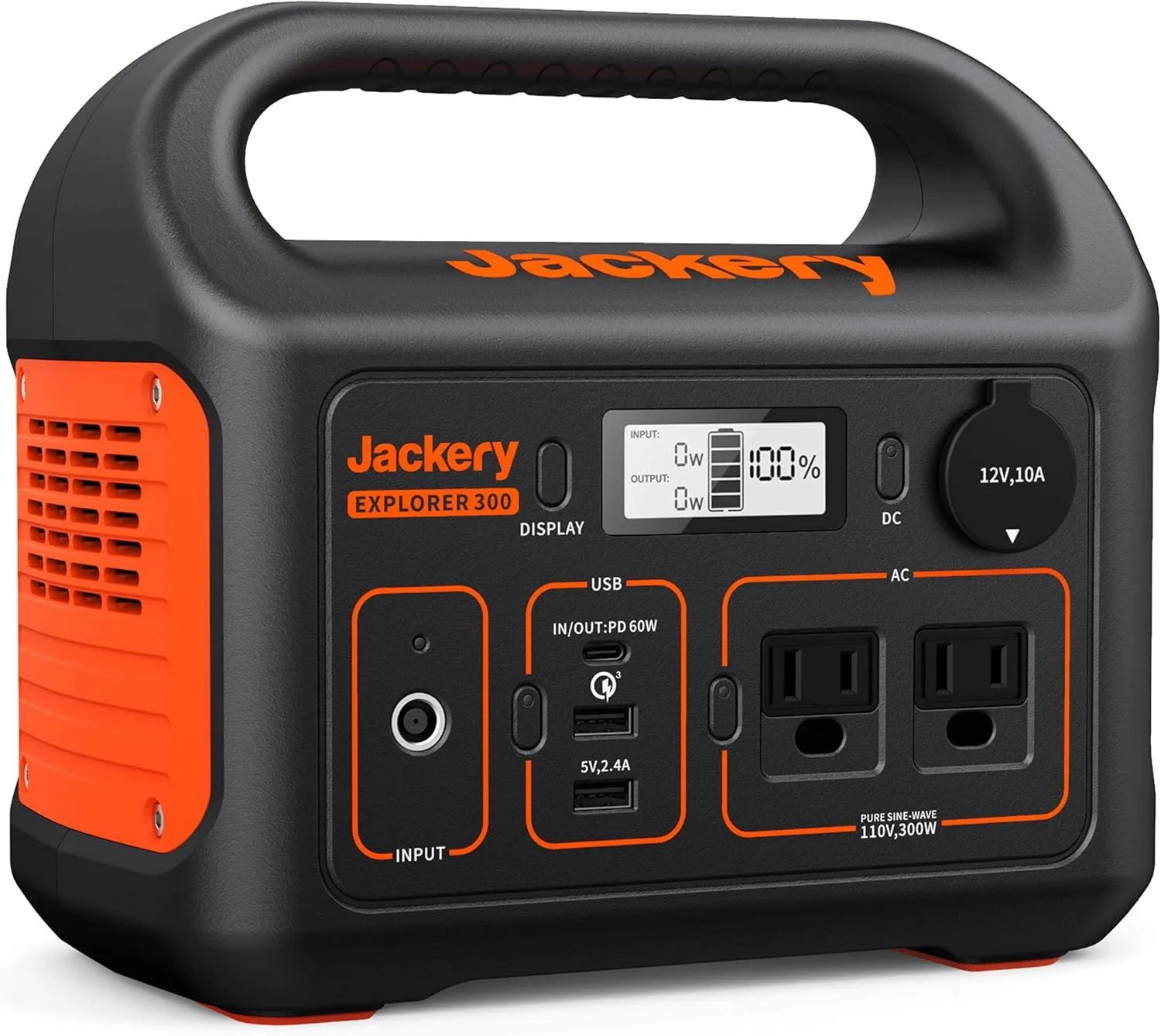
Jackery Explorer 300
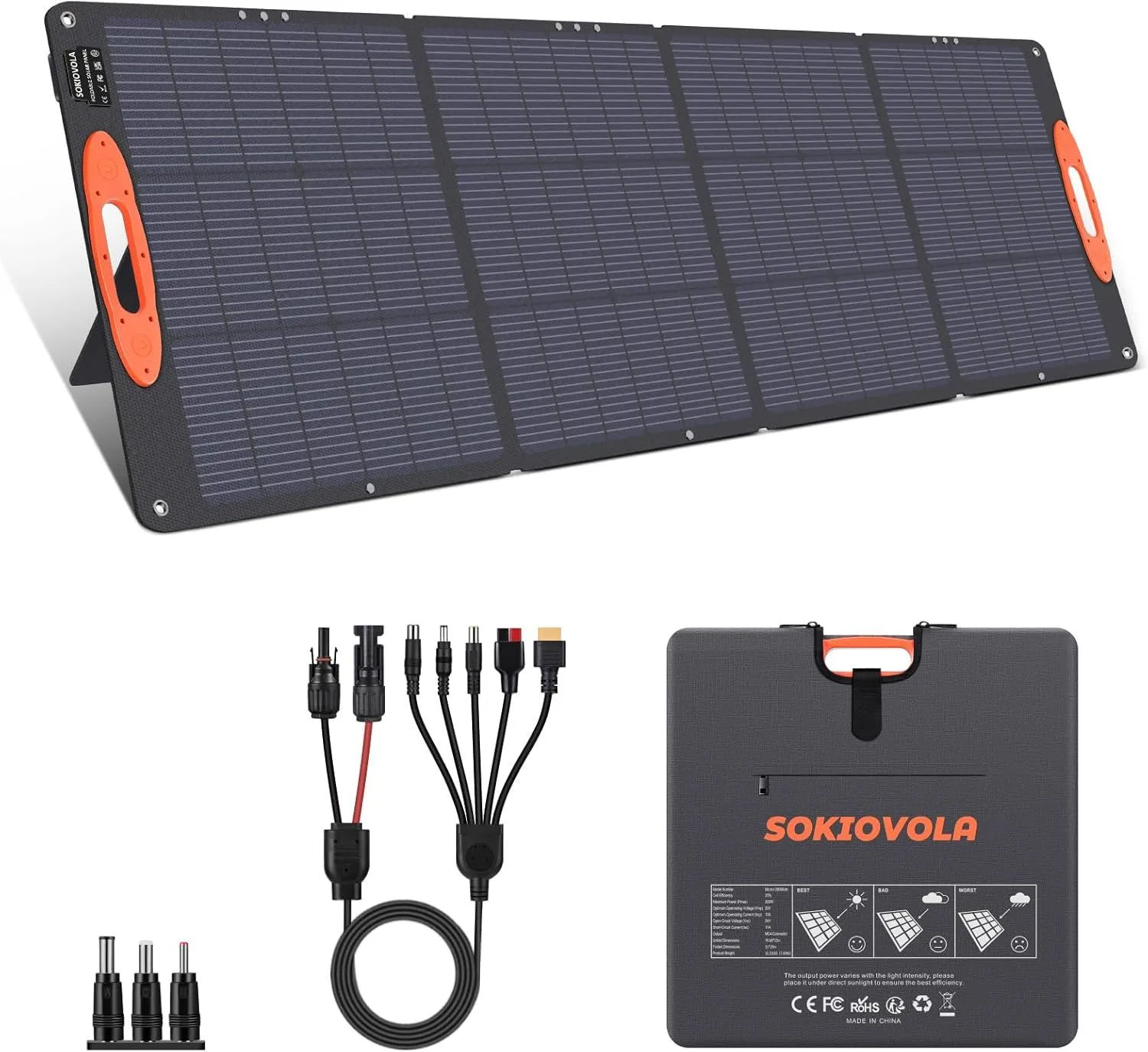
DaranEner NEO
Specs at a Glance
On paper, these two stations target the same buyer — someone who needs a compact, portable power source for phone and laptop charging during camping trips or short power outages. Both deliver 300W continuous AC output through two outlets, and both weigh under 8 lbs. But the technology underneath the shell tells a very different story.
The Jackery relies on older NMC lithium-ion chemistry — the same cell type that powered early portable power stations but comes with a steep cycle life penalty. The DaranEner uses LiFePO4 cells that last several times longer and operate more safely at temperature extremes. Here is how every spec compares head to head.
| Feature | Jackery Explorer 300 Portable Power Station | DaranEner NEO 192Wh Portable Power Station |
|---|---|---|
| Price Range | $100–$250 | $100–$250 |
| Battery Capacity | 293Wh | 192Wh |
| Battery Type | Lithium-Ion (NMC) | LiFePO4 |
| Output Power | 300W | 300W |
| Surge Power | 500W | 600W |
| Weight | 7.1 lbs | 5.3 lbs |
| Solar Input | 90W max (proprietary connector, 12-30V) | 60W max (DC5521, 10-30V) |
| Check Price | Check Price |
Category-by-Category Breakdown
Battery Chemistry and Longevity
DaranEner NEO WinsThis is the single biggest difference between these two stations — and the one that should drive most buying decisions. The Jackery Explorer 300 uses NMC lithium-ion cells rated for 500 charge cycles to 80% capacity. The DaranEner NEO uses LiFePO4 cells rated for 3,500+ cycles to 80%. That is a 7x longevity multiplier from a station that costs less upfront.
In practical terms, if you charge and discharge the unit once per week, the Jackery will start losing noticeable capacity in under two years. The DaranEner will not hit that same degradation point for over 67 years at that pace. Even with daily use — charging every single day — the DaranEner's battery outlasts the Jackery by roughly a decade of usable life.
LiFePO4 also runs cooler under load, tolerates temperature extremes better (both hot summers in a parked car and freezing winter nights in a garage), and poses measurably less fire risk than NMC chemistry. For a device that lives in your vehicle trunk, garage shelf, or camping gear bin, thermal stability is not a marketing talking point — it is a practical safety consideration that affects where you store the unit year-round.
The bottom line: buying a 500-cycle NMC battery in 2026 when 3,500-cycle LiFePO4 alternatives exist at a lower price requires a specific reason. Our LiFePO4 vs lithium-ion guide explains the chemistry differences in detail. Brand loyalty counts as one. But from a pure chemistry standpoint, the DaranEner wins this category decisively.
Temperature tolerance adds a practical dimension to the chemistry difference. LiFePO4 cells maintain rated performance across a wider operating range — the DaranEner NEO charges reliably down to 32 degrees F and discharges safely in freezing conditions that cause NMC cells to lose 20-30% of their rated capacity. If your power station lives in a garage, truck bed, or outdoor shed through winter, the DaranEner delivers closer to its rated 192Wh in January than the Jackery delivers to its rated 293Wh. In a cold garage at 20 degrees F, real-world capacity from the Jackery can drop to 200-230Wh — narrowing the capacity gap between the two units to a margin far smaller than the spec sheets suggest.
Output Power and Surge Capability
DaranEner NEO WinsBoth stations deliver 300W continuous output through two AC outlets — enough for laptops, phone chargers, small fans, LED lighting rigs, and most portable electronics. For pure gadget charging, they perform identically. The difference shows up in surge power: the DaranEner NEO peaks at 600W while the Jackery Explorer 300 tops out at 500W.
That 100W surge gap sounds marginal on paper. Where it matters is motor startup and inductive load spikes. Small appliances like portable blenders, mini fans, and some power tools draw a brief surge above their rated wattage when they first turn on. A device rated at 250W continuous might pull 450W for a fraction of a second during startup. The DaranEner's 600W surge ceiling handles those spikes with more comfortable headroom than the Jackery's 500W limit.
For users who stick exclusively to phone charging, laptop work, and LED lighting, both stations are functionally identical at 300W continuous. The DaranEner edges ahead only when you push into small appliance territory — and that extra 100W of surge headroom provides a real buffer against unexpected overload shutdowns.
Battery Capacity and Runtime
Jackery Explorer 300 WinsThe Jackery Explorer 300 packs 293Wh — over 50% more stored energy than the DaranEner NEO's 192Wh. That gap translates directly to longer runtime between charges. In real-world terms, the Jackery delivers roughly 10-12 additional full phone charges, one extra complete laptop cycle, or 2-3 more hours of running a small USB fan.
For overnight camping where you need to power a CPAP machine, the capacity difference becomes critical. At typical CPAP draw (30-60W depending on pressure settings and whether the humidifier is active), the Jackery runs approximately 5-9 hours compared to the DaranEner's 3-6 hours. That is the difference between one reliable night of sleep and potentially waking up to a dead unit before sunrise.
Multi-day scenarios amplify the advantage further. A weekend camping trip with moderate phone and camera charging easily burns through the DaranEner's 192Wh by Saturday afternoon. The Jackery's 293Wh stretches into Sunday morning with careful power management. If you camp near your car, both can recharge from a 12V socket — but fewer recharge cycles means less hassle.
The Jackery's capacity advantage is real — and the primary reason to choose the Explorer 300 over the NEO. More stored energy means more time off-grid between charges, more devices powered simultaneously, and less anxiety about running dry at the worst moment.
Wall Charging and Solar Recharge Speed
DaranEner NEO WinsThe DaranEner NEO reaches full charge from empty in approximately 2 hours via AC wall outlet. The Jackery Explorer 300 takes about 4 hours from its standard AC adapter. That is a 2x speed advantage — and it compounds every time you recharge. Over a year of weekly use, you save roughly 100 hours of wall time with the DaranEner.
For road trippers who stop at rest areas, campgrounds with shore power, or friends' houses, 2 hours of plug-in time fully restores the DaranEner. You would need double that window for the Jackery — a real constraint when you are trying to top off between afternoon destinations. The Jackery does support dual charging (AC + USB-C simultaneously, reaching full in approximately 2.5 hours), but that requires two separate cables and two available power sources.
Solar charging tells a different story. The Jackery accepts up to 90W solar input versus the DaranEner's 60W maximum. With a dedicated panel, the Jackery recharges faster from sunlight alone — roughly 5 hours with a compatible 100W SolarSaga panel compared to 5-6 hours for the DaranEner with a 60W third-party panel. The Jackery's larger battery and higher solar input ceiling give it the edge for purely solar-powered scenarios where you lay out a panel and wait.
The overall charging winner depends on your primary recharge method. If you mostly charge from wall outlets or car adapters between uses, the DaranEner's 2-hour speed is a clear advantage. If you rely primarily on solar panels during extended off-grid trips, the Jackery's higher solar input capacity closes the gap.
Brand Reputation and After-Sale Support
Jackery Explorer 300 WinsJackery is one of the most established brands in portable power. The Explorer 300 alone has accumulated over 18,500 Amazon reviews — that is more customer feedback than all other compact portables in our catalog combined. Jackery products sit on shelves at Best Buy, Costco, Home Depot, and dozens of other major retailers. Their warranty process is well-documented, and replacement parts are readily available.
DaranEner is a newer entrant with approximately 1,100 reviews on the NEO model. The brand has built a solid early reputation for delivering strong specifications at aggressive pricing, and their customer support team responds on Amazon within 24 hours based on review reply patterns. But the long-term track record is thin. If your unit develops an issue two years from now, Jackery's warranty infrastructure is battle-tested. DaranEner's is promising but has not been tested at scale over time. Jackery also publishes detailed user manuals, troubleshooting guides, and setup videos on their website — resources that DaranEner currently lacks. For first-time power station owners who may need help with solar panel pairing or firmware updates, that documentation library is a practical advantage beyond the warranty itself.
Jackery also offers a dedicated ecosystem of compatible accessories. Their SolarSaga panel line connects directly without adapters, and their customer community forums provide peer support for common setup questions. DaranEner uses standard DC connectors (a plus for third-party panel compatibility) but lacks the dedicated accessory ecosystem that established brands build around their products.
For buyers who value the peace of mind that comes with a known brand, established warranty service, easy retail returns, and a massive review base to reference before purchase — Jackery wins this category decisively. For buyers who prioritize specifications over brand prestige, the DaranEner's 2-year warranty and growing positive review base may be sufficient reassurance.
Weight and Portability
DaranEner NEO WinsThe DaranEner NEO weighs 5.3 lbs. The Jackery Explorer 300 comes in at 7.1 lbs. That 1.8 lb gap does not sound dramatic in isolation, but context matters. In a loaded camping pack already weighing 30-40 lbs, every additional pound is felt in your shoulders by mile two. The DaranEner is closer to the weight of a large water bottle — easy to toss in a daypack without adjusting your load balance.
Both stations are compact enough for comfortable one-handed carry. Neither is airline-friendly — both exceed the FAA's 100Wh carry-on limit (the DaranEner at 192Wh, the Jackery at 293Wh). For car camping where the station rides in the trunk alongside a cooler and camp chairs, the weight difference is negligible. For walk-in campsites, motorcycle touring, or kayak camping where you carry everything on your body or in limited storage, the DaranEner's lighter frame earns a measurable advantage.
Size-wise, both units fit easily inside a standard daypack. The DaranEner has a slightly smaller footprint and slides into the side pocket of some larger hiking packs. Neither will be the bulkiest item in your camping kit. The portability gap is real but modest — it only becomes a deciding factor if you are specifically weight-optimizing your loadout for walk-in campsites or multi-day treks where every ounce is tracked.
Already know which one fits your needs?
Which One Should You Buy?
The right choice depends entirely on what you value most. Both stations deliver reliable 300W output for gadget charging. The split comes down to longevity versus capacity, speed versus ecosystem, and specs versus brand confidence.
Get the Jackery Explorer 300 if...
- → You want the reassurance of 18,500+ reviews and one of the most recognized names in portable power
- → You need the extra 100Wh of capacity for overnight CPAP use or multi-day phone charging without recharging
- → You plan to use Jackery SolarSaga panels and want plug-and-play ecosystem compatibility
- → You prefer buying from a brand available at major retailers like Best Buy and Costco for easy in-store returns
- → Your primary charging method is solar panels (the Jackery accepts 90W vs the DaranEner's 60W cap)
Get the DaranEner NEO if...
- → You want a battery rated for 3,500+ cycles versus the Jackery's 500 — that is 7x the usable lifespan
- → You want 2-hour wall charging versus 4 hours — half the time plugged in on every single recharge
- → You want to spend less — the DaranEner NEO is roughly double the price less than the Jackery
- → You prefer standard DC5521 connectors that work with a wide range of affordable third-party solar panels
- → You plan to use the station regularly and value long-term cost-per-cycle over brand prestige
One more consideration that rarely enters the buying conversation: resale value. Jackery's brand recognition means used Explorer 300 units sell quickly on marketplace platforms at 60-70% of retail, even after a year of use. DaranEner's lower brand awareness translates to slower resale and steeper depreciation. If you tend to upgrade your gear every 1-2 years and resell the previous version, the Jackery holds its value better in the secondary market. If you buy once and use a device until it dies, the DaranEner's 7x cycle life advantage makes resale irrelevant — the unit will outlast your interest in selling it.
If you use your power station twice per week, the Jackery Explorer 300 will burn through its 500 cycles in under 5 years. The DaranEner NEO will not reach 3,500 cycles until roughly year 33 at that same pace. Even accounting for the Jackery's higher capacity per charge, you would need to purchase 7 Jackery units over the DaranEner's lifespan to match its total energy delivery. The cost-per-cycle math overwhelmingly favors the DaranEner NEO for anyone who plans to use their station more than occasionally.
The Real Cost of Ownership
Purchase price is only the beginning of the cost equation. The Jackery Explorer 300 is roughly double the price compared to the DaranEner NEO upfront. But factor in cycle life, and the math flips dramatically.
The DaranEner NEO's LiFePO4 battery will deliver 3,500+ full charge-discharge cycles before degrading to 80% capacity. At 192Wh per cycle, that is 672,000Wh of total energy delivered over the battery's useful life. (Not sure what watt-hours mean in practice? We break it down.) The Jackery Explorer 300 delivers 293Wh per cycle across 500 cycles — 146,500Wh total. The DaranEner delivers more than 4x the total lifetime energy despite having smaller per-cycle capacity.
The cost-per-watt-hour-delivered metric tells the story in dollars. Divide each unit's price by its total lifetime energy output, and the DaranEner delivers each watt-hour at a fraction of the cost. For anyone who uses their power station regularly — weekenders, emergency prep enthusiasts, remote workers — the DaranEner's lifetime value proposition is difficult to argue against.
The Jackery's value proposition hinges on how you weigh intangible benefits — brand trust, ecosystem compatibility, retail availability, and the comfort of knowing 18,500 other buyers made the same choice. Those factors are real. They are just not measurable in watt-hours.
Questions Buyers Ask About This Matchup
Is the DaranEner NEO battery really better than the Jackery Explorer 300?
The DaranEner NEO uses LiFePO4 chemistry rated for 3,500+ charge cycles to 80% capacity. The Jackery Explorer 300 uses lithium-ion NMC rated for only 500 cycles. That means the DaranEner will maintain usable capacity roughly 7x longer under regular use. LiFePO4 is also more thermally stable and safer in extreme temperatures.
Why does the Jackery Explorer 300 cost more than the DaranEner NEO with worse specs?
Brand premium. Jackery is one of the most recognized names in portable power with 18,500+ Amazon reviews on this model alone. That brand recognition, wide retail availability, established warranty support, and ecosystem of compatible solar panels command a higher price. Whether that premium is worth it depends on how much you value brand trust over raw specifications.
Can either of these power stations run a CPAP machine?
Both can run most CPAP machines for one or more nights. The Jackery Explorer 300 at 293Wh typically delivers 2-3 nights of CPAP runtime depending on pressure settings and humidifier use. The DaranEner NEO at 192Wh will manage 1-2 nights. Neither is a long-term CPAP solution without solar recharging during the day.
Which one charges faster from a wall outlet?
The DaranEner NEO charges from empty to full in approximately 2 hours. The Jackery Explorer 300 takes about 4 hours for a full charge. The DaranEner is twice as fast from a wall outlet, which matters if you need to top off quickly between uses or before a trip.
Do either of these include a solar panel?
Neither includes a solar panel in the box. The Jackery Explorer 300 works with Jackery SolarSaga panels via a proprietary connector, which limits third-party panel options. The DaranEner NEO accepts up to 60W solar input via a standard DC5521 connector, making it compatible with a wider range of affordable third-party panels.
Which is better for airline travel?
Neither qualifies for airline carry-on. The FAA limit for lithium batteries is 100Wh without airline approval and 160Wh with airline approval. The DaranEner NEO at 192Wh and the Jackery Explorer 300 at 293Wh both exceed even the pre-approved limit. If airline portability is your primary concern, look at units under 100Wh like the Emergency Weather Radio Solar Generator.
How does cold weather affect each unit's real-world capacity?
The Jackery Explorer 300's NMC cells lose 20-30% of rated capacity below freezing. At 20 degrees F, expect 200-230Wh instead of the rated 293Wh. The DaranEner NEO's LiFePO4 cells handle cold better — capacity drops roughly 10-15% in the same conditions, delivering 163-173Wh. In freezing temperatures, the Jackery's capacity advantage over the DaranEner shrinks from a 53% gap to roughly a 25-35% gap. If you store or use your station in an unheated garage, vehicle, or outdoor shed during winter, factor in these cold-weather deductions when sizing your power needs.
Ready to Decide?
Prices and availability change frequently. Both links go to Amazon where you can verify current pricing. As an Amazon Associate, Solar Power Guides earns from qualifying purchases — this does not affect our analysis or recommendations.