LiFePO4 vs Lithium-Ion Batteries: What Actually Matters for Solar Generators
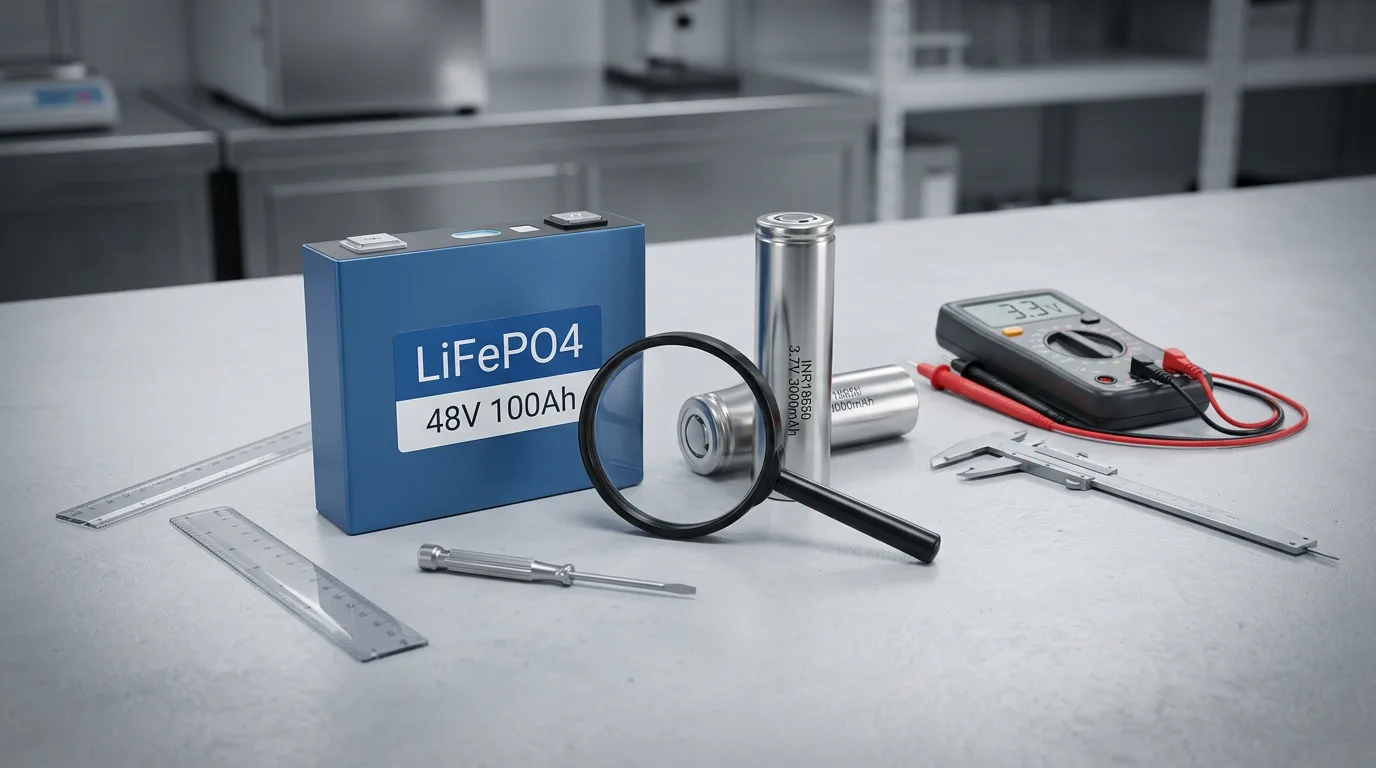
Every solar generator listing throws around battery chemistry like it settles the debate. LiFePO4 here, lithium-ion there. But strip away the marketing and the choice between these two chemistries boils down to exactly three things: how often you use it, how long you plan to keep it, and whether the weight penalty matters for your situation.
Both battery types are lithium-based. Both work. Both will power your devices. But they age differently, fail differently, and cost differently — and those differences compound over years of ownership in ways that a spec sheet cannot show you.
This guide breaks down the actual chemistry, the real-world compromises, and the math that should drive your decision. No hand-waving about which is "better" — the right answer depends entirely on how you plan to use your power station.
The Chemistry Behind Each Battery Type
All lithium batteries work the same way at a fundamental level: lithium ions shuttle between a cathode (positive electrode) and an anode (negative electrode) through an electrolyte during charge and discharge. The cathode material is what creates the differences you care about.
NMC (Nickel Manganese Cobalt) Lithium-Ion
When power station manufacturers say "lithium-ion" without specifying the chemistry, they almost always mean NMC — nickel manganese cobalt oxide. This cathode chemistry dominated the first wave of portable power stations from roughly 2018 to 2023. The nickel component provides high energy density (more watt-hours per kilogram), manganese improves structural stability, and cobalt enhances the voltage profile.
NMC cells pack energy tightly. A single NMC 18650 or 21700 cell delivers 3.6-3.7V nominal with energy densities reaching 150-250 Wh/kg depending on the exact nickel-to-cobalt ratio. That density advantage is why your smartphone, laptop, and Tesla all use NMC variants — weight matters in those applications.
The downside is longevity and thermal stability. NMC cathodes are structurally less stable at high temperatures. When an NMC cell overheats, the nickel-rich cathode releases oxygen, which feeds an exothermic reaction that can cascade into thermal runaway. Modern battery management systems (BMS) prevent this in normal operation, but the underlying chemistry is less forgiving of abuse.
LiFePO4 (Lithium Iron Phosphate)
LiFePO4 — sometimes written as LFP — uses an iron phosphate cathode instead of nickel-manganese-cobalt. Iron phosphate forms an olivine crystal structure that is thermodynamically more stable than the layered oxide structure in NMC. That stability is the source of almost every advantage LiFePO4 has: longer cycle life, higher thermal runaway threshold, and better aging characteristics.
The nominal cell voltage is lower (3.2V vs 3.6-3.7V for NMC), and the energy density is roughly 90-160 Wh/kg — noticeably less than NMC. A LiFePO4 cell stores less energy per gram, which directly translates to heavier power stations for the same capacity.
But that iron phosphate cathode does not decompose and release oxygen the way NMC does. The onset of thermal runaway in LiFePO4 is around 270°C (518°F) compared to 150-210°C for NMC. In plain terms, a LiFePO4 cell can absorb far more heat before anything dangerous happens.
Cycle Life: The Defining Difference
Cycle life is where the two chemistries diverge most dramatically, and it is the single largest factor in total cost of ownership.
A "cycle" means one full discharge-and-recharge (0% to 100% to 0%). Partial cycles count proportionally — discharging from 100% to 50% and recharging counts as half a cycle. The industry standard benchmark is how many cycles a battery completes before its capacity drops to 80% of the original rating.
NMC lithium-ion cells typically deliver 500 to 1,000 cycles to 80% capacity. Budget power stations on the lower end; premium cells with careful thermal management on the upper end. After 500 cycles, a 1,000Wh NMC station might only store 800Wh — still usable, but noticeably degraded.
LiFePO4 cells typically deliver 3,000 to 5,000 cycles to 80% capacity. Some manufacturers claim 6,000+ cycles, though those numbers are often measured under ideal lab conditions (25°C, controlled discharge rates) that do not reflect real-world use.
That ratio — roughly 3x to 5x the cycle life — is not marginal. It is the difference between replacing a power station every two years versus using the same unit for a decade. For anyone who uses their power station regularly (weekly camping trips, daily off-grid use, frequent home backup during storm seasons), cycle life drives the total cost equation more than any other factor.
Safety: Thermal Runaway and Failure Modes
Battery safety conversations always come back to thermal runaway — the self-sustaining, exothermic reaction where a battery cell's temperature rises uncontrollably, potentially resulting in fire or explosion. Both chemistries can enter thermal runaway under extreme conditions, but the threshold and severity differ substantially.
NMC cells enter thermal runaway between 150°C and 210°C (302-410°F). At those temperatures, the NMC cathode decomposes and releases oxygen. That oxygen feeds an internal fire that continues even without external air. Once started, NMC thermal runaway is extremely difficult to stop. This is the failure mode behind headlines about electric vehicle fires and hoverboard explosions — though modern BMS protection makes such events rare in well-engineered products.
LiFePO4 cells do not begin thermal runaway until approximately 270°C (518°F). More importantly, the iron phosphate cathode does not release oxygen during decomposition. Without that internal oxygen source, LiFePO4 thermal events are far less violent and far easier to contain. A LiFePO4 cell that overheats will vent gas and swell, but the cascading fire-and-explosion failure mode of NMC is essentially absent.
In practical terms for power station owners: both chemistries are safe when used within their designed parameters, thanks to the BMS that monitors voltage, temperature, and current. But LiFePO4 provides a larger safety margin against manufacturing defects, physical damage, and extreme heat — which matters if you store your power station in a hot garage, a van in summer, or anywhere that ambient temperatures regularly exceed 40°C (104°F).
Weight and Energy Density: The LiFePO4 Penalty
This is where NMC maintains a clear advantage. Energy density — how many watt-hours you get per kilogram of battery — directly determines how heavy your power station is for a given capacity.
NMC cells deliver 150-250 Wh/kg. LiFePO4 delivers 90-160 Wh/kg. In the real world, a 1,000Wh NMC power station might weigh 20-24 lbs, while a 1,000Wh LiFePO4 unit of similar construction might weigh 26-32 lbs. That is a 25-35% weight premium for LiFePO4 at the same capacity.
For a power station that lives in your garage and gets carried to the patio during outages, the difference is irrelevant. For a station that goes into a backpack, kayak, or carry-on bag, the math changes. At the compact end of the market (under 300Wh), NMC units can be pocket-sized at 3-5 lbs. A LiFePO4 equivalent might weigh 5-7 lbs — still portable, but the relative difference is proportionally larger when the whole unit is small.
The industry has partially offset this gap through structural engineering. Newer LiFePO4 power stations use more efficient packaging, prismatic cells instead of cylindrical ones, and lighter enclosures. The weight gap has narrowed from 40%+ in 2021 to roughly 20-30% in 2026, and it continues to shrink.
Cost Per Cycle: The Math That Actually Matters
Upfront price is the wrong metric. Cost per cycle reveals the real value proposition.
Suppose two 1,000Wh power stations are available. The NMC unit costs 30% less upfront and lasts 800 cycles. The LiFePO4 unit costs 30% more and lasts 3,500 cycles. Here is the comparison:
- NMC unit: If the purchase price represents the baseline, the cost per cycle is roughly the total price divided by 800. Over its lifetime, you get 800,000 Wh of total energy throughput.
- LiFePO4 unit: At 30% higher upfront cost, the cost per cycle drops to roughly one-third — because 3,500 cycles is 4.4 times more than 800. The total lifetime throughput is 3,500,000 Wh of energy.
Even at a 30% price premium, the LiFePO4 station costs approximately 70% less per cycle. That math only gets worse for NMC if you factor in replacement costs — buying a second NMC station when the first one degrades means paying the upfront cost twice.
There is one scenario where NMC makes financial sense: occasional emergency use. A power station that sits in a closet and gets used three times per year during power outages might complete fewer than 100 cycles in a decade. At that usage rate, the cheaper NMC unit is a rational choice — you are paying for capacity, not longevity.
Charging Behavior and Voltage Curves
LiFePO4 and NMC charge differently due to their voltage profiles, and this affects how solar charging performs in practice.
NMC cells have a gradually sloping voltage curve — the cell voltage rises steadily as state of charge increases. This means the charge rate begins to taper earlier in the cycle. By the time an NMC cell reaches 70-80% charge, the BMS is already reducing charging current to protect the cells. The last 20% of an NMC charge can take as long as the first 80%.
LiFePO4 cells have a remarkably flat voltage curve. The cell voltage stays near 3.2V for most of the charge cycle, only rising sharply in the final 5-10%. This flat profile allows the charge controller to push near-maximum current for a much larger portion of the cycle. In practice, LiFePO4 stations often charge from 0% to 80% faster than NMC units with the same input wattage, because the taper starts much later.
For solar charging specifically, the LiFePO4 voltage profile is advantageous. Solar input fluctuates constantly as clouds pass, panel angle changes, and ambient temperature shifts. A flat voltage acceptance curve means the station captures more of those fluctuating solar watts effectively. NMC's sloping curve means more of the available solar power gets rejected during the taper phase.
Temperature Performance and Storage
Both chemistries lose capacity in extreme cold and degrade faster in extreme heat, but the specifics differ.
At -10°C (14°F), both NMC and LiFePO4 cells lose roughly 20-30% of their rated capacity. NMC retains a slight edge in cold-weather discharge performance due to its higher operating voltage. But neither chemistry should be charged below 0°C (32°F) — lithium plating on the anode causes irreversible damage. Most modern power stations include low-temperature charging protection that disables input below freezing.
For long-term storage, LiFePO4 is notably better. Store a LiFePO4 power station at 40-60% charge in a cool room, and it will lose only 2-3% capacity per month from self-discharge, with minimal calendar aging. NMC cells self-discharge at 3-5% per month and experience measurable calendar degradation — they age even when sitting idle, especially if stored at full or near-empty charge. After 18 months on a shelf, an NMC station may have lost 5-10% of its permanent capacity regardless of use.
Which Chemistry Should You Choose?
The decision framework is straightforward once you know your usage pattern.
Choose LiFePO4 When:
- You use it regularly — weekly camping trips, daily off-grid power, frequent home backup during storm seasons. Regular use means you burn through cycles, and LiFePO4's 3,000-5,000 cycle lifespan pays for itself many times over.
- You store it in hot environments — garages, sheds, vehicles, or anywhere that sees temperatures above 35°C (95°F). LiFePO4's thermal stability reduces degradation in heat.
- You want a buy-it-once product — the 8-14 year usable lifespan of LiFePO4 means most owners will never need to replace the unit.
- You prioritize safety margins — families with children, use in enclosed spaces (vans, tents, RVs), or high-temperature environments where the extra thermal runway headroom matters.
- You plan to sell or pass it on — a 5-year-old LiFePO4 station with 1,000 cycles used retains far more resale value than an NMC unit at the same age and usage.
Choose NMC Lithium-Ion When:
- Portability is the top priority — backpacking, airline travel (under 160Wh FAA limit), kayaking, or any application where every ounce counts. NMC's 25-35% weight advantage matters when you are carrying the unit over distance.
- You need it for occasional emergencies only — a power station that lives in a closet and sees fewer than 50 cycles per year may never approach NMC's cycle life limit. The lower upfront cost makes more sense at minimal usage rates.
- Budget is the primary constraint — for buyers in the lowest price tier who need basic phone and laptop charging for occasional use, an NMC unit at a lower price point delivers adequate service life for the investment.
Common Misconceptions
"LiFePO4 is not lithium-ion." Incorrect. LiFePO4 is a type of lithium-ion battery. The term "lithium-ion" covers all rechargeable batteries that use lithium ions shuttling between electrodes. NMC, NCA, LCO, and LiFePO4 are all lithium-ion chemistries. When power station marketing says "lithium-ion," they usually mean NMC specifically.
"NMC batteries are dangerous." Overstated. NMC batteries power billions of devices safely every day, including smartphones, laptops, electric vehicles, and medical devices. The BMS in a well-engineered power station prevents the conditions that lead to thermal runaway. NMC is less inherently stable than LiFePO4, but calling it "dangerous" ignores the engineering controls that make it safe in normal use.
"LiFePO4 lasts forever." It does not. LiFePO4 cells degrade over time just like any battery. They degrade more slowly and more gracefully than NMC, but a heavily used LiFePO4 station will eventually lose capacity. The 80% threshold at 3,000-5,000 cycles means it still works — just with reduced runtime per charge.
"You need LiFePO4 for solar charging." No. Both chemistries accept solar input equally well. The charge controller inside the power station (MPPT or PWM) determines how efficiently solar energy is captured — not the battery chemistry. LiFePO4 does have a flatter voltage acceptance curve that can marginally improve mid-cycle solar absorption, but this difference is small compared to charge controller quality and solar panel sizing.
LiFePO4 vs Lithium-Ion: Quick Reference
| Characteristic | LiFePO4 (LFP) | NMC Lithium-Ion |
|---|---|---|
| Cycle life (to 80%) | 3,000–5,000 cycles | 500–1,000 cycles |
| Energy density | 90–160 Wh/kg | 150–250 Wh/kg |
| Nominal cell voltage | 3.2V | 3.6–3.7V |
| Thermal runaway onset | ~270°C (518°F) | ~150–210°C (302–410°F) |
| Self-discharge rate | 2–3% per month | 3–5% per month |
| Calendar aging | Minimal | Moderate (degrades on shelf) |
| Weight for 1,000Wh | 26–32 lbs typical | 20–24 lbs typical |
| Cold discharge performance | Good (reduced below -10°C) | Slightly better in cold |
| Upfront cost | Higher (20–30% premium) | Lower |
| Cost per cycle | Roughly 70% less | Higher per cycle |
| Best for | Frequent use, long-term ownership, safety-critical | Lightweight needs, infrequent use, budget buys |
Questions About LiFePO4 and Lithium-Ion Batteries
Is LiFePO4 actually safer than lithium-ion NMC?
Yes. LiFePO4 cells begin thermal runaway around 270°C (518°F) compared to 150-210°C (302-410°F) for NMC cells. The iron phosphate cathode is inherently more stable and does not release oxygen during decomposition, which means LiFePO4 batteries are far less likely to catch fire or experience explosive failure even when punctured or overcharged.
How many cycles does a LiFePO4 battery last compared to NMC?
Most LiFePO4 cells deliver 3,000 to 5,000 charge-discharge cycles before dropping to 80% of their original capacity. Standard NMC lithium-ion cells typically last 500 to 1,000 cycles to the same 80% threshold. In practical terms, charging a LiFePO4 power station daily would give you roughly 8 to 14 years of service versus 1.5 to 3 years from NMC.
Why are LiFePO4 power stations heavier than lithium-ion?
LiFePO4 has a lower energy density — roughly 90-160 Wh/kg compared to 150-250 Wh/kg for NMC chemistry. That means you need more physical material to store the same amount of energy. A 1,000Wh LiFePO4 station typically weighs 25-35% more than an equivalent NMC unit.
Can I use a LiFePO4 power station in freezing temperatures?
You can discharge a LiFePO4 battery down to about -20°C (-4°F) with reduced capacity, but charging below 0°C (32°F) causes lithium plating on the anode and permanently damages the cells. Many modern LiFePO4 power stations include a low-temperature cutoff that prevents charging below freezing. NMC cells have similar cold-charging risks but slightly better cold-discharge performance.
Are LiFePO4 batteries worth the higher upfront cost?
For power stations you plan to use frequently (weekly or more), the math strongly favors LiFePO4. A LiFePO4 station that costs 30% more upfront but lasts 5 times as many cycles delivers a cost-per-cycle that is roughly one-quarter of an NMC unit. For occasional emergency use where the station sits on a shelf most of the year, the lower upfront cost of NMC may make more financial sense.
Do LiFePO4 batteries lose capacity when stored?
LiFePO4 has one of the lowest self-discharge rates among lithium chemistries — about 2-3% per month at room temperature. Stored at 50% state of charge in a cool environment, a LiFePO4 power station can sit for 6-12 months with minimal degradation. NMC batteries self-discharge at roughly 3-5% per month and degrade faster when stored at full or empty charge states.
Which battery type is better for solar charging?
Both chemistries accept solar charging equally well — the charge controller (MPPT or PWM) inside the power station matters more than the battery type. LiFePO4 cells do have a flatter voltage curve during charging, which allows them to accept near-full input power for a larger portion of the charge cycle. In practice, this means LiFePO4 stations often reach 80% charge slightly faster from solar panels compared to NMC units with the same input wattage.
Ready to Buy? Start Here
Based on this guide, our #1 recommendation:
BLUETTI Elite 30 V2 LiFePO4 with 3,500+ cycle life, 5-year warranty, and 45-minute turbo charging Read Full Review →