Budget Solar Generator Guide: Maximum Power Without Maximum Spending
You do not need to spend four figures to own a capable solar generator. Our 35-product catalog includes 13 compact portable generators and 8 mid-range stations — and some of the best value-per-watt-hour sits firmly in the budget range. This guide maps every price bracket, names the trade-offs at each tier, and identifies the specific models that deliver the most usable power for the least money.
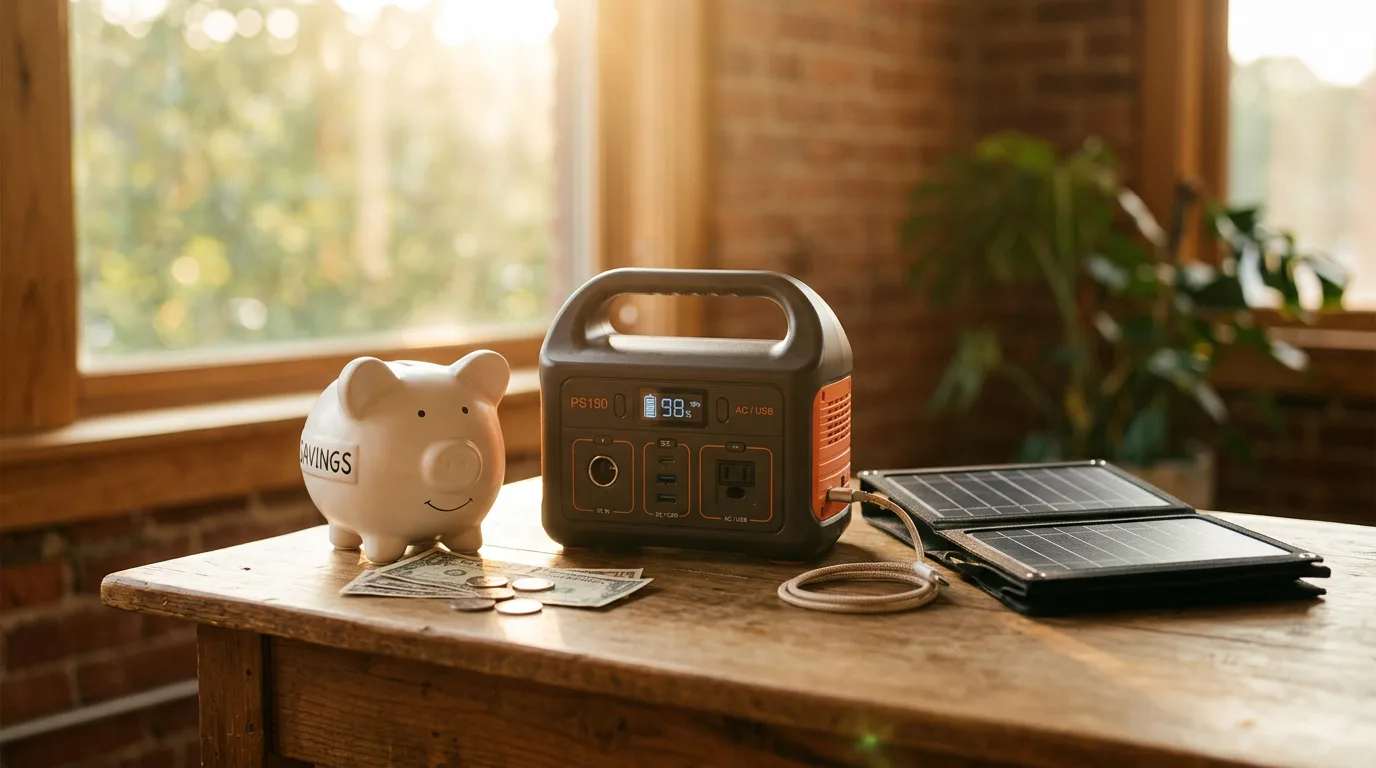
The solar generator market in 2026 has a pricing paradox: the technology that matters most — LiFePO4 battery cells — costs roughly the same across all price tiers. A budget generator and a premium generator both use iron phosphate chemistry rated for 3,000+ cycles. What changes between tiers is capacity, inverter output, charging speed, build quality, app integration, and brand reputation. Some of those differences matter for your use case. Some do not. The goal of this guide is to help you figure out which is which.
The Budget Price Map: What Each Tier Actually Gets You
Solar generators span from emergency radio power banks to whole-home backup systems. Budget buyers typically fall into three brackets, each with a distinct set of capabilities and limitations.
Entry Tier — The Bare Essentials. Products in this range deliver 100-300Wh of capacity and 200-300W of output. That is enough to charge phones, tablets, laptops, LED lights, and small USB devices for a weekend camping trip. It is NOT enough to run a mini-fridge, power tools, or anything with a heating element. Several models here include 40W solar panels — a genuine value add if you plan to use them outdoors. The Emergency Weather Radio, Powkey 200W, DaranEner NEO, Apowking 200W, Apowking 300W, and EBL 300W all fall in this bracket.
Budget Sweet Spot — Real Capability. This is where budget becomes useful. Capacity jumps to 200-600Wh, output reaches 300-600W, and build quality noticeably improves. The Arkpax Core 300W, Zerokor 300W, BLUETTI Elite 30 V2, Anker SOLIX C300, Jackery Explorer 300, and VTOMAN FlashSpeed 600 sit here. Some of these units can run a mini-fridge for 5-8 hours. Most can power a CPAP machine overnight. The VTOMAN FlashSpeed 600 at 600Wh is the capacity leader in this bracket.
Budget Mid-Range — Serious Power. Here you cross into serious portable power territory. Capacity hits 600-1,200Wh, output reaches 1,000-1,600W, and you can run small appliances, portable heaters on low settings, and even small power tools. The VTOMAN Jump 600X, UPOPOWER S1200, EcoFlow DELTA 2, and OUKITEL P1000 Plus occupy this bracket. These units compete with stations costing twice as much from premium brands.
What Budget Generators Do Well
Budget does not mean bad. Modern LiFePO4 budget generators share several strengths that would have been premium features three years ago.
Battery longevity is identical across price tiers. LiFePO4 cells rated for 3,000+ cycles do not cost more than lower-rated cells — the chemistry itself is mature and widely manufactured. A budget generator with LiFePO4 batteries lasts just as many charge cycles as a premium unit. The Apowking 300W at its price point uses the same fundamental cell chemistry as the Anker SOLIX F3800 Plus at twenty times the price.
Bundled solar panels add real value. At least eight products in our compact category include solar panels in the box — typically 40-60W panels. Buying a 40W solar panel separately costs roughly the same as the price difference between a panel-included and panel-excluded model. If you plan to charge outdoors at all, bundled panels are effectively free.
USB-C charging is now standard even at the entry level. Nearly every generator in our catalog — including the cheapest units — includes at least one USB-C port. Several include USB-C PD ports capable of charging laptops at full speed. USB-A, USB-C, and 12V car ports are no longer premium differentiators.
Weight is naturally low. Small batteries mean light units. Most compact generators weigh 3-15 lbs — light enough for a backpack or tote bag. Premium generators with more capacity weigh 30-100 lbs. If portability matters more than capacity, budget units win by default.
Where Budget Generators Cut Corners
Every price tier involves compromises. Being honest about the weaknesses helps you decide whether they matter for your intended use.
Inverter output limits what you can plug in. Most budget generators cap at 200-600W continuous output. That rules out high-draw appliances: full-size refrigerators (100-400W continuous, 800-1,200W startup), microwaves (600-1,200W), space heaters (750-1,500W), and hair dryers (1,000-1,800W). You can run LED lights, phone chargers, laptops, small fans, portable speakers, and USB devices — but not much more. If you need to run a fridge or power tools, step up to the $300-$500 bracket where output reaches 1,000W+.
Charging speed is slower. Budget generators typically charge from a wall outlet in 4-8 hours and from solar in 6-12 hours (with included panels). Premium units with fast-charge technology fill to 80% in under an hour. If you need rapid turnaround — charging during a brief break and deploying again — budget units will frustrate you. If you can plug in overnight and use during the day, charging speed is irrelevant.
App integration ranges from basic to nonexistent. Premium brands like Anker, EcoFlow, and Jackery offer polished mobile apps with real-time monitoring, firmware updates, and power management. Most budget generators either have no app at all or use generic third-party apps with limited functionality. If you want to monitor your power station from your phone, budget units disappoint. If you are fine reading the built-in LCD display, this does not matter.
Build quality varies more at lower prices. Premium generators feel solid — machined aluminum, tight tolerances, rubber port covers, quality latches. Budget generators range from surprisingly well-built (the BLUETTI Elite 30 V2 and Jackery Explorer 300 both feel like they cost more than they do) to clearly cost-engineered (thin plastic, wobbly buttons, loose port connections). Read user reviews specifically about build quality before buying in the under-$150 range.
Warranty and support vary widely. Anker, Jackery, EcoFlow, and BLUETTI have established US-based customer support. Smaller brands like Apowking, Zerokor, and DaranEner may have limited support infrastructure. Check the warranty length AND the brand's track record for honoring it before committing. A 2-year warranty from a brand with no US support office is worth less than a 1-year warranty from a brand you can actually reach.
Our Budget Picks by Use Case
Rather than a single "best budget" recommendation, here are targeted picks for specific scenarios — because a camping charger and a home backup unit are different products solving different problems.
Best for phone and device charging on camping trips: The Anker SOLIX C300 with its included 60W solar panel gives you a trusted brand, USB-C PD for laptop charging, and enough capacity to charge phones for a long weekend. The Jackery Explorer 300 offers similar capability with Jackery's proven track record. Both sit in the mid-budget range and deliver more reliability than the cheaper alternatives.
Best for absolute minimum spend: The Apowking 300W with its included 40W panel delivers 300Wh of LiFePO4 capacity and a solar charging setup at entry-tier pricing. It charges phones, runs LED lights, and powers small USB devices. Do not expect more than that — but for basic power at a campsite or during a short outage, it works.
Best for budget home backup: The VTOMAN FlashSpeed 600 at 600Wh is the capacity leader in the compact class. It powers a router, charges phones, runs LED lights, and keeps a mini-fridge going during a short outage. Priced in the budget sweet spot, it costs a fraction of what dedicated home backup stations charge. For longer outages, the UPOPOWER S1200 or EcoFlow DELTA 2 in the budget mid-range roughly double the capacity.
Best included solar panel package: The Zerokor 300W includes a 60W panel — the largest bundled panel in the under-$200 range. The Anker SOLIX C300 also includes a 60W panel with the added benefit of Anker's brand quality. If solar charging is your primary use case, the panel wattage matters as much as the battery capacity.
Budget Mistakes That Cost More Than Buying Premium
Buying too small and then buying again. The most expensive budget generator is the one you replace in six months because it could not handle the load you actually needed. An entry-tier generator that cannot run your mini-fridge is money wasted — you will end up buying a more capable unit anyway. Be honest about your minimum requirements before buying. If you need to run anything larger than USB devices, start at 500Wh minimum.
Ignoring surge wattage. A 300W generator with 300W surge cannot start any device with a motor — not even a small fan, which can draw 2-3x rated watts on startup. Budget generators often have minimal or zero surge headroom. The VTOMAN FlashSpeed 600 with 1,200W surge is a standout because it handles motor startup spikes that cheaper 300W units simply cannot.
Overvaluing capacity, undervaluing output. A 600Wh generator with 200W output can only power 200W of devices at a time — it just does it for longer. If the appliance you need to run draws 400W, it does not matter that your battery holds 600Wh. Output determines WHAT you can power. Capacity determines HOW LONG. Buy enough output first, then get as much capacity as your budget allows.
Skipping the solar panel for indoor-only use. If you will only use your generator at home during power outages, a solar panel seems unnecessary — you can charge from the wall outlet. But the entire point of having a backup generator is when the power is out. If an outage lasts longer than your battery, solar is your only way to recharge. Even a small 40W panel extends your backup window from hours to days. Budget for a panel, even if it is a small one.
When to Stop Buying Budget
Budget generators are the right choice for USB device charging, light camping use, basic emergency backup for phones and lights, and supplementary power alongside grid electricity. They solve these problems well and affordably.
Step up to the mid-range tier when you need to: run a full-size portable fridge continuously, power small appliances (blenders, small TVs, CPAP machines) reliably, have enough capacity for a full weekend off-grid without solar recharging, or use fast charging to cycle the generator multiple times per day. The Anker SOLIX C1000 Gen 2, Jackery Explorer 1000 v2, and VTOMAN FlashSpeed 1500 all deliver a jump in capability at this level.
Step up to the high-capacity tier when you need whole-home backup, 240V output for well pumps or dryers, expandable capacity for multi-day outages, or power for job site tools. At this level, you are buying a different product category entirely — not a bigger version of a budget generator.
Budget Solar Generator Questions
What is the cheapest solar generator worth buying?
The Emergency Weather Radio at the entry level and the Powkey 200W with its included 40W panel offer the lowest price points with usable output. For a step up in reliability, the DaranEner NEO at 192Wh gives you a known brand with solid build quality. Below these price points, you are mostly looking at phone-charger-grade devices that cannot run real appliances.
Can a budget solar generator power a refrigerator?
A standard household refrigerator needs 100-400W continuous with 800-1,200W startup surge. Most compact budget generators under 300W output cannot handle the startup spike. You need at least a 600W unit like the VTOMAN FlashSpeed 600 — and even then, a full-size fridge will drain the battery in a few hours. Budget generators are best suited for mini-fridges (40-60W), which they can run for 5-10 hours depending on capacity.
Should I buy a generator that includes a solar panel?
Bundled solar panels save money compared to buying separately, and several budget generators include 40-60W panels. The Apowking 200W, Apowking 300W, EBL 300W, and Zerokor 300W all include panels. The downside is that bundled panels are typically smaller (40-60W), meaning slower charge times — 4-8 hours of direct sun for a full charge. If you plan to use solar regularly, a separate higher-wattage panel (100W+) charges much faster but costs more upfront.
How long do budget solar generators last?
Every unit in our catalog uses LiFePO4 batteries rated for 3,000+ charge cycles — that translates to 8-10+ years of regular use. Budget price does not mean budget battery life. The electronics (inverter, charge controller, ports) may have shorter lifespans on cheaper units, but the battery itself is the same chemistry used in premium stations. The weakest link is usually the included solar panel, if one is bundled.
What is the best value per watt-hour in the budget range?
The best value-per-watt-hour shifts depending on your price bracket. In the under-$150 range, the Apowking 300W and EBL 300W both include solar panels and deliver solid capacity for the price. In the $200-$300 range, the BLUETTI Elite 30 V2 and VTOMAN FlashSpeed 600 offer far more capacity and features. The sweet spot for most buyers is the $250-$400 range where you get enough capacity to be useful for real appliances without paying the premium-brand tax.
Are cheap solar generators safe?
LiFePO4 batteries are inherently safer than older lithium-ion NMC chemistry — they do not catch fire under fault conditions. Budget generators using LiFePO4 cells carry the same fundamental safety profile as premium units. Where budget models sometimes cut corners is in build quality (loose ports, thin cables), charging protection circuits (less sophisticated BMS), and certifications (some skip UL or FCC certification). Check for UL 2743 certification if safety is a top priority.
Ready to Find Your Budget Solar Generator?
Browse our best compact portable generators for the full lineup ranked by value and capability. Or if you want to understand the math behind capacity and runtime, start with our watt-hours guide to calculate exactly how much power your devices need.
Ready to Buy? Start Here
Based on this guide, our #1 recommendation:
Powkey 200W Solar Generator Best budget option with included 40W panel under $100 Read Full Review →