EcoFlow DELTA 3 MAX vs Anker C2000 Gen 2 (2026)
Bottom Line
Two premium 2kWh stations making different bets. The EcoFlow DELTA 3 MAX bundles a 220W bifacial solar panel and runs whisper-quiet below 25dB — the only complete solar generator kit in its class. The Anker C2000 Gen 2 counters with expandability to 4,096Wh, double the solar input (1,000W vs 500W), lighter weight, and Storm Guard weather alerts. If you want a grab-and-go solar setup with zero extra purchases, the EcoFlow is unmatched. If you want a system that grows with your needs, the Anker is the smarter foundation.
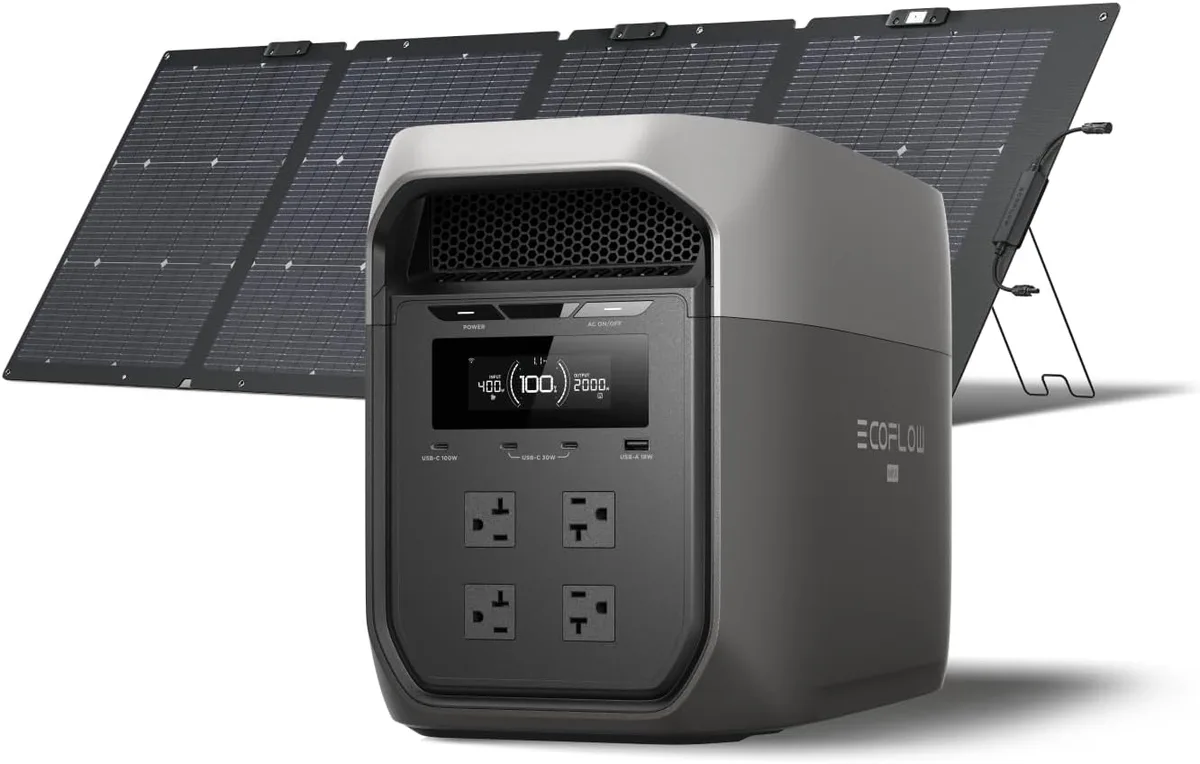
EcoFlow DELTA 3 MAX
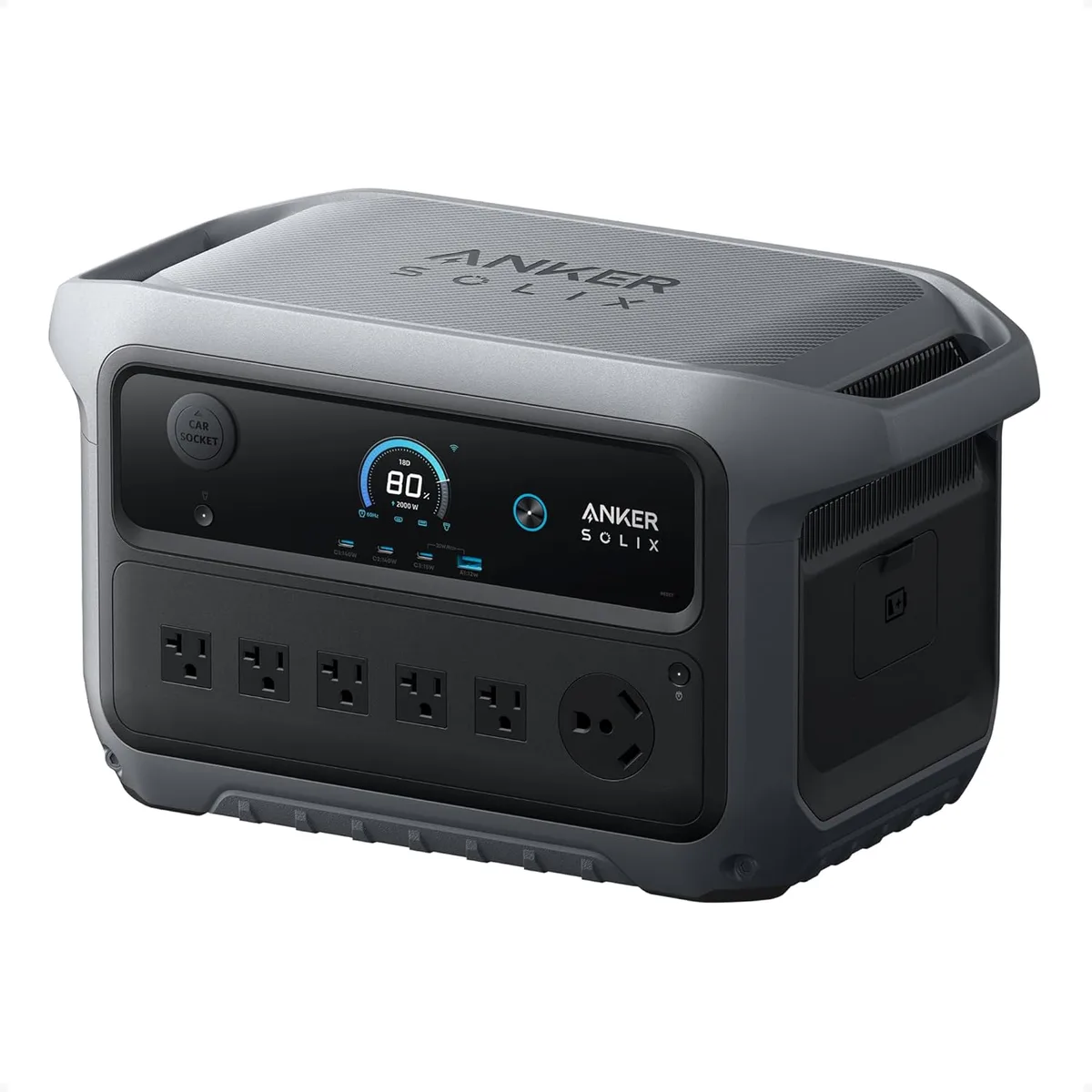
Anker SOLIX C2000 Gen 2
Two Premium Philosophies for the Same 2,048Wh
Both stations pack identical 2,048Wh LiFePO4 batteries. Both deliver 2,400W continuous output. Both come from established brands with 5-year warranties. But the EcoFlow DELTA 3 MAX runs top-tier investment because it includes a 220W bifacial solar panel — while the Anker SOLIX C2000 Gen 2 at top-tier investment is station-only, no panel in the box.
Strip out the panel and the station prices are close. What separates them is philosophy: EcoFlow built a complete, self-contained solar kit optimized for quiet operation and fast AC charging. Anker built a modular platform that expands to 4,096Wh and accepts 1,000W of solar — twice the EcoFlow's cap. Buyers who want a complete, ready-to-go kit lean EcoFlow. Buyers building a long-term expandable system lean Anker. Our high-capacity roundup ranks both alongside their closest competitors.
| Feature | EcoFlow DELTA 3 MAX with 220W Solar Panel | Anker SOLIX C2000 Gen 2 Portable Power Station |
|---|---|---|
| Price Range | $500+ | $500+ |
| Battery Capacity | 2,048Wh | — |
| Battery Type | LiFePO4 (automotive-grade) | — |
| Output Power | 2,400W continuous | 2,400W continuous |
| Surge Power | 4,800W (3,200W X-Boost 3.0) | 4,000W peak |
| Weight | 44.8 lbs (station only) | 41.7 lbs (18.9 kg) |
| Solar Input | 500W max | 800W max |
| Check Price | Check Price |
EcoFlow Wins The Included Solar Panel Changes the Math
The EcoFlow DELTA 3 MAX is the only station in the 2kWh class that ships with a solar panel. The included 220W bifacial panel uses TOPCon cells at 25% efficiency and captures light on both sides — up to 175W from reflected ground light on the rear face. During a weekend camping trip in Colorado, one user averaged 190W combined (150W front + 40W rear from ground reflection) on partly cloudy days.
That panel retails for roughly $300 on its own. Factor that in and the effective station cost drops close to the Anker's price. For buyers who would purchase a solar panel anyway, the EcoFlow bundle eliminates compatibility guesswork and ships as a tested, matched system. For buyers who plan to charge primarily from wall outlets, the bundled panel is money spent on something that stays in a closet.
The bifacial design is the detail that sets this panel apart from standard rigid panels at the same wattage. Placing it on a light-colored surface — concrete, a white tarp, or even sandy ground — bumps rear-face output to 30-40W of bonus harvest. Over a full sunny day, that extra rear production adds roughly 150-200Wh to total yield. Not enough to change the math on its own, but enough to offset running a small fan or LED lights while charging. Owners who pair the panel with a reflective ground sheet report the most consistent rear gains.
EcoFlow Wins Noise: Sub-25dB vs Audible Fans
At loads up to 600W, the EcoFlow DELTA 3 MAX operates below 25dB — effectively inaudible. One user ran a CPAP machine, phone charger, and small fan overnight with the unit on their nightstand. They never heard it. The battery still showed 78% when power returned at 6 AM.
The Anker C2000 Gen 2 runs quiet at low loads too, but its cooling system engages more noticeably under moderate draw. It is not loud by any standard — competing stations often hit 40-55dB — but it is audible in a quiet bedroom. For overnight outage backup, where the unit sits 3 feet from your head, the EcoFlow's near-silent operation is a real comfort advantage.
The noise gap widens at moderate loads. Running a 400W appliance (mini fridge compressor cycling on and off), the EcoFlow's thermal management keeps fan speed low enough to stay below the ambient hum of the fridge itself. The Anker ramps its fans more aggressively in the 300-500W range — still reasonable for a garage or living room, but noticeable in a quiet tent or bedroom. If your primary use case involves sleeping within earshot, the EcoFlow is measurably better. If the station lives in another room or outdoors, both are quiet enough.
Anker Wins Solar Input: 1,000W vs 500W
The Anker C2000 Gen 2 accepts up to 1,000W of solar input — double the EcoFlow's 500W cap. With a 4-panel array producing 800W, the Anker reaches full charge in about 3 hours. The EcoFlow hits its 500W ceiling with just two 300W panels and needs 4-5 hours for a full solar charge even at maximum input.
The EcoFlow's included 220W panel takes 5-6 hours for a full charge in ideal sun. That is fine for a lazy weekend of topping up while the station runs a portable fridge. But for serious off-grid use where you need to recharge and run loads simultaneously, the Anker's 1,000W input provides noticeably faster solar recovery — especially when paired with a high-wattage panel array.
The practical difference shows up during extended off-grid trips. With the EcoFlow, you harvest roughly 800-1,000Wh per sunny day from the included panel. Subtract whatever loads are running, and net daily recovery might be 500-700Wh. The Anker paired with a 600W array harvests 2,400-3,000Wh in the same conditions — enough to run heavy loads all day and still finish at full charge by sunset. For weekend camping the EcoFlow's panel is plenty. For week-long off-grid stays or full-time van life, the Anker's higher ceiling means less rationing.
Anker Wins Expandability: 4,096Wh vs Fixed 2,048Wh
The Anker C2000 Gen 2 accepts a BP2000 Gen 2 expansion battery, doubling total capacity to 4,096Wh. The EcoFlow DELTA 3 MAX is a closed system — 2,048Wh with no expansion path. This is the single biggest architectural difference between the two stations.
If your power needs grow — a larger fridge, a new home office, or longer outage windows — the Anker lets you add capacity without replacing the entire unit. The EcoFlow requires buying a second station entirely, which means a second inverter, second display, second set of ports you may not need. For buyers who see their power station as a long-term investment, the Anker's expansion path matters.
The expansion math tells the story. Adding a BP2000 Gen 2 battery to the Anker costs less than buying a second standalone station, and you end up with a single 4,096Wh system managed from one display and one app. That 4,096Wh runs a standard refrigerator for roughly 22-24 hours without solar — long enough to ride out most regional outages. The EcoFlow at fixed 2,048Wh covers 11-12 hours of fridge runtime, so multi-day outages require solar or a backup plan. If you live in an area with frequent extended outages (hurricane coast, ice storm corridor), the Anker's growth path from 2,048Wh to 4,096Wh might be the difference between comfortable and stranded. See our emergency preparedness guide for sizing recommendations.
EcoFlow Wins AC Charging Speed
The EcoFlow DELTA 3 MAX charges from empty to full in 68 minutes via X-Stream technology. Independent testing from The Solar Lab confirmed this matches the advertised spec. The Anker C2000 Gen 2 takes about 90 minutes for a full AC charge — still fast, but 22 minutes slower.
Where Anker closes the gap is combined charging. With AC power and an 800W solar array running simultaneously, the Anker hits full in 58 minutes — actually beating the EcoFlow's AC-only time. If you have both AC and solar available, the Anker's higher solar input becomes an advantage. But for pure wall-outlet charging (the most common scenario for home backup), EcoFlow is the faster option.
The charging speed difference matters most in two scenarios. First: pre-storm preparation. When a severe weather alert gives you 2-3 hours of warning, the EcoFlow can go from dead to full in just over an hour, leaving time for a second charge cycle if you have a second unit. The Anker needs 90 minutes for the same task — still fast, but that extra 22 minutes can feel long when the wind is picking up. Second: daily cycling for solar self-consumption. If you drain the battery during peak evening hours and recharge overnight on off-peak electricity rates, the EcoFlow finishes charging before midnight with a 10 PM start. The Anker pushes into the early morning hours. Over a year of daily cycling, the EcoFlow spends roughly 130 fewer hours plugged into the wall.
Display, App, and Daily Usability
The Anker C2000 Gen 2 has what multiple reviewers call the best display in portable power stations. The screen is large, bright, and readable in direct sunlight with real-time power flow animations showing energy moving between solar input, battery, and connected loads. At night, the display dims automatically without washing out — a detail that matters when you check battery status at 3 AM during an outage.
The EcoFlow DELTA 3 MAX has a functional display with clear readouts for input/output wattage, battery percentage, and estimated runtime. It is smaller than the Anker's screen and lacks the animated power flow visualization. For quick status checks, both displays do the job. For monitoring complex multi-source charging (AC plus solar simultaneously), the Anker's animated flow diagram is easier to parse at a glance.
Both stations offer full-featured smartphone apps. EcoFlow's app is polished with real-time monitoring, remote on/off control, charging schedule management, and firmware updates pushed over Wi-Fi. Anker's app matches those features and adds Storm Guard — the automatic pre-storm charging feature that monitors local weather alerts and tops off the battery when severe weather approaches your ZIP code. Storm Guard requires the station to be plugged into a wall outlet and connected to Wi-Fi, but once configured, it works without any user intervention. During hurricane season along the Gulf Coast or tornado season in the Midwest, Storm Guard removes the human step of remembering to charge before a storm — the station handles it autonomously.
EcoFlow counters with scheduling features that let you set charging windows around time-of-use electricity rates. If your utility charges peak rates from 4 PM to 9 PM and off-peak rates overnight, you can program the DELTA 3 MAX to charge only during the cheapest hours. The Anker app supports similar scheduling. Both apps track lifetime energy throughput and battery health metrics, giving you long-term visibility into how the unit is aging.
Weight and Portability: 44.8 lbs vs 41.7 lbs
The Anker C2000 Gen 2 is 3 lbs lighter at 41.7 lbs versus the EcoFlow's 44.8 lbs. Both are comfortably one-person-portable — the sub-45-lb range is the sweet spot where a single adult can carry the station from garage to truck bed without strain.
The real portability consideration is the solar panel. The EcoFlow's included 220W panel adds roughly 20 lbs to the total kit. When you are packing for a camping trip, you are carrying 65 lbs of gear in two pieces — the station plus the panel. The Anker at 42 lbs is a single grab-and-go unit. That weight gap matters most if you are bringing solar — and if so, the EcoFlow's panel is already matched and tested with the station.
Both stations use recessed side handles rather than a single top bar. The EcoFlow's handles are slightly wider, which distributes weight more comfortably across the palm during longer carries. The Anker's narrower handles concentrate force in a smaller grip area — fine for a 20-foot carry from trunk to campsite, less comfortable for hauling across a parking lot. Neither station has wheels, so stairs and uneven terrain require carrying the full weight. At 42-45 lbs, both are manageable for a single person but heavy enough that you notice the weight after 50 feet.
The footprint difference matters for tight installations. The EcoFlow DELTA 3 MAX measures 24.8 x 11.2 x 14.0 inches — a wide, flat profile that sits stable on shelves but demands more horizontal space. The Anker C2000 Gen 2 is slightly more compact at 18.5 x 11.0 x 13.3 inches, fitting into narrower closets and van compartments. In a garage or utility room with dedicated shelf space, neither footprint is a problem. In a van conversion or tight apartment closet, the Anker's smaller footprint gives it a practical edge for permanent placement.
EcoFlow DELTA 3 MAX vs Anker SOLIX C2000 Gen 2: Your Questions
Does the EcoFlow DELTA 3 MAX include a solar panel?
Yes — the DELTA 3 MAX ships with a 220W bifacial solar panel using TOPCon cells at 25% efficiency. It captures light on both sides, pulling up to 175W from reflected ground light on the rear. No other station in this class includes a panel. The Anker C2000 Gen 2 is sold as a station-only unit — panels are a separate purchase.
Which is quieter during overnight use?
The EcoFlow DELTA 3 MAX operates below 25dB at loads up to 600W — effectively silent at bedside distance. One user ran a CPAP machine and phone charger overnight without hearing the unit once. The Anker C2000 Gen 2 runs quiet at low loads but audibly spins up fans under moderate draw. For bedroom backup during outages, the EcoFlow wins on noise.
Can I add extra batteries to either station?
Only the Anker. The C2000 Gen 2 accepts a BP2000 Gen 2 expansion battery, doubling capacity to 4,096Wh. The EcoFlow DELTA 3 MAX is fixed at 2,048Wh with no expansion path. If you anticipate needing more capacity in the future, the Anker is the only option.
Which charges faster from a wall outlet?
The EcoFlow DELTA 3 MAX charges from 0-100% in 68 minutes via X-Stream technology — confirmed by independent testing. The Anker C2000 Gen 2 reaches full charge in about 90 minutes. Both are fast, but EcoFlow finishes 22 minutes sooner. The gap narrows with combined AC + solar charging, where Anker can hit full in 58 minutes if you have an 800W panel array.
How do their solar input limits compare?
The Anker C2000 Gen 2 accepts up to 1,000W of solar input — double the EcoFlow DELTA 3 MAX's 500W cap. With a large panel array (800W+), the Anker recharges far faster via solar alone. The EcoFlow's included 220W panel takes 5-6 hours for a full solar charge. If off-grid solar speed matters, the Anker has a clear advantage despite not including a panel.
Is the EcoFlow worth the extra cost over the Anker?
The EcoFlow costs roughly $300 more but includes a $300+ solar panel — so the station itself is similarly priced. You are paying for the convenience of an out-of-box solar setup, whisper-quiet operation, and faster AC charging. The Anker gives you expandability to 4,096Wh, higher solar input, lighter weight, and Storm Guard weather alerts. If you want a complete solar bundle with no extra purchases, EcoFlow wins. If you want a system that grows over time, Anker wins.
Which station has the better display?
The Anker C2000 Gen 2 has what reviewers consistently call the best display in portable power — large, bright, and readable in direct sunlight with real-time power flow indicators. The EcoFlow DELTA 3 MAX has a good display with clear readouts, but it is smaller and less vivid. For monitoring power flow at a glance, the Anker's screen is the better experience.
Can either station power a full-size refrigerator during a multi-day outage?
A standard refrigerator draws 100-200W average (with compressor cycling). At 150W average, both 2,048Wh stations run a fridge for roughly 11-12 hours. The EcoFlow's included 220W panel adds about 800-1,000Wh of solar per day in good conditions — enough to extend the fridge well past 24 hours. The Anker paired with a 400W panel (sold separately) harvests 1,600-2,000Wh per day, making multi-day fridge operation practical even with cloudy stretches.
Which is better for apartment dwellers with no solar access?
The Anker C2000 Gen 2. Without solar panels, the EcoFlow's bundled panel is wasted cost. The Anker charges faster via combined AC input, has lower idle draw (9W vs higher), and its Storm Guard feature auto-charges before storms when plugged into a wall outlet. The lighter weight also makes it easier to store in a closet and move to wherever power is needed during an outage.
Who Should Get Which?
Get the EcoFlow DELTA 3 MAX if you:
- Want a complete solar setup out of the box — no separate panel purchase, no compatibility guesswork, just open and deploy.
- Need near-silent overnight operation for bedroom backup, tent camping, or any scenario where the station sits within earshot.
- Prefer the fastest wall-outlet charging — 68 minutes from empty to full beats every competitor in the 2kWh class.
- Plan to use solar casually (weekend trips, patio power, emergency top-ups) rather than as your primary charging method.
Get the Anker SOLIX C2000 Gen 2 if you:
- Want a system that can grow to 4,096Wh with a single expansion battery — critical for extended outages or growing power demands.
- Plan to build a large solar array (600W+) and need 1,000W of input to keep up with heavy daily loads off-grid.
- Value Storm Guard auto-charging — the station tops itself off before severe weather arrives when plugged into a wall outlet.
- Prefer lighter weight for frequent transport — 41.7 lbs vs 44.8 lbs (plus the EcoFlow's 20-lb panel if you bring solar).
Which Premium 2kWh Station Fits Your Setup?
The EcoFlow DELTA 3 MAX is the right choice if you want a complete solar generator kit out of the box — station plus panel, matched and ready. Whisper-quiet overnight operation and 68-minute AC charging make it a polished home backup companion. The Anker SOLIX C2000 Gen 2 is the right choice if you want a lighter, expandable system with double the solar input capacity. Storm Guard auto-charging and a growth path to 4,096Wh make it the smarter long-term foundation.
If you already own solar panels or plan to invest in a large array, the Anker's 1,000W input ceiling makes it the better foundation for a serious off-grid system. If you want one purchase that covers casual solar use, quiet overnight backup, and fast wall charging with no accessories to buy, the EcoFlow bundle is hard to beat. Both stations share the same LiFePO4 longevity (3,000+ cycles to 80%) and 5-year warranty. The difference is how they grow: the EcoFlow stays as-is, the Anker can double.