Best Whole-Home Backup Systems 2026: Expert Picks
We analyzed 7 whole-home portable power stations ranging from 3,072Wh to 4,608Wh — cross-referencing independent efficiency measurements, idle draw data, solar input capabilities, and real-world outage reports from expert reviewers and verified Amazon purchasers. These are the stations that can actually keep a household running when the grid fails.
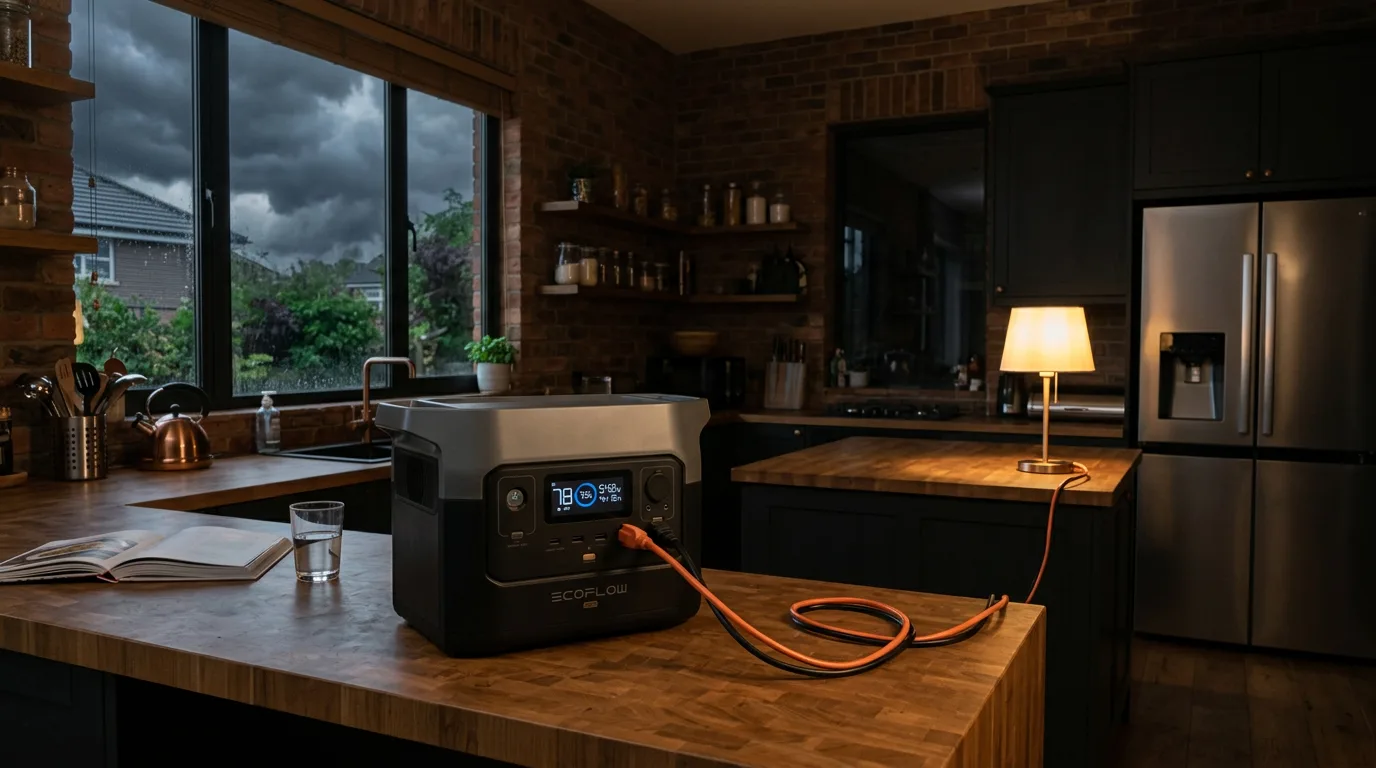
Whole-home backup is where portable power stations stop being camping accessories and start competing with installed standby generators. Every unit in this roundup delivers at least 3,072Wh of LiFePO4 capacity and 3,300W of continuous output — enough to keep a refrigerator, router, lights, and medical devices running through a 24-hour outage without rationing.
But the spread within this category is enormous. The lightest station weighs 59.5 lbs. The heaviest weighs 136.7 lbs. One charges to 80% in 50 minutes. Another takes over 3 hours. Some deliver 240V split-phase for well pumps and central AC. Others max out at 120V. Idle draw ranges from 8W to 80W — a tenfold difference that silently determines how much capacity is left when you actually need it.
We dissected each station's real-world performance using data from Outdoor Gear Lab, The Solar Lab, CleanTechnica, TechRadar, Bob Vila, Apple Insider, and verified Amazon purchasers. The rankings below reflect the stations that deliver the most usable power, most reliably, for the widest range of home backup scenarios.
Quick Comparison: All 7 Whole-Home Stations
Side-by-side specs for every whole-home backup system we reviewed. All units use LiFePO4 batteries with 3,072-4,608Wh capacity.
| Feature | GROWATT HELIOS 3600 Portable Power Station | OUPES Guardian 6000 Portable Power Station | Anker SOLIX F3000 with 400W Solar Panel | EcoFlow DELTA Pro 3 Portable Power Station | Anker SOLIX F3800 Portable Power Station | Jackery HomePower 3000 with 2x200W Solar Panels | Anker SOLIX F3800 Plus Portable Power Station |
|---|---|---|---|---|---|---|---|
| Price Range | $500+ | $500+ | $500+ | $500+ | $500+ | $500+ | $500+ |
| Battery Capacity | 3,686Wh | 4,608Wh | 3,072Wh | 4,096Wh | 3,840Wh | 3,072Wh | 3,840Wh |
| Battery Type | LiFePO4 (EV-grade) | LiFePO4 | LiFePO4 | LiFePO4 | LiFePO4 | LiFePO4 | LiFePO4 |
| Output Power | 3,600W (120V/240V dual voltage) | 6,000W (240V) / 3,600W (120V) | 3,600W | 4,000W (6,000W X-Boost) | 6,000W (120V/240V) | 3,600W | 3,300W (6,000W with expansion) |
| Surge Power | 4,500W (Watt+) | 9,000W | 7,200W (two units) | 8,000W | 6,000W sustained | 7,200W | 12,000W (two units) |
| Weight | 99 lbs | 111 lbs | 91.5 lbs | 113.5 lbs | 132 lbs | 59.5 lbs | 136.7 lbs |
| Solar Input | 2,000W max | 2,400W max (12-140V, 15A) | 2,400W dual MPPT | 2,600W dual MPPT | 2,400W dual MPPT (11-60V per port) | 1,000W max | 3,200W dual 165V MPPT (MC4 compatible) |
| Check Price | Check Price | Check Price | Check Price | Check Price | Check Price | Check Price |
Every Whole-Home Station, Ranked
1. EcoFlow DELTA Pro 3 — Best Overall Whole-Home Station
4,096Wh LiFePO4 · 4,000W (6,000W X-Boost) · $500+
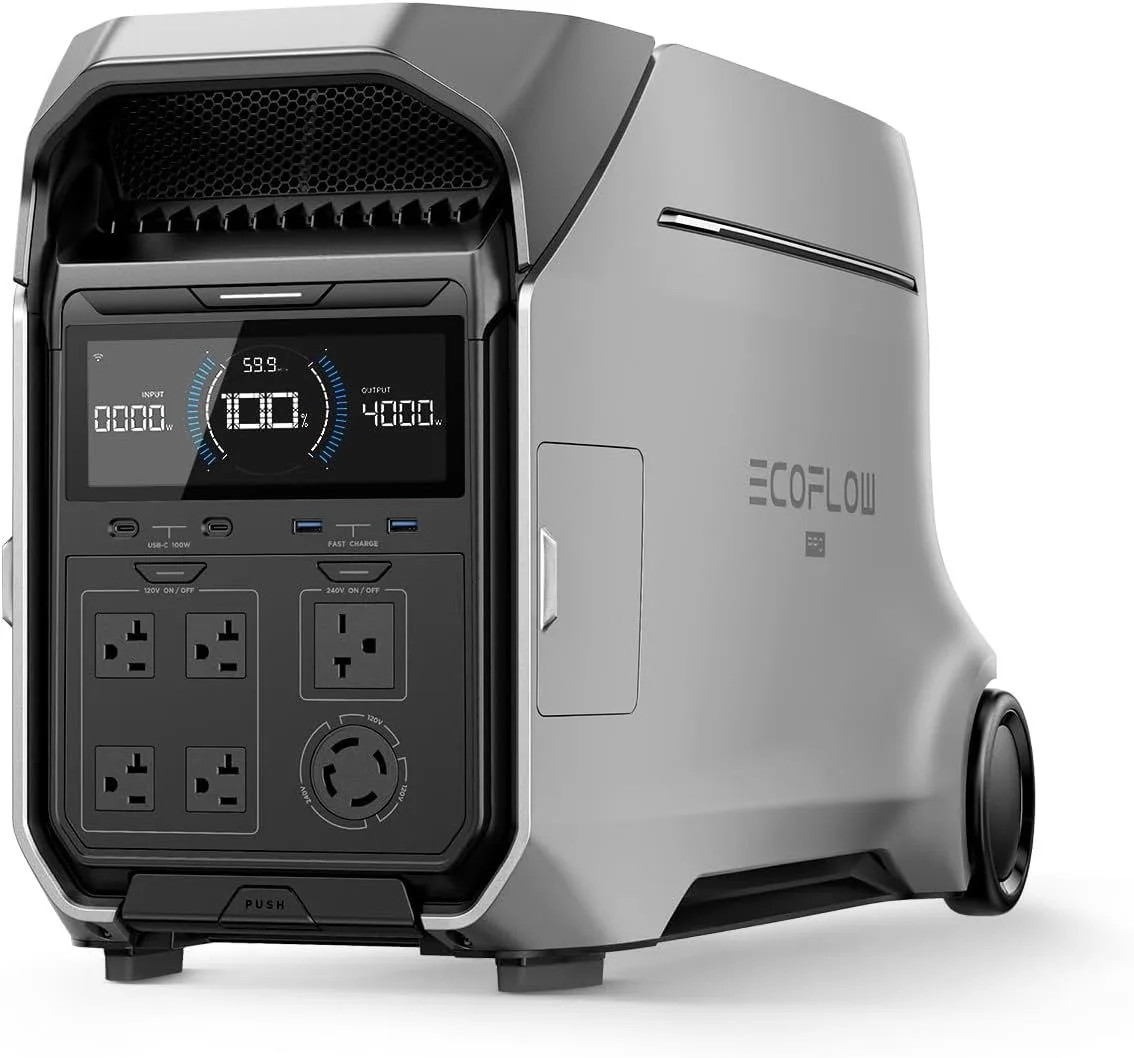
The EcoFlow DELTA Pro 3 earned its top spot through measurable superiority in the metrics that matter most during an actual outage. Outdoor Gear Lab measured 3,790Wh of usable capacity from the 4,096Wh rating — a 93% discharge efficiency that delivers roughly 400-600Wh more usable energy than comparably rated competitors. That is an extra 3-4 hours of refrigerator runtime that other stations leave trapped as heat.
The charging speed is the fastest in this category and it is not close. X-Stream technology pushes 0-80% in approximately 50 minutes from a standard 120V wall outlet — no special 240V circuit required. CleanTechnica's long-term tester confirmed a full 0-100% charge slightly exceeding 2 hours from 120V. At 30dB under normal loads, multiple reviewers ran CPAP machines and space heaters overnight without hearing the fans. Men's Journal awarded it top spot at the 2026 Tech Awards. Bob Vila called it "the best backup plan short of installing a standby generator."
The weight is real: 113.5 lbs requires two people and a plan for any relocation. The pass-through limitation is the most significant weakness — CleanTechnica discovered that compressor surge draws over ~2,000W while grid-connected cause shutdowns, undermining its always-on UPS value for high-draw appliances. And a documented fire incident, while isolated, raised community concerns about quality control. For buyers who will use it primarily on battery power with periodic recharging, the DELTA Pro 3 delivers the most polished, most efficient whole-home backup experience available.
2. Anker SOLIX F3000 — Quietest and Most Efficient
3,072Wh LiFePO4 · 3,600W Output · $500+
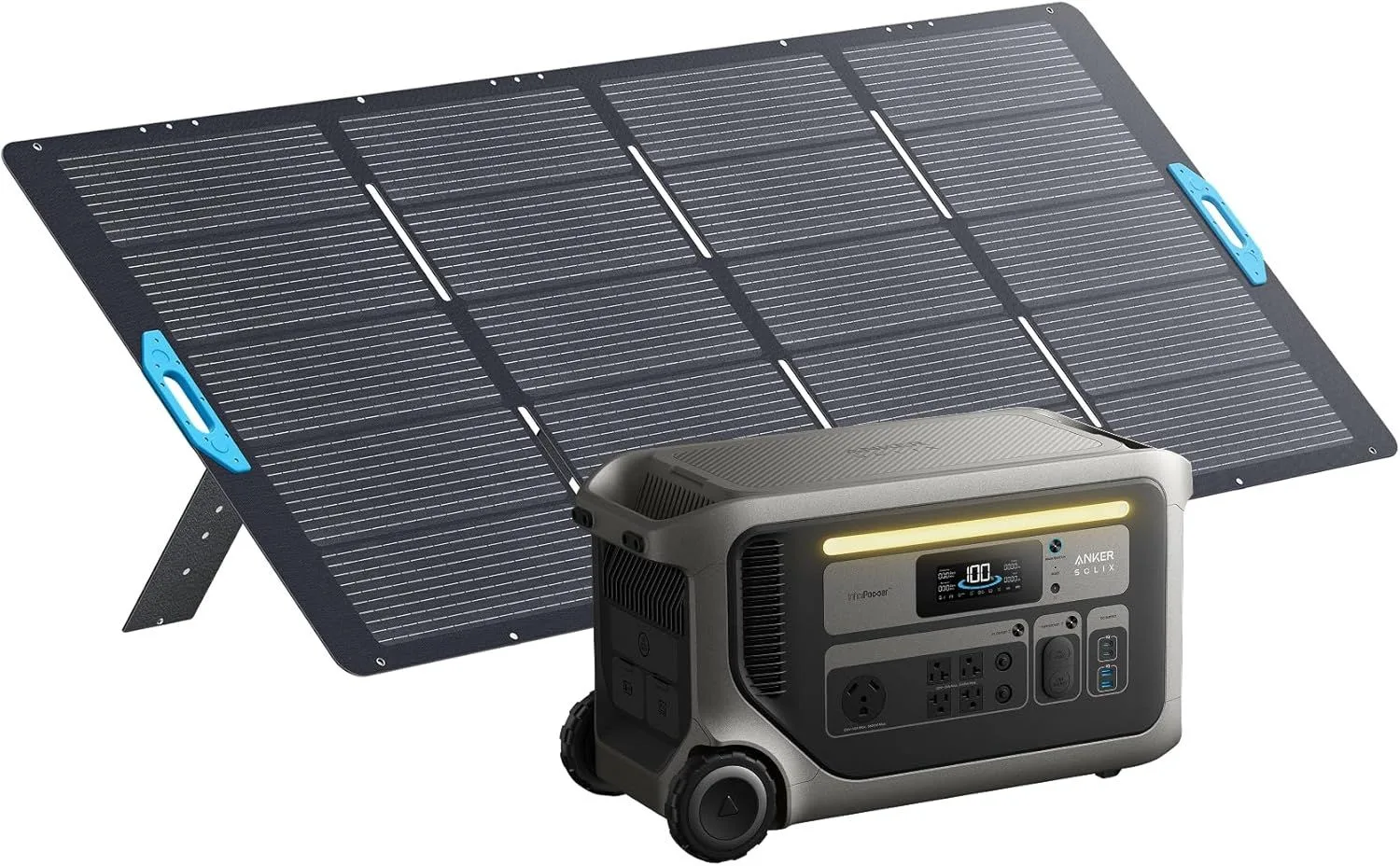
The Anker SOLIX F3000 posted the lowest idle draw of any multi-kilowatt station we have encountered — The Solar Lab measured 20.5W, beating even Anker's own published 25W spec. In standby mode, it remained powered on for 125 hours (over 5 days) on a single charge. For a home backup unit sitting on standby waiting for an outage, that efficiency translates directly to readiness.
Multiple expert reviewers — How-To Geek, Android Authority, The Solar Lab — confirmed near-silent operation even under heavy loads. Android Authority named it their "new favorite high-capacity power station." The true 30A TT-30R output doubles as a 3,600W fast-charge input, achieving a full recharge in roughly one hour. The 400W solar panel included in the bundle adds immediate off-grid capability without a separate purchase.
The limitation that keeps it at #2: no 240V from a single unit. Getting 240V requires two F3000 units plus a Double Voltage Hub — pushing the total cost to several times the single-unit price. If your emergency plan requires powering a well pump, dryer, or central AC, the DELTA Pro 3, OUPES Guardian 6000, or Anker F3800 deliver 240V natively. The proprietary charging connectors and BP3000 ecosystem lock-in are additional friction points. But for 120V home backup, RV use, and portable power, the F3000's combination of efficiency, silence, and build quality is unmatched.
3. OUPES Guardian 6000 — Best Value per Watt-Hour
4,608Wh LiFePO4 · 6,000W (240V) Output · $500+
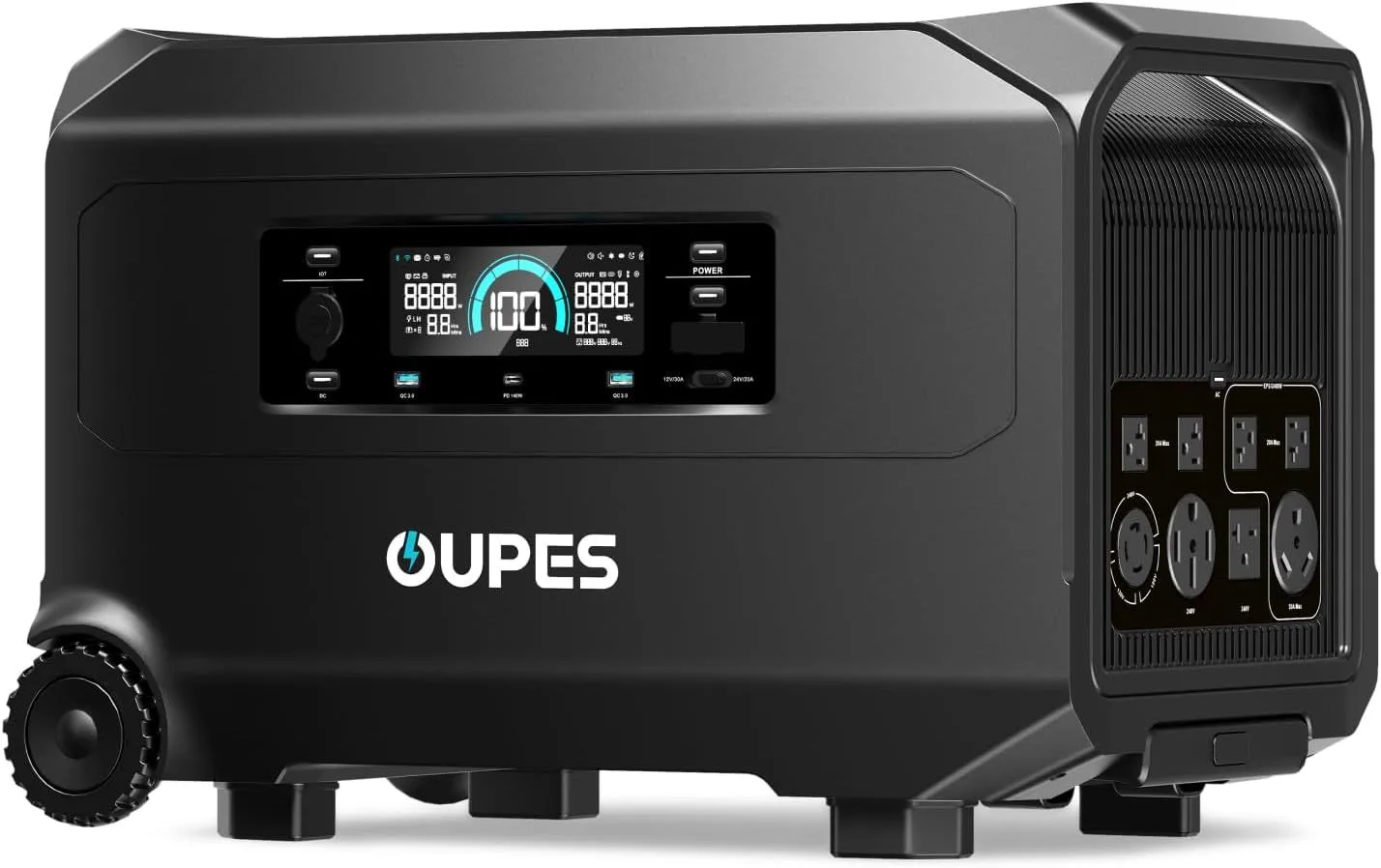
The OUPES Guardian 6000 rewrites the value equation for whole-home backup. At its price point, it delivers 4,608Wh and 6,000W of true single-unit 240V output — specs that competitors charge nearly twice as much to match. The Solar Lab called it "one of the fastest-charging budget 240V units ever tested," and during testing it hit close to 6,000W at 240V without voltage dips or instability. The 240V charging input achieves 0-100% in roughly 84 minutes.
Expandability to 41.4kWh with 8 G5 expansion batteries provides the second-highest expansion ceiling in this roundup. The rolling toolbox form factor connects directly to standard transfer switches for whole-home backup without requiring an electrician for the power station side. For buyers whose primary need is maximum capacity and 240V output at the lowest possible cost, nothing else comes close.
The rough edges are real. The Solar Lab measured approximately 75W of idle draw — meaning the unit drains roughly 1,400Wh over 18 hours of sitting powered on but not outputting. The most critical flaw: you cannot charge via AC while outputting 240V split-phase. During an extended outage, recharging from a generator requires disconnecting all loads first. DIY Solar Forum users called this an "EPIC FAIL" for long-term outage scenarios. Firmware on existing units reportedly cannot be updated. And the 140V solar input voltage limit restricts panel stringing options. For overnight backup and solar-paired weekend resilience, the Guardian 6000 punches above its price class. For multi-day generator-backed outages, the charge limitation is a deal-breaker.
4. GROWATT HELIOS 3600 — Best for Off-Grid and Extreme Cold
3,686Wh LiFePO4 · 3,600W (120V/240V) Output · $500+
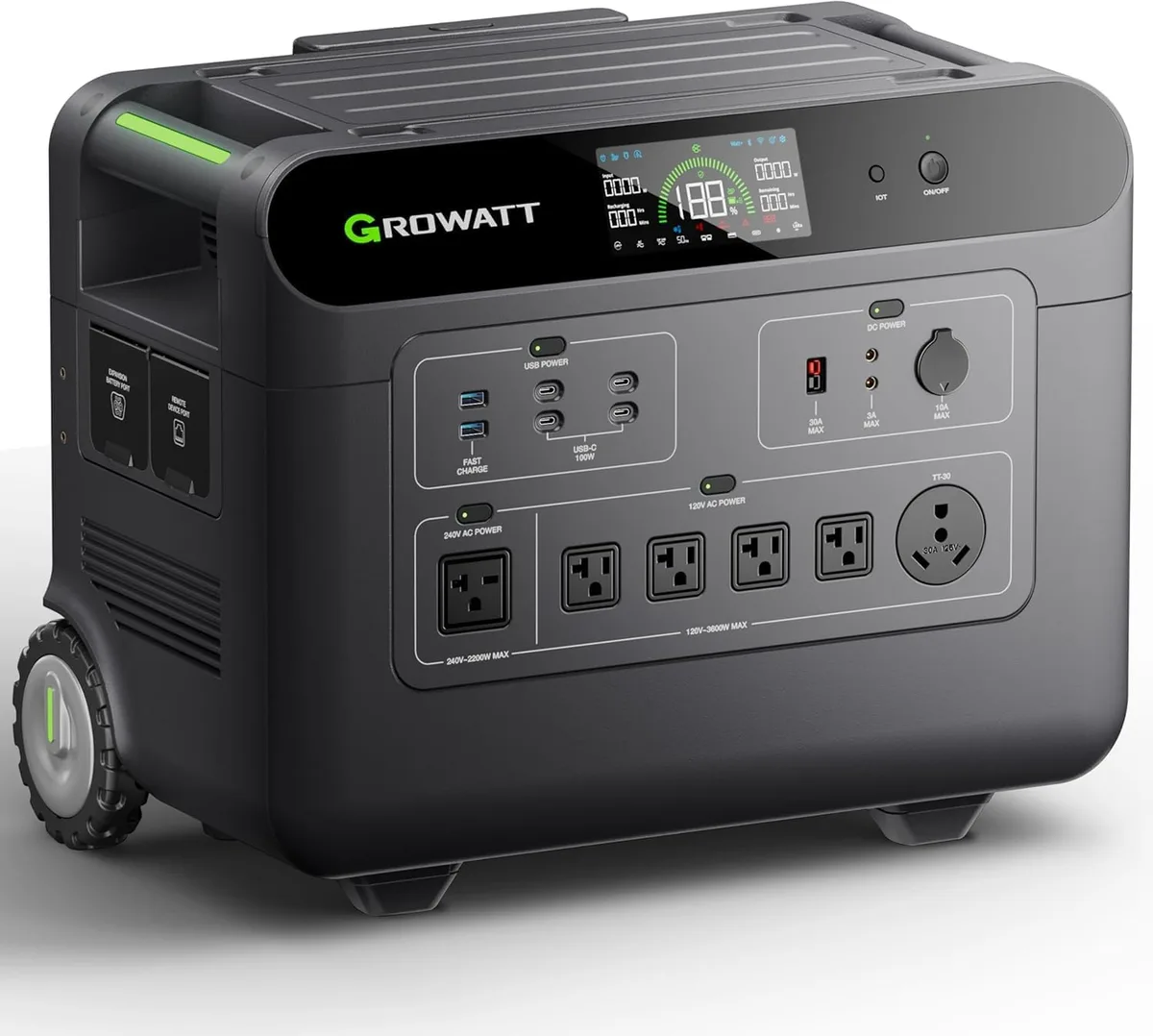
The GROWATT HELIOS 3600 is the entry point to the whole-home category — and it earns that position with the lowest price and the highest standalone capacity at 3,686Wh. That is nearly 80% more than the 2,048Wh units in the high-capacity class below. A cabin owner running a fridge, Starlink internet, router, and TV reported 24-30 hours of runtime on a single charge, with a 400W solar panel providing another 24+ hours from just a 2-hour charge window.
The cold startup certification at -22°F (-30°C) is a genuine differentiator. Most LiFePO4 stations refuse to operate below 32°F, making them useless for winter cabin use, ice fishing, or cold-climate emergency backup. The 120V/240V dual voltage with NEMA TT-30 outlet delivers native 240V, and two units in parallel reach 7,200W — genuine whole-home territory. The 2,000W solar input is competitive and achieves a full charge in 2.5 hours with a matching array.
At 99 lbs, this is a two-person lift that is effectively a semi-permanent installation. Users report the included 14AWG AC charging cable is underrated — one reviewer fried an extension cord during charging. Two units running in parallel for 240V cannot charge from the grid simultaneously, only solar. And the MyGro app is slow to connect and frequently fails to retrieve status updates. For off-grid cabins, cold-climate installations, and buyers who need maximum capacity at the category's entry price, the HELIOS 3600 delivers capability that the smaller units below cannot match.
5. Anker SOLIX F3800 — Highest Single-Unit Output
3,840Wh LiFePO4 · 6,000W (240V) Output · $500+
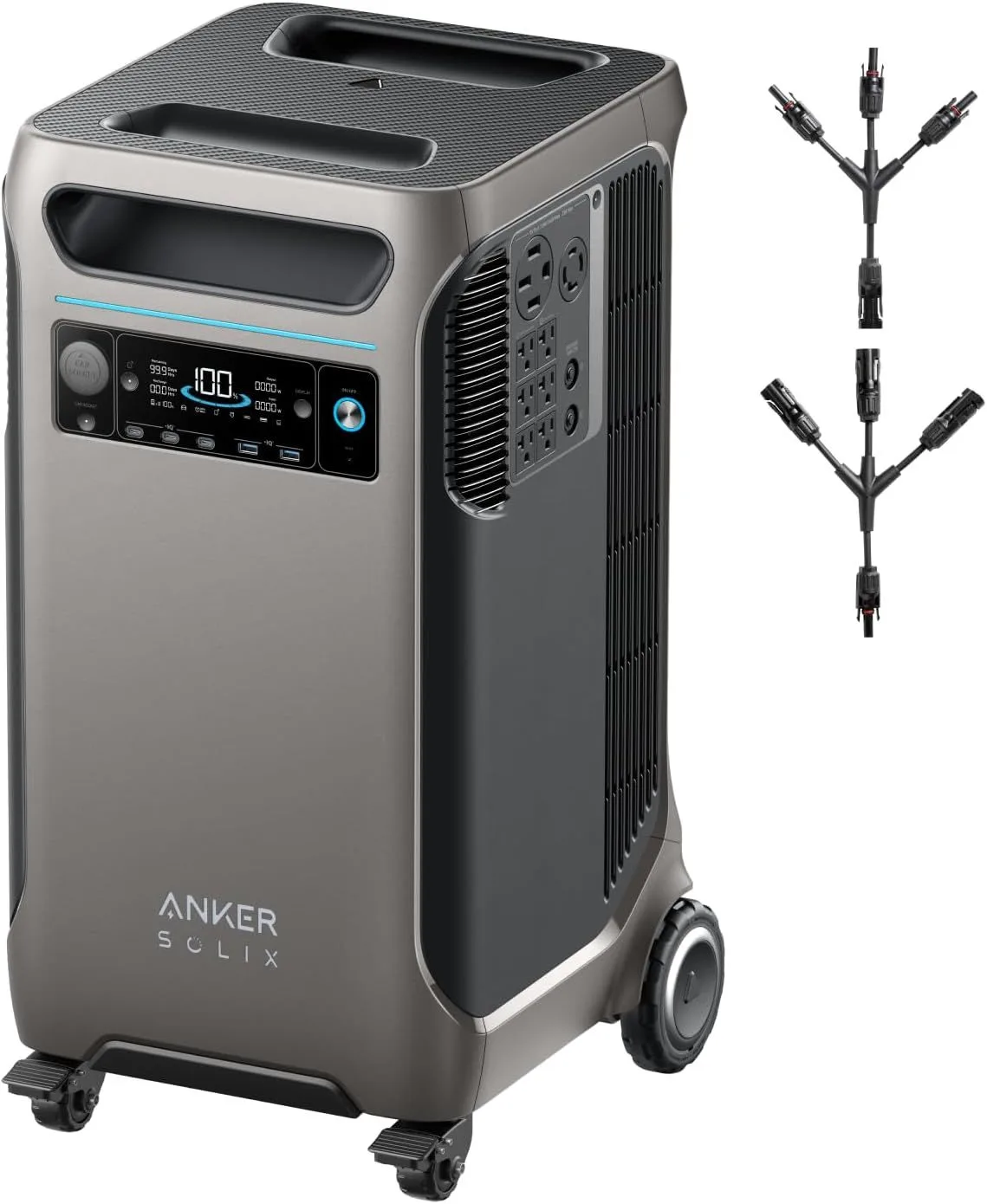
The Anker SOLIX F3800 is raw power incarnate. 6,000W of continuous 240V output from a single unit — enough to directly charge an EV via the built-in NEMA 14-50 outlet, run a 240V dryer, or power a well pump without a second unit or accessory hub. TechRadar called it the unit that "epitomizes (semi) portable power stations." The 14+ port selection covers every conceivable use case, and the 53.8kWh expansion ceiling with two units and 12 BP3800 batteries is the highest available from any portable brand.
The compromises are proportional to the capability. At 132 lbs, it is the second-heaviest unit here — reviewers described moving it between floors as requiring "two people and a plan." The Solar Lab documented 80W of idle draw, nearly 4x the F3000's 20.5W, consuming half the battery in 24 hours of standby alone. The restrictive 60V-per-port solar input limit makes it incompatible with most standard residential panels — forum users consistently identify this as the most frustrating design flaw. And UPS mode is limited to three 120V ports at 1,440W, with no 240V UPS capability.
A hurricane-prone Florida user praised the F3800's reliability during extended outages but noted that if choosing again, they would suggest the DELTA Pro 3 instead — citing lower weight, better idle efficiency, and faster charging as advantages that matter more during actual emergencies than the F3800's higher raw output figure. For permanent installations where maximum single-unit wattage is the priority and the 60V solar limitation is acceptable, the F3800 delivers unmatched output. For most other scenarios, the stations ranked above offer better balance.
6. Jackery HomePower 3000 — Lightest 3kWh Station
3,072Wh LiFePO4 · 3,600W Output · $500+
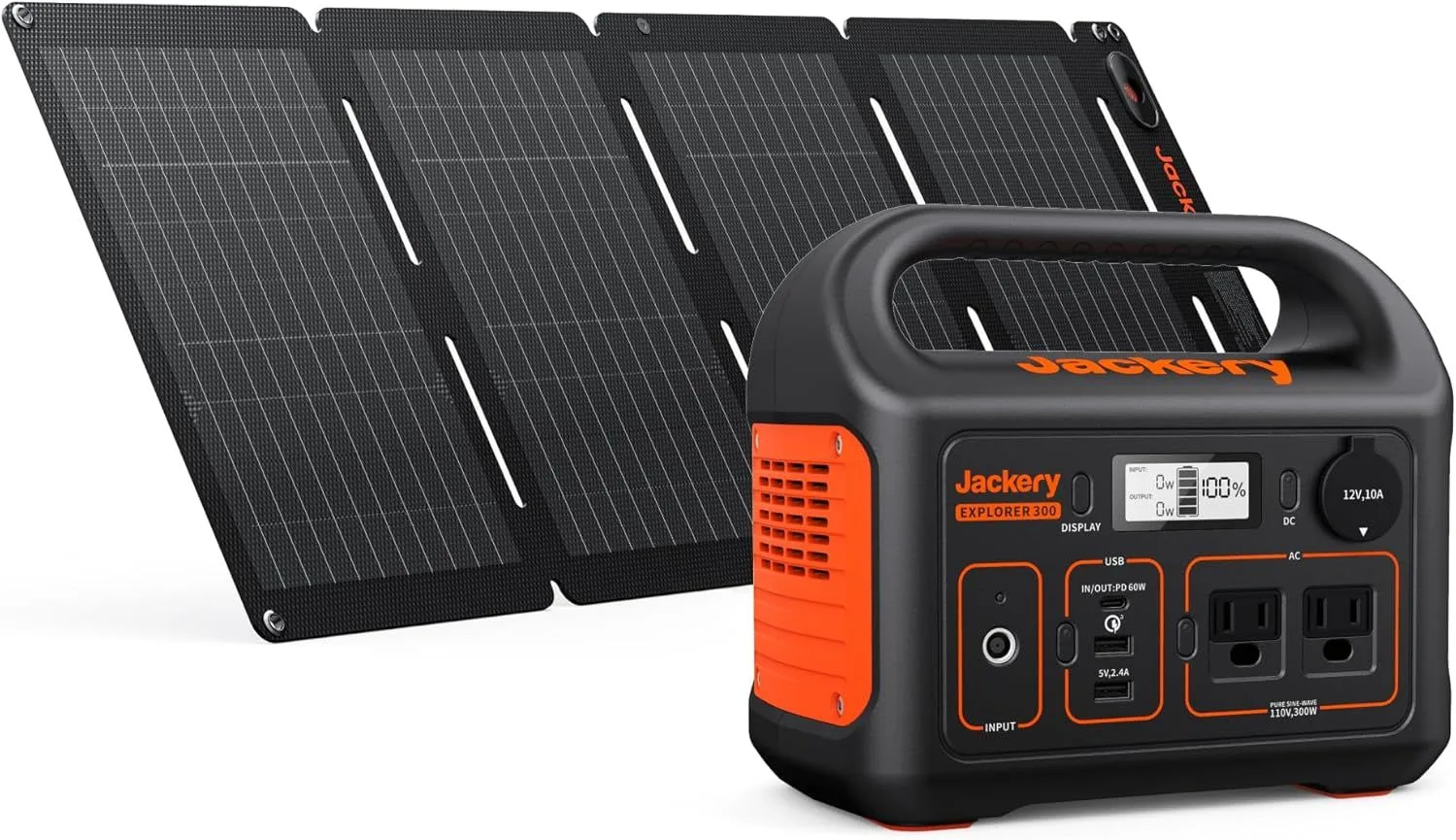
The Jackery HomePower 3000 makes one bet and wins it decisively: at 59.5 lbs, it is the only 3kWh station one person can realistically lift, carry, and store without dedicated floor space. It weighs less than half of what the Anker F3800 (132 lbs) and EcoFlow DELTA Pro 3 (113.5 lbs) weigh. The 16.4 x 12.8 x 12-inch footprint fits in a closet, under a desk, or in an RV bay where competitors simply cannot go.
The Solar Lab measured just 8W of idle draw — the lowest they have ever recorded from any large power station. In practical terms, the HomePower 3000 could maintain its inverter in ready state for approximately 16 days on a single charge. ZeroDrain technology retains roughly 95% charge after 12 months of storage. For emergency preparedness buyers who charge the unit once and need it ready months later, nothing else delivers this level of set-and-forget reliability.
The trade-offs explain the lower ranking. Zero expandability — no expansion ports, no compatible batteries, 3,072Wh is all you get. The 1,000W maximum solar input is the lowest in this roundup by a wide margin, taking roughly 4 hours for a full solar recharge vs. under 2 hours for competitors. No 240V output in any configuration. And the highest cost per watt-hour in this roundup — roughly 2.5x more expensive per Wh than the Guardian 6000. A PopUpPortal user reported that Bluetooth and WiFi disable themselves after a timeout, requiring a physical button press to re-enable — a genuine usability problem when the unit lives in a hard-to-reach location. For buyers who value portability and standby readiness above all else, the HomePower 3000 is the clear choice. For maximum capability per dollar, the competition delivers more.
7. Anker SOLIX F3800 Plus — Best for Solar-First Systems
3,840Wh LiFePO4 · 3,300W (6,000W w/ expansion) · $500+
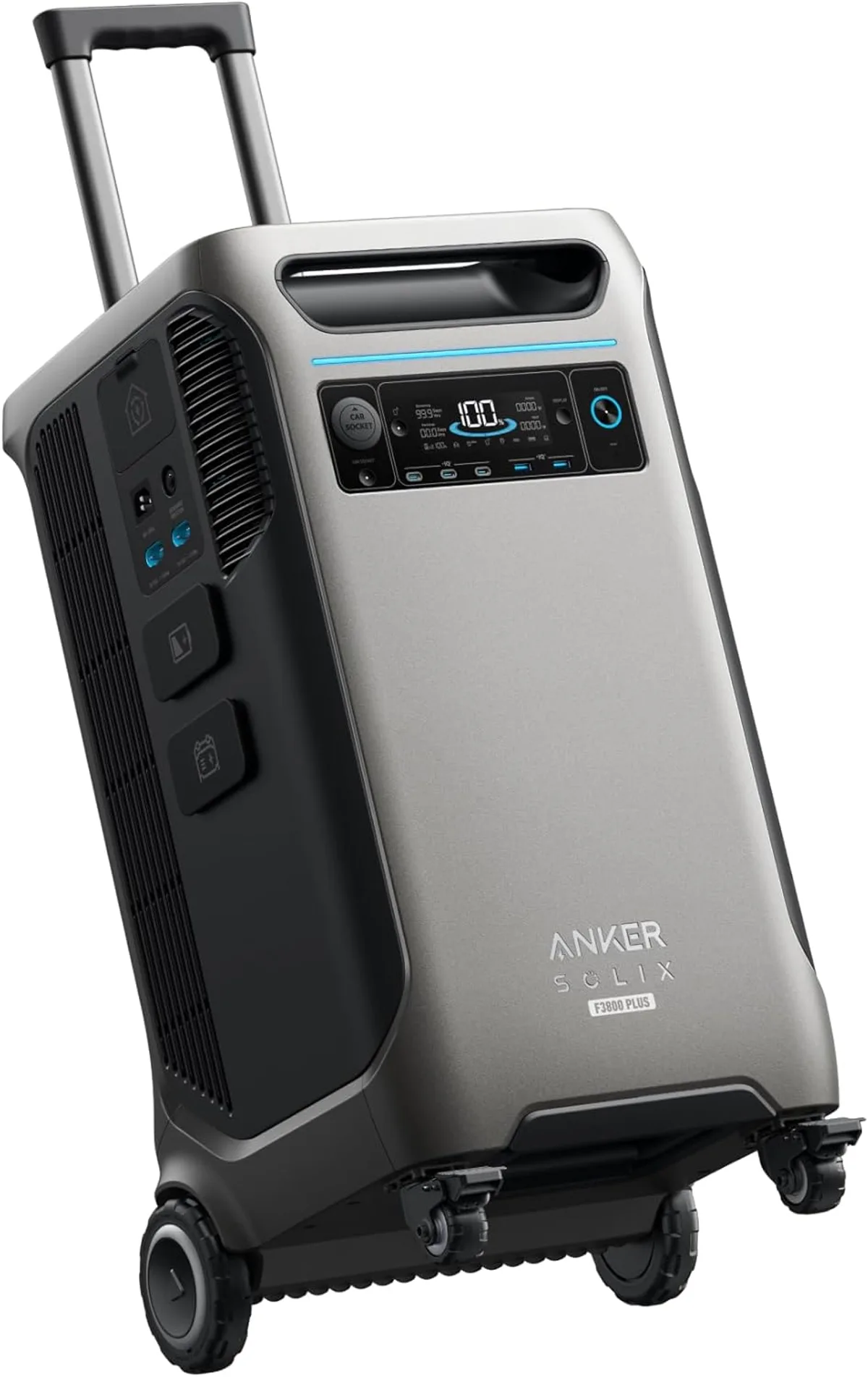
The Anker SOLIX F3800 Plus surgically fixes the original F3800's most criticized flaw. The Solar Lab confirmed the upgrade: 3,200W of MC4-compatible solar input at 165V MPPT works immediately with standard off-the-shelf solar panels — no voltage-matching gymnastics, no proprietary connectors, no rewiring series connections. This is the highest solar input in the roundup, 33% more than the DELTA Pro 3's 2,600W.
The 240V generator and wall outlet charging hits 0-100% in approximately 1.5 hours. The weather alert integration that auto-starts charging when storms approach your area is unique to Anker's ecosystem. Apple Insider gave it 8/10, noting the Plus "takes every core feature of the original and builds on an already excellent home battery backup solution." The 53.8kWh expansion ceiling matches the original F3800.
The ranking reflects two problems that the solar fix does not solve. First, single-unit output dropped from the original F3800's 6,000W to just 3,300W — you need at least one premium-priced expansion battery to unlock full power. The Solar Lab noted this makes it "weaker as a standalone unit versus the competition." Second, 136.7 lbs makes it the heaviest station in this comparison. Apple Insider's reviewer treated it as a permanent installation after the initial placement and never moved it again. The same UPS limitation (120V only, 1,440W max) and BP3800 buzzing reports carry over from the original platform. For buyers building a solar-centric Anker ecosystem with panels, batteries, and a Home Power Panel, the F3800 Plus is the right foundation. As a standalone purchase, the stations ranked above deliver more power at lower weight and cost.
How We Ranked These Stations
At the whole-home level, every station delivers multi-kilowatt output and multi-kilowatt-hour capacity. The baseline is already high. What separates the #1 pick from the #7 pick is not whether it can run your fridge — they all can — but how efficiently, how quietly, and with what practical limitations. Here is what determined placement:
- Usable efficiency and idle draw (25%): Rated capacity tells you how much energy the battery stores. Discharge efficiency tells you how much you can actually use. The DELTA Pro 3's 93% efficiency delivers 3,790Wh from 4,096Wh. An 80% efficient unit with the same rating delivers only 3,277Wh. Idle draw determines how much capacity bleeds away during standby — and the range from 8W to 80W creates a tenfold difference in standby loss that no spec sheet highlights.
- Charging speed — AC and solar (20%): During a multi-day outage, how quickly you can recharge from a generator or solar panels determines whether the station lasts the duration. The gap between 50-minute 0-80% charging and 3+ hour charging is the difference between a quick generator top-up and an hours-long recharging session with all loads disconnected.
- Output capability and voltage (20%): Continuous wattage, surge capability, and 120V vs. 240V output determine which household loads you can support. A station that delivers 240V from a single unit without requiring accessories scores higher than one requiring two units plus a hub for the same capability.
- Practical usability — weight, noise, and reliability (15%): A 136.7 lb station is a permanent installation. A 59.5 lb station can still be moved by one person. Fan noise, connectivity reliability, cable quality, and real-world user reports all factor in. Units with documented reliability issues (expansion battery noise, cable heating, pass-through shutdowns) receive deductions.
- Value — price per Wh and total cost of ownership (10%): Raw price divided by capacity gives the $/Wh baseline. But total cost includes expansion batteries, required accessories (hubs, transfer switches, smart meters), and panel compatibility. A station that requires costly accessories for basic 240V output has a different real cost than one that delivers 240V out of the box.
- Ecosystem and expandability (10%): Growth potential matters for home backup. A 3,072Wh station that expands to 41.4kWh represents fundamentally different long-term value than one locked at 3,072Wh forever. Backward compatibility with existing batteries, app ecosystem quality, and integration with transfer switches and home panels all contribute.
Whole-Home Backup Buying Guide
Who Needs a Whole-Home Station
The whole-home category serves buyers whose power needs exceed what a mid-range 1,000Wh station can deliver. If you need to keep a refrigerator, medical devices, Wi-Fi, and lighting running for 24+ hours — or need 240V output for well pumps, central AC, or EV charging — a 3,000Wh+ station is the minimum viable solution. Primary use cases: hurricane and storm preparedness, off-grid cabin power, RV and van life with heavy appliance loads, and permanent home backup installations paired with transfer switches.
If your outage plan is limited to keeping phones charged and a few lights on for 8-12 hours, a mid-range station delivers that capability at a fraction of the cost and weight. The whole-home category is for buyers who refuse to ration power during an outage.
120V vs 240V: Do You Need Split-Phase Output?
Most household essentials — refrigerators, routers, LED lights, medical devices, TVs, phone chargers — run on 120V. If your emergency plan covers these circuits exclusively, a 120V-only station like the Anker F3000 or Jackery HomePower 3000 handles it. But several critical systems require 240V: well pumps (your water supply), central AC and heat pumps, electric dryers, electric ranges, and EV chargers. If losing any of these during an outage is unacceptable, you need a station with native 240V output — the OUPES Guardian 6000, EcoFlow DELTA Pro 3, GROWATT HELIOS 3600, or Anker F3800.
Idle Draw: The Spec Nobody Talks About
Idle draw is the power consumed just keeping the inverter ready. In this category, it ranges from 8W (Jackery HomePower 3000) to 80W (Anker F3800). At 80W, the F3800 drains 1,920Wh in 24 hours of standby — that is half its capacity gone to waste heat before you plug in a single device. The EcoFlow DELTA Pro 3 at ~40-50W, the Anker F3000 at 20.5W, and the Jackery at 8W represent clear improvements. During a multi-day outage where the station cycles between active use and standby, lower idle draw translates directly to more days of usable power.
Solar Input: Matching Panels to Your Station
Solar input determines how fast you can recharge without grid power — the single most important factor during extended outages. The range in this category spans from 1,000W (Jackery HomePower 3000) to 3,200W (Anker F3800 Plus). Higher solar input means faster recovery between usage cycles. The F3800 Plus with 3,200W at 165V MPPT works with standard MC4 residential panels. The original F3800's restrictive 60V-per-port limit forces careful panel selection. The DELTA Pro 3's 2,600W dual MPPT is the most versatile for mixed panel configurations. Budget at least 400W of solar per 1,000Wh of storage capacity for practical same-day recharging.
Expandability: Building a System Over Time
Five of seven stations in this roundup offer expansion. The Anker F3800 platform reaches 53.8kWh — enough for multi-week backup. The OUPES Guardian 6000 expands to 41.4kWh at the lowest per-kWh cost. The EcoFlow DELTA Pro 3 grows to 48kWh with backward compatibility for original DELTA Pro batteries. The Jackery HomePower 3000 and any single-unit configurations are locked at their base capacity forever. If you anticipate scaling your system over the next 3-5 years, buy an expandable platform now and add batteries as budget and need dictate.
Weight: Portable vs. Permanent Installation
"Portable" in this category ranges from one-person portable (Jackery HomePower 3000 at 59.5 lbs) to practically permanent (Anker F3800 Plus at 136.7 lbs). Most stations over 100 lbs require two people for any relocation and are best treated as semi-permanent installations. If you need to move the station between your house and a vehicle — or between floors of your home — weight is a hard constraint. The Anker F3000 at 91.5 lbs sits at the boundary: manageable with effort for one strong person, comfortable for two.
Whole-Home Backup Questions Answered
Can a portable power station actually power a whole house?
It depends on which circuits you need running. A 4,096Wh unit like the EcoFlow DELTA Pro 3 can keep a refrigerator (150W avg), Wi-Fi router (12W), phone chargers, LED lighting, and a TV running for roughly 18-24 hours on a single charge. But central AC (3,500W+), electric water heaters (4,500W), and electric ranges (8,000W+) exceed even the largest portable stations. The practical approach: connect to a transfer switch that isolates critical circuits — fridge, lights, router, medical devices — and let the non-essentials wait for grid restoration.
Why does idle draw matter so much in this category?
Idle draw is the power a station consumes just keeping its inverter ready — before you plug in a single device. In the whole-home class, idle draw ranges from 8W (Jackery HomePower 3000) to 80W (Anker F3800). At 80W, the F3800 drains 1,920Wh in 24 hours of standby — half its total capacity gone to heat before powering anything. During a multi-day outage where the unit sits partially idle between peak usage, high idle draw silently eats your reserve. The EcoFlow DELTA Pro 3 at ~40-50W and the Anker F3000 at 20.5W represent clear improvements that translate to real-world runtime gains.
Is the EcoFlow DELTA Pro 3 worth the premium price?
For most buyers building a home backup system — yes. The 93% discharge efficiency means you get roughly 400-600Wh more usable energy than comparably rated competitors. The 0-80% charge in 50 minutes from a standard wall outlet is the fastest in the category. The 30dB quiet operation makes it livable in indoor spaces. And backward compatibility with original DELTA Pro batteries protects existing EcoFlow investments. The pass-through power limitation (shutdowns above ~2,000W while grid-connected) is the main caveat — if you need true always-on UPS for high-draw appliances, the OUPES Guardian 6000 or Anker F3800 handle that scenario better.
Do I need 240V output for home backup?
Only if you need to power 240V appliances: central AC, well pumps, electric dryers, electric ranges, or EV chargers. Most critical household circuits — refrigerator, lights, outlets, router, medical devices — run on 120V. If your emergency plan focuses on keeping essentials running, a 120V-only station like the Anker F3000 or Jackery HomePower 3000 covers it. If losing well water (pump requires 240V) is unacceptable, you need the OUPES Guardian 6000, EcoFlow DELTA Pro 3, Anker F3800, or GROWATT HELIOS 3600 — all of which deliver 240V output.
How big of a solar array do I need for a whole-home station?
Match your solar input to at least 50% of the station's rated solar capacity for practical recharging. The EcoFlow DELTA Pro 3 accepts 2,600W — a 1,300-1,600W solar array (three to four 400W panels) would recharge it in roughly 3-4 hours of direct sunlight. The Anker F3800 Plus accepts 3,200W with standard MC4 panels, making it the easiest to pair with off-the-shelf residential solar equipment. Budget at least 400W of solar per 1,000Wh of storage for same-day recharging in typical conditions. Real-world solar output runs 60-80% of rated capacity due to angle, clouds, and temperature.
How long do LiFePO4 batteries in these stations actually last?
Every station in this roundup uses LiFePO4 cells rated for 3,000-4,000+ cycles to 80% capacity. At one full charge-discharge cycle per day, a 4,000-cycle battery lasts over 10 years before dropping to 80% of its original capacity — and it continues working beyond that, just with reduced runtime. LiFePO4 also handles partial cycles well: charging from 20% to 80% daily counts as less than a full cycle. For most home backup users who charge weekly or monthly (not daily), these batteries will outlast the electronics around them.
What should I do to prepare my power station before a storm?
Charge it to 100% immediately when a storm watch is issued — do not wait for the warning. Test that all critical devices power on correctly by plugging them in briefly. Verify your transfer switch is properly configured if you have one installed. Fill coolers with ice to reduce refrigerator duty cycle. Charge all laptops, phones, and battery packs. Know your station's idle draw: if yours consumes 80W, turn it off between usage windows to preserve capacity. The Anker F3800 Plus can automate this — its weather alert integration starts charging automatically when storm warnings hit your area.
Our #1 Pick: EcoFlow DELTA Pro 3
93% discharge efficiency, 50-minute 0-80% charging, 30dB quiet operation, backward-compatible ecosystem, and endorsements from Men's Journal, Bob Vila, TechRadar, and Outdoor Gear Lab. The most polished whole-home backup station available in 2026.