Anker SOLIX C1000 Gen 2 vs EcoFlow DELTA 2: The Refinement King Meets the Expansion Champion
Our Verdict
This is one of the closest matchups in the mid-range class. The Anker SOLIX C1000 Gen 2 wins on refinement — it charges faster (49 minutes, Guinness-certified), weighs 2 lbs less, delivers higher USB-C output (dual 140W ports), retains charge perfectly after a month of standby, and carries 4,000 cycles versus EcoFlow's 3,000. The EcoFlow DELTA 2 wins on capability — expandable to 3,072Wh, X-Boost extends effective output to 2,200W, the app ecosystem is the best in the industry, and it costs far less at comparable capacity. Your choice hinges on whether you need a single, polished unit or a flexible, expandable system.
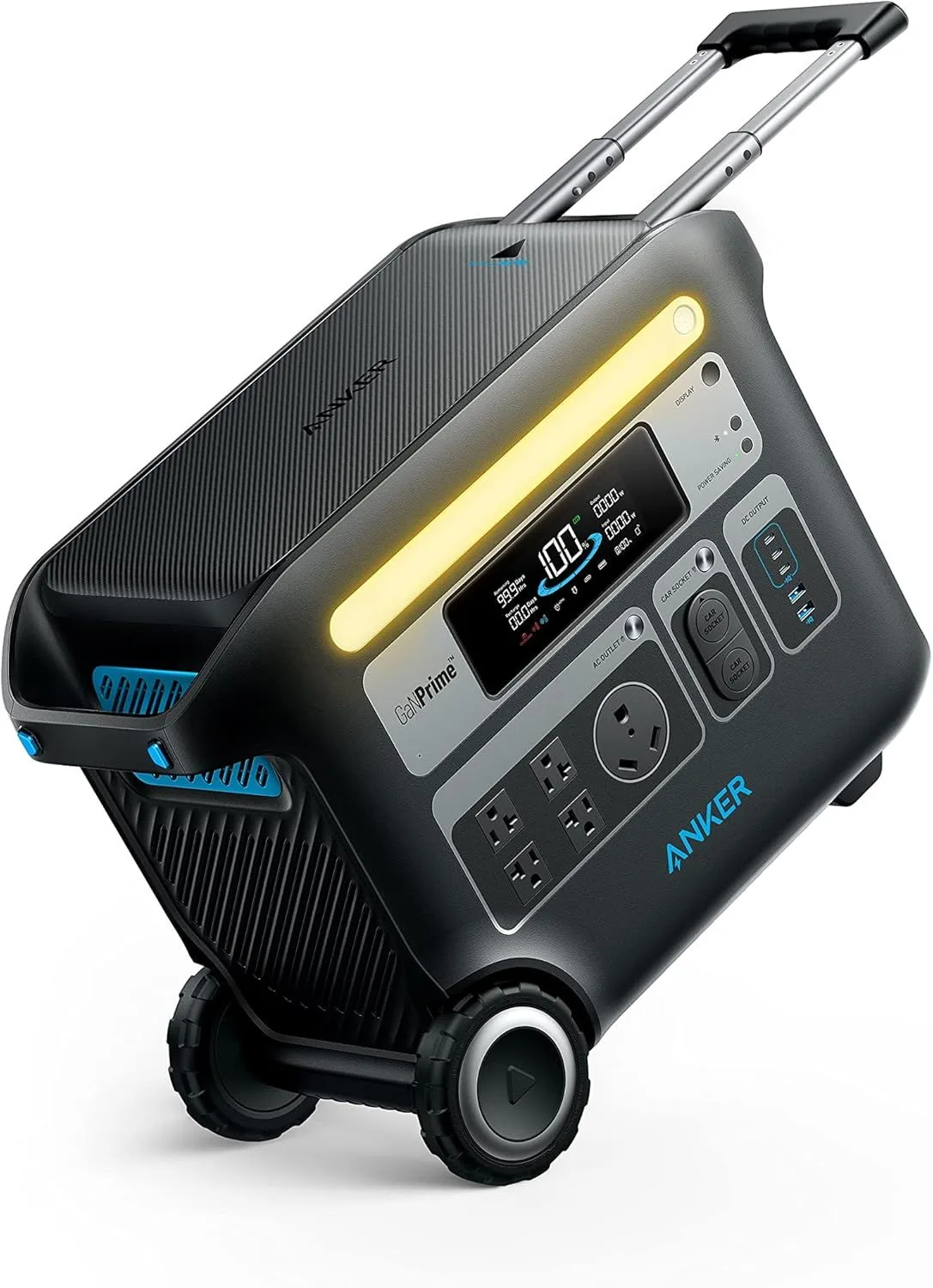
Anker SOLIX C1000 Gen 2
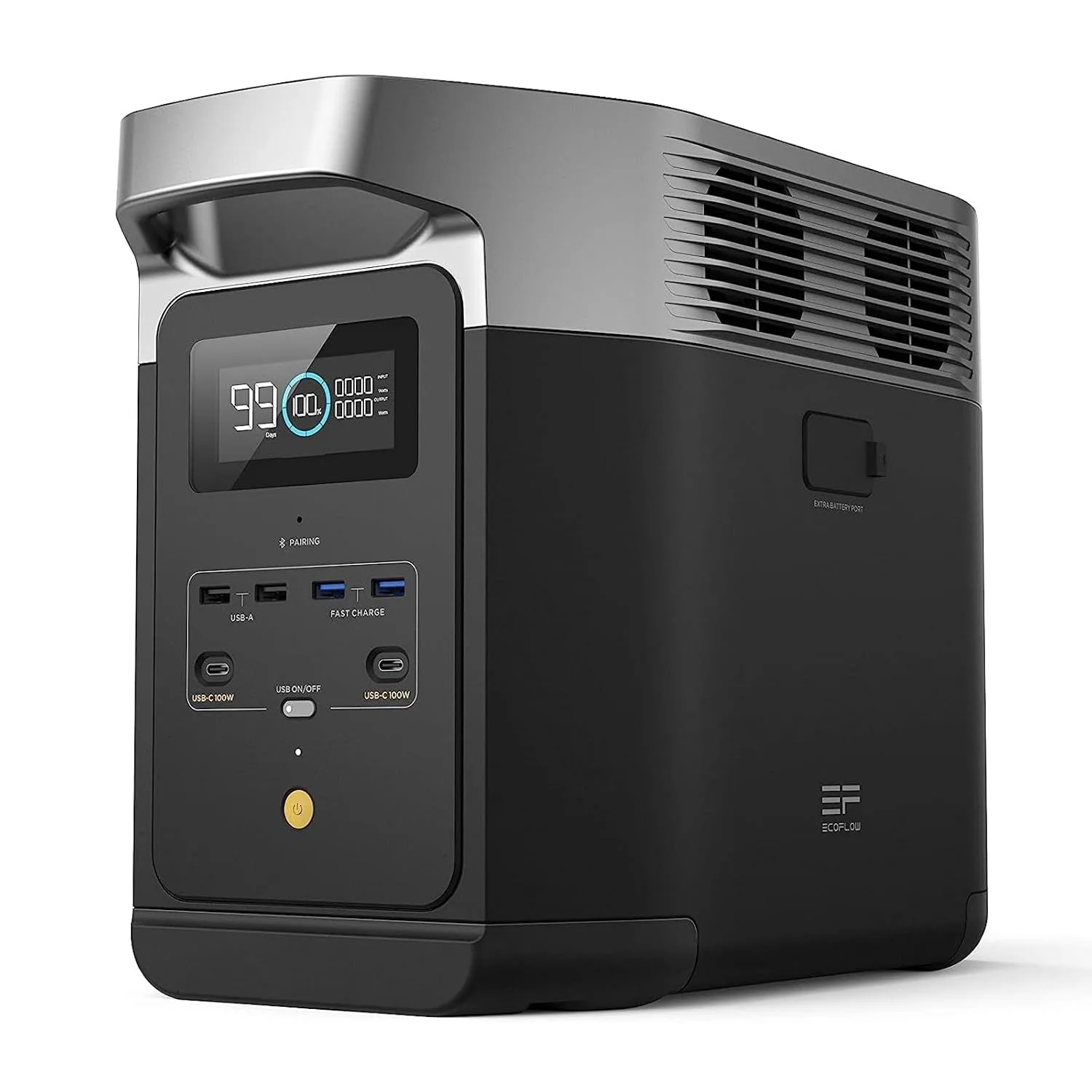
EcoFlow DELTA 2
Two Philosophies, Same 1,024Wh Battery
The Anker SOLIX C1000 Gen 2 and EcoFlow DELTA 2 share an identical battery capacity — 1,024Wh of LiFePO4 — and compete in the same mid-range price band. Both deliver 2,000W-class output. Both fast-charge from wall outlets in under 90 minutes. Both have established brand support with 5-year warranties. On paper, they look like the same product from different factories.
They are not. Anker built the Gen 2 by stripping features to optimize a single unit: lighter, faster, more compact, longer cycle life, better standby retention. EcoFlow built the DELTA 2 to be a platform: expandable to 3x capacity, the best app ecosystem in portable power, and X-Boost technology that effectively stretches output beyond rated specs. One is a scalpel. The other is a Swiss Army knife.
We researched both products in depth — drawing from 300+ Anker Amazon ratings and 5000+ EcoFlow Amazon ratings, plus reviews from PCWorld, StorageReview, NotebookCheck, MacRumors, and The Gadgeteer. Both units have been independently verified on charging speed, output accuracy, and real-world performance. Here is how every dimension stacks up.
Full Spec Comparison
| Feature | Anker SOLIX C1000 Gen 2 Portable Power Station | EcoFlow DELTA 2 Portable Power Station |
|---|---|---|
| Price Range | $500+ | $250–$500 |
| Battery Capacity | 1,024Wh | 1,024Wh |
| Battery Type | LiFePO4 | LiFePO4 |
| Output Power | 2,000W | 1,800W (2,200W X-Boost) |
| Surge Power | 3,000W (SurgePad) | 2,700W |
| Weight | 24.9 lbs | 27 lbs |
| Solar Input | 600W max (60V) | 500W max |
| Check Price | Check Price |
How Fast Can You Refill the Tank?
The Anker SOLIX C1000 Gen 2 holds the Guinness World Record for fastest full charge in a portable power station: 49 minutes from empty to 100% via HyperFlash technology at 1,600W input. That is not a marketing claim — it is a verified record. MacRumors left it charging from dead and had a full battery before finishing a cup of coffee. The standby retention is equally striking: 100% charge maintained after a full month of powered-off storage, per MacRumors testing.
The EcoFlow DELTA 2 is no slouch. X-Stream technology pushes 1,200W to the battery for a 0-80% time of approximately 50 minutes, with a full charge completing around the 80-minute mark. PCWorld independently verified these numbers. For most practical scenarios — topping off between uses, recharging overnight, grabbing a quick charge before heading out — the difference between 49 and 80 minutes to full is noticeable but rarely a deal-breaker.
Where Anker's speed advantage becomes material is for road trippers and event professionals. If you are stopping at a rest area for a lunch break and need a full charge before the next leg, 49 minutes fits within a typical stop. Eighty minutes does not. And if you are powering a booth at an outdoor event, the faster turnaround means less downtime between shows.
Solar charging favors the Anker as well. The C1000 Gen 2 accepts 600W maximum solar input versus the DELTA 2's 500W. With adequate panels, the Anker reaches full from solar in approximately 1.8 hours; the EcoFlow takes roughly 3 hours with 400W panels. That 600W headroom also future-proofs the Anker for higher-wattage panel arrays.
Raw Output vs Smart Output
On paper, the Anker C1000 Gen 2 delivers 2,000W continuous with a 3,000W SurgePad surge. The EcoFlow DELTA 2 delivers 1,800W continuous with a 2,700W surge. Anker wins on raw numbers. But EcoFlow has a trick that changes the equation.
X-Boost is EcoFlow's intelligent voltage management system. When a device exceeding 1,800W is plugged in — say a 2,000W space heater or a 1,500W microwave — X-Boost reduces the voltage slightly while maintaining current flow. The appliance runs at reduced power (a microwave heats 10-15% slower, a hair dryer blows slightly less hot), but it works without tripping the overload protection. This effectively extends the DELTA 2's usable output to approximately 2,200W for resistive and heating loads.
The Anker C1000 Gen 2 has no equivalent feature. Its 2,000W ceiling is firm. A 2,100W device will trip the overload shutoff. That means the EcoFlow DELTA 2 can actually power a wider range of household appliances in practice, despite having a lower rated continuous output on the spec sheet. For users who want to run a microwave, a space heater, or a high-wattage coffee maker during an outage, the DELTA 2's X-Boost provides a real and measurable advantage.
The Anker's 3,000W surge capacity is higher than EcoFlow's 2,700W, which helps with inrush current from compressor-based appliances (refrigerators, air conditioners). But for sustained high-wattage draws, X-Boost gives the DELTA 2 the practical edge.
Fixed Battery vs Expandable System
This is the DELTA 2's defining advantage. The EcoFlow DELTA 2 supports expansion to 3,072Wh — triple its base capacity — by connecting one DELTA 2 Extra Battery (1,024Wh) and one DELTA Max Extra Battery (1,024Wh). The entire expanded system is managed through the EcoFlow app with combined monitoring and smart charging distribution.
The Anker SOLIX C1000 Gen 2 is not expandable. Period. The Gen 1 C1000 supported the B1000 expansion battery, but Anker deliberately removed that capability in the Gen 2 redesign to achieve its lighter weight and more compact form factor. What you buy is what you get — 1,024Wh, no growth path.
Whether expandability matters depends entirely on your use case. If you need 1,024Wh for weekend camping trips and overnight power outages, the Anker's fixed capacity is fine — the lighter weight and faster charging are the benefits of that design decision. But if you are building toward an off-grid cabin setup, preparing for multi-day outages, or running a food truck that might need more capacity next season, the EcoFlow's expansion path means you never hit a dead end with your initial investment.
App Control and Connected Features
EcoFlow's app is the gold standard in portable power. The DELTA 2 connects via both WiFi and Bluetooth, offering real-time power draw monitoring, remote port toggling, custom charging schedules, firmware updates over-the-air, and detailed battery health analytics. PCWorld, StorageReview, and every major reviewer has praised the EcoFlow app as the best in the industry. You can check your battery level from another room, set the DELTA 2 to charge only during off-peak electricity rates, and receive push notifications when the battery reaches a threshold.
Anker's app support for the C1000 Gen 2 exists but is less developed. The Anker app offers basic monitoring and firmware updates, but the interface is simpler, the feature set is thinner, and the connected experience does not match EcoFlow's depth. NotebookCheck noted that Anker's app connectivity works reliably but lacks the sophisticated scheduling and analytics that make EcoFlow's ecosystem feel like a smart home product rather than a battery with an app bolted on.
For users who treat their power station as a "set and forget" device — charge it, use it, put it away — app quality is irrelevant. Both units work perfectly without ever opening an app. But for tech-forward users who want to integrate their power station into a smart home workflow, monitor power consumption remotely, or schedule charging around time-of-use electricity pricing, the EcoFlow's app is a genuine differentiator that no other portable power brand matches.
Carrying It Out the Door
The Anker SOLIX C1000 Gen 2 weighs 24.9 lbs and measures 15.12 x 8.19 x 9.61 inches. The EcoFlow DELTA 2 weighs 27 lbs and measures 19.5 x 9.5 x 12 inches. The Anker is 2.1 lbs lighter and substantially more compact — roughly 25% less volume overall.
That matters more than the numbers suggest. When you are carrying a power station from a car trunk to a campsite, loading it into an RV bay, or storing it on a shelf between uses, the physical footprint is the lived experience. The Anker Gen 2 slides into spaces the DELTA 2 cannot, fits more comfortably in a vehicle's cargo area alongside coolers and gear, and is noticeably easier to carry one-handed thanks to the lighter weight.
Anker achieved this by redesigning the internal layout and removing the expansion battery port — a deliberate engineering trade-off that concentrates all 1,024Wh and 2,000W of output into a tighter, lighter package. The DELTA 2's larger size partially reflects its expansion port hardware and the wider array of 15 output ports (versus Anker's 10).
For home backup use where the unit sits on a shelf until needed, the size difference is negligible. For frequent travelers, campers, and anyone who regularly moves their power station between locations, the Anker's compact profile provides a real quality-of-life improvement.
Long-Term Durability and Charge Retention
The Anker C1000 Gen 2 is rated for 4,000 cycles to 80% capacity. The EcoFlow DELTA 2 is rated for 3,000 cycles to 80%. That 1,000-cycle difference translates to roughly 25-30% more total energy delivered over the battery's lifetime. For a unit used daily, the Anker's battery will maintain usable capacity approximately 2-3 years longer than the EcoFlow's before reaching the 80% degradation threshold.
Standby retention is where the Anker opens a wider gap. MacRumors tested the C1000 Gen 2 in standby for a full month with all outputs powered off and measured zero charge loss — 100% retained after 30 days. The EcoFlow DELTA 2 does not have equivalent third-party standby data, but PCWorld noted that idle drain with the display and WiFi module active is measurable over days. If you plan to keep a power station charged for emergency preparedness (fully charged in a closet, ready to grab when the lights go out), the Anker's standby retention is a concrete advantage.
StorageReview measured the EcoFlow DELTA 2's discharge efficiency at 83.3% under a 270W continuous load — meaning roughly 17% of stored energy is lost to internal conversion and heat. The Anker Gen 2 does not have an equivalent third-party efficiency measurement published, but Anker's Guinness-level engineering attention suggests competitive or better efficiency. Both are within the normal range for LiFePO4 power stations.
Fan Noise: The Shared Weakness
Both units are loud under load. The EcoFlow DELTA 2's fan noise is the most frequently cited complaint across all reviewers. PCWorld titled their review "Flexible, advanced, and LOUD" — a three-word summary that captures the product perfectly. The fan activates during charging, high-output draws, and even moderate USB-C usage, and the sound is described as a persistent hum audible across a room.
The Anker C1000 Gen 2 is not quiet either. NotebookCheck, MacRumors, and The Gadgeteer all flagged noticeable fan noise during charging and high-draw scenarios. Anker's fan management may be slightly less aggressive at moderate loads, but neither unit qualifies for bedside use, quiet office environments, or recording studios.
If noise is a priority, both of these units lose to quieter alternatives in the mid-range class. The UPOPOWER S1200 operates below 25dB — essentially silent. The OUKITEL P1000 Plus measures 29dB — quieter than a library whisper. Both deliver 1,000Wh+ capacity with fast charging while keeping fan noise at barely perceptible levels. The catch is less output wattage (1,200W-1,800W vs 2,000W+) and no expandability.
Pricing Reality Check
The EcoFlow DELTA 2 carries a lower list price for the same 1,024Wh LiFePO4 capacity, making it modestly more expensive when the Anker is at full MSRP. That price gap is substantial — it represents the cost of a quality 100W solar panel, which could turn the DELTA 2 into a complete solar generator kit at roughly the same total spend as the Anker alone.
The Anker C1000 Gen 2's premium buys three specific things: the Guinness-certified fastest charging (49 min vs 80 min), a lighter and more compact form factor (24.9 lbs vs 27 lbs), and 1,000 additional battery cycles (4,000 vs 3,000). Whether those refinements justify the premium depends on your usage pattern. Frequent travelers who value fast turnaround and light weight will find the Anker's extras worth every dollar. Home backup users who value expandability and the best app ecosystem will get more from the EcoFlow's lower price and growth potential.
Both units frequently go on sale. The EcoFlow DELTA 2 has been available in the $250–$500-$250–$500 range during promotions. The Anker Gen 2 has appeared in the $250–$500-$500+ range during sales events. At sale prices, both become more competitive against budget alternatives like the UPOPOWER S1200 — which delivers 1,190Wh and UPS at a fraction of either full MSRP.
Choosing Between Refinement and Flexibility
Get the Anker SOLIX C1000 Gen 2 if you...
- ✓ Need the absolute fastest charging — 49 minutes to full is unmatched in portable power
- ✓ Frequently transport your power station and value the lighter, more compact design
- ✓ Want the best USB-C performance — dual 140W PD ports fast-charge MacBooks at max speed
- ✓ Keep a unit charged for emergency preparedness — zero standby loss after a month
- ✓ Plan to use one unit intensively and want maximum battery longevity (4,000 cycles)
- ✓ Value Anker's established customer support and repair infrastructure
Get the EcoFlow DELTA 2 if you...
- ✓ Want expandability — grow from 1,024Wh to 3,072Wh as your needs increase
- ✓ Need to run high-wattage appliances — X-Boost extends effective output to 2,200W
- ✓ Want the best app ecosystem — WiFi monitoring, remote control, and charging schedules
- ✓ Prefer to spend less upfront for the same core capacity (1,024Wh LiFePO4)
- ✓ Need more output ports — 15 total including 6 AC outlets versus Anker's 10 ports
- ✓ Are building a comprehensive power system with room to grow over time
For most mid-range buyers, the EcoFlow DELTA 2 is the more versatile choice. It costs less, powers more devices via X-Boost, expands to 3x capacity, and has the best app in the business. Those are four significant advantages against one main compromise: you sacrifice ~30 minutes of charge time, 2 lbs of portability, and 1,000 battery cycles.
The Anker C1000 Gen 2 is the right call if you prioritize the single-unit experience above all else. The fastest charging, the lightest weight at 2,000W, the best USB-C ports, the longest cycle life, and perfect standby retention make it the most refined power station in the mid-range class. The premium is real, but so is the polish.
Other Mid-Range Contenders Worth Considering
If neither the Anker nor the EcoFlow perfectly fits your priorities, three other mid-range stations are worth researching:
- UPOPOWER S1200 — below average for its category with 1,190Wh, sub-25dB silent operation, and enterprise-grade UPS. Best for: buyers who need quiet operation above all else.
- OUKITEL P1000 Plus — Includes a 100W solar panel at $250–$500, 29dB quiet operation, and 80% charge in 39 minutes. Best for: buyers who want a complete solar kit with fast charging and minimal fan noise.
- OUPES Mega 1 — 2,000W continuous with 4,500W surge and expandable to 5,120Wh. Includes a 100W solar panel. Best for: buyers who prioritize raw output power and maximum expansion potential.
All three cost less than the Anker C1000 Gen 2 at MSRP and offer specific advantages in noise, bundled panels, or expandability. The mid-range class is deep — take time to match the right unit to your actual needs.
Anker SOLIX C1000 Gen 2 vs EcoFlow DELTA 2 FAQ
Which charges faster from a wall outlet — the Anker C1000 Gen 2 or EcoFlow DELTA 2?
The Anker SOLIX C1000 Gen 2 holds the Guinness World Record for fastest full charge at 49 minutes via HyperFlash (1,600W input). The EcoFlow DELTA 2 reaches 80% in 50 minutes and full in about 80 minutes via X-Stream (1,200W input). The Anker is roughly 30 minutes faster to a complete charge, though the EcoFlow reaches the critical 80% mark at nearly the same speed.
Can the EcoFlow DELTA 2 really expand to 3,072Wh?
Yes. The EcoFlow DELTA 2 supports one DELTA 2 Extra Battery (1,024Wh) and one DELTA Max Extra Battery (also 1,024Wh) for a total system capacity of 3,072Wh. The expansion batteries connect via proprietary EcoFlow cables and are monitored through the EcoFlow app. The Anker C1000 Gen 2 removed expansion support to achieve its lighter, more compact design — its capacity is fixed at 1,024Wh.
Is the Anker C1000 Gen 2 quieter than the EcoFlow DELTA 2?
Based on reviewer consensus, the EcoFlow DELTA 2 is noticeably louder. PCWorld described it as "Flexible, advanced, and LOUD." Multiple reviewers flagged Anker fan noise as well — NotebookCheck, MacRumors, and The Gadgeteer all noted it. Neither is quiet enough for bedside use at full draw. For silent operation, you would need to look at the UPOPOWER S1200 (sub-25dB) or OUKITEL P1000 Plus (29dB).
How does X-Boost on the EcoFlow DELTA 2 work?
X-Boost is EcoFlow's intelligent voltage management system. When a high-wattage device (like a 1,500W microwave or 1,800W hair dryer) is plugged in, X-Boost reduces the voltage slightly while maintaining the current. The appliance runs at reduced power — a microwave might heat 10-15% slower — but it works without tripping the overload protection. This effectively extends the DELTA 2's usable output from 1,800W to approximately 2,200W for resistive and heating loads.
Which has better USB-C performance?
The Anker SOLIX C1000 Gen 2 wins on USB-C. It offers two 140W USB-C PD ports — the highest in the mid-range class — capable of fast-charging even the latest MacBook Pro at maximum speed. The EcoFlow DELTA 2 has two 100W USB-C PD ports. Both are strong for laptop charging, but the Anker's 140W ports provide a measurable speed advantage with devices that support USB-C PD 3.1 at 28V/5A.
Which power station has better long-term value?
The EcoFlow DELTA 2 offers better upfront value with a lower price for the same 1,024Wh capacity, plus expandability to 3,072Wh. The Anker C1000 Gen 2 offers better long-term battery life at 4,000 cycles versus 3,000 cycles, which means roughly 25-30% more total energy delivered over the battery's lifetime. If you plan to expand capacity later, the EcoFlow wins on flexibility. If you plan to use one unit intensively for years, the Anker's extra 1,000 cycles matter.
Which Mid-Range Powerhouse Is Right for You?
The Anker SOLIX C1000 Gen 2 is the fastest, lightest, and longest-lasting single unit. The EcoFlow DELTA 2 is more affordable, expandable, and powers more devices via X-Boost. Both are excellent — the right choice depends on your needs.